Greenhouse of the Mora i Bravard Cactus and Succulent Botanical Garden
Casarabonela (Málaga), Andalusia

Sources checked October 2026
- Year
- 2011 (opening of the garden; collection established on the site since 1995)
- Style
- Large glazed greenhouse on a metal frame for cacti and succulents, outdoor xerophyte garden
- Dimensions
- Garden of 8,000 m²
- Status
- Presented as open by the 2026 press (guided visits, activities); privately managed, concession to Viveros Guzmán announced in November 2025; days and hours to be confirmed with the garden
In Casarabonela, at the foot of the Sierra de las Nieves, the Mora i Bravard botanical garden gathers over 8,000 m² a collection of about 11,000 cacti and other succulents from 45 botanical families, counted at between 2,200 and 2,500 species. The plants are arranged by geographic origin under a large glazed greenhouse on a metal frame, completed by a landscaped outdoor garden. The collection, begun in Mallorca and installed in Andalusia in 1995, was handed over to the municipality and the garden opened in 2011; its management is now private.
Affiliate links — booking through Verrière helps fund our research, at no extra cost to you.
History
The garden grew out of a collection of succulent plants that Joan Gabriel Mora and Edwige Bravard built up over many years. They began it in Mallorca; in 1995, looking for a more suitable climate, they moved it to Andalusia, to the present site at Casarabonela (andalucia.org). According to Spanish Wikipedia, the couple handed the collection and the 8,000 m² of land over to the municipality, on condition that their legacy be preserved permanently. The garden opened in March 2011 according to the Costa del Sol blog, and Spanish Wikipedia cites a Diario Sur article of 27 March 2011 on the opening of “Europe's great Cactus Museum”; a communiqué of the Málaga provincial council (Diputación), read only as an extract, mentions an investment of 2.4 million euros.
The garden belongs to the municipal heritage, but its management is private: andalucia.org says so without a date, and the Málaga horticultural company Viveros Guzmán announced on 19 November 2025 that it had obtained the concession, to fold it into its “I love cactus” brand. Its project includes the sale of plants, applied research with Guzmán Biotech, a special employment centre and educational and tourist activities.
Architecture and engineering
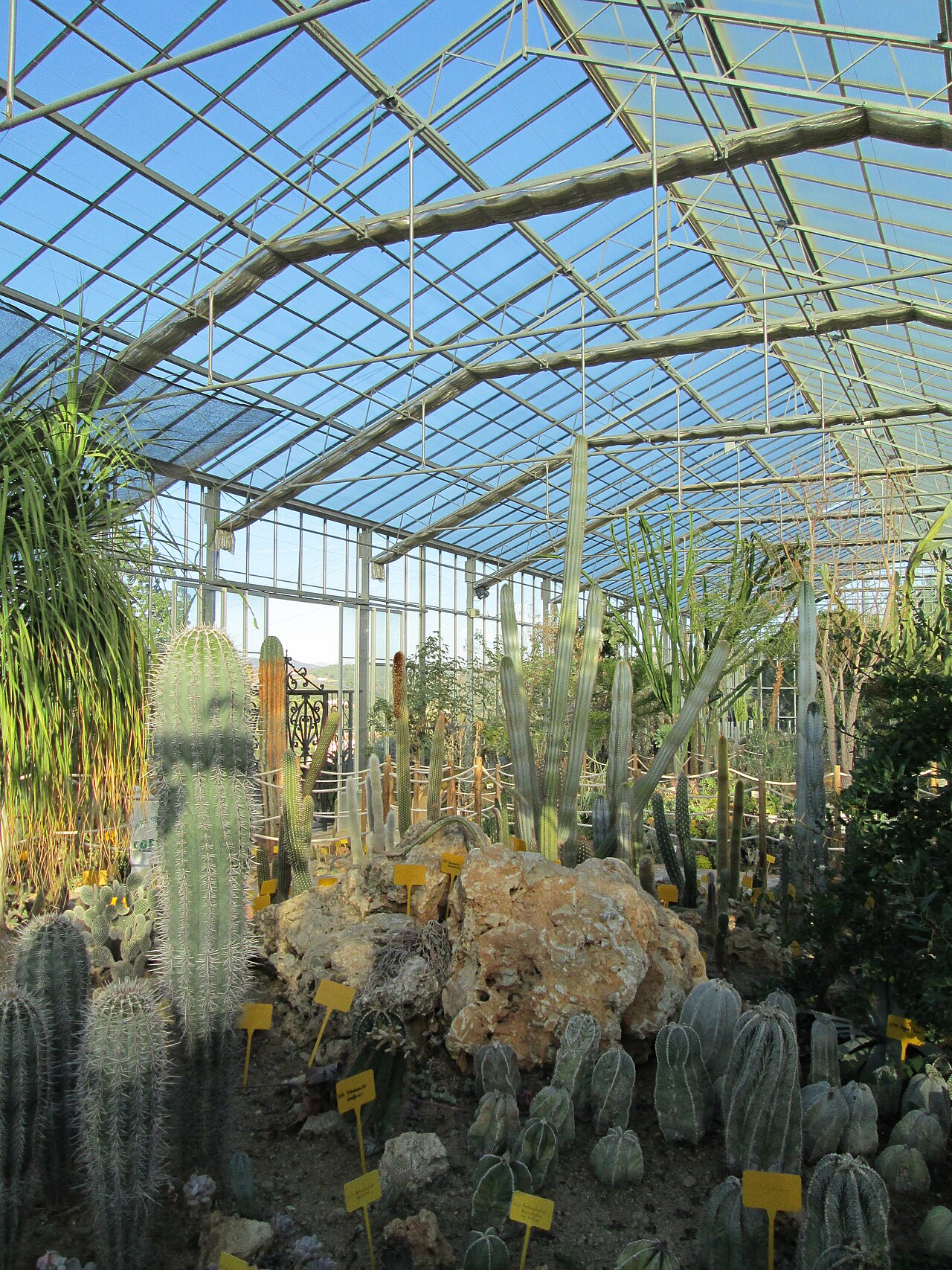
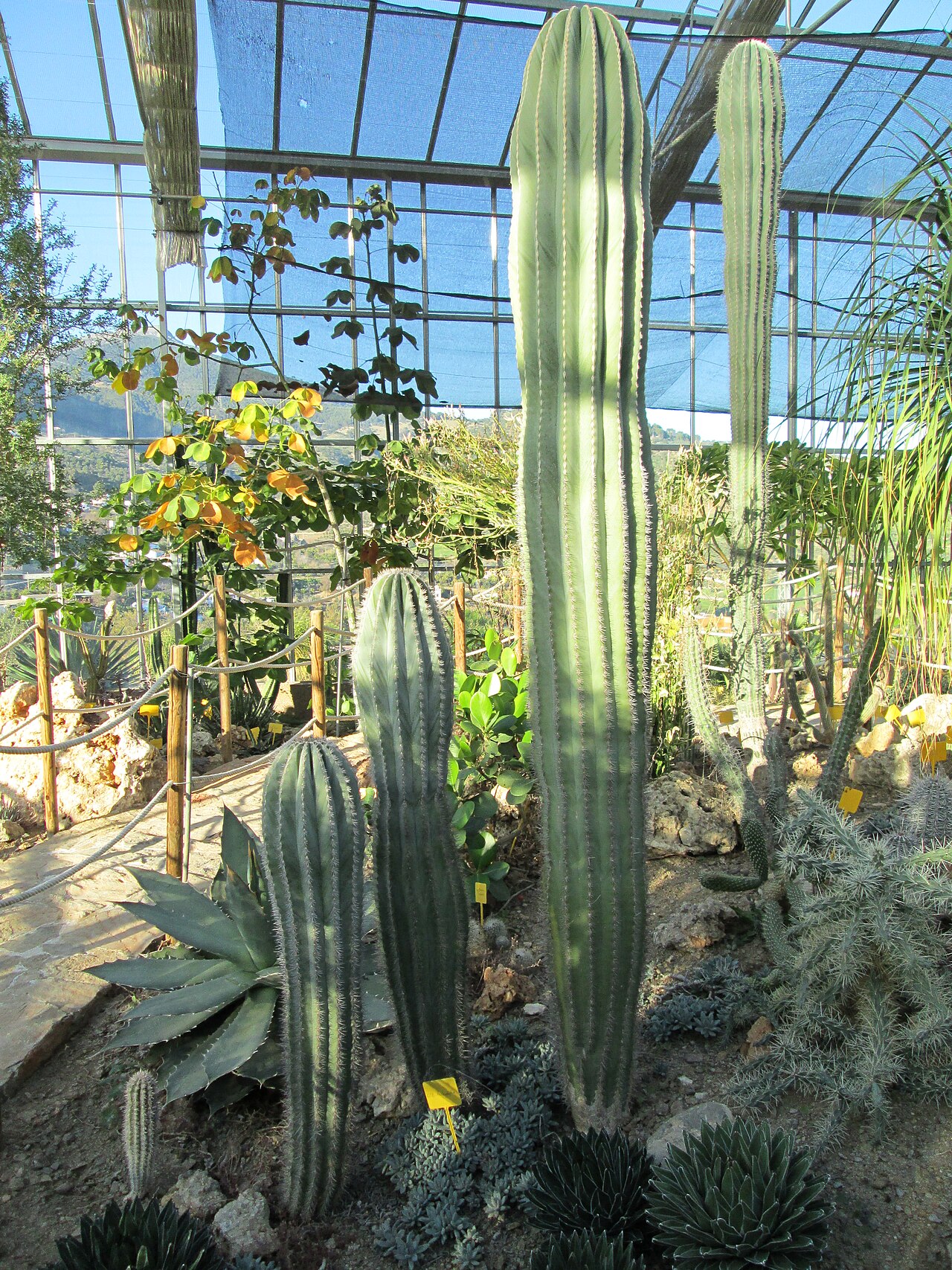
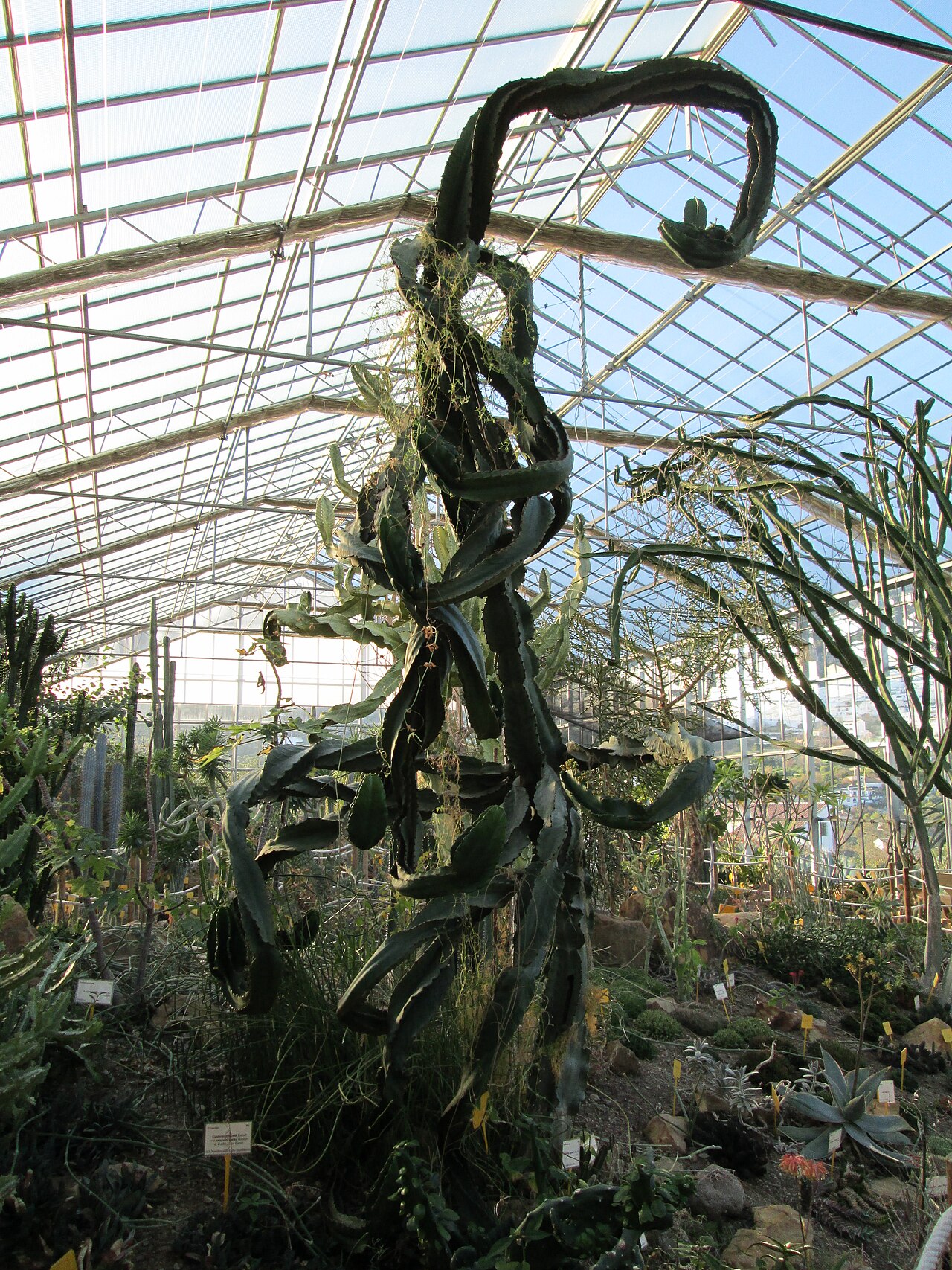
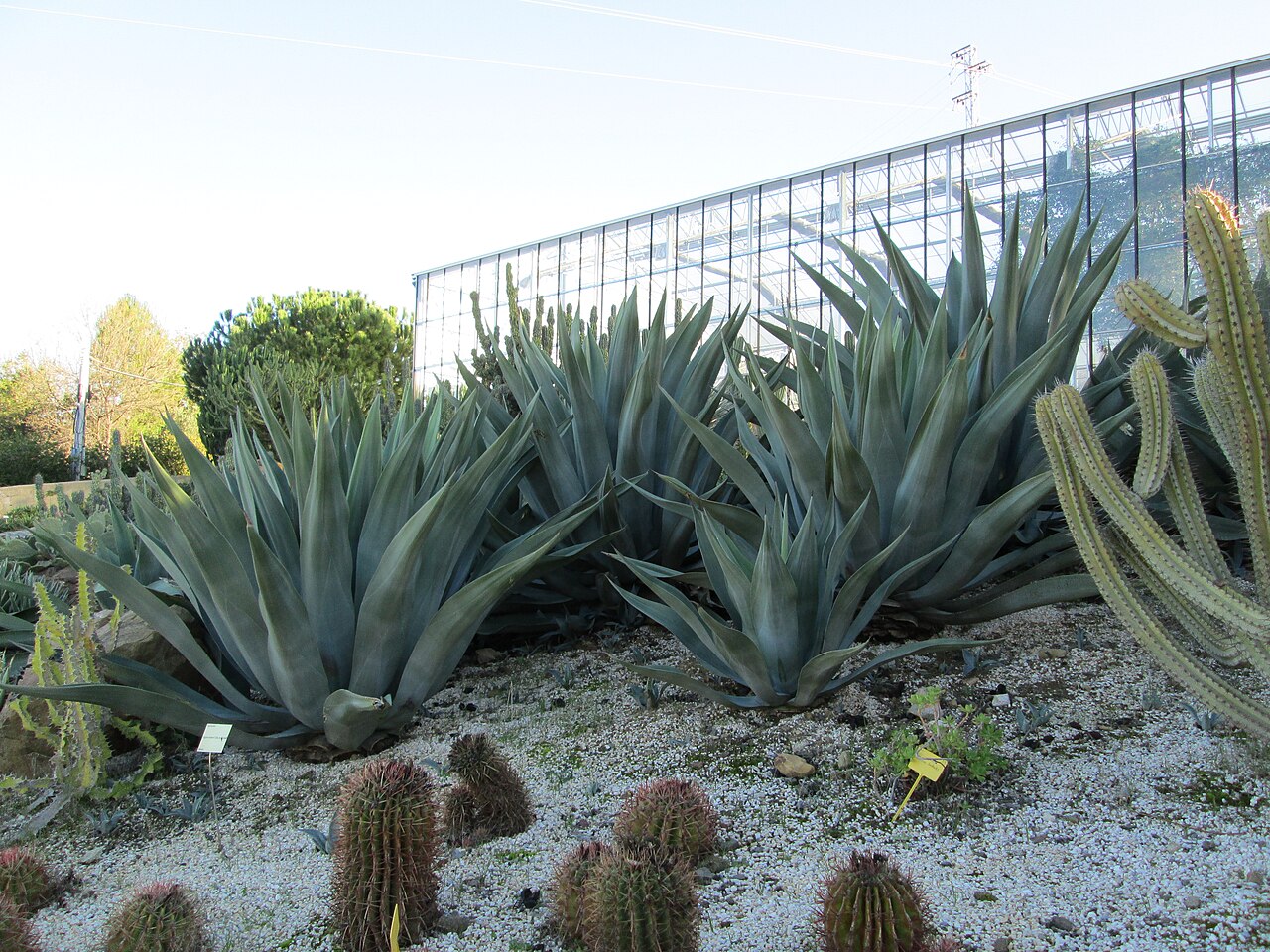
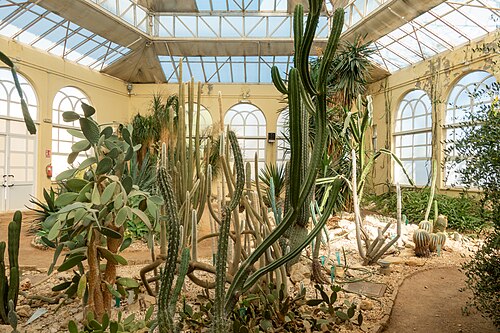
The greenhouse is a large glazed hall. Spanish Wikipedia describes the collection as housed in “latest-generation glazed greenhouses”, and the Costa del Sol blog (2018) speaks of “a glass greenhouse”; neither the exact number (plural in one, singular in the other), nor the floor area, nor the builder is given. On the Wikimedia Commons photographs of December 2012, a tall gabled volume with walls and roof in large glass panels on a metal frame rises above a stone wall in front of which barrel cacti are lined up; inside, the glazed roof lights large columnar cacti.
The garden lies at about 375-380 m above sea level, on the south-east slope of the Sierra Prieta, whose microclimate suits the plants shown, according to the garden's own text and andalucia.org: a climate with subtropical tendencies. Beside the greenhouse, Spanish Wikipedia distinguishes an outdoor patio devoted to the use of xerophytes in gardening and an information centre on the Sierra de las Nieves Biosphere Reserve; a white two-storey building carrying the garden's sign appears in the photographs.
Plant collections
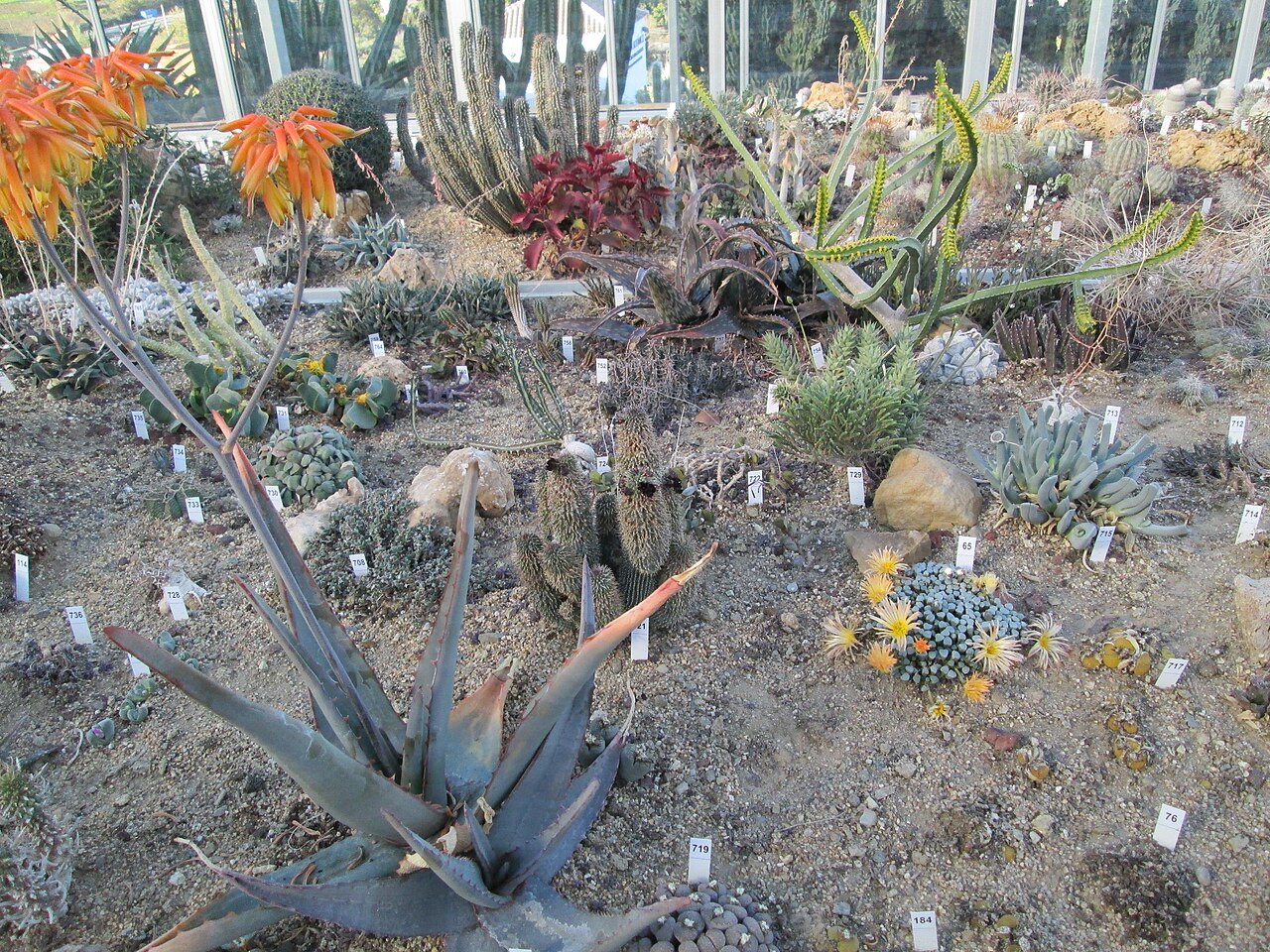
The garden's own text, repeated on a specialist website, announces about 11,000 plants from 45 botanical families, spread over some 2,200 species; Spanish Wikipedia and Málaga Hoy (August 2026) give 2,500 species instead, and the sources cannot be reconciled. Endangered species from Madagascar, the Arabian Peninsula and Mexico are included, with plants from other origins (United States, Morocco, Spain, Africa, India), placed in the greenhouse as well as in the outdoor garden, which is laid out on landscape criteria. The regions best represented under glass are southern Africa and Madagascar, and the deserts of the southern United States and Mexico; next come Peru, Ecuador, Brazil, Chile and Argentina, tropical Africa, the Arabian Peninsula, India, Australia, Europe and the Mediterranean, with a space devoted to the Canary Islands.
The photographs in the Commons category name, among others, Aeonium glutinosum, Coryphantha potosiana and Echinocactus platyacanthus. The garden states that plants flower there all year round, thanks to the variety of flowering periods.
Visiting
The garden lies on road A-7275, at kilometre 0.5, on the edge of Casarabonela, a white village of the Sierra de las Nieves about 35 minutes by car from Málaga according to Málaga Hoy. According to that source (August 2026), it offers guided visits and activities; a 2018 blog said they were possible in Spanish and in English. Days and hours should be checked before travelling, as the garden changed manager at the end of 2025.
The village combines easily with the visit: an Arab castle listed as a Bien de Interés Cultural, the 16th-century church of Santiago Apóstol, and the Andalusian Garden at the foot of the fortress. The Sierra de las Nieves National Park is close by.
36.78° N, 4.83° W
Greenhouses nearby
More greenhouses — Spain
Do you have a good photo of this greenhouse? Suggest it for this page →
Sources (8)
- es.wikipedia.org/wiki/Jard%C3%ADn_bot%C3%A1nico_Mora_i_Bravard
- andalucia.org/listing/jard%C3%ADn-bot%C3%A1nico-de-cactus-y-otras-suculentas-mora-i-bravar
- blog.visitacostadelsol.com/es/visita-al-jard%C3%ADn-de-cactus-de-casarabonela
- arbolesornamentales.es/casarabonela.htm
- malagahoy.es/la-farola/35-minutos-malaga-pueblo-magico-coleccion-cactus-espana_0_200766666
- viverosguzman.es/info-francais/viveros-guzman-gerera-le-jardin-botanique-de-cactus-et-succ
- malaga.es/delegacionpresidencia/575/com1_md3_cd-9911/casarabonela-acoge-el-mayor-jardin-bo
- commons.wikimedia.org/wiki/Category:Jard%C3%ADn_Bot%C3%A1nico_Mora_i_Bravard
Affiliate links — booking through Verrière helps fund our research, at no extra cost to you.