Greenhouses of the Real Jardín Botánico de Córdoba (American, Central and Orchid houses)
Córdoba, Andalusia

Sources checked October 2026
- Style
- Interconnected climate-controlled pavilions with translucent vaults on a metal frame
- Dimensions
- Three groups of pavilions
- Status
- Garden temporarily closed after storm damage (official site, Oct. 2026); normally open Tuesday to Sunday
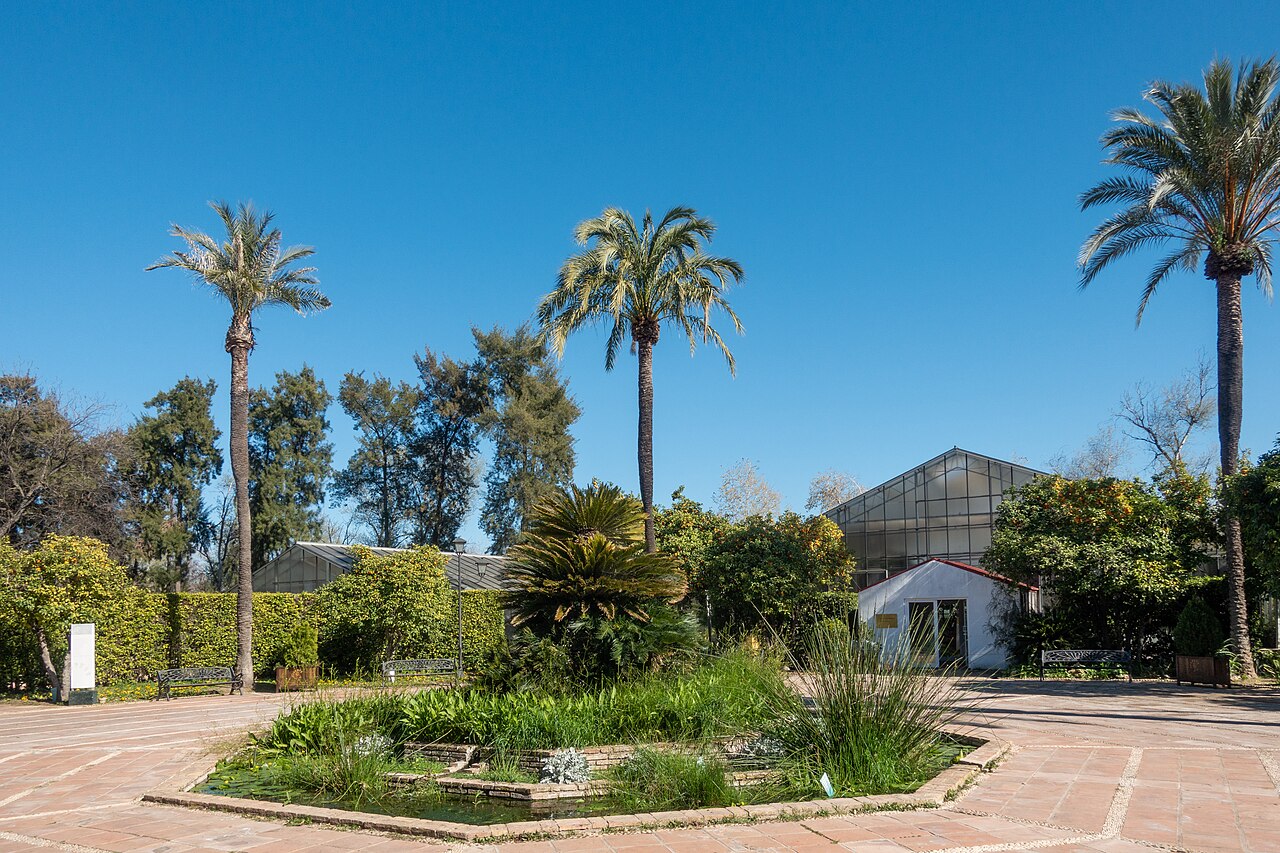
Córdoba's botanical garden, laid out between 1980 and 1987 on 5.5 hectares beside the Guadalquivir and granted the title 'Real' in 2012, shows its sheltered flora in three groups of interconnected pavilions. The American greenhouses gather about 800 species from the Americas in three pavilions, temperate-humid, warm and xerophytic, the warm one being viewed from a walkway three metres above the ground. The Central greenhouses keep 130 Canary Island species, cycads and African succulents; an orchid house fitted out inside an earlier building holds more than 80 species. In October 2026 the official site announced a temporary closure after a storm.
Affiliate links — booking through Verrière helps fund our research, at no extra cost to you.
History
The botanical garden of Córdoba was launched in July 1980 on the initiative of a group of professors from the University of Córdoba. The city council allotted it a 5.5-hectare plot on the right bank of the Guadalquivir, and the works ran from 1980 to 1987, the year of its inauguration. From the start the institution was conceived as a living museum with cultural and scientific content, run jointly by the city and the university. In 2012, for the twenty-fifth anniversary of its opening, King Juan Carlos I granted it the title 'Real', hence its present name.
The greenhouses belong to the garden's display of living flora, alongside the botanical school, the agricultural school, the arboretum and the rose garden. The official pages describe three groups: the American greenhouses, the Central greenhouses and the orchid house, the latter fitted out inside an earlier building of modest size whose interior was redesigned.
The garden later gained a museum of ethnobotany, with three permanent halls, and a museum of palaeobotany, dated 2002 by Wikidata, installed in the Molino de la Alegría, a riverside mill with medieval and Renaissance elements, around a collection donated by Roberto Wagner and now numbering some 150,000 pieces. A seed bank of Andalusian flora keeps nearly 3,000 species. In October 2026 the official site displayed a notice of temporary closure because of extensive storm damage; the mills had been flooded.
Architecture and engineering
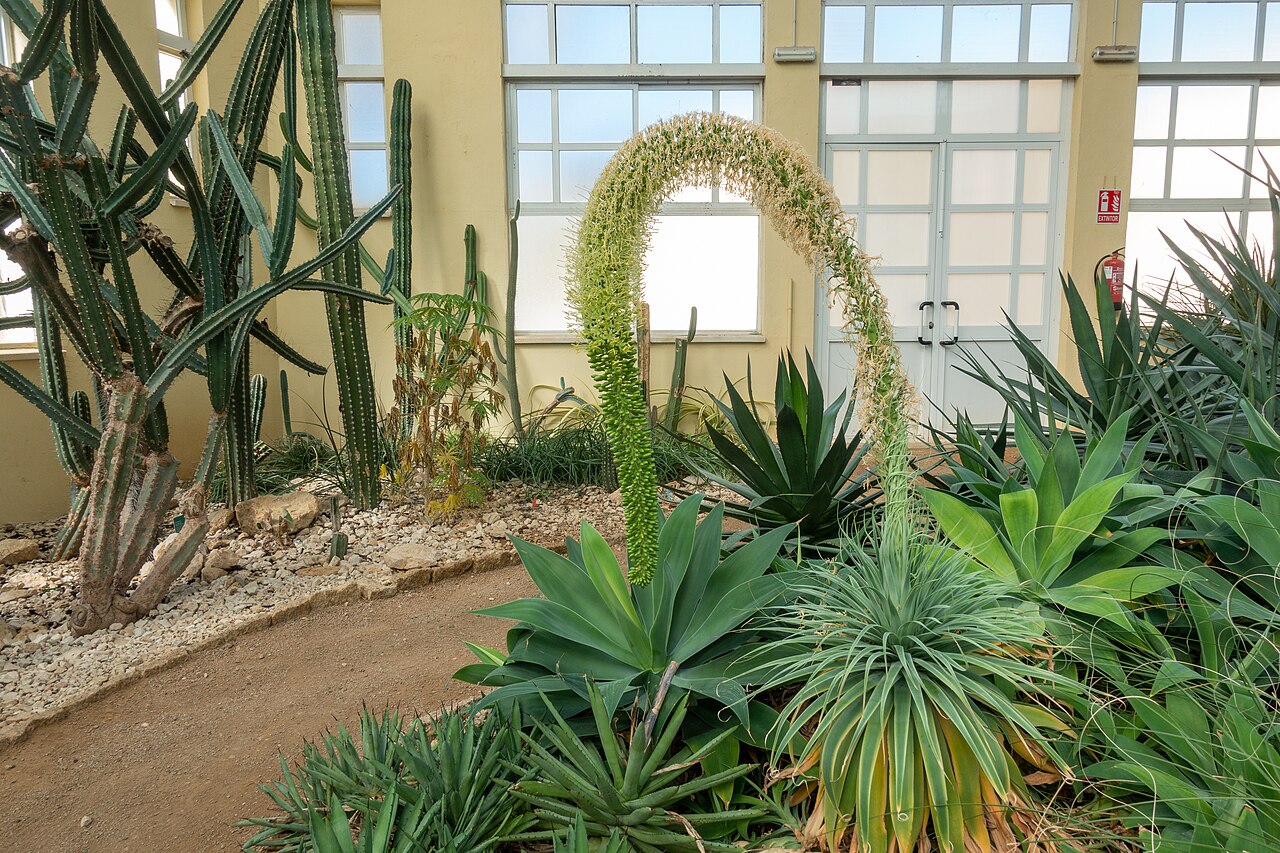
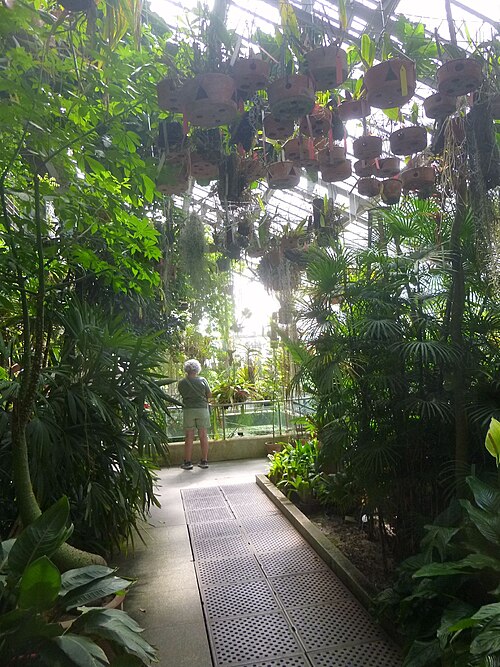
The three groups consist of interconnected pavilions in which each set of plants receives the temperature and humidity of its home region; Córdoba's tourist office describes them as climate-controlled greenhouses for tropical and subtropical flora and the Canary laurel forest. The American greenhouses have three linked exhibition pavilions with different temperature, humidity and soil conditions: a temperate-humid pavilion, a warm pavilion and a xerophytic pavilion. The warm pavilion is first seen from above: visitors enter on a walkway three metres above the ground, which leads to a lookout rising to five metres before coming back down to planting level. The xerophytic pavilion, at ground level, is just as warm but far drier.
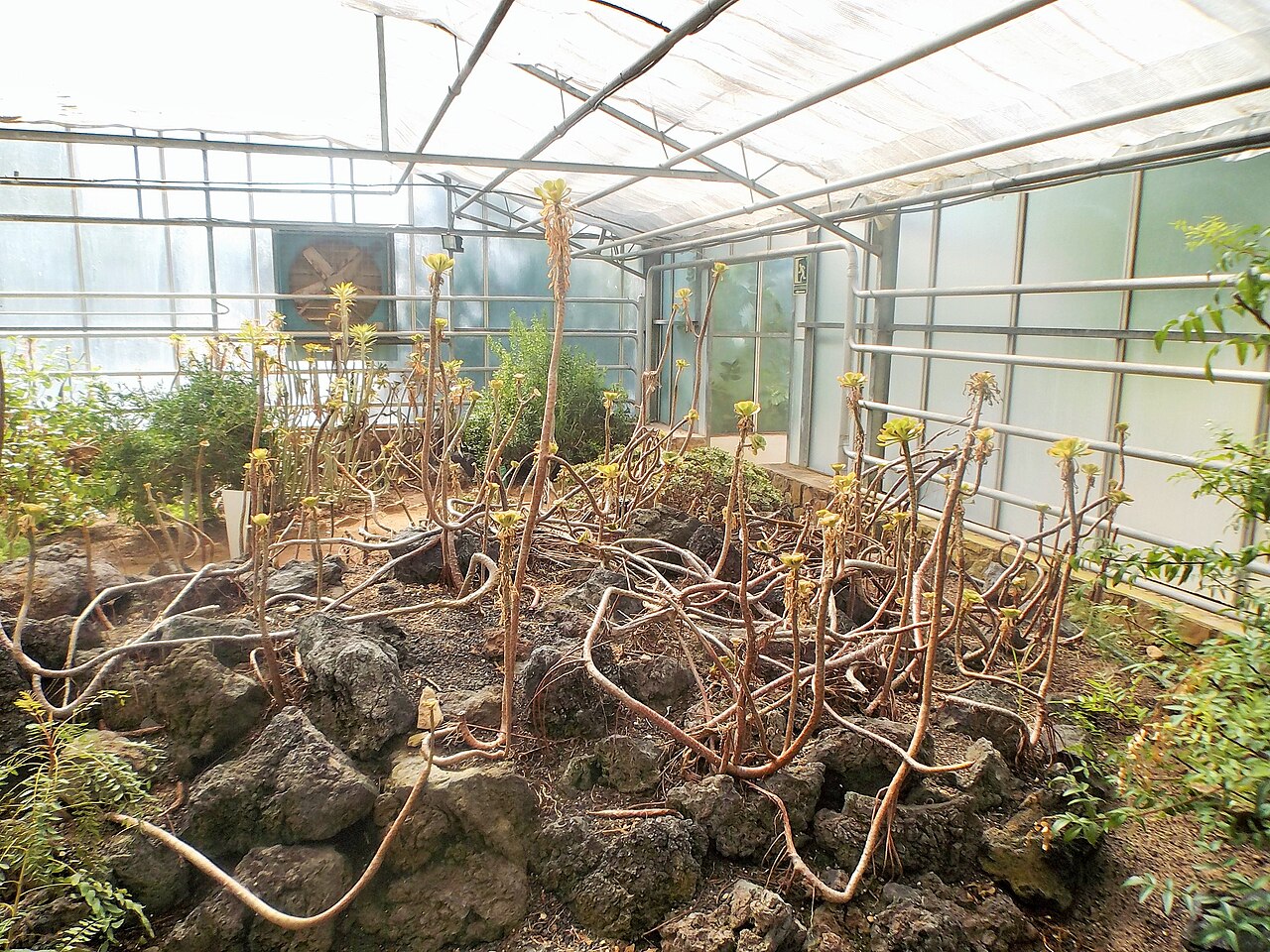
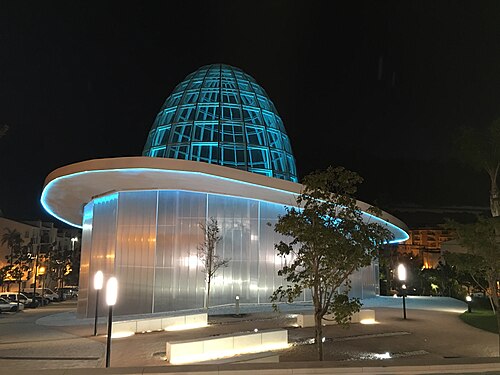
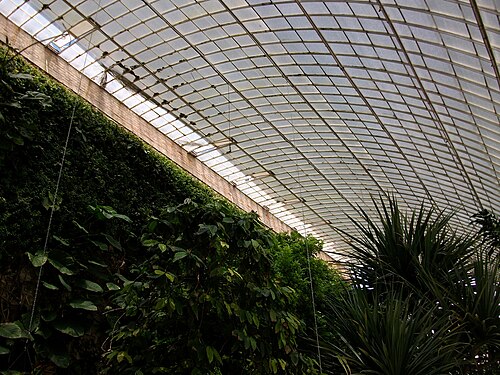
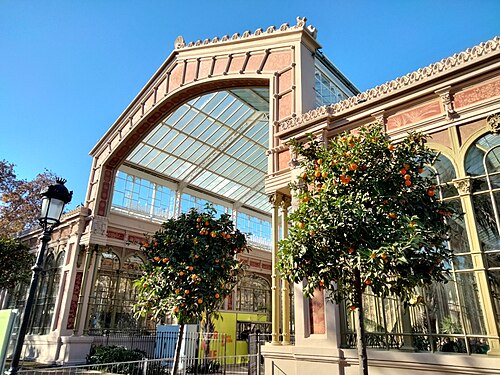
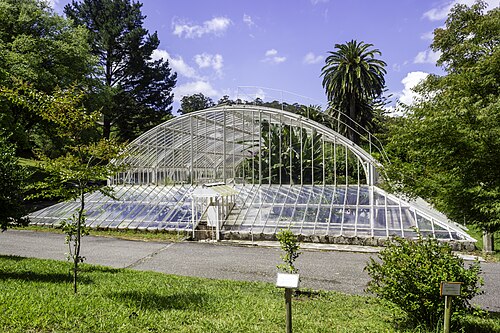
The Central greenhouses, the building named as such on OpenStreetMap near the garden's central plaza, are divided into three modules with distinct climates: one humid, one drier, the third devoted to ferns and rock gardens. Photographs published on Wikimedia Commons show a translucent vault carried on a metal frame. The orchid house occupies an earlier building of modest size whose modern interior recreates the particular conditions demanded by orchids, bromeliads and carnivorous plants.
Plant collections
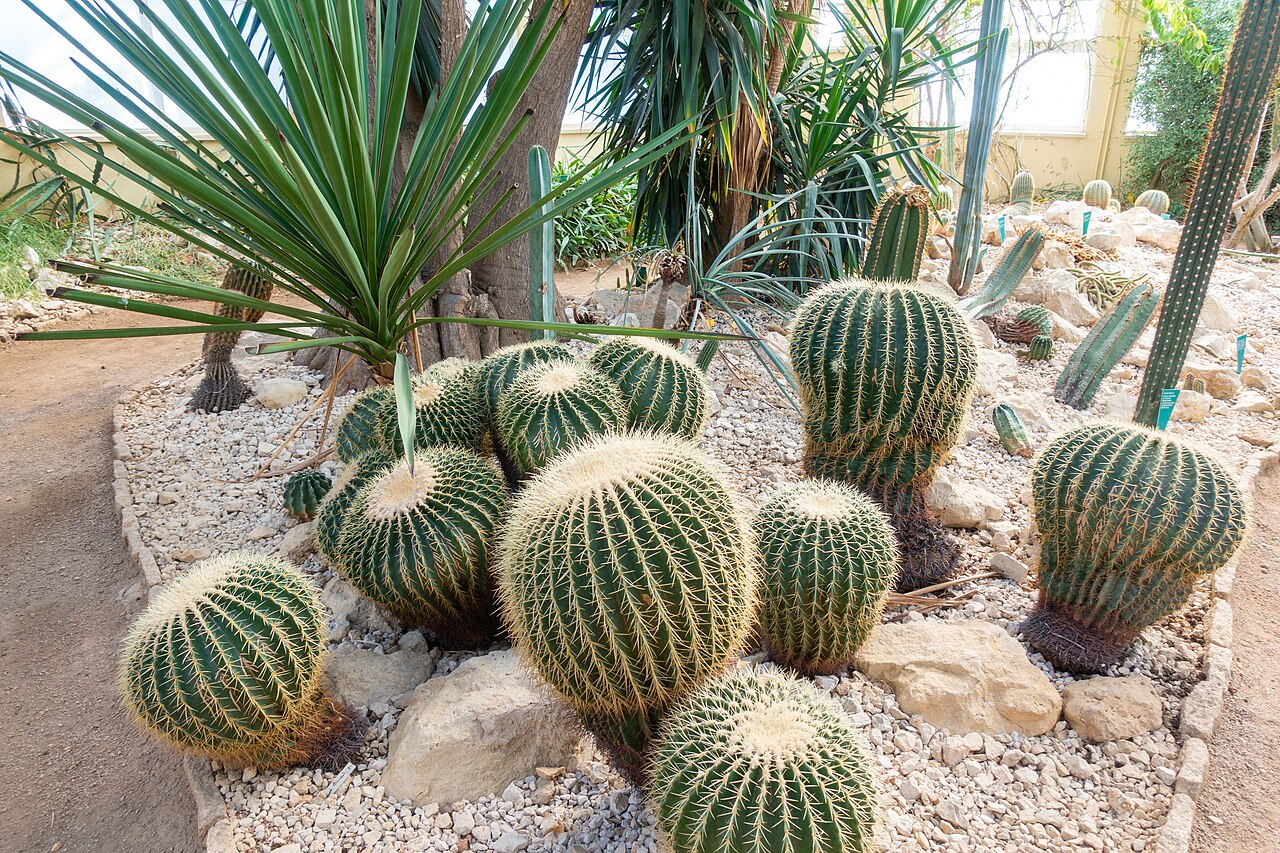
The American greenhouses bring together about 800 species representative of the flora of the Americas, chosen for their ethnobotanical or economic interest. The temperate-humid pavilion stresses the colours of that flora, with aroids, marantas, orchids and bromeliads; the warm pavilion shows crop species and trees of economic importance, tropical fruit trees and a group of palms at its centre; the xerophytic pavilion houses the plants of extremely dry climates, led by cacti and agaves.
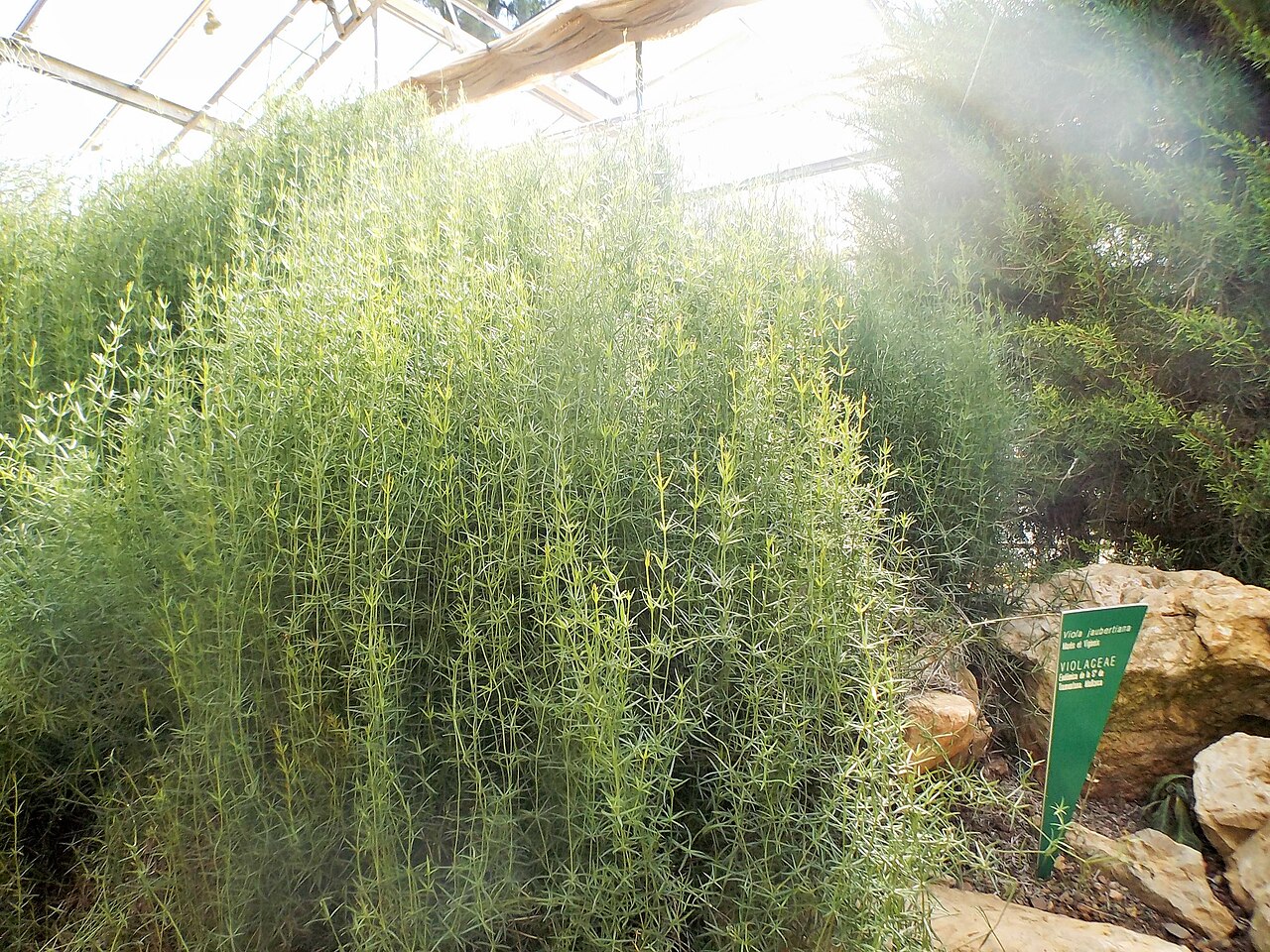
The Central greenhouses keep 130 species of Canary Island flora, presented as the most complete collection of Canarian endemics outside the archipelago: laurel forest and fayal-brezal heath (Laurus azorica, Erica arborea) in the humid module; tabaibal-cardonal scrub, a dragon tree (Dracaena draco) and Canary pine (Pinus canariensis) in the dry module; ferns (Platycerium alcicorne, several Pteris) and rock gardens of Iberian endemics from the Baetic mountains and the Balearic Islands in the third. Two specimens of Ruizia cordata, a tree from Réunion nearly extinct in its native range, grow in the middle; a space is set aside for African succulents of desert habitats and primitive gymnosperms, among them South African Encephalartos. The orchid house displays more than 80 species: around thirty orchids, epiphytic or terrestrial, a dozen Tillandsia, tropical ferns including tree ferns, and more than two dozen species of insectivorous plants.
Visiting
The greenhouses stand at the heart of the garden, around the central plaza, at the end of the botanical school route, which spreads 45 beds of seed plants over some 5,500 m². Allow a good hour for the three groups, and more to combine them with the agricultural school and its olive varieties, the arboretum with its very old fig tree, the rose garden, the Cordoban patio and the touch-and-smell garden. The garden's two museums, ethnobotany and palaeobotany with its 'bosque de piedra' of fossil trunks, round off the outing; the riverside mills, Molino de Martos and Molino de San Antonio, are visited under their own arrangements. The entrance is on Avenida de Linneo, on the bank of the Guadalquivir.
37.87° N, 4.79° W
Greenhouses nearby
More greenhouses — Spain
Do you have a good photo of this greenhouse? Suggest it for this page →
Sources (8)
- jardinbotanicodecordoba.com/invernaderos/
- jardinbotanicodecordoba.com/invernaderos/americanos/
- jardinbotanicodecordoba.com/invernaderos/centrales/
- jardinbotanicodecordoba.com/invernaderos/orquidario/
- jardinbotanicodecordoba.com/tarifas-y-horarios/
- es.wikipedia.org/wiki/Real_Jard%C3%ADn_Bot%C3%A1nico_de_C%C3%B3rdoba
- fundaciondescubre.es/wp-content/exploria-ciencia/22650002/
- wikidata.org/wiki/Q5926489
Affiliate links — booking through Verrière helps fund our research, at no extra cost to you.