Appalachian Cove Forest (Tennessee Aquarium)
Chattanooga, Tennessee

Sources checked October 2026
- Year
- 1992
- Architect
- Cambridge Seven Associates
- Style
- Contemporary architecture, glass pyramidal roof
- Dimensions
- About 12,000 m² (building); forest 560 to 650 m²
- Status
- Open to the public, with the aquarium ticket
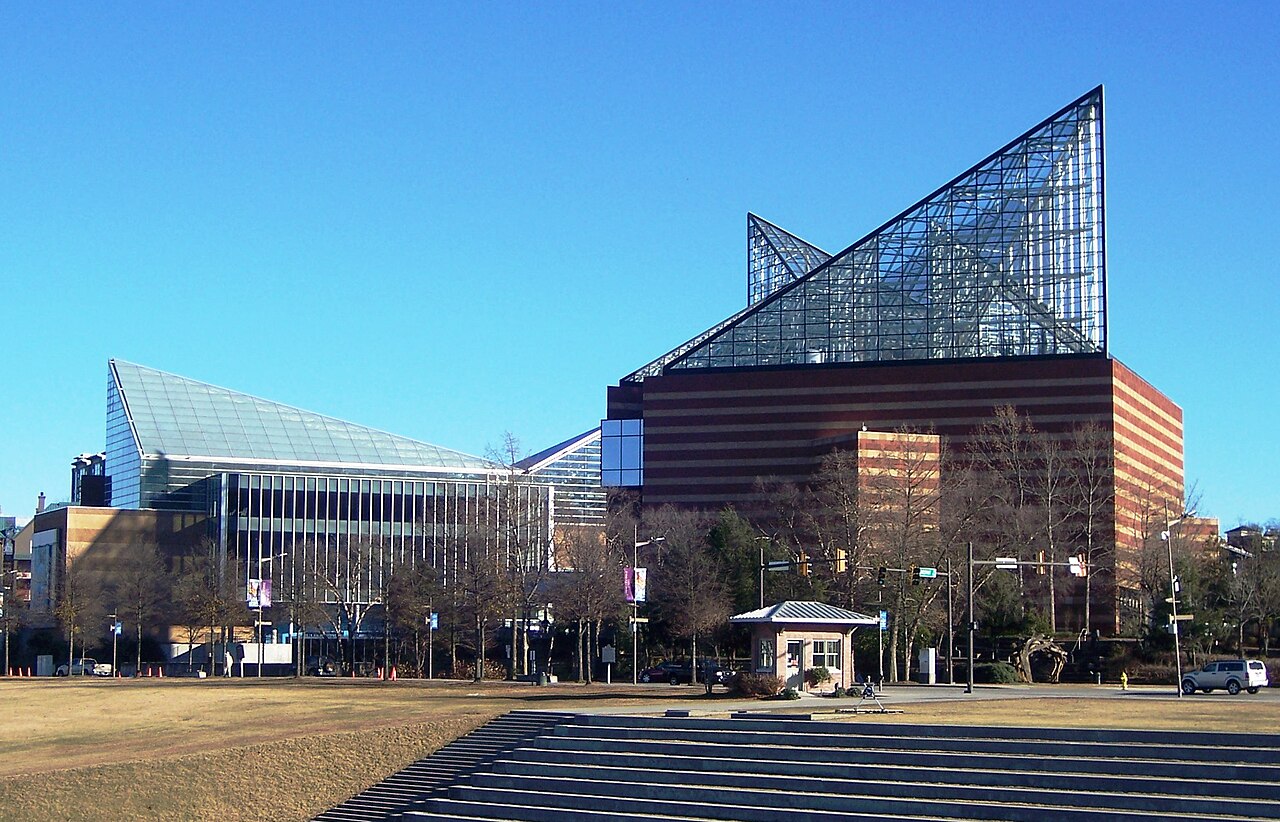
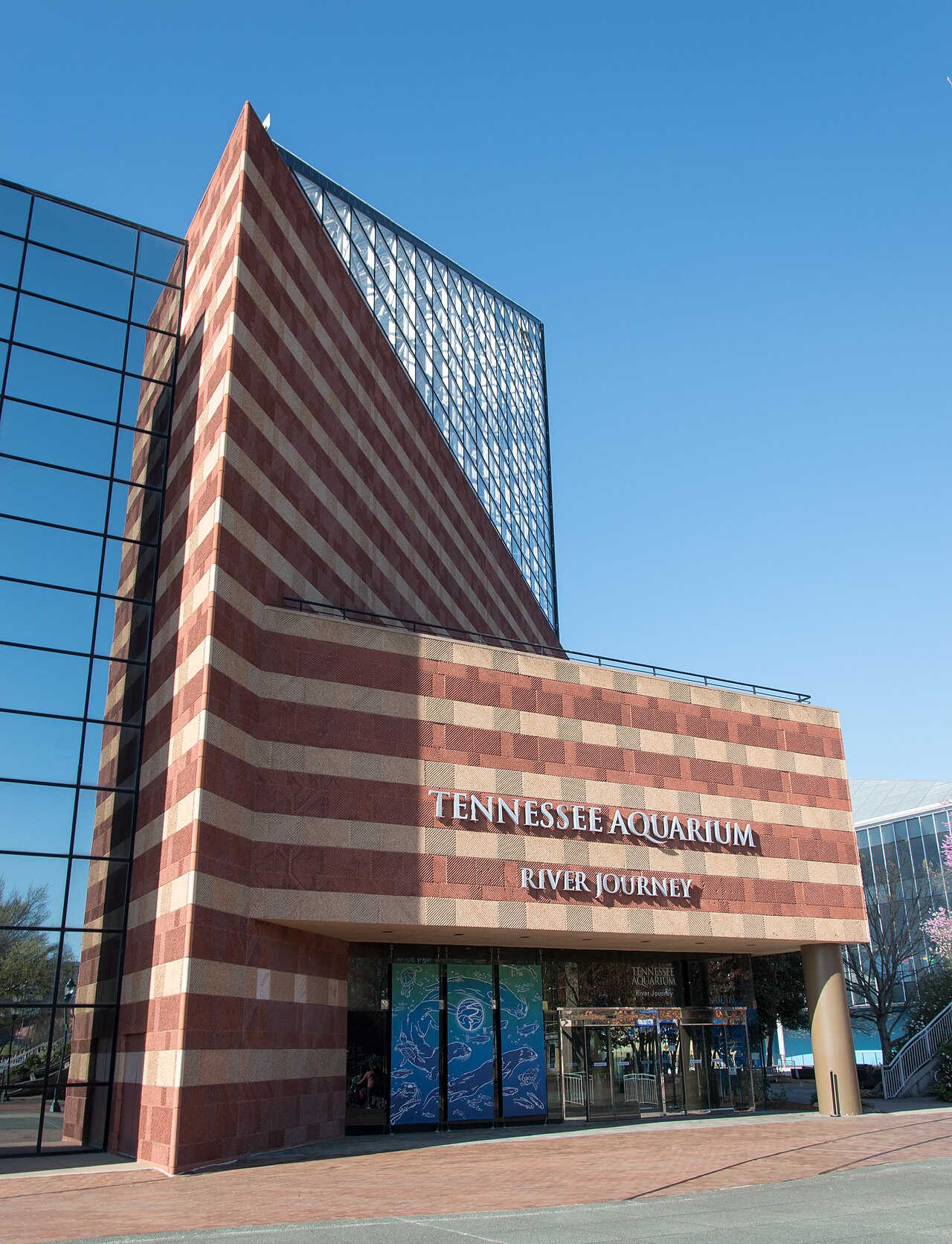
At the top of the River Journey building of the Tennessee Aquarium in Chattanooga, the Appalachian Cove Forest recreates the understory of nearby mountains beneath a glass pyramidal roof. The building opened on 1 May 1992 and was designed by the Boston firm Cambridge Seven Associates; it measures about 12,000 m². The gallery holds more than fifty species of native plants and trees. It is deliberately left outside the aquarium's heating and air-conditioning controls, and its vegetation follows the seasons. The aquarium ticket gives access to both buildings, River Journey and Ocean Journey.
Affiliate links — booking through Verrière helps fund our research, at no extra cost to you.
History
River Journey opened on 1 May 1992. According to the aquarium's own website, it is the first and largest building of the Tennessee Aquarium in Chattanooga. Cambridge Seven Associates of Boston designed the project; Wikipedia credits Peter Chermayeff, then a principal of that firm, with the design of River Journey. Trade press of the period adds that Frank Zaremba, of Lyons/Zaremba in Boston, helped design the exhibits. In 2005 the aquarium was extended with Ocean Journey, designed by Chermayeff, Sollogub and Poole; that wing is a separate building and is not covered by this entry. The Appalachian Cove Forest occupies the upper part of River Journey. Its centre, River Otter Falls, opened in 2014 and replaced a smaller exhibit of North American river otters.
Architecture and engineering
The River Journey building measures about 130,000 square feet, or nearly 12,000 m², according to Wikipedia. Wikipedia compares its floor area with a twelve-storey building, while the trade press of 1992 gives a height equal to twelve storeys. The roof is a pyramidal glass structure about 70 feet (about 21 m) high, according to the 1992 trade article; the aquarium's website describes an “iconic glass peaked roof”. The forest sits in the upper part of the building and is lit by skylights (Wikipedia). The aquarium's site says the forest is meant to mirror mountain conditions at about 3,000 feet (about 900 m). It is deliberately left outside the aquarium's heating and air-conditioning controls. The trade article names the simulation of the normal day and night cycle as the exhibit team's main challenge. The same article gives the forest an area of 6,000 to 7,000 square feet, or 560 to 650 m².
Plant collections
The gallery holds more than fifty species of native plants and trees of the Appalachians. The aquarium's website names rhododendron, Virginia creeper, turtlehead and jewelweed. The plants follow the same seasonal changes as their relatives on the nearby ridges and valleys, and cold winters can occasionally bring ice inside. According to the lead horticulturist profile the aquarium published in 2021, native wildflower seeds are sown in the gallery. The forest also includes free-flying songbirds, native fish and an artificial waterfall, River Otter Falls.
Visiting
The forest is on the top floors of River Journey, the aquarium's first building, whose roof is a landmark of the Chattanooga skyline: the aquarium's website calls it an architectural capstone iconic to the city. According to the visit page, the aquarium ticket covers both buildings, River Journey and Ocean Journey. Ocean Journey, opened in 2005 in the same complex, houses a butterfly garden with free-flying South American species. The forest's plants follow the seasons, with ice sometimes brought inside in cold winters.
35.06° N, 85.31° W
Greenhouses nearby
More greenhouses — United States
Do you have a good photo of this greenhouse? Suggest it for this page →
Sources (6)
Affiliate links — booking through Verrière helps fund our research, at no extra cost to you.