Dobříš Château Orangery (Oranžérie)
Dobříš, Central Bohemian Region

Sources checked October 2026
- Year
- 1760s
- Style
- Rococo orangery with a trompe-l'œil painted north façade and a glasshouse with a glazed, timber-framed front wall
- Dimensions
- Almost 90 m long (north façade)
- Status
- Open to the public in season (April to October; closed for the 2026 season since 11 October); exhibitions
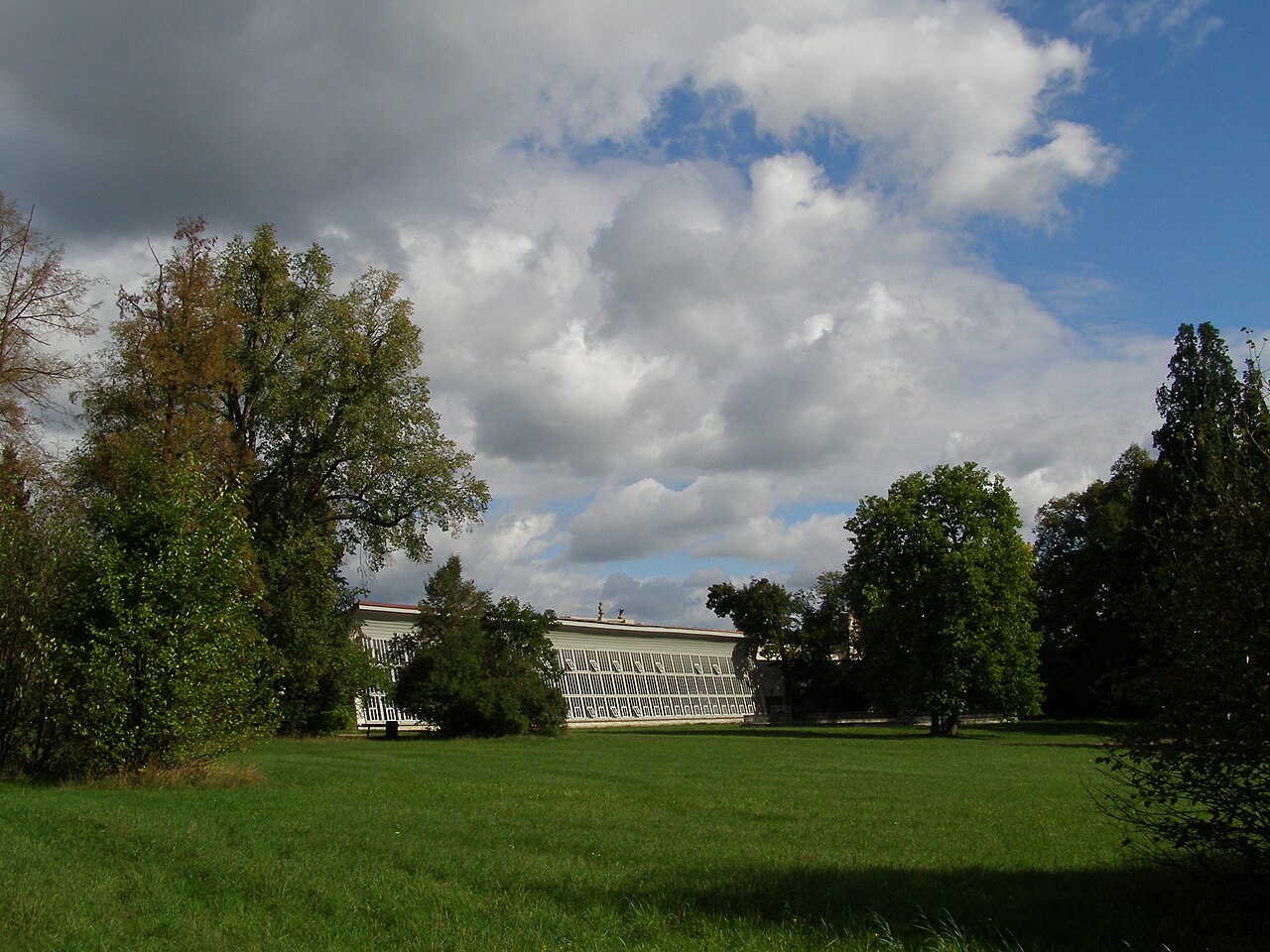
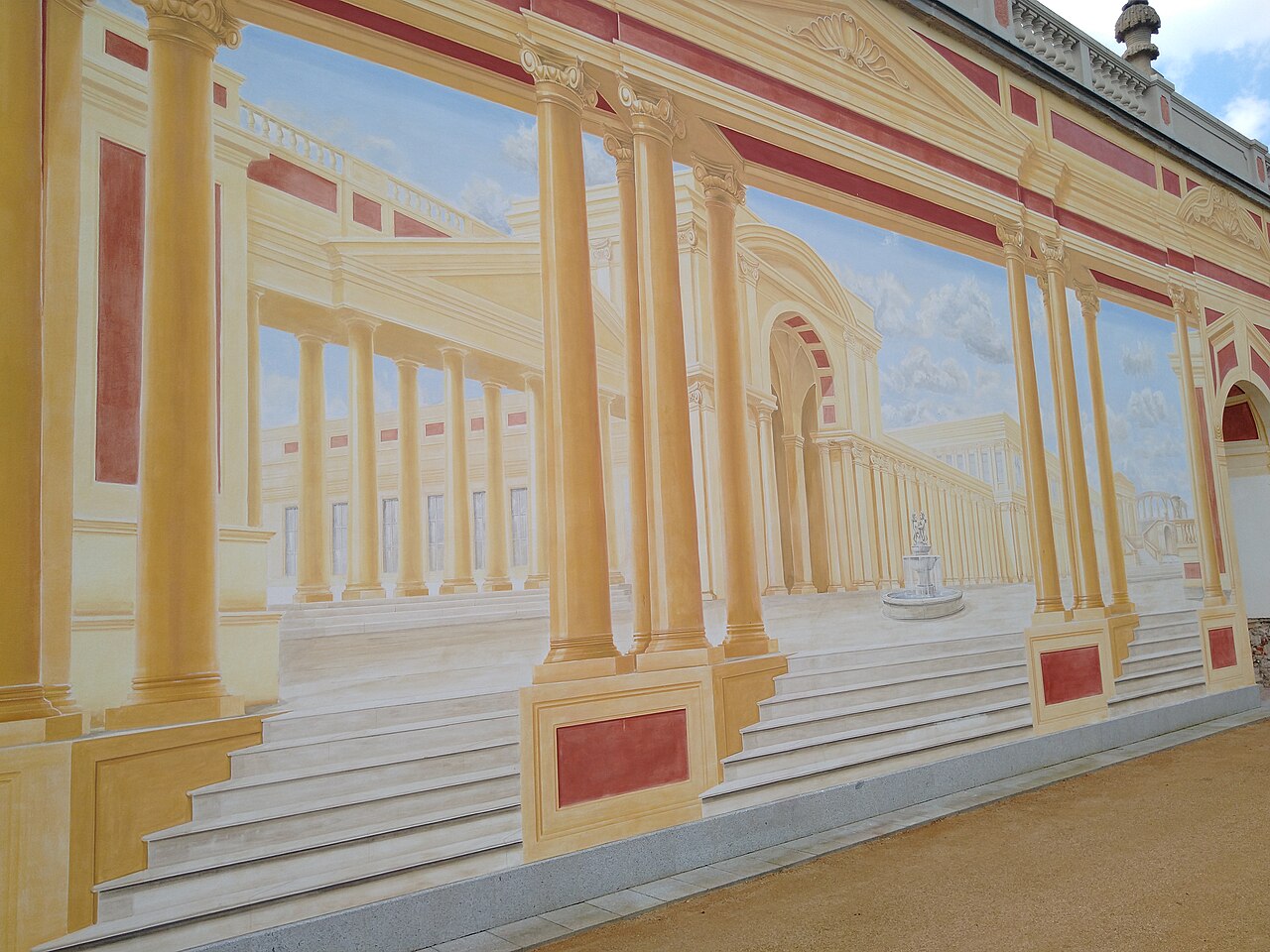
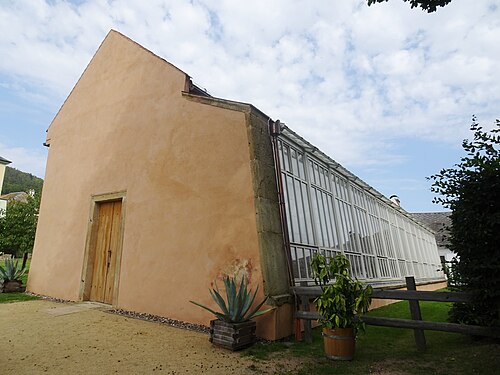
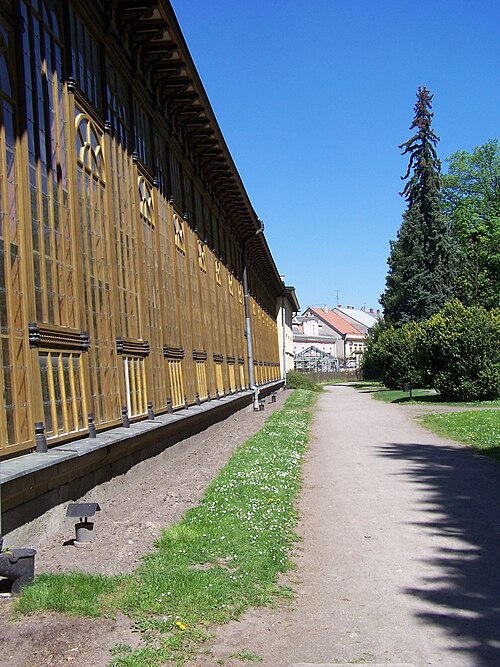
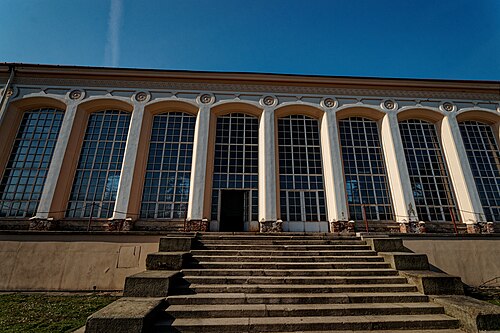
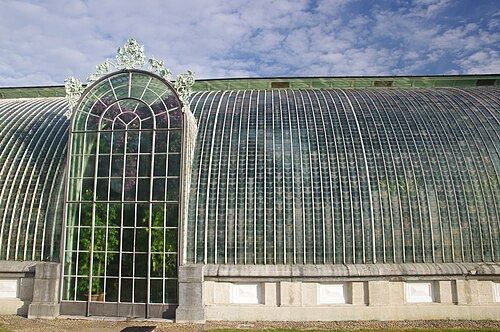
Closing the fourth terrace of the French garden of Dobříš Château in Central Bohemia, the orangery was completed in the 1760s and is almost 90 metres long. Its north façade is covered with painted trompe-l'œil architecture, recreated between 2020 and 2024 at the end of the estate's restoration, which began in 1998. The building, which includes a glasshouse with a glazed front wall, is still used to overwinter palms, oleanders and laurels, and hosts exhibitions on water, château gardening and the sculptor Ignác František Platzer.
Affiliate links — booking through Verrière helps fund our research, at no extra cost to you.
History
Dobříš Château was built between 1745 and 1755 to plans by Stephan Dieudonné, later modified by Anselm Lurago; the French garden that extends south of it rises in terraces from the mid-18th century and ends at the orangery. The orangery was completed in the 1760s and is documented from 1765. A study by the Faculty of Horticulture of Mendel University (September 2021) lists it among the rococo orangeries whose outer plaster carried rich illusionistic decoration, like the one at Jablonné v Podještědí, built in the same period. The château's website, by contrast, speaks of orangery buildings erected "from the mid-17th century" to overwinter fragile plants. The date of the adjoining glasshouse also varies: 1813 according to a 2026 article, between 1816 and 1840 according to the château.
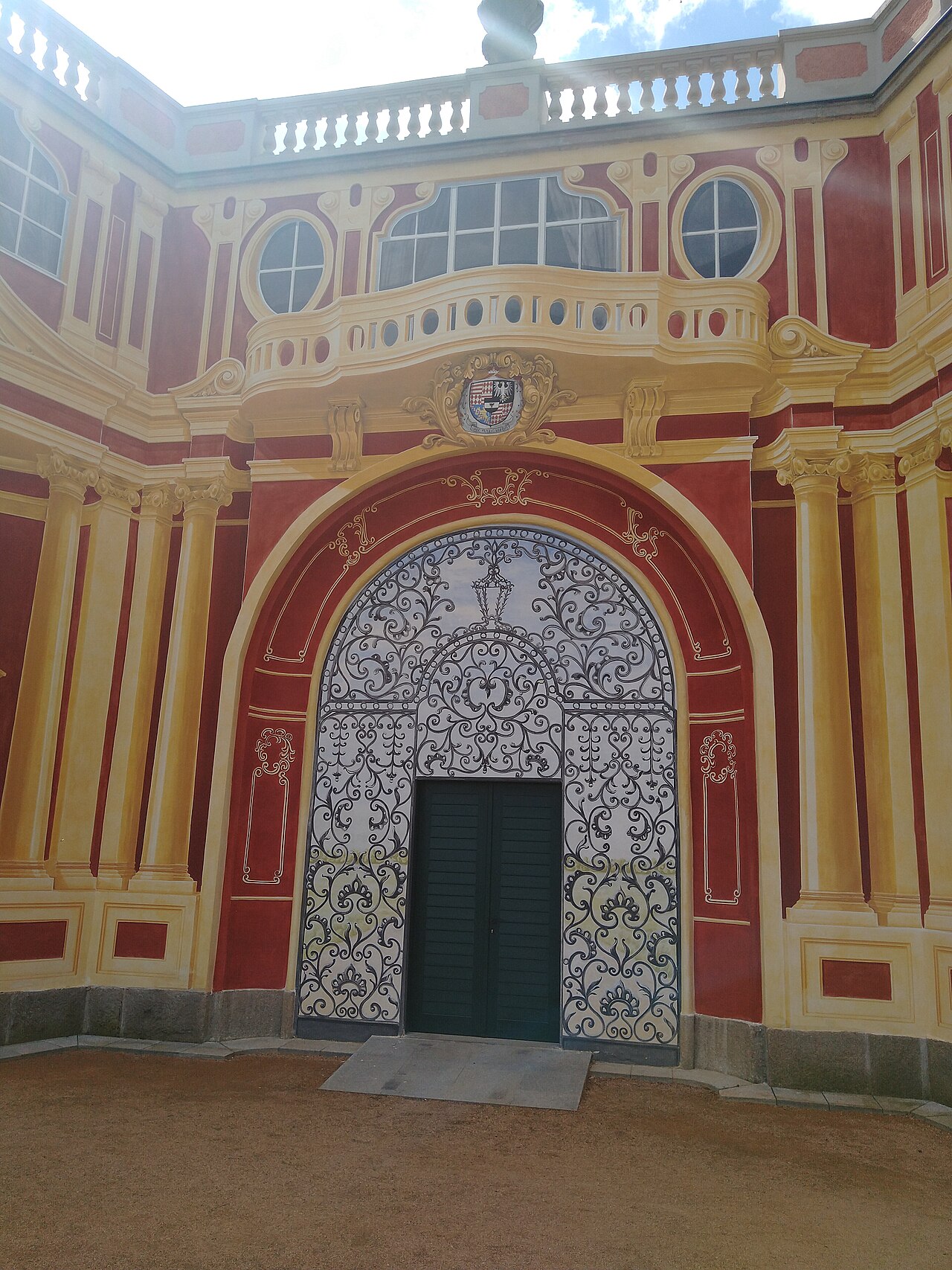
The painting on the north façade, redone in the 1930s and again in the 1970s with unsuitable materials, deteriorated; as early as 1992 specialists concluded that the plaster with its fragments of decoration could no longer be restored, only recreated. The estate, returned to the Colloredo-Mannsfeld family in 1998, was repaired in stages: the château façades, the fountain and Platzer's sculptures, the garden, then the orangery, where the timber frame of the glasshouse front wall, the roofs and the balustraded attic were repaired. The main works ran from 2017 to 2022 and were completed in 2024. Master painter Milan Strnad and his team carried out most of the painting in 2020-2022. The project cost almost 98.6 million crowns, 85% of it covered by the EU-funded regional programme IROP, and the work won the Patrimonium pro futuro award of the National Heritage Institute (NPÚ), reported in the press in May 2026.
Architecture and engineering
The orangery closes the composition of the French garden on its fourth terrace and separates the formal park from the English-style park. Its north façade, almost 90 metres long, replaces the usual architectural articulation with a painted illusion: trompe-l'œil balconies, windows and staircases, with light effects, around niches holding statues of Meleager, Apollo, Artemis and Aphrodite. The château presents it as the largest painted outdoor decoration in Central Europe. The closed central section has kept the original Baroque painting, which served as the model for the recreation.
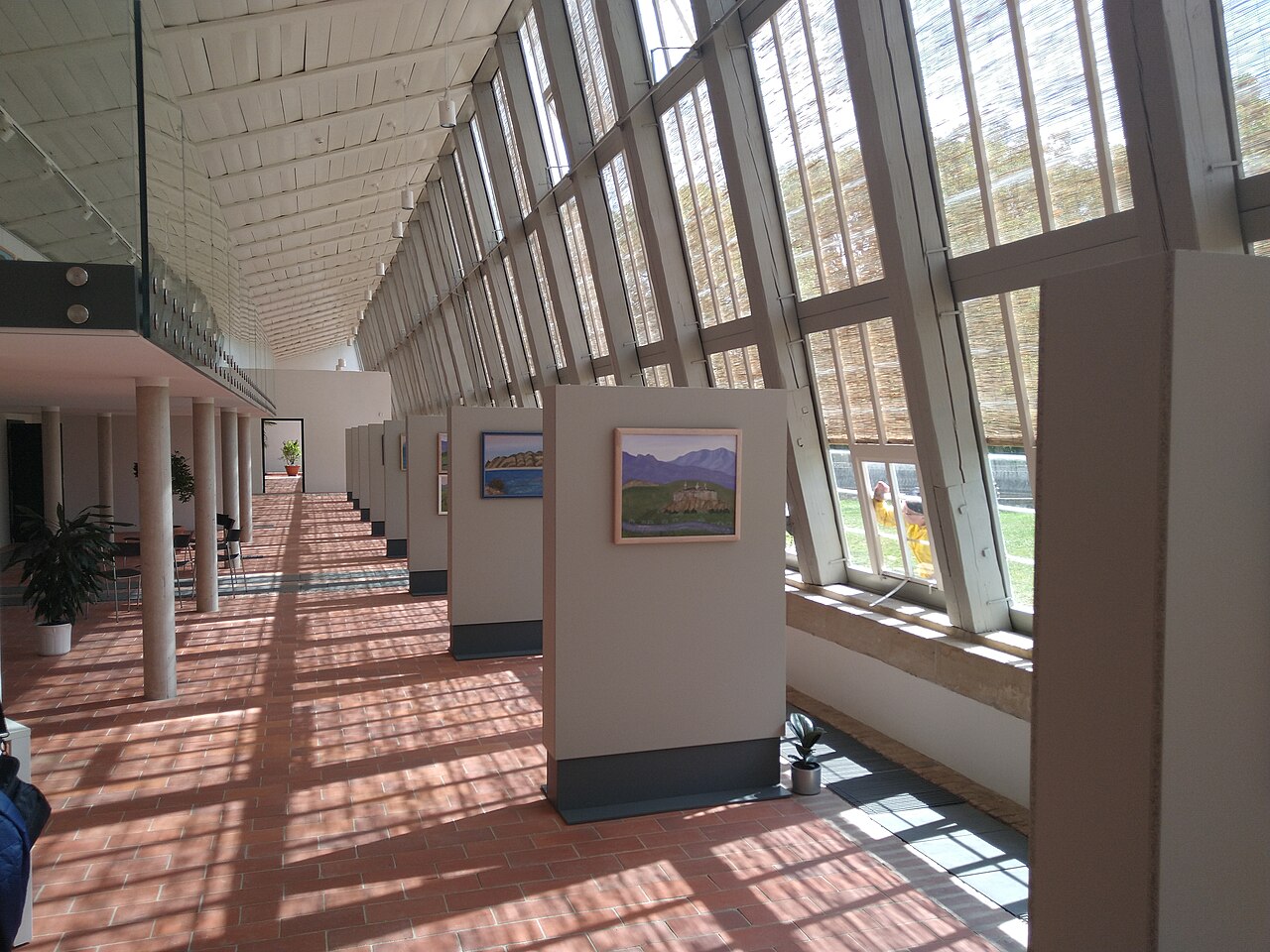
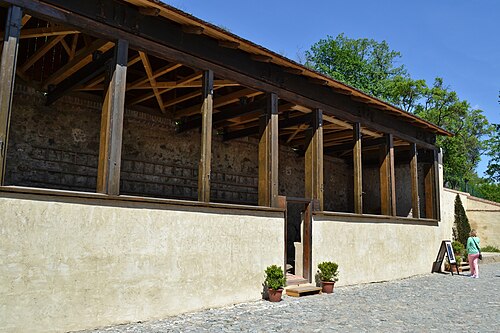
According to the Mendel University study, the plan already includes a pronounced curve, and the building belongs to the type of orangeries with one glazed side crowned by a so-called "swan-neck" cornice. The study rates it "adapted": the main parts of the original construction survive or have been well restored, but some details were lost. During the restoration the timber frame of the glasshouse front wall was repaired, along with the roofs and the attic, and the brick heating channels were brought back into use. A historic canal runs beneath the building and still feeds the fountain of the Watering of the Horses of Helios (Napájení Heliových koní). Inside, a winter garden opens onto the English park through large glazed windows.
Plant collections
The orangery still serves its original purpose: palms, oleanders and laurels spend the winter there before returning to the château courtyard for the summer. Citrus trees, once grown on site, are on show, together with, more recently, exotic birds. The exhibition "Zámecké zahradnictví" (château gardening) traces the history of growing exotic plants and orange trees in Europe.
The building, now mainly a venue for exhibitions and cultural events, also houses an interactive exhibition on water, a gallery devoted to Zdeněk Miler's mole, the exhibition "Tajuplný les" on the forest and on the forests managed by the owners, and an exhibition on the Baroque sculptor Ignác František Platzer, author of the sculptural group on the garden fountain.
Visiting
The orangery is visited together with the two-hectare French garden, laid out on five terraces, and the château. It opens only in season, from April to October (until 11 October in 2026); the French garden stays accessible longer, without the orangery, on winter hours. The English park, just under 30 hectares on both banks of the Huťský pond, is open all year and continues the walk to the south.
The winter garden and the painted façade will mainly interest lovers of garden architecture; the exhibitions on water, the forest and Miler's mole are aimed at families.
49.78° N, 14.18° E
Greenhouses nearby
More greenhouses — Czech Republic
Do you have a good photo of this greenhouse? Suggest it for this page →
Sources (8)
- zamekdobris.cz/oranzerie/
- zamekdobris.cz/parky/
- zamekdobris.cz/oteviraci-doba/
- npu.cz/cs/pamatkova-pece/sluzby-pro-verejnost/opravujete-pamatku/inspirujte-se/121447-obno
- pamatkovykatalog.cz/zamek-dobris-2343895
- strednicechy.rozhlas.cz/oranzerie-zamku-dobris-je-nejvetsi-stredoevropskou-stavbou-s-iluzo
- estav.cz/cz/14600.oceneni-npu-pro-oranzerii-na-zamku-dobris-iluzivni-malba-je-celosvetovy-
- ubz.zf.mendelu.cz/wcd/w-zf-ubz/projekty/naki-dg18p02ovv007/nmap-historicke-oranzerie/nmap0
Affiliate links — booking through Verrière helps fund our research, at no extra cost to you.