Edvard Andersons växthus (Edvard Anderson Glasshouse)
Bergianska trädgården, Stockholm

Sources checked September 2026
- Year
- 1995
- Architect
- Per-Rune Semrén
- Style
- Contemporary glasshouse with a stainless-steel frame and Pilkington Planar glazing
- Dimensions
- 3,000 m², of which 1,600 m² open to visitors; 14 m high
- Status
- Open to the public all year
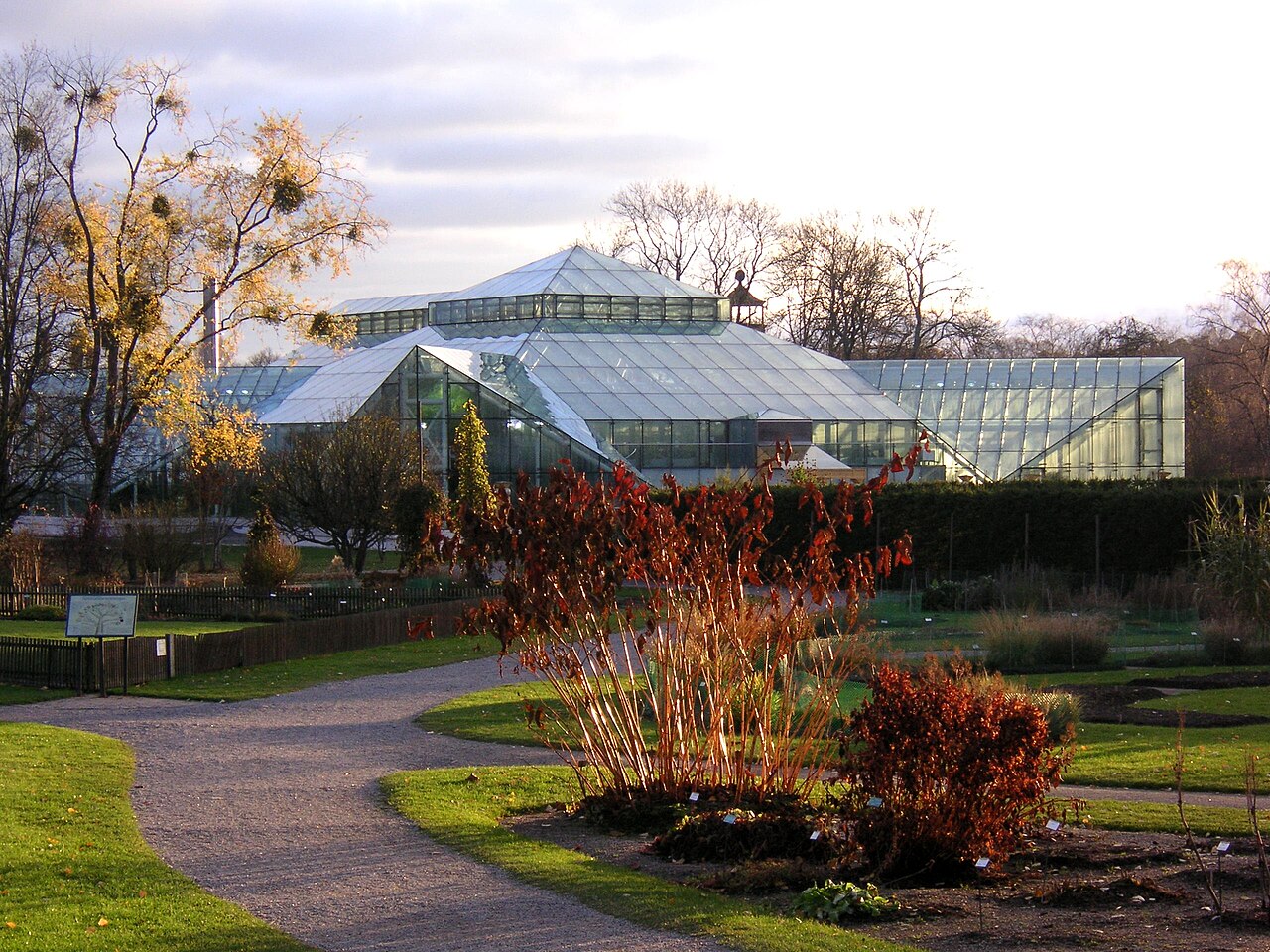
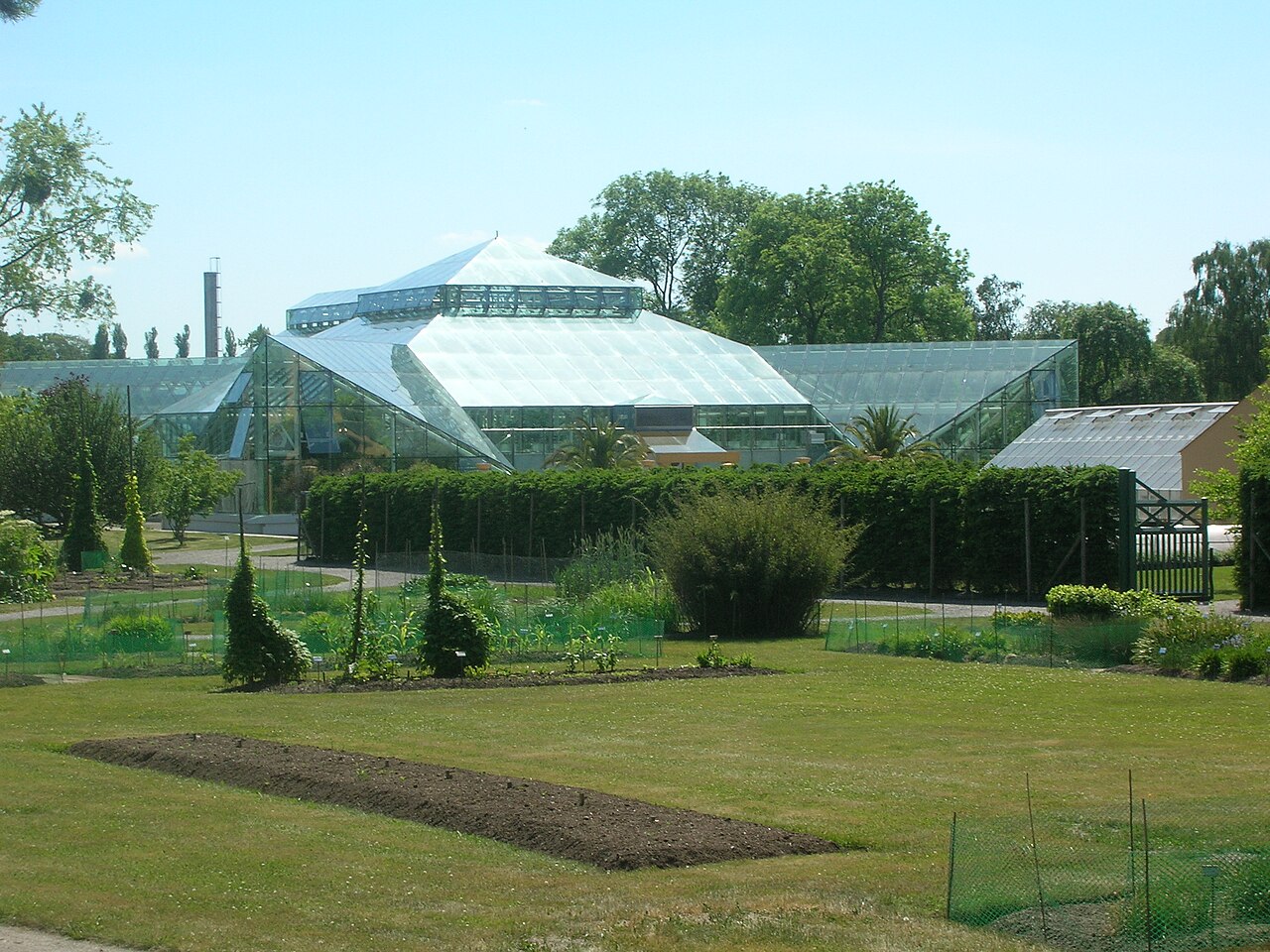
The largest building in the Bergius Botanic Garden owes its existence to the glass wholesaler Edvard Anderson (1865-1936), who left his fortune to create a winter garden devoted to Mediterranean-climate flora. Designed by Per-Rune Semrén for the Royal Swedish Academy of Sciences, it was inaugurated on 7 June 1995 by King Carl XVI Gustaf. Across 3,000 m², 1,600 m² of them open to visitors and up to 14 m high, a stainless-steel frame carries Pilkington Planar insulating glass; the building won the European Steel Design Award in 1995.
Affiliate links — booking through Verrière helps fund our research, at no extra cost to you.
History
The glasshouse bears the name of Edvard Anderson, born in Stockholm in 1865, the son of a sail and compass maker. Setting up on his own in 1898, he founded a glass wholesale business that became one of the largest in Sweden. A keen plant lover, he often stayed on the Italian Riviera to enjoy its climate and vegetation. When he died unmarried and childless in 1936, he left his fortune to the Bergius foundation of the Royal Swedish Academy of Sciences to establish and run a winter garden in which only plants of the Mediterranean climate and comparable climates would be represented. His wishes went into detail: a temperature of about 15-16 °C and a small café.
The project took almost sixty years to come about. Commissioned by the Academy from the architect Per-Rune Semrén, the glasshouse was inaugurated on 7 June 1995 by King Carl XVI Gustaf and won the European Steel Design Award the same year.
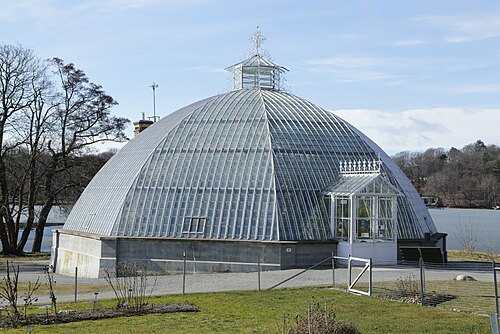
It stands in the Bergius Botanic Garden, which grew out of the Bergielund estate bought in 1759 by the brothers Bengt and Peter Jonas Bergius and has been at Frescati since 1885. Management is shared: the Bergius foundation runs the glasshouse, while Stockholm University is responsible for its tropical sections, the Victoriahuset and the outdoor collections.
Architecture and engineering
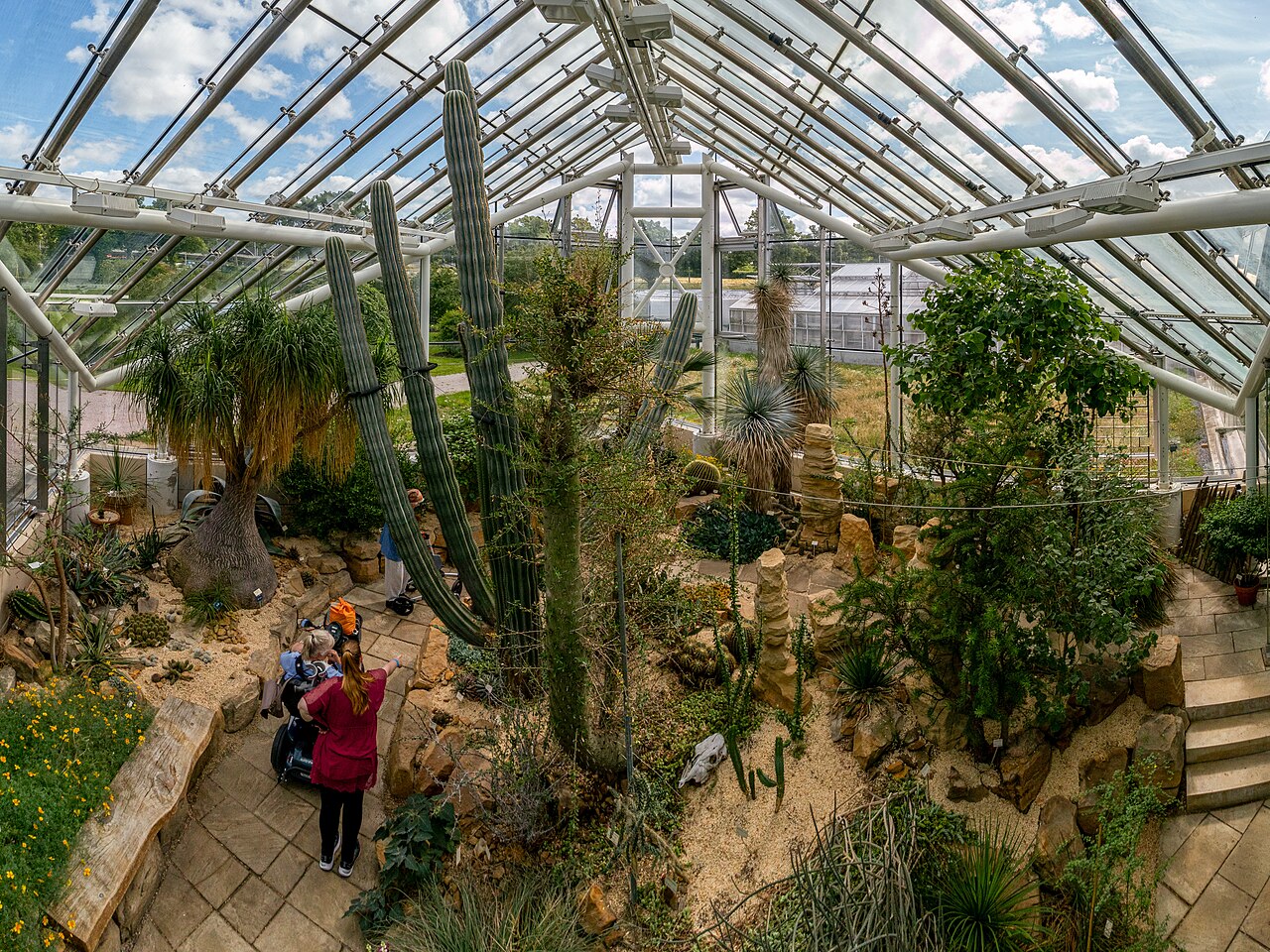
The largest building in the garden, the glasshouse stands at its centre. It covers 3,000 m², 1,600 m² of which are open to visitors, and its roof rises to 14 metres. The garden specifies a stainless-steel frame carrying a Pilkington Planar glazing system of 32 mm insulating glass. This construction earned the building the European Steel Design Award in 1995.
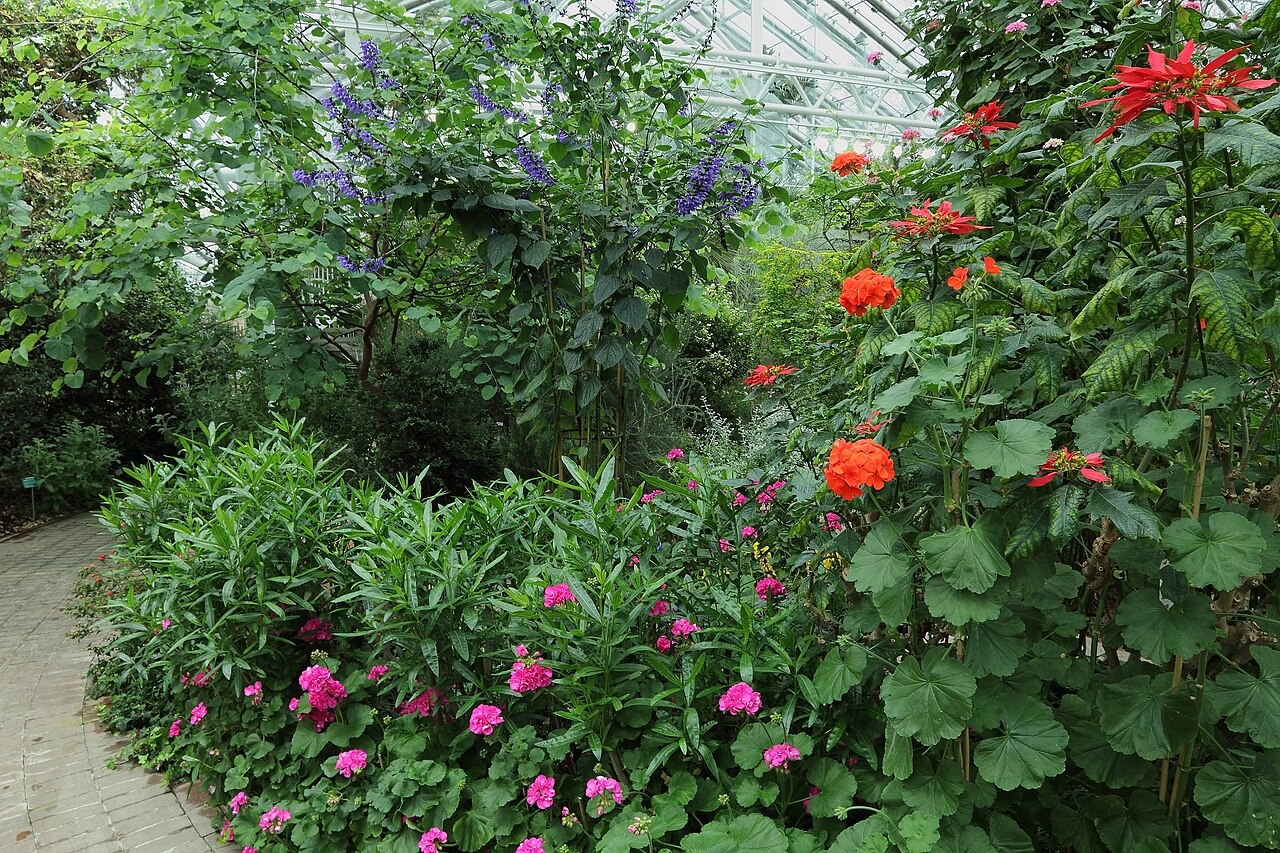
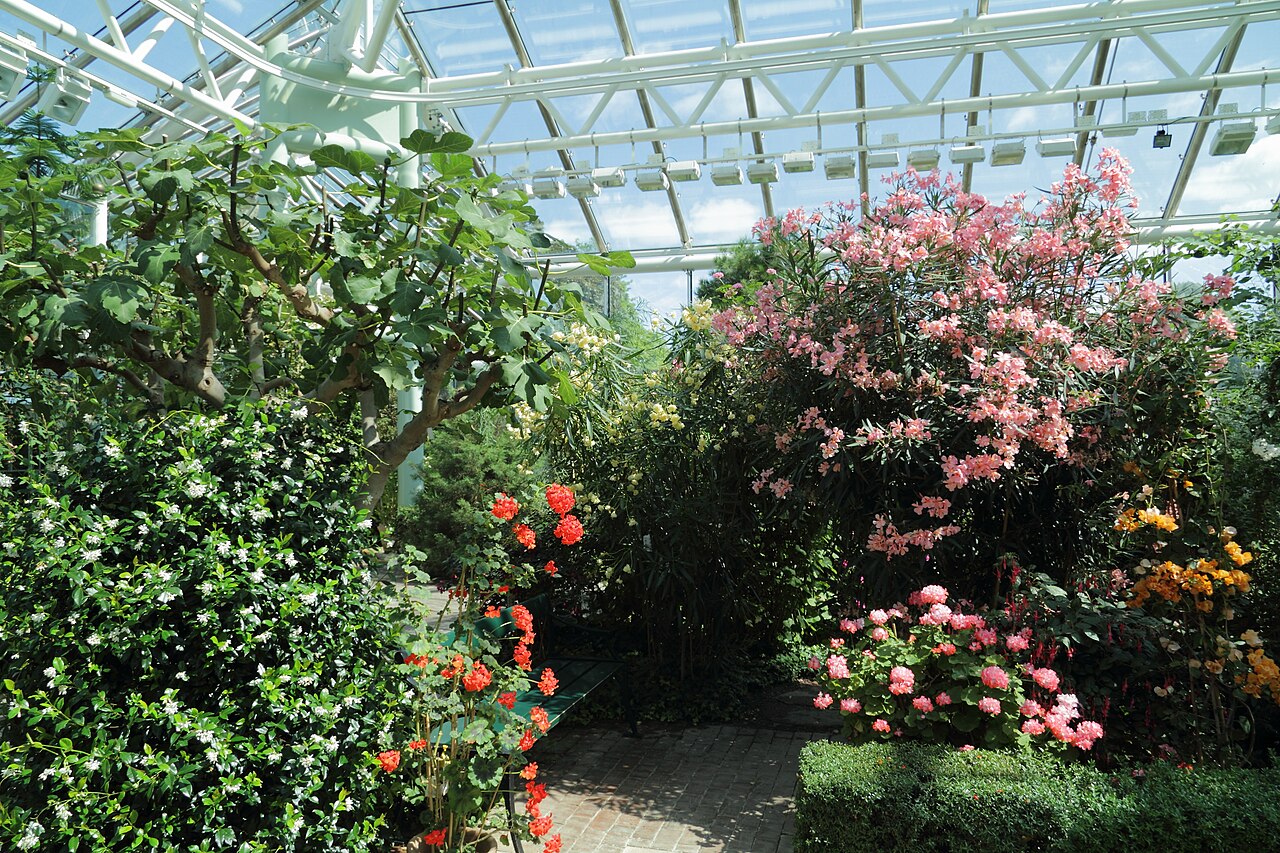
At its heart is a large central hall where Mediterranean flora is planted in landscapes of rocks and terraces. In the middle lies a paved courtyard with a reflecting pool ringed by columns, planted with olive, fig, lemon and orange trees. Themed rooms with climates of their own complete the building.
The climate is run by a specialised computer system drawing on heat pumps and district heating. The landscape design is the work of the architect Ulla von Krusenstierna and the botanist Henni Wanntorp, who used stone typical of each region represented.
Plant collections
True to the donor's will, the glasshouse is devoted first of all to Mediterranean-climate floras, with tropical rooms added. The Mediterranean hall evokes the maquis with rockroses, broom and rosemary, along with oak and laurel woodland. The California room shows chaparral and desert plants from California and Mexico, including the saguaro and jojoba, alongside a range of succulents.
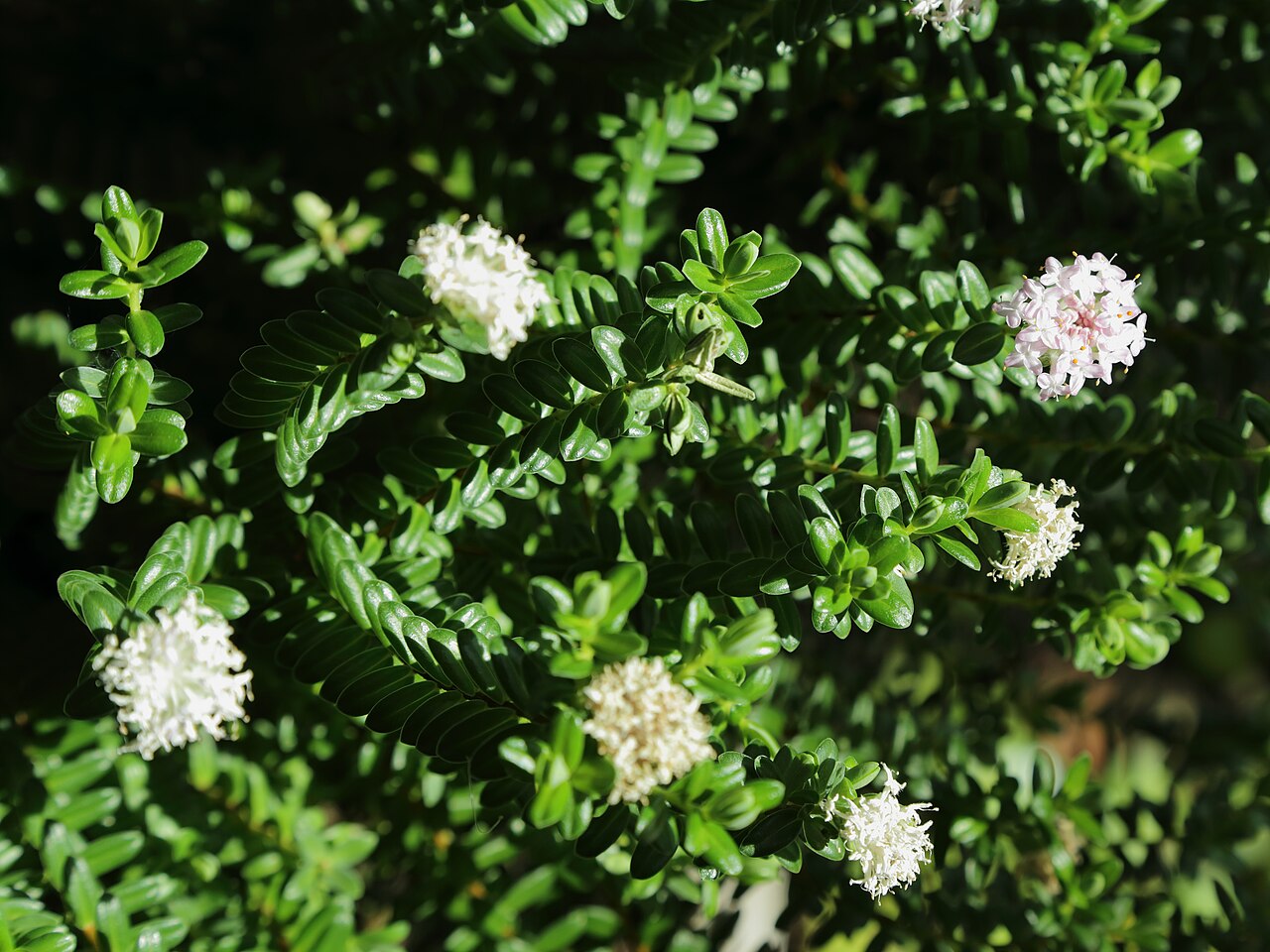
The Australia room is given over to south-western Australia, a region with more than 8,000 plant species, and includes members of the protea and myrtle families and grass trees (Xanthorrhoea). The South Africa room evokes the tip of the continent, home to 8,550 species, with its fynbos and succulents. In the fern room, light filters through tall tree ferns and epiphytes of temperate rainforests.
The tropical sections comprise a palm hall, with several useful species as well as bamboos and bananas, and a tropical room showing the cycad Cycas circinalis, pitcher plants (Nepenthes), the Venus flytrap (Dionaea muscipula) and orchids.
Visiting
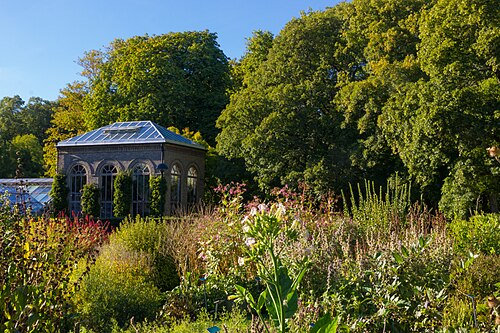
The glasshouse stands at the centre of the Bergius Botanic Garden at Frescati, in the north of Stockholm on the shore of Brunnsviken. It is open all year, which makes it the mainstay of a winter visit, whereas the neighbouring Victoriahuset opens only from May to September; the outdoor garden is free to enter. The garden shop is in its entrance.
Universitetet station, on the red metro line and the Roslagsbanan railway, and bus routes 50 and 540 serve the site. A visit can continue at the old orangery, now a restaurant and café, and around the Japanese pond laid out in 1991 for the Bergius foundation's bicentenary. The garden offers guided tours and activities through the year.
59.37° N, 18.05° E
Greenhouses nearby
More greenhouses — Sweden
Do you have a good photo of this greenhouse? Suggest it for this page →
Sources (7)
- su.se/enheter/bergianska-tradgarden/i-tradgard-och-vaxthus/edvard-andersons-vaxthus/om-edv
- su.se/enheter/bergianska-tradgarden/i-tradgard-och-vaxthus/edvard-andersons-vaxthus
- su.se/enheter/bergianska-tradgarden/besok-oss/besoksinformation
- sfv.se/vara-fastigheter/sverige/stockholms-lan/mark-och-park/bergianska-tradgarden
- sv.wikipedia.org/wiki/Edvard_Andersons_v%C3%A4xthus
- sv.wikipedia.org/wiki/Bergianska_tr%C3%A4dg%C3%A5rden
- openstreetmap.org/way/4880162
Affiliate links — booking through Verrière helps fund our research, at no extra cost to you.