Fjärilshuset Haga Ocean (Haga trädgård glasshouses)
Solna, Stockholm County

Entry updated on October 5, 2026
- Year
- 1989
- Architect
- Unknown
- Style
- Range of nursery glasshouses around a 1917 winter garden
- Dimensions
- Over 5,000 m²
- Status
- Open to the public
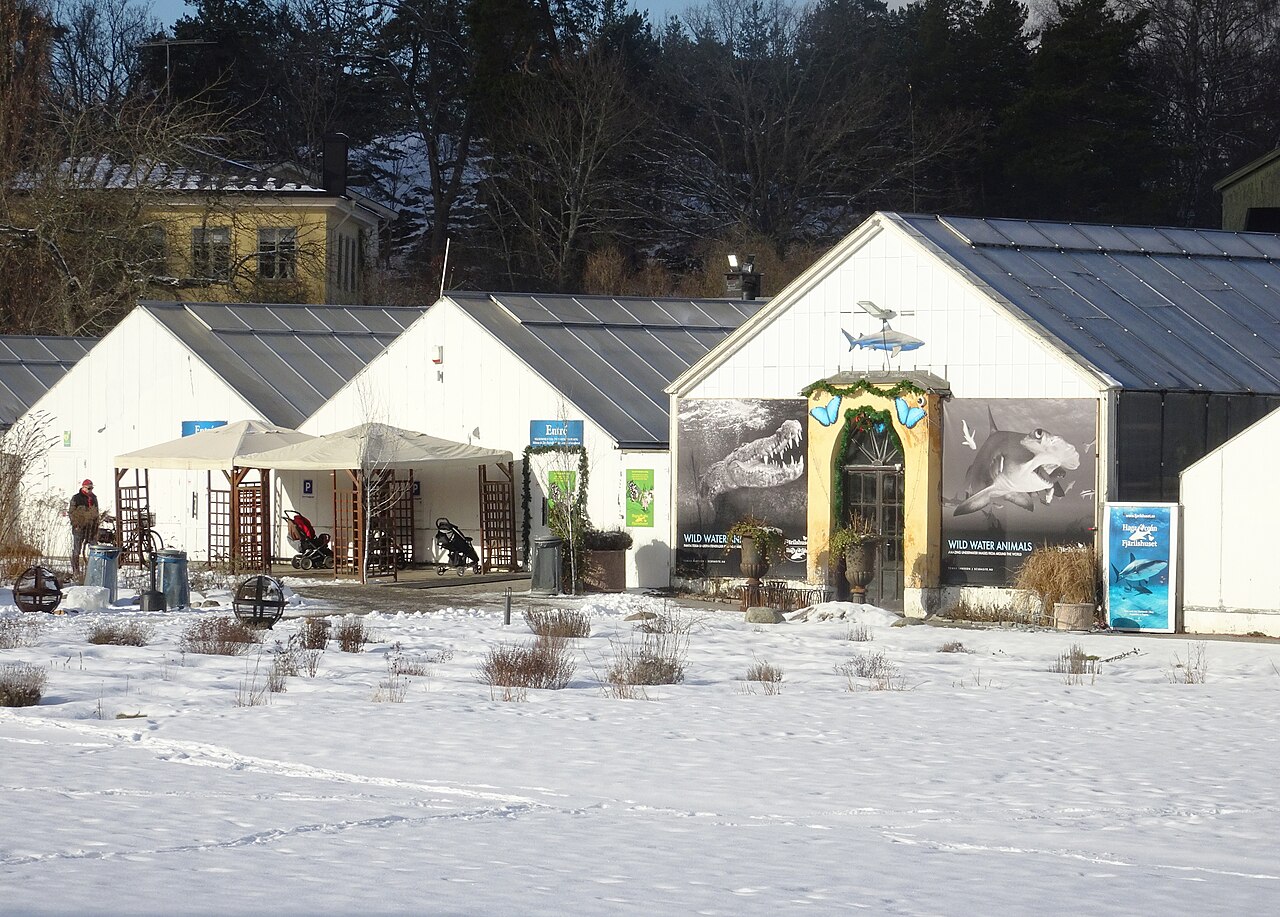
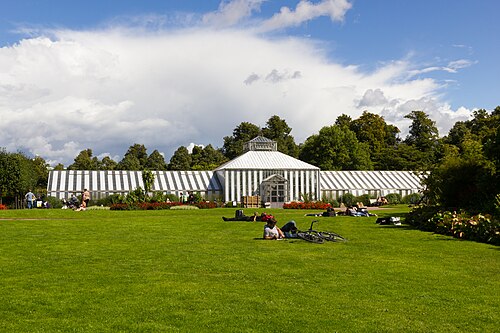
At the northern end of Haga Park in Solna, the Butterfly House has occupied the glasshouses of Haga trädgård since 1989; the garden was founded by Gustav III in 1785 as a kitchen garden for the royal household. At its centre stands the winter garden built in 1917 by the NK department store and described as Stockholm's oldest. Kept at 25 °C all year, the glasshouses hold hundreds of free-flying tropical butterflies, frogs and turtles, and since the opening of Haga Ocean a 30-metre aquarium with reef sharks.
Affiliate links — booking through Verrière helps fund our research, at no extra cost to you.
History
1 min
Haga trädgård was founded in 1785 by King Gustav III, who intended it to become the kitchen garden of the royal household; a palace planned about 300 metres away was never built for lack of funds. During the First World War the NK department store took over the beds to supply Stockholm with fresh vegetables, and in 1917 it had a winter garden built, often described as the oldest conservatory in the capital. From 1933 to 1989 the City of Stockholm ran the nursery, growing flowers for official civic use.
In 1989 Stephen and Marie Fried bought the buildings from the city, while the National Property Board kept the land, and opened Fjärilshuset, the Butterfly House. Stephen Fried, an Austrian, had already opened several butterfly houses at home and abroad, and the new attraction was an immediate success. In 2007 it was sold to Mikael Odell and Christer Fredriksson; Odell, who had previously worked on setting up the Universeum in Gothenburg, has run the business since 2006 according to the official site. Later years brought a large aquarium, Haga Ocean, and outdoor butterfly gardens laid out in 2019, while the site is being restored step by step to reflect its historical continuity.
Architecture and engineering
1 min
Fjärilshuset is not a single building but a run of glasshouses built over time for the Haga trädgård nursery. At the centre of the range stands the 1917 winter garden, the most imposing structure, put up while NK was running the estate. The other glasshouses on either side have been turned into tropical habitats; the furthest ones bear the name Bellman, after the poet whose well-known song celebrates the butterflies of Haga.
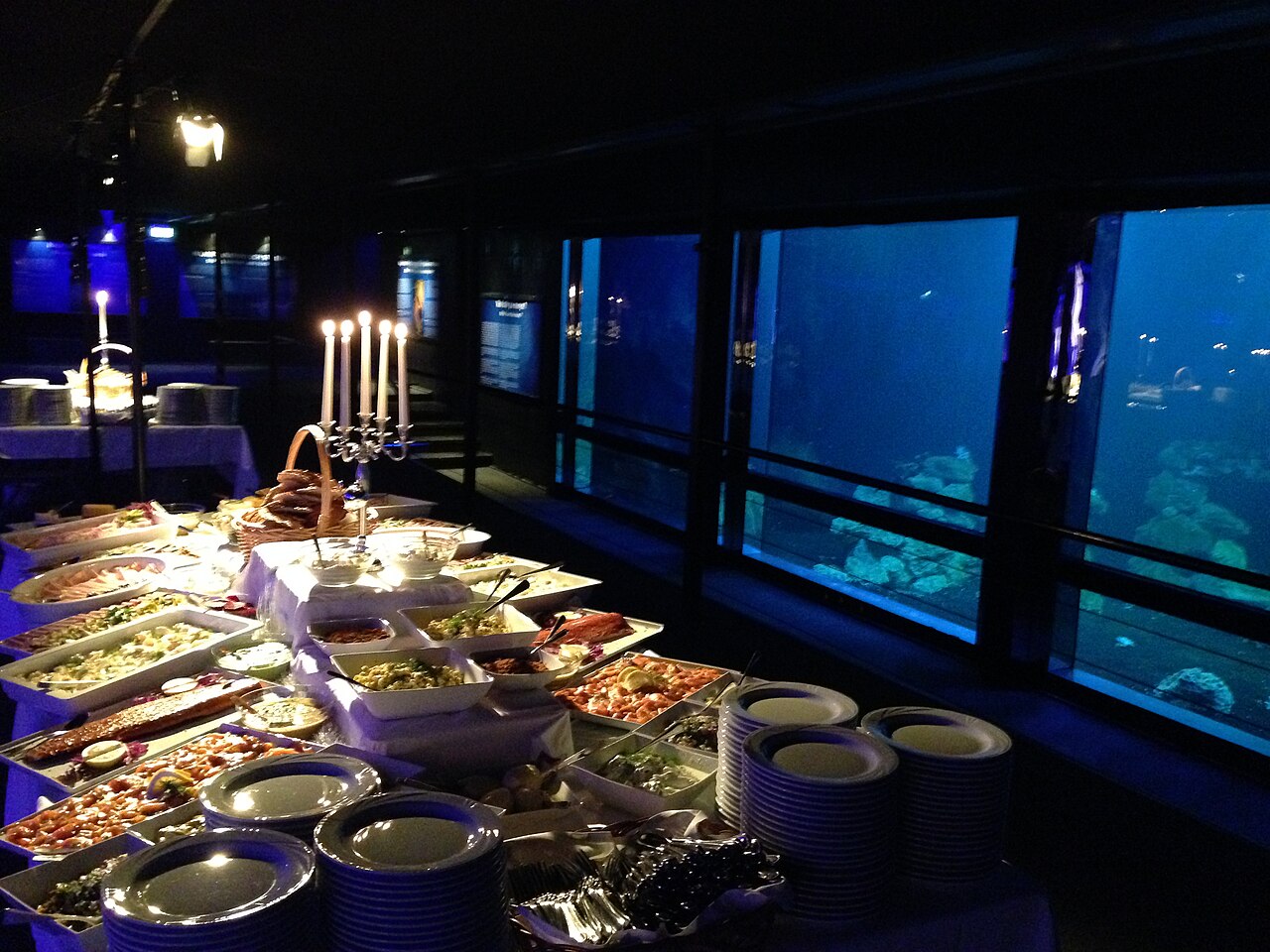
The complex covers more than 5,000 m². The butterfly houses are kept at no less than 25 °C day and night, with high humidity, so that the insects can complete their entire life cycle. In the winter garden and other glasshouses, ponds and large glass-sided aquariums have been set among the plantings. The most striking element is the Haga Ocean tank: 30 metres long, it holds 1.2 million litres of water. None of the sources consulted names an architect for the glasshouses.
Plant collections
1 min
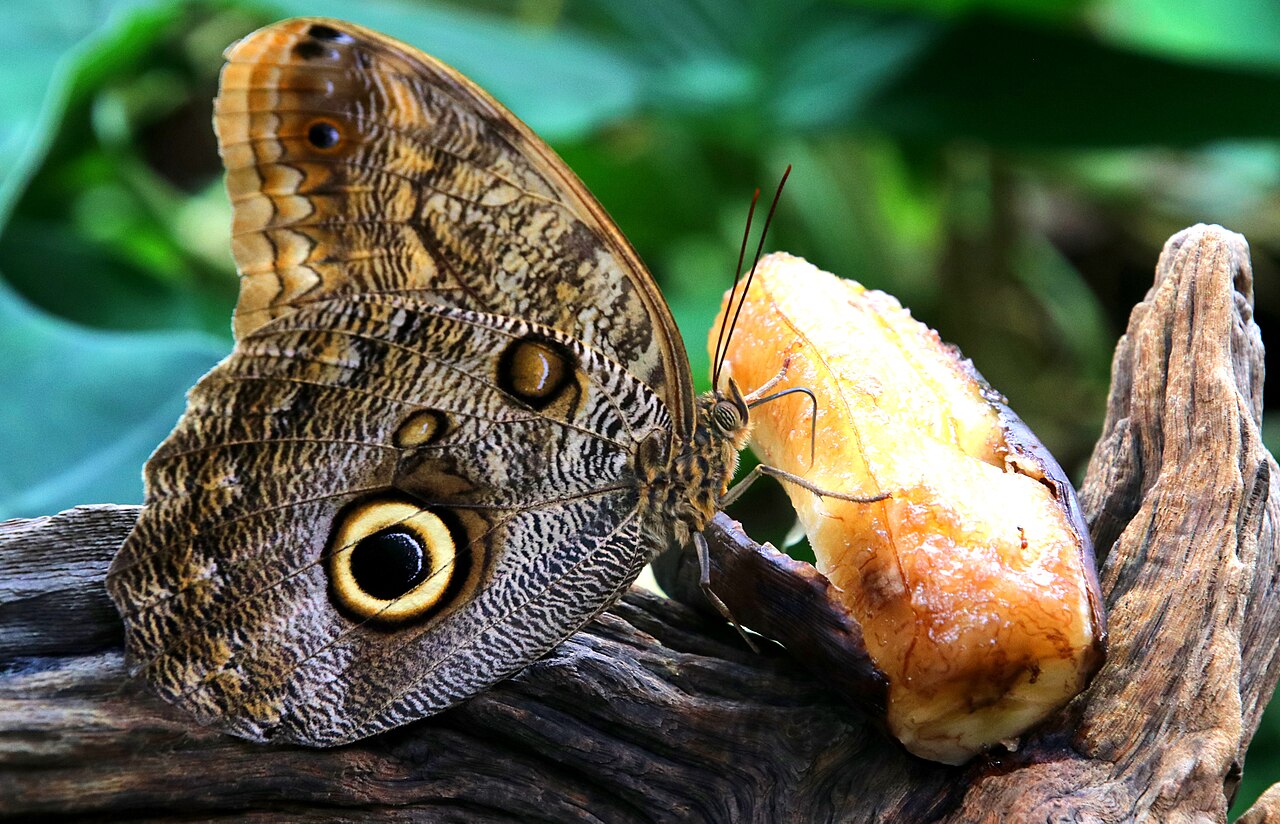
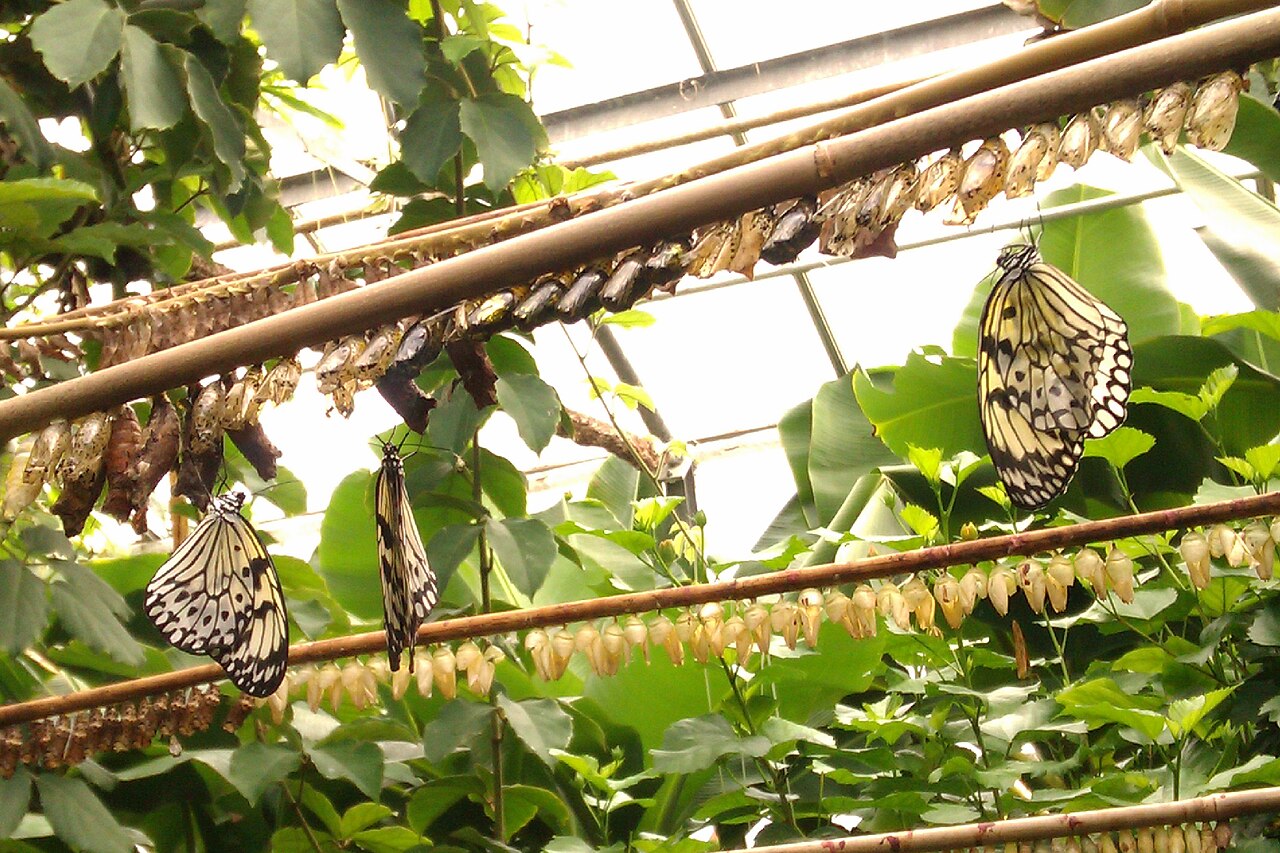
Butterflies remain the main draw. In 2009 the newsletter of the Friends of Haga-Brunnsviken counted more than 700 individuals of some 250 species from around the world over a year, among them the blue morpho from South America; Swedish Wikipedia now mentions up to a thousand free-flying butterflies. Visitors can watch pupae and see adults emerging.
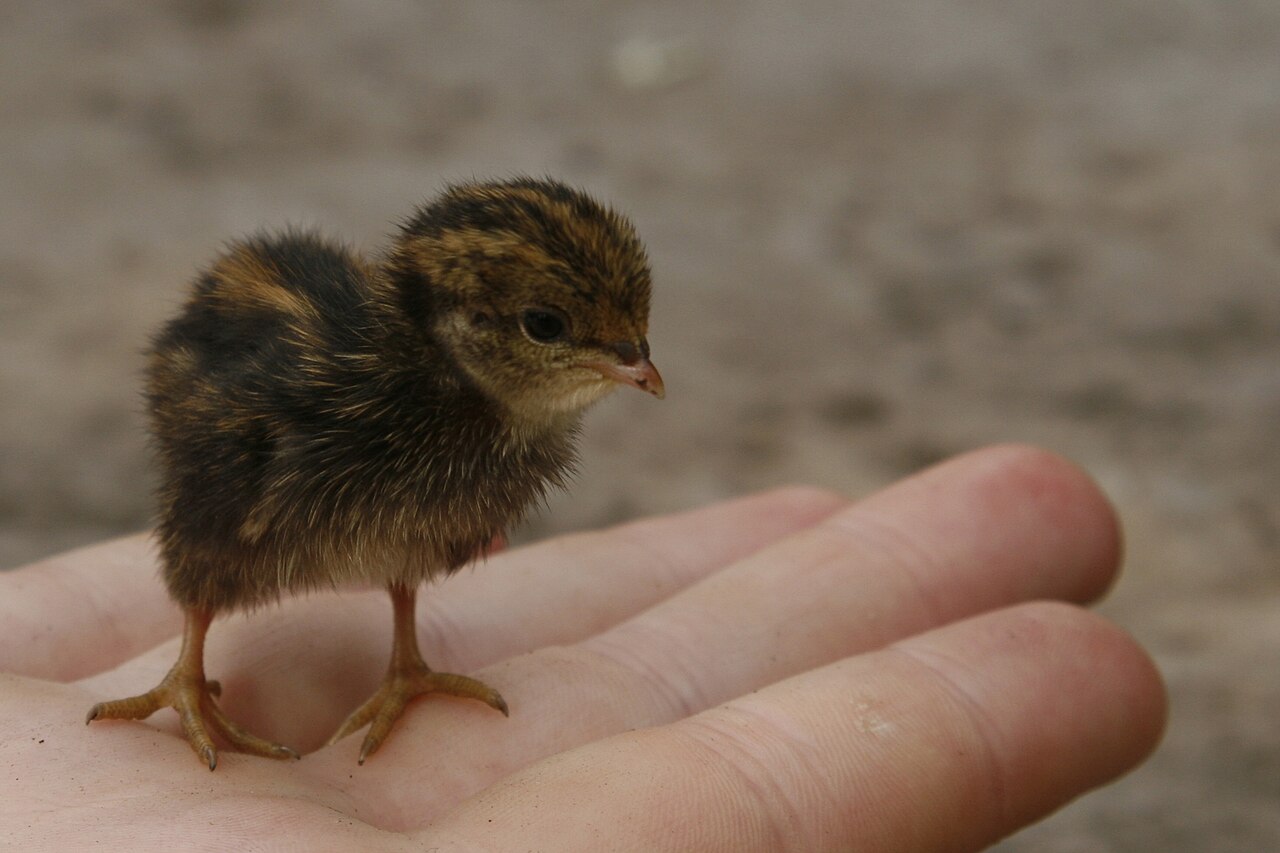
The rainforest planting also shelters poison dart frogs, lizards, turtles and quails running about on the ground. The ponds hold koi carp, goldfish and Amazonian fish, and a permanent exhibition is devoted to the coral reef. Haga Ocean shows blacktip and whitetip reef sharks, rays and reef fish including clownfish. Outside, an avenue of real palms stays outdoors, wrapped in a plastic cover in winter.
Visiting
1 min
The glasshouses stand in Haga trädgård, at the northern end of Haga Park in Solna, on the shore of the Brunnsviken inlet. The site has a café, a shop and terraces framed by flower beds; in summer the winter garden is a popular setting for weddings and receptions.
Winter is a good time to come: visitor numbers drop although there are no fewer butterflies. Talks and feeding sessions are held on some weekends and during school holidays. A visit combines naturally with a walk through Haga Park, past Gustav III's Pavilion, the Echo Temple and Haga Palace, and on to the Bergianska botanical garden across Brunnsviken.
59.37° N, 18.03° E
Greenhouses nearby
More greenhouses — Sweden
Do you have a good photo of this greenhouse? Suggest it for this page →