Greenhouses of Rosendals Trädgård (Växthusen)
Djurgården, Stockholm

Sources checked October 2026
- Architect
- Unknown (2024 renovation: Ryds Glas)
- Style
- Glazed garden greenhouses, renovated in 2024 (Norrland pine, reused insulated glass)
- Dimensions
- Several greenhouses (five according to 2023 press)
- Status
- Open to the public; a further greenhouse renovation announced in October 2025, no date given
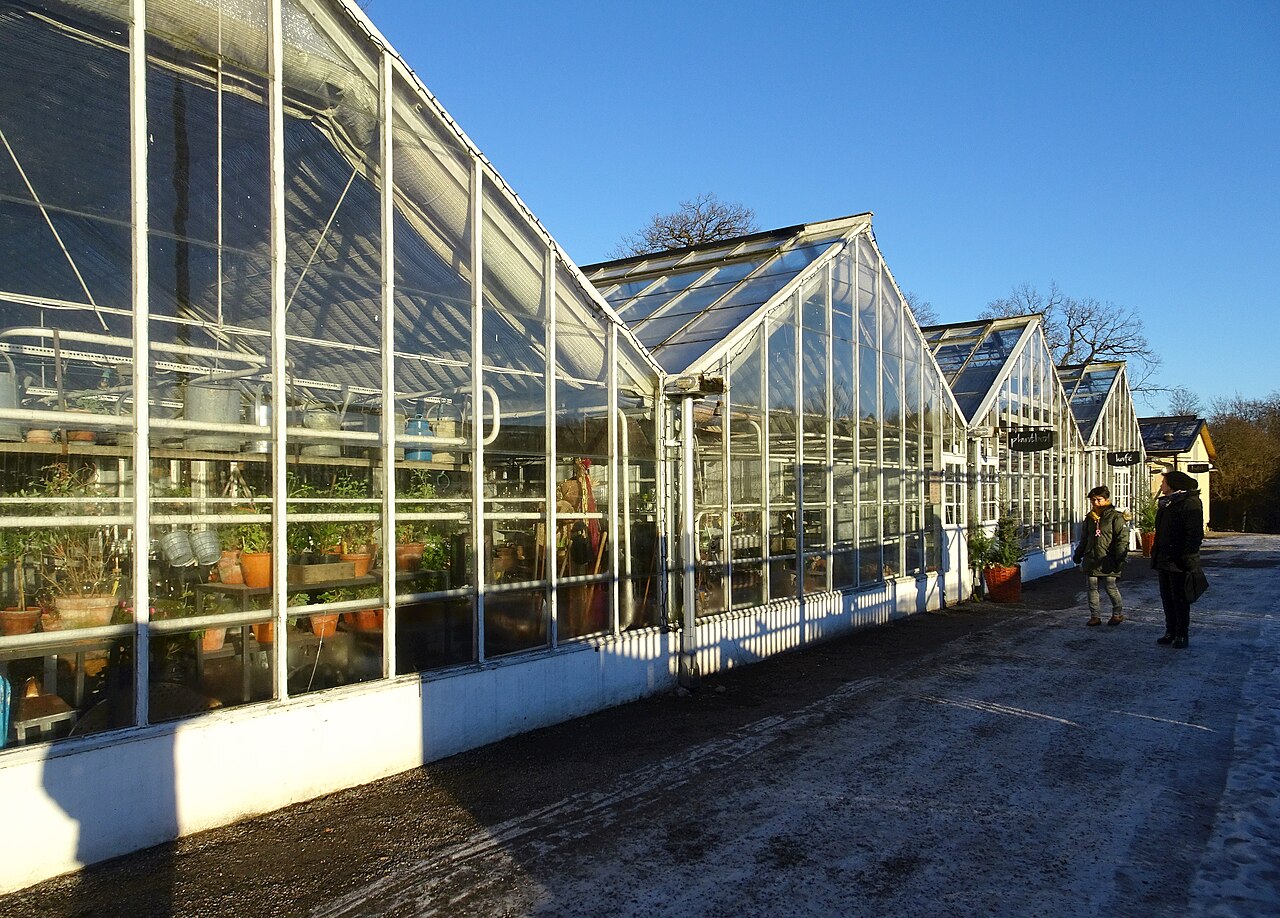
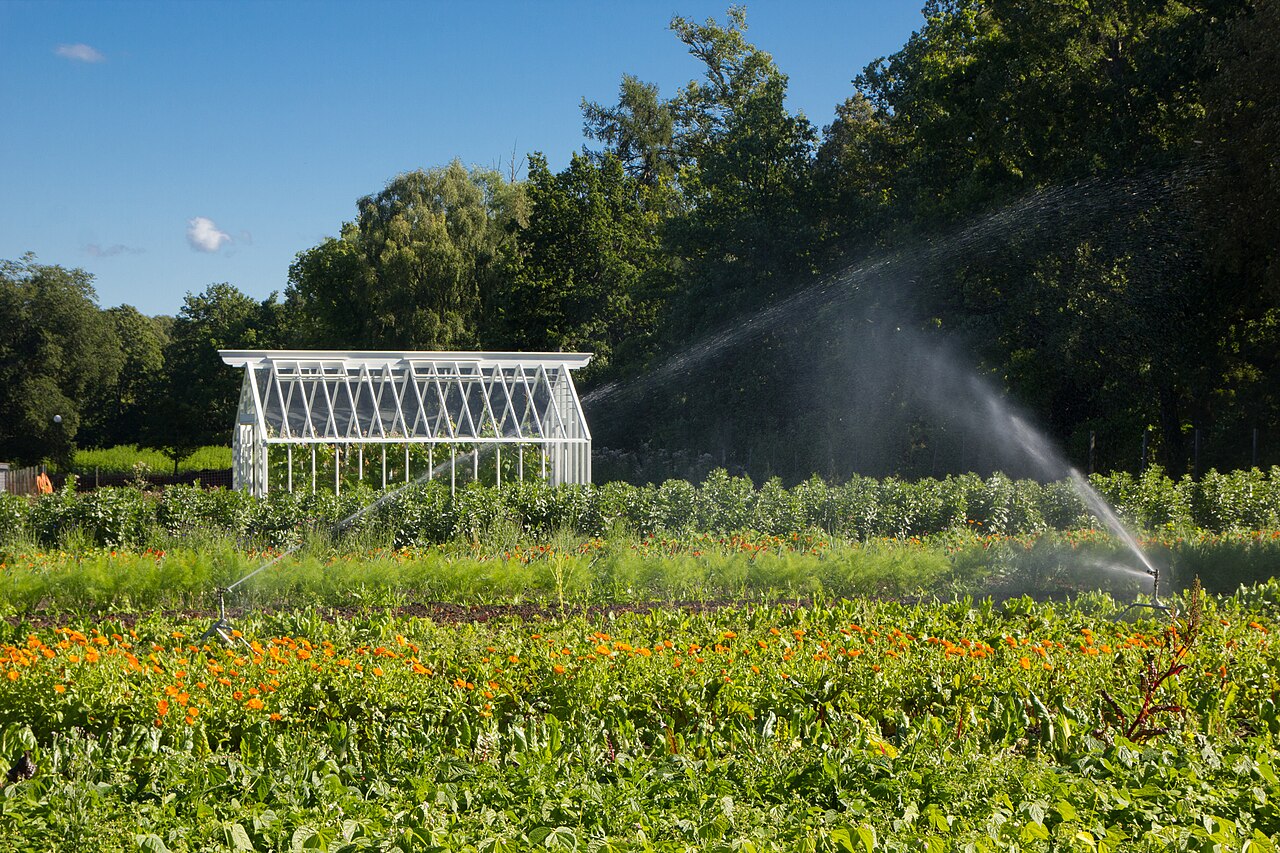
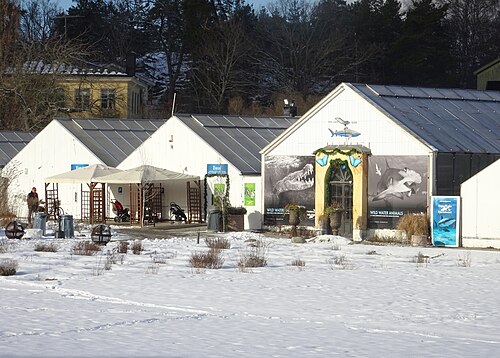
Inside Rosendals Trädgård, a biodynamic garden run by a foundation just west of Rosendal Palace on Djurgården in Stockholm, several greenhouses house the garden café-restaurant and the plant shop (Plantboden), while a large free-standing greenhouse serves for events. One greenhouse was completely renovated in 2024, with Norrland pine and reused insulated glass, so that it can be used in winter. The big nineteenth-century greenhouses of the gardeners' school, demolished in the 1910s, stood 180 metres to the north-west.
Affiliate links — booking through Verrière helps fund our research, at no extra cost to you.
History
The horticultural past of the Rosendal garden on Djurgården goes back to Svenska trädgårdsföreningen, the Swedish Garden Society, which founded a gardeners' school with greenhouses there in 1861 (1862 according to the present-day garden's own history page). It ran until 1911 and trained about 700 gardeners. The large greenhouses of that period, including the cast-iron and glass Victoria regia house photographed in 1905, stood on Rosendalsterrassen, some 180 metres north-west of the present site; they were demolished in the 1910s. After the Society left, the garden passed to private growers, and the royal administration of Djurgården later had it restored: in 1960 according to Swedish Gardens, in the late 1960s according to English Wikipedia.
Since 1982 the foundation Stiftelsen Rosendals Trädgård has practised biodynamic cultivation here and funds the place through its café, bakery, plant shop and farm shop. In 2023 the foundation called the present greenhouses charming old greenhouses, and the press counted five. An extension project, started in mid-February 2023 with the architects Jordens Arkitekter, the builder M3 Bygg and the landlord Kungliga Djurgårdens Förvaltning (more than 100 million kronor invested), delivered its first stage on 14 May 2024: a new kitchen, a new restaurant and a completely renovated greenhouse made usable in winter. The foundation added that the other greenhouses would follow as outside funding allowed. In October 2025 it announced that a greenhouse renovation was being prepared and that the plant shop had moved temporarily further along the row.
Architecture and engineering
The café occupies new premises insulated for winter, with a renovated greenhouse adjoining them. Two greenhouses form the dining room, with gravel floors and a change of level bridged by a ramp; the serving building entered first has a brick floor. The plant shop fills two other greenhouses, entered through a heated airlock with double doors. A large free-standing greenhouse, with a sliding door and wide double doors on the orchard side, hosts private events. The greenhouses stand at ground level, with relatively wide doors.
The 2024 renovation, carried out with Ryds Glas, used heartwood pine (kärnfuru) from Norrland and Skavank insulated glass, reused from offcuts that would otherwise have been crushed or landfilled. The new buildings next door have a timber frame, an interior of spruce grown on Djurgården (trees felled after bark-beetle attack), a reused-brick floor, and a roof and walls clad in galvanised steel sheet. The foundation calls them both a mirror image of and a contrast to the existing greenhouses.
Plant collections
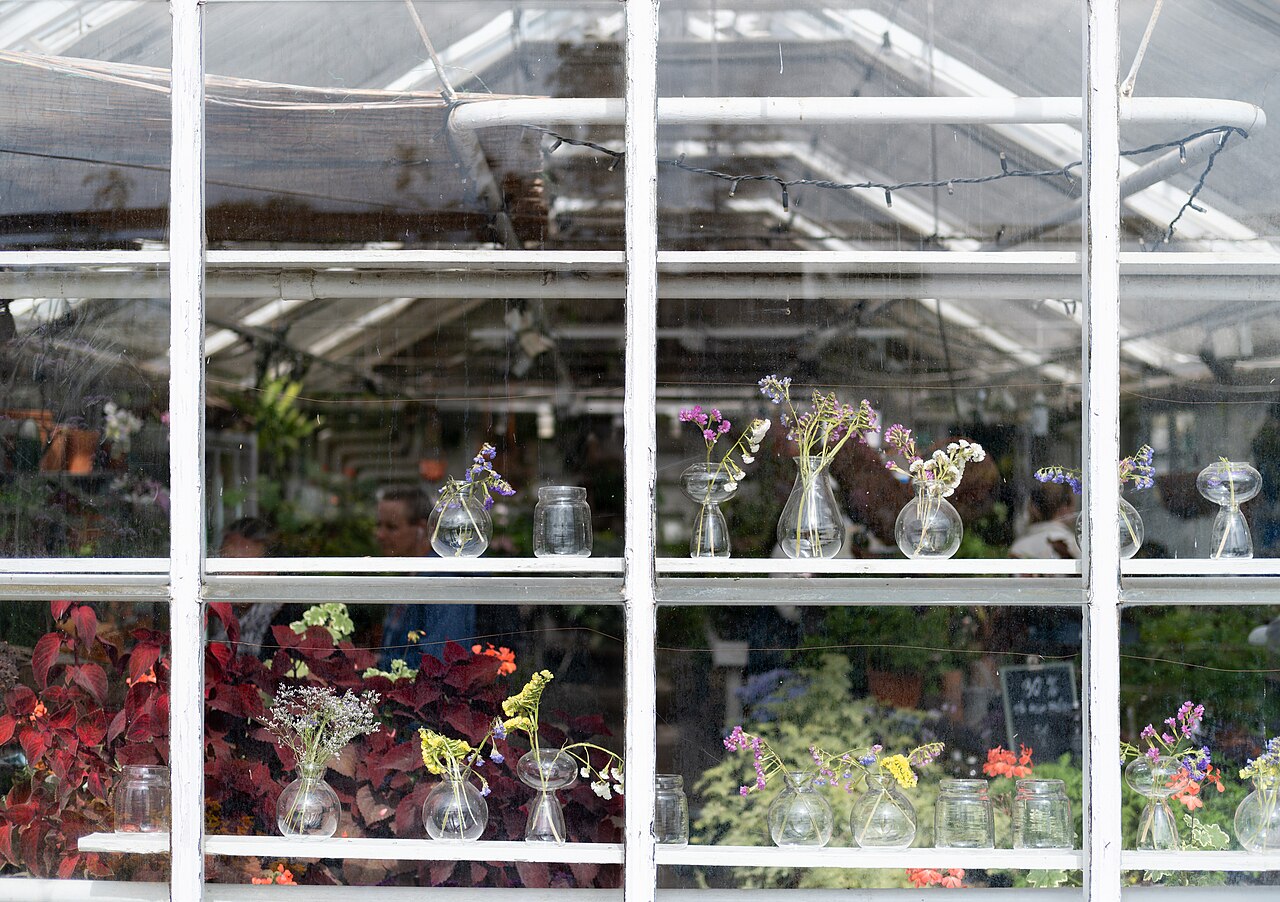
The Plantboden shop sells perennials (autumn phlox, Japanese anemones, delphiniums), annuals, grasses and foliage plants for pots and balconies, organic seeds including a range sold only on site, and every autumn an organic bulb market with more than 120 varieties (tulips, daffodils, alliums). An archive page of the garden says the gardeners fill the shop and the plant yard with biodynamic seedlings raised in the large greenhouse, at a plant festival held in May.
Outside the glass, the foundation grows vegetables, herbs, fruit and cut flowers on biodynamic principles. The fruit garden holds about a hundred trees, the oldest planted in 1861 according to the café's website; the rose garden was created in 1988 and seven grape varieties are planted around the old orangery, according to English Wikipedia. Picking of cut flowers usually opens in late July or early August.
Visiting
The greenhouses lie in the heart of the garden, west of Rosendal Palace (built between 1823 and 1827), inside the Royal National City Park; the foundation reports close to a million visitors a year. Access to the garden is presented as free, with a voluntary contribution; dogs on a lead are welcome, except in the farm shop. The café sets out tables under the orchard trees from early summer to late autumn.
Documented seasonal moments: the plant festival in May, the bulb market from September, cut-flower picking from late July, and a Christmas buffet served in the greenhouse dining room in winter. Allow an hour or two, and combine it with the neighbouring palace. From T-Centralen: bus 69 to Museiparken then ten minutes on foot, or tram 7 to Bellmansro.
59.33° N, 18.11° E
Greenhouses nearby
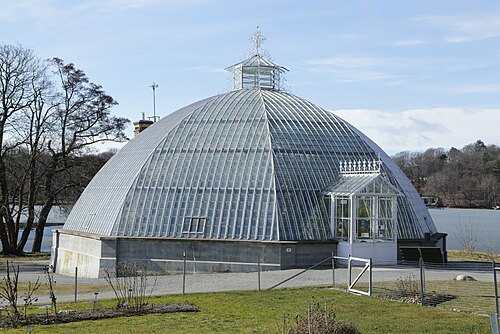
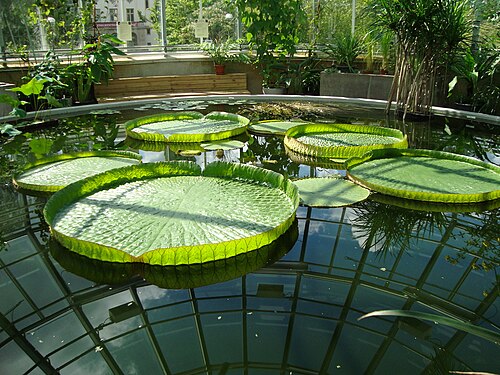
More greenhouses — Sweden
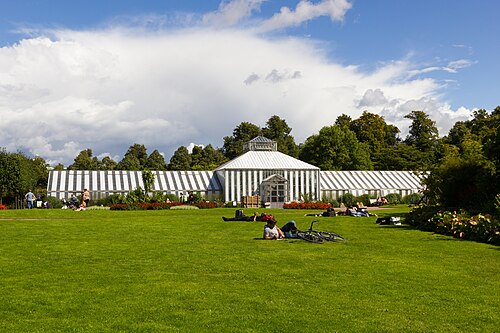
Do you have a good photo of this greenhouse? Suggest it for this page →
Sources (9)
- rosendalstradgard.se/oppettider/
- rosendalstradgard.se/pressmeddelande-lansering-14-maj/
- rosendalstradgard.se/tradgardskafe/
- rosendalstradgard.se/plantboden-oppnar-pa-ny-plats-med-arets-ekologiska-lokmarknad/
- rosendalstradgard.se/historik/
- sv.wikipedia.org/wiki/Rosendals_tr%C3%A4dg%C3%A5rd
- en.wikipedia.org/wiki/Rosendals_Tr%C3%A4dg%C3%A5rd
- fastighetsvarlden.se/notiser/rosendals-tradgard-ska-fa-storre-vaxtkraft/
- swedishgardens.se/sv/garden/rosendals-tradgard/
Affiliate links — booking through Verrière helps fund our research, at no extra cost to you.