Glasshouses and orangeries of Lund University Botanical Garden (Palmhuset)
Lund, Scania
Entry updated on October 5, 2026
- Architect
- Not documented (2024–2026 renovation: White arkitekter)
- Style
- Group of glasshouses and orangeries (orangeries of 1862)
- Status
- Glasshouses closed for renovation, reopening announced for 2027; garden partly open
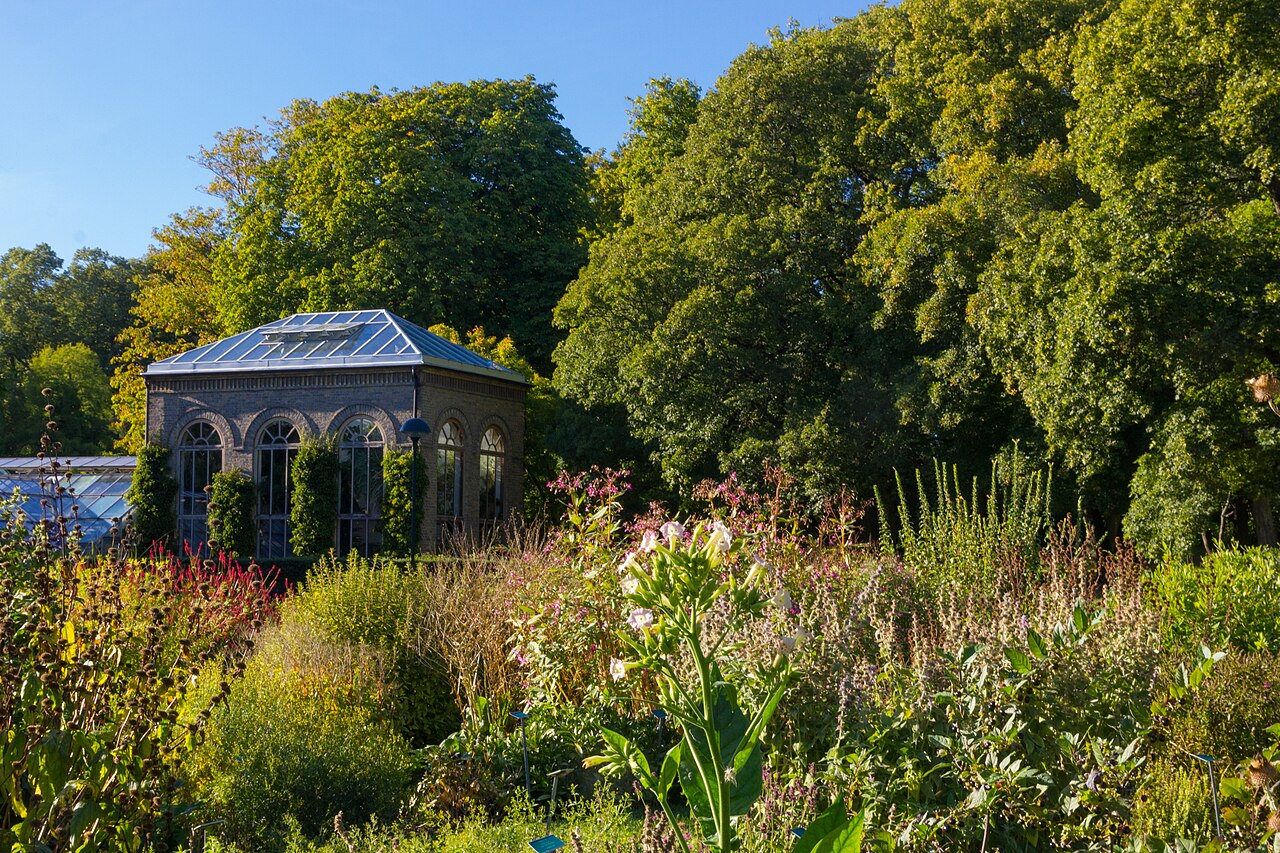
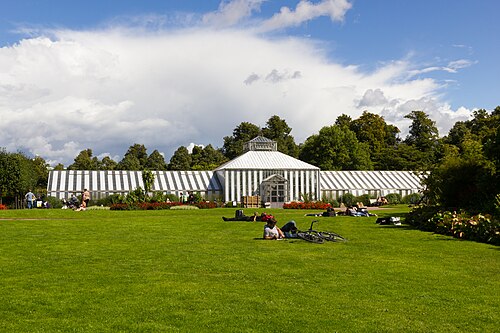
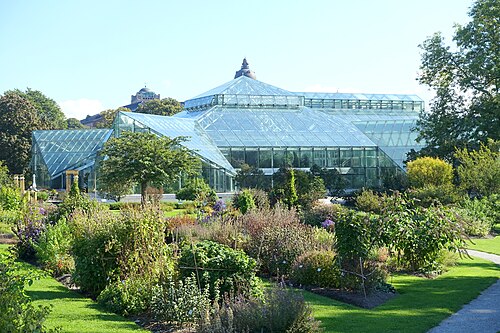
At the heart of the botanical garden laid out in Lund by Jacob Georg Agardh between 1862 and 1867, a group of glasshouses and orangeries, the latter dated 1862, brings together the Palmhuset, the Victoriahuset and houses for pepper, orchids, ferns, Mediterranean plants and cacti: nine climate zones and some 2,000 species. Listed with the garden as a state monument, the complex has been under renovation since 2024 by the National Property Board and the university, with new glazing and services, a palm house raised by 3 metres and a new entrance building by White arkitekter. Reopening is announced for 2027.
Affiliate links — booking through Verrière helps fund our research, at no extra cost to you.
History
1 min
Lund's botanical garden was founded in 1690 in the centre of the town. It later moved to its present site, laid out between 1862 and 1867 under the direction of the botanist Jacob Georg Agardh. The orangeries date from 1862, and it was in the 1860s that the cycads of the now endangered species Cycas zeylanica were planted; they remain among the glasshouses' prize specimens. The garden, its buildings and grounds are protected as a state listed monument (statligt byggnadsminne), and the glasshouses belong to Statens fastighetsverk (SFV), the National Property Board that manages state-owned buildings.
By the early 2020s the cycads had reached the roof of the Palmhuset, one of the reasons behind a large programme of works. In April 2023, 70 million kronor were set aside for maintenance. Lund University, backed by donors, pays for much of the project, while SFV runs the building work and covers the renovation of the lower glasshouses and orangeries. The total cost is put at around 80 million kronor, including a 15 per cent reserve.
Work began in summer 2024, in June according to the university and in August according to SFV, and was scheduled to finish in spring 2026. The inauguration and the reopening of the glasshouses to the public are announced for 2027.
Architecture and engineering
1 min
The glasshouses and orangeries form a compact group at the heart of the garden, made up of specialised houses: the Palmhuset, the Victoriahuset, the Kryddpepparhuset (pepper house), the Orkidéhuset (orchids), the Ormbunkshuset (ferns), the Medelhavshuset (Mediterranean plants) and the Kaktushuset (cacti), together with the orangeries of 1862. Between them they provide nine climate zones.
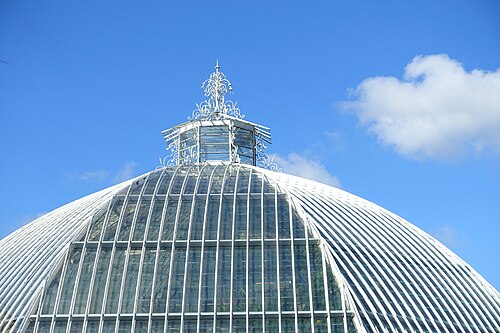
White arkitekter's scheme replaces the Palmhuset with a palm house whose ridge stands 3 metres higher, giving the tallest plants room to grow, and adds an entrance building with an exhibition room, shop, toilets and potting room. Every glasshouse receives new glazing and new frames, along with new irrigation, humidification, electrical, heating, climate-control and ventilation systems and interior shade curtains. During the works, large plants left in place are sheltered under climate-controlled tents of heavy plastic sheeting.
Plant collections
1 min
The glasshouses hold around 2,000 species spread over nine climate zones, out of the roughly 7,000 grown across the whole garden. Their most famous residents are the cycads of the endangered species Cycas zeylanica planted in the 1860s; Swedish Wikipedia mentions a 150-year-old specimen and notes that cycads have existed for 280 million years, making them contemporaries of the dinosaurs. Their growth up to the roof is one of the reasons for building a taller palm house.
The names of the houses sum up the range of the collections: the Victoria house and the houses for pepper, orchids, ferns, Mediterranean plants and cacti. During the works most potted plants were moved to temporary working glasshouses and other university premises.
Visiting
1 min
The glasshouses are closed while work is under way, but part of the botanical garden remains open; the inauguration and reopening of the glasshouses are announced for 2027. Once they reopen, an hour is enough to walk through them.
A visit continues in the garden itself, laid out by Agardh in the 1860s and home to some 7,000 plant species. The earth ramparts along its edge, already shown on maps of 1704, are protected as ancient monuments and recall how old the site is.
55.70° N, 13.20° E
Greenhouses nearby
More greenhouses — Sweden
Do you have a good photo of this greenhouse? Suggest it for this page →