Kibble Palace
Glasgow, Scotland

Sources checked September 2026
- Year
- 1873
- Architect
- John (or James) Boucher and James Cousland; re-erected by James Boyd & Sons
- Style
- Victorian circular iron-and-glass dome
- Dimensions
- About 2,137 m² (23,000 sq ft); main dome 146–150 ft across
- Status
- Open to the public
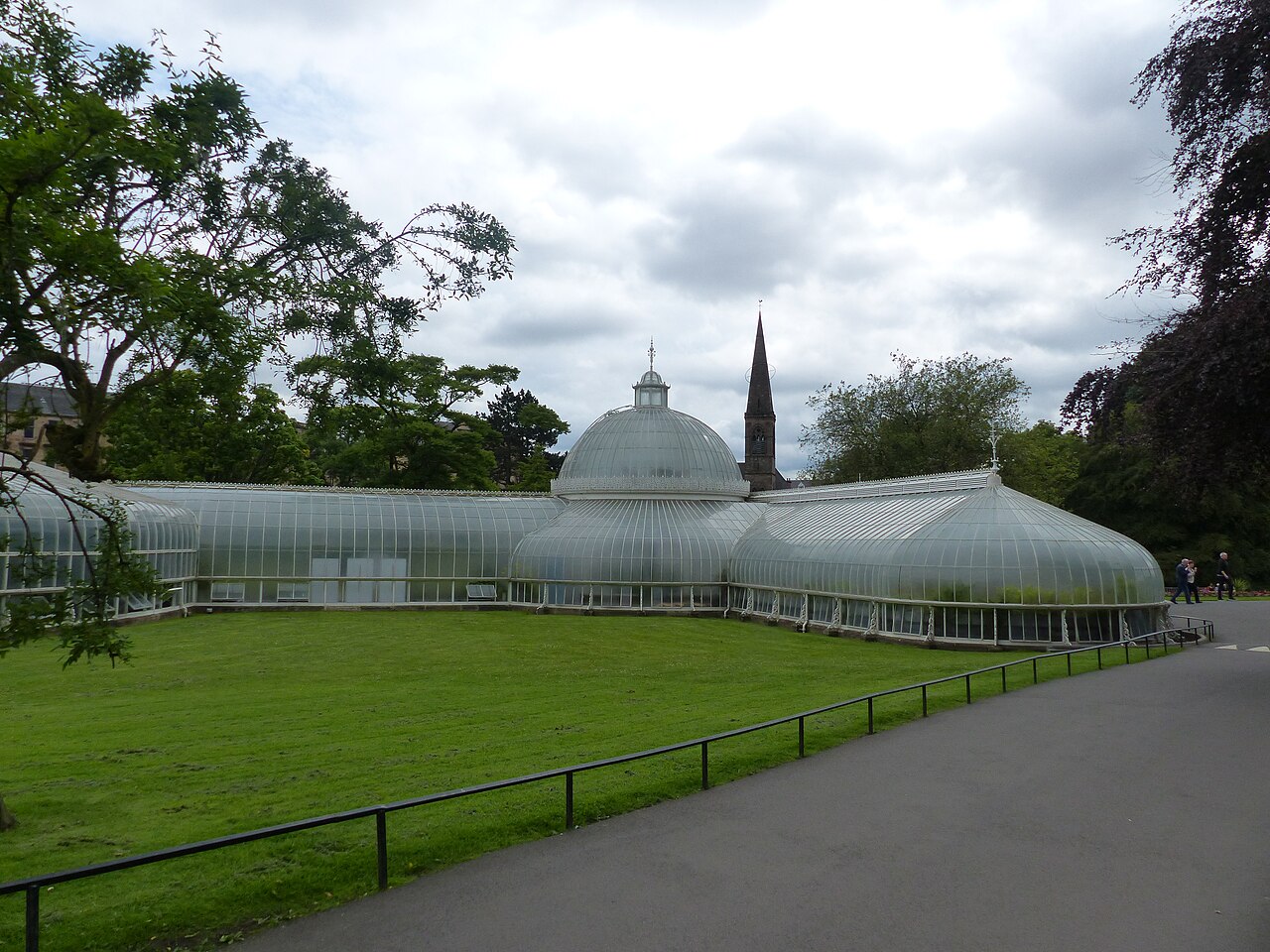
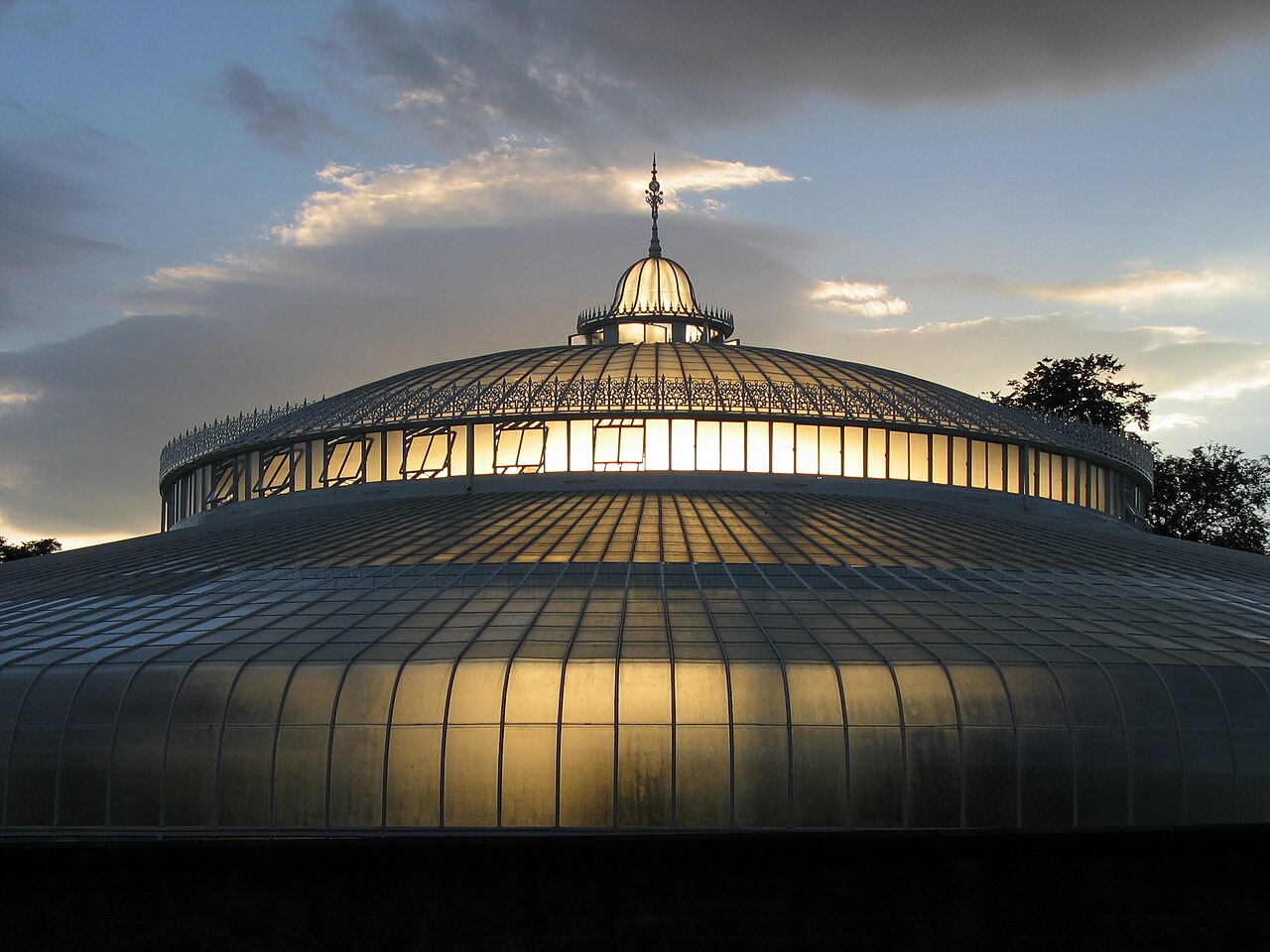
Built in the 1860s for John Kibble's house at Coulport on Loch Long, the glasshouse was dismantled, shipped by barge up the Clyde and re-erected in 1873 in Glasgow Botanic Gardens, enlarged with a great circular dome. First used as a concert and meeting hall, it saw Disraeli (1873) and Gladstone (1879) installed as Rectors of the University of Glasgow before becoming a winter garden in 1881. Dismantled and restored off site between 2003 and 2006, it shelters beneath its dome the national collection of tree ferns, planted in the 1880s.
Affiliate links — booking through Verrière helps fund our research, at no extra cost to you.
History
The Kibble Palace began life on the shores of Loch Long at Coulport in the 1860s (1863–1866 according to Canmore). John Kibble, described by the gardens as an engineer, astronomer and photographer among other pursuits, had it built as a conservatory for his house there. The design is credited to the architects James Cousland and Boucher, whose first name is John on the gardens' website and James in the Historic Environment Scotland record; the castings came from Walter Macfarlane's Saracen Foundry in Possilpark.
In 1871 Kibble opened negotiations to have the structure dismantled and carried by barge up the Clyde to Glasgow Botanic Gardens. Re-erected by James Boyd & Sons of Paisley and considerably enlarged, it reopened in 1873 as the Kibble Crystal Art Palace, a concert and meeting hall lit by 600 gas lamps that could be coloured for effect. Benjamin Disraeli was installed there as Rector of the University of Glasgow on 19 November 1873 and William Ewart Gladstone in December 1879; in May 1874 the evangelists Moody and Sankey drew some 6,000 people inside, with thousands more outside.
In 1881 a loan from the Corporation allowed Kibble's interest to be bought out for £10,000, and the palace became a winter garden. Closed in September 2003, it was taken apart and its components restored at Shepley Engineers' workshop in Shafton, South Yorkshire, in a programme of around £7 million, £3.4 million of it from the Heritage Lottery Fund. It reopened on 30 November 2006.
Architecture and engineering
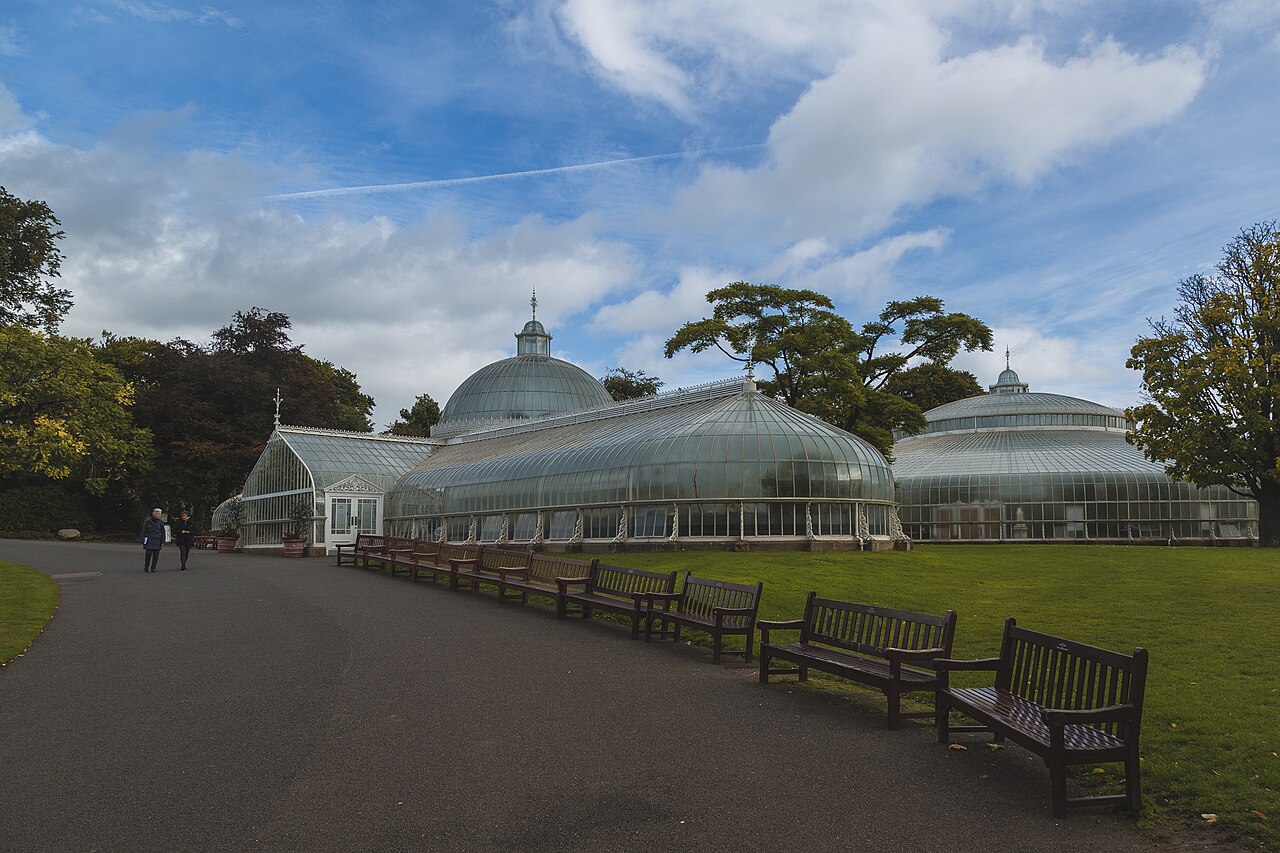
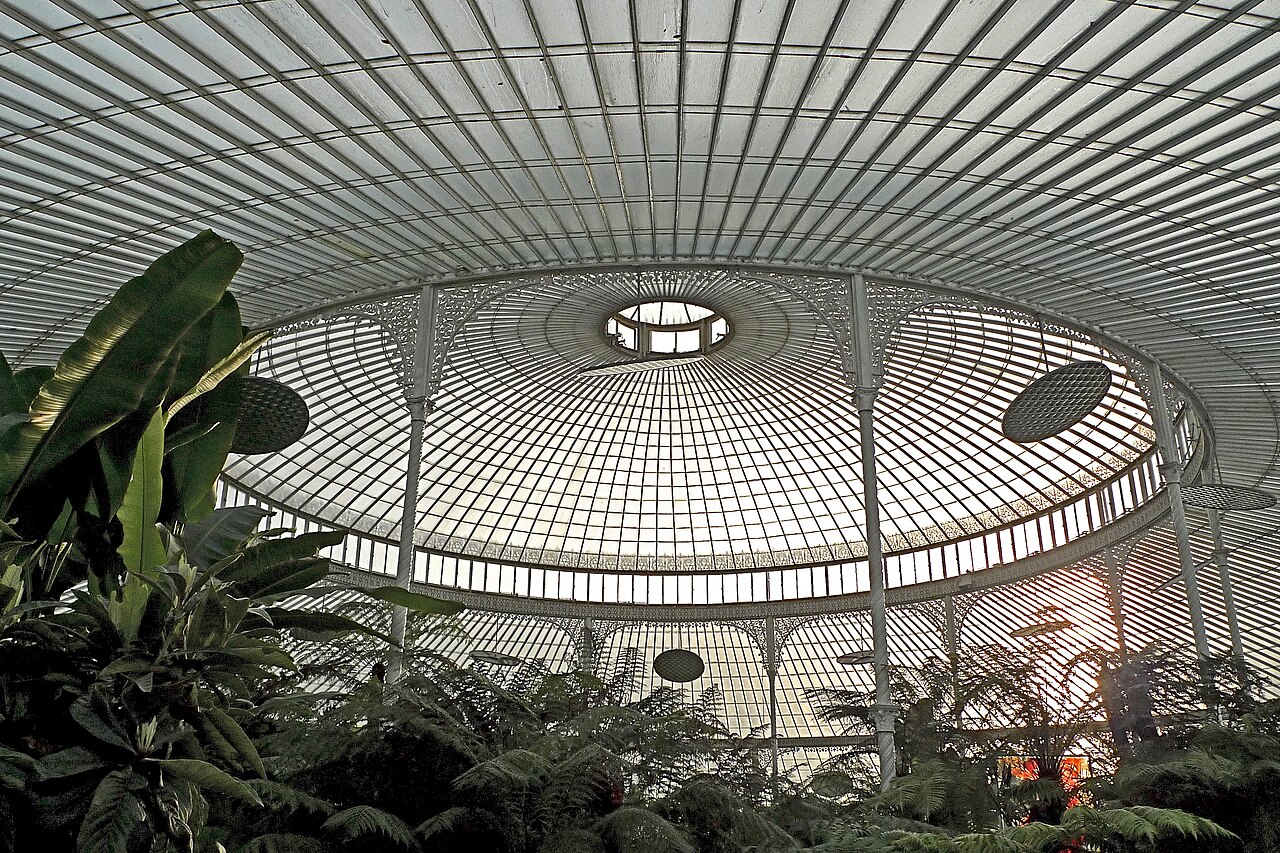
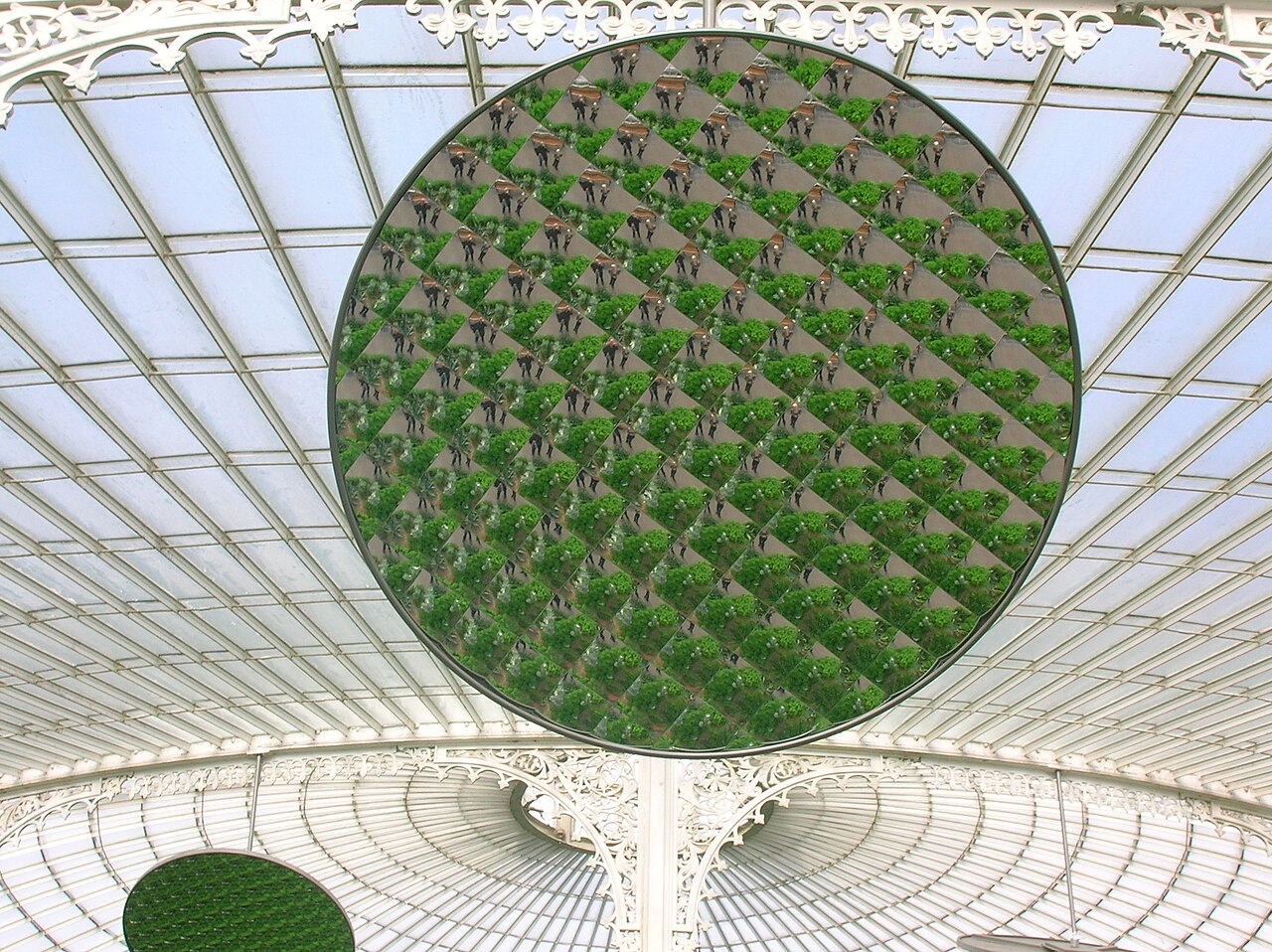
The plan combines a large circular dome, linked by a corridor to a small entrance dome flanked by two corridor wings. The great dome, added at re-erection, is 146 feet (about 44 m) across and 43 feet (13 m) high according to Canmore and the Conservatory Heritage Society, while the gardens and Historic Environment Scotland give 150 feet. The whole covers some 23,000 sq ft, about 2,137 m², placing it among the largest glasshouses in Britain.
The structure pairs curved wrought iron and glass, carried on cast-iron beams that rest on ornate columns and masonry foundations. Twelve twisted cast-iron columns originally held it up; another twenty-four, with leafy brackets, were added during re-erection. From 1873 to 1881 a stage stood over the pond beneath the great dome; after the conversion to a winter garden the pond was planted over and a goldfish pond was created under the entrance dome.
During the 2000s restoration the plant collection was removed for the first time, the plinth was rebuilt and strengthened, salvageable parts were repaired and the rest recast, and the ironwork and glass were then reassembled over a rearranged interior layout.
Plant collections
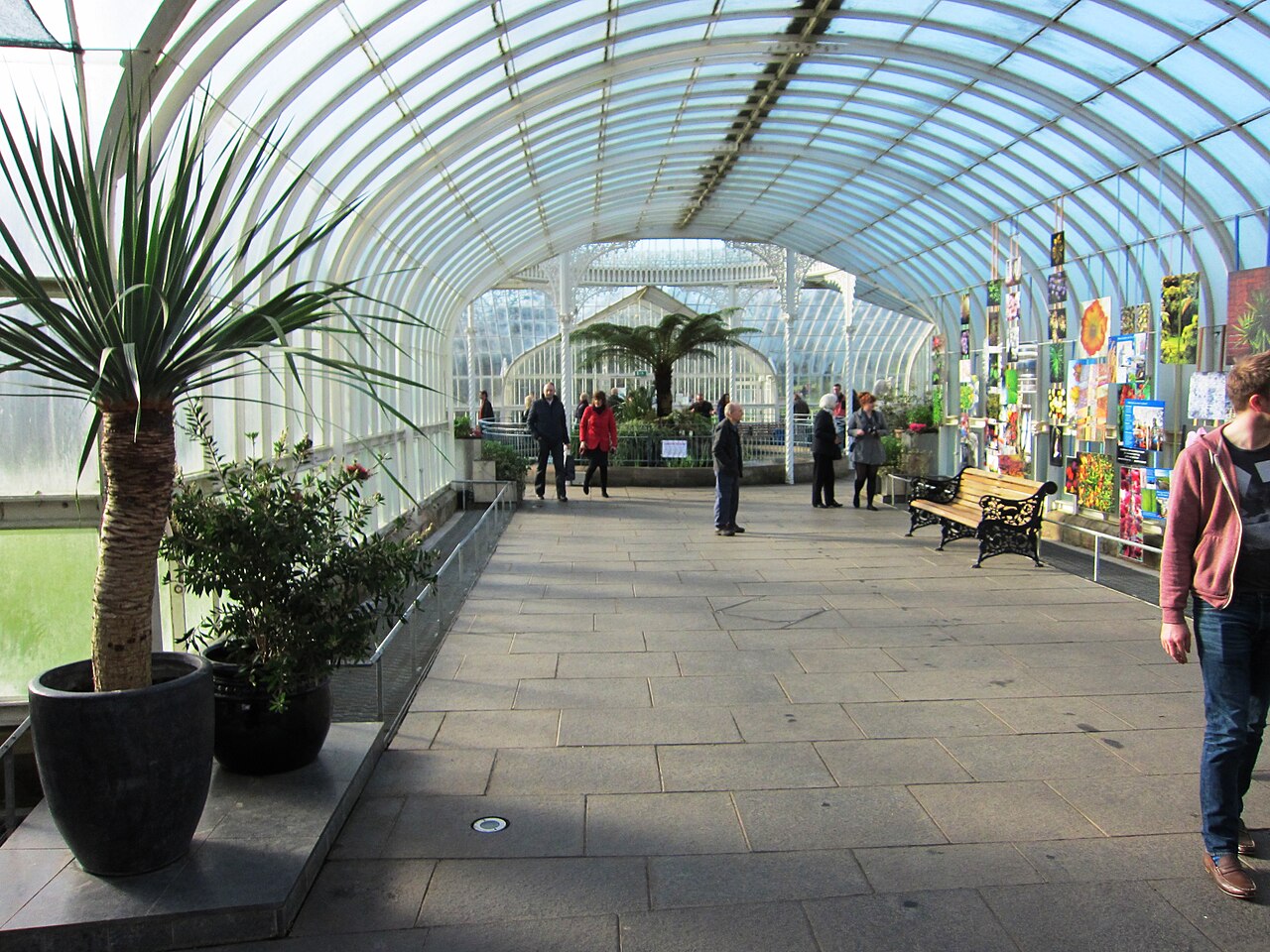
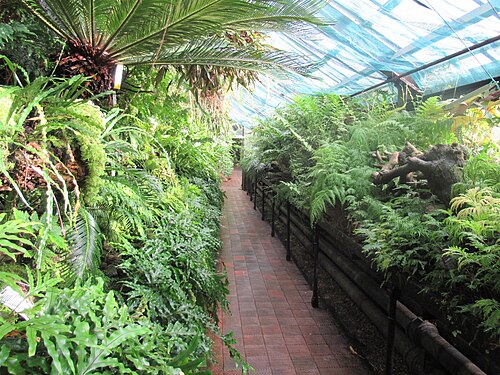
The heart of the Kibble Palace is its collection of New Zealand and Australian tree ferns, planted beneath the great dome in the 1880s (in 1881 according to Parks & Gardens) and now recognised as a National Collection; some specimens have been growing there for more than a century. Around them, temperate plantings are grouped by origin: southern Africa, Australia, New Zealand, the Americas, China, Japan and Mediterranean regions. The palace also displays orchids and carnivorous plants.
Historic Environment Scotland counts nine statues inside, a legacy of the building's early life as a gallery. They include Eve by Scipione Tadolini (c. 1870), Ruth by Giovanni Ciniselli (1880), Cain by Edwin Roscoe Mellins (1899), The Elf by William Goscombe John (1899), Stepping Stones by William Hamo Thornycroft (1878) and King Robert of Sicily by George Henry Paulin (1927), a figure drawn from a poem by Henry Wadsworth Longfellow.
Visiting
The Kibble Palace stands at the centre of Glasgow Botanic Gardens in the West End, a few minutes from the lodges of the main entrance on Great Western Road. An hour is enough to circle the great dome, its tree ferns and its statues at an easy pace.
The rest of the garden, which covers some 15 hectares, extends the visit. West of the palace, the Main Range, opened in 1884, lines up eleven glasshouse compartments; the chronological border sets out plants by their date of introduction, one bed per century; and the herb garden, laid out in 1957, lies just south-east of the palace. Along the northern edge, the Kelvin Walkway follows the River Kelvin without a break to Kelvingrove Park.
55.88° N, 4.29° W
Greenhouses nearby
Architecture nearby
More greenhouses — United Kingdom
Do you have a good photo of this greenhouse? Suggest it for this page →
Sources (7)
- glasgowbotanicgardens.com/the-gardens/history/kibble-palace/
- portal.historicenvironment.scot/designation/GDL00190
- canmore.org.uk/site/44152/glasgow-703-great-western-road-botanic-gardens-kibble-palace
- en.wikipedia.org/wiki/Glasgow_Botanic_Gardens
- parksandgardens.org/places/glasgow-botanic-gardens
- shepleyengineers.co.uk/case-studies/kibble-palace-restoration/
- conservatoryheritage.org/historic-conservatories-library/19-century/kibble-palace-conserva
Affiliate links — booking through Verrière helps fund our research, at no extra cost to you.