Main Range glasshouses, Glasgow Botanic Gardens
Glasgow, Scotland
Entry updated on October 5, 2026
- Year
- 1883–1884
- Architect
- Not stated in the sources
- Style
- Victorian glass, cedar and cast-iron range with central and end pavilions
- Dimensions
- 11 compartments, ≈1,670 m² (18,000 sq ft)
- Status
- Open to the public
Opened in 1884 west of the Kibble Palace and dated 1883 in its listing, the main glasshouse range of Glasgow Botanic Gardens brings together eleven symmetrical compartments covering some 18,000 sq ft. Its long front is marked by taller central and end pavilions; the structure of glass, cedar and cast iron stands on ashlar base courses, and the timber was largely replaced by bronzed aluminium in 1993. Palms, economic plants, ferns, succulents, orchids and begonias follow one another along the range.
Affiliate links — booking through Verrière helps fund our research, at no extra cost to you.
History
1 min
Glasgow's botanic garden dates from 1817, when the Royal Botanic Institution of Glasgow, founded by Thomas Hopkirk of Dalbeth and Professor James Jeffray, laid out about three hectares at Sandyford, near Sauchiehall Street. The garden later moved to the banks of the Kelvin in the West End and opened on its present site in 1842.
The long glasshouse range, the Main Range, is dated 1883 in its listing and opened in 1884, west of the Kibble Palace, the garden's great circular glasshouse. According to Scotland's Inventory of Gardens and Designed Landscapes, the reconstruction of the glasshouses added heavily to the debts of the Royal Botanic Institution, and Glasgow Corporation took over the garden in 1887; other sources date its incorporation into the city's parks to 1891.
The glasshouses were listed on 15 December 1970 as part of a Category B group of garden buildings, then listed individually in that category on 28 July 1987. According to the listing, they have been extensively repaired to their original design; the rear of the range was rebuilt on brick base courses and, in 1993, most of the cedar was replaced by bronzed aluminium.
Architecture and engineering
1 min
The Main Range lines up eleven symmetrical compartments covering some 18,000 sq ft in all, about 1,670 m². Seen from the garden, it presents a long symmetrical front, marked by taller pavilions at the centre and at both ends; the central pavilion houses the palm house.
The structure combines glass, cedar and cast iron on ashlar base courses; at the rear, the range stands on brick base courses. Inside, cast-iron columns carry the structure, and some of them support cast-iron spiral staircases. In 1993 most of the cedar was replaced by bronzed aluminium.
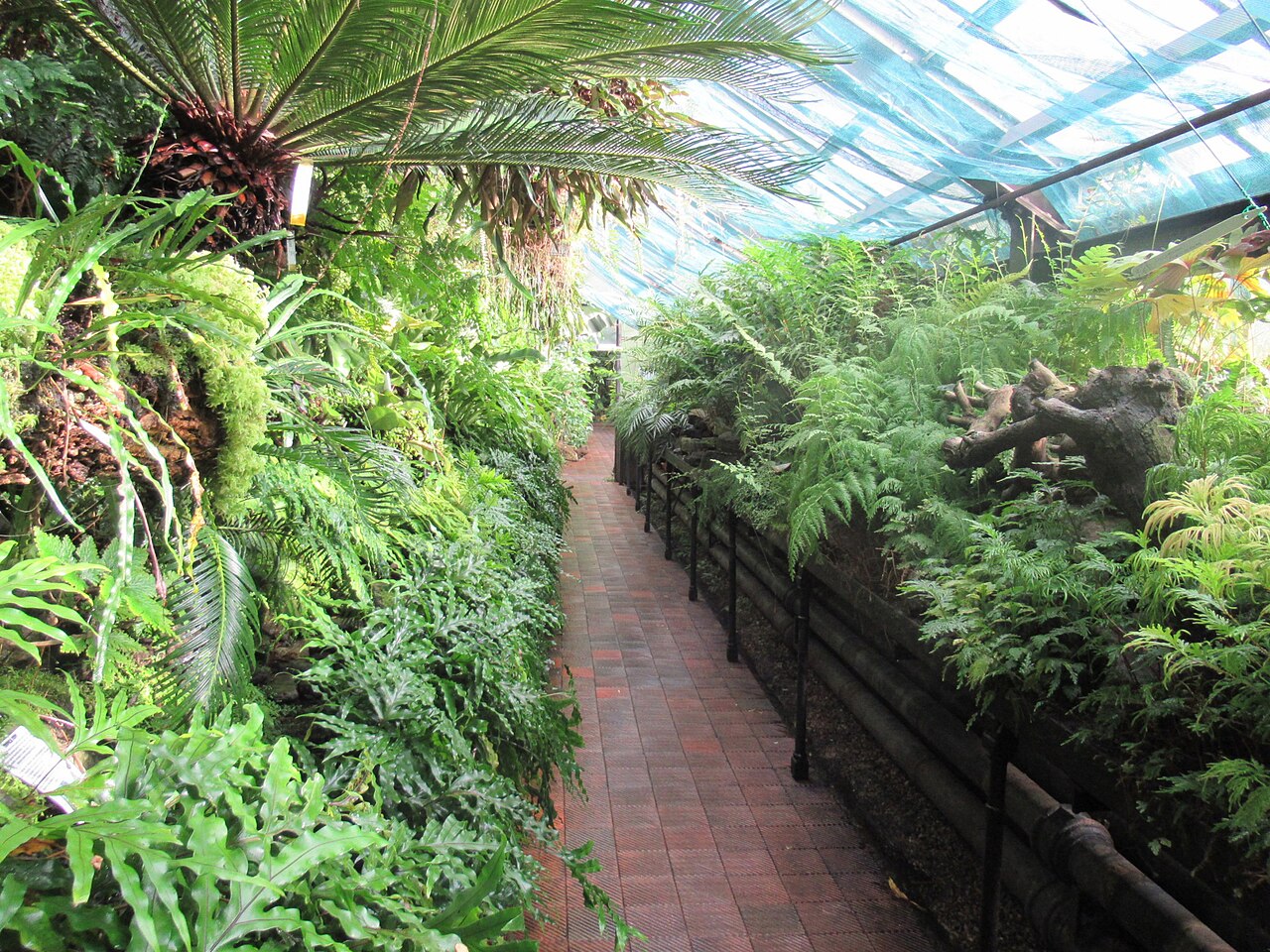
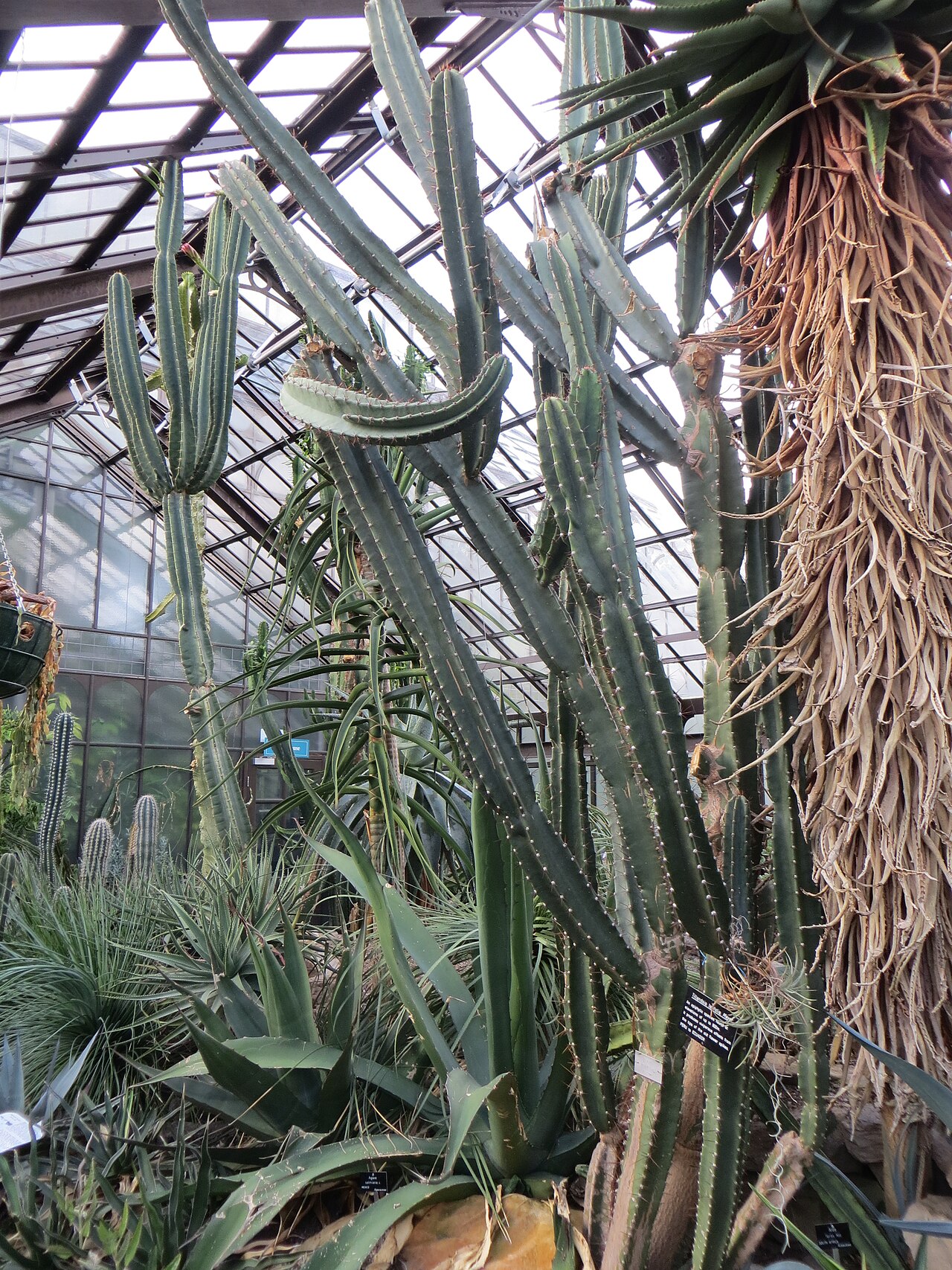
Each compartment has its own climate: a few steps separate the arid cactus house from the humid tropical fernery. The range stands west of the Kibble Palace, the garden's great circular glasshouse.
Plant collections
1 min
The most remarkable collections in the glasshouses are the begonias and the orchids. The begonia collection, counted among the most extensive in the world, consists mainly of species, from introductions of the 1880s and earlier, such as Begonia socotrana, parent of many winter-flowering varieties, to recent discoveries such as Begonia chlorosticta from Borneo. The orchids, of international importance according to the Inventory, include Dendrobium nobile hybrids and Paphiopedilum species. The garden holds national collections of Dendrobium, begonias and tree ferns, the latter displayed in the Kibble Palace.
The other compartments are devoted to temperate and tropical economic plants, succulents, tropical ferns, tropical flowers and aquatic plants, around the central palm house. The Inventory also notes an internationally renowned collection of filmy ferns.
Visiting
1 min
The Main Range stands in Glasgow Botanic Gardens, on Great Western Road in the West End, west of the Kibble Palace. Visitor guides suggest allowing a good half-hour to walk through its eleven compartments. The orchids are at their peak in winter, which makes December and January good months for a visit. It combines with the Kibble Palace, home to the national collection of tree ferns, carnivorous plants, sculptures and a koi pond, and with a walk through the gardens along the Kelvin.
55.88° N, 4.29° W
Greenhouses nearby
More greenhouses — United Kingdom
Do you have a good photo of this greenhouse? Suggest it for this page →
Sources (6)
- glasgowbotanicgardens.com/the-gardens/
- portal.historicenvironment.scot/designation/GDL00190
- britishlistedbuildings.co.uk/200374929-glasshouses-botanic-gardens-703-great-western-road-
- en.wikipedia.org/wiki/Glasgow_Botanic_Gardens
- tripscot.co.uk/gardens/botanic-gardens-glasgow
- glasgowtourism.org/glasgow-botanic-gardens/