Green House, Ōfuna Flower Center (日比谷花壇大船フラワーセンター グリーンハウス)
Kamakura (Ōfuna), Kanagawa Prefecture

Sources checked October 2026
- Style
- Ring-shaped ("donut") glasshouse with a glazed roof
- Dimensions
- Ring-shaped footprint about 50 m across (map survey)
- Status
- Open to the public; heated-greenhouse function discontinued in the 2017-2018 renovation
At the centre of a prefectural garden laid out on the former Kanagawa agricultural experiment station, this ring-shaped glasshouse, planned for ventilation and light, once held the centre's tropical and subtropical plants, jade vine and water lilies among them. The 2017-2018 renovation and the move to outsourced management ended its heating: renamed the Green House, it now shows plants and flower exhibitions, while the garden around it displays 210 peony cultivars, including strains bred only at Ōfuna, 370 rose varieties and the early-flowering Tamanawa cherry.
Affiliate links — booking through Verrière helps fund our research, at no extra cost to you.
History
The garden stands on the former site of the Kanagawa prefectural agricultural experiment station, where the so-called Ōfuna strains of peony and Japanese iris were bred for export from the late Meiji era into early Shōwa. The prefecture and the English Wikipedia give 1961 for the creation of the Flower Center, the official English page an opening in 1962, and the Japanese Wikipedia an opening in 1967. An ornamental greenhouse (観賞温室) housed the garden's tropical and subtropical plants, among them a jade vine, water lilies and hibiscus.
As the facilities aged, the whole centre closed from July 2017 to March 2018 for a renovation of its buildings costing about 326 million yen, designed by the Kiyota Ikuo studio and carried out by the Horimoto construction company, timed to prepare the switch to outsourced management. The centre reopened on 1 April 2018 as the Hibiya Kadan Ōfuna Flower Center, run on the prefecture's behalf by a consortium of Hibiya Amenis, Hibiya Kadan, the Kamakura City Park Association and Sōtetsu Kigyō. The renovation also ended the building's role as a heated greenhouse: the jade vine, which normally flowers in April, failed to bloom in 2018 for want of warmth and humidity, and the new manager planned to keep the interior above freezing in winter with off-the-shelf heaters. The structure survives as the Green House, a space for plants and exhibitions.
Architecture and engineering
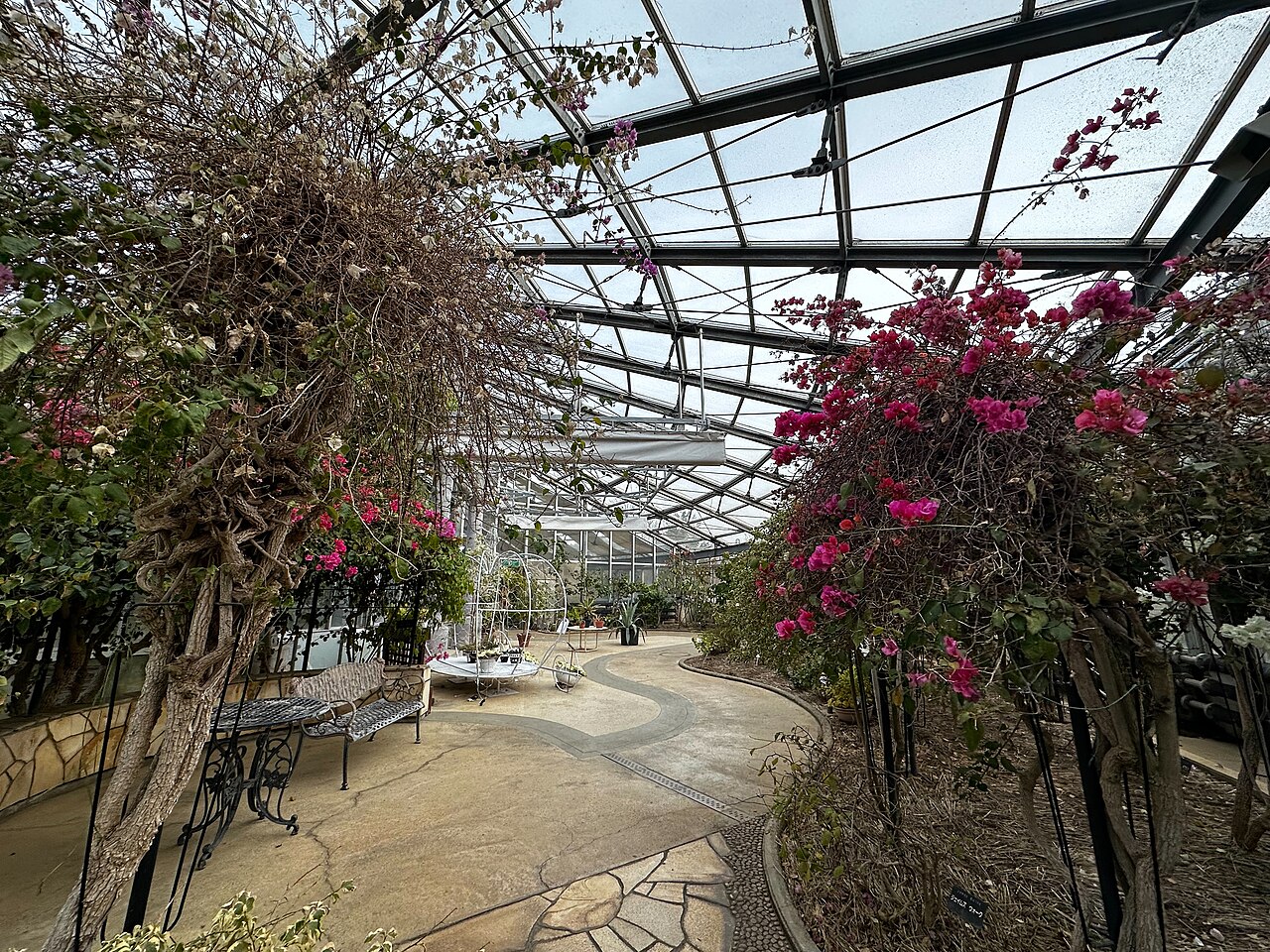
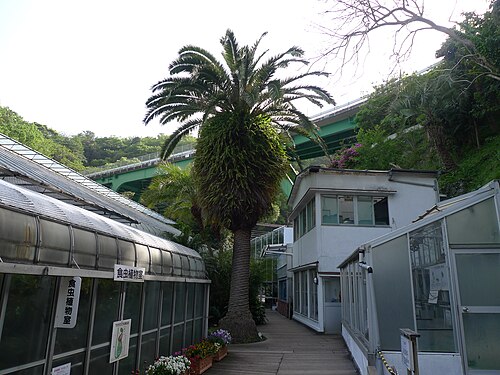
The official guide describes the Green House as a "donut-shaped" glasshouse designed to let air circulate and admit as much light as possible. The map record bears this out: the building, labelled グリーンハウス on the Geospatial Information Authority base map used by OpenStreetMap, has a ring-shaped footprint roughly fifty metres across, with an open court of some twenty metres in the middle. The roof is glazed, which is why tourist guides list it as the garden's "glass house" (ガラス室).
Since the 2017-2018 renovation the structure has no longer been run as a tropical greenhouse: under a prefectural plan to slim down facilities and cut maintenance costs, the greenhouse function was abolished, and the operator relies only on portable heaters to keep frost out.
Plant collections
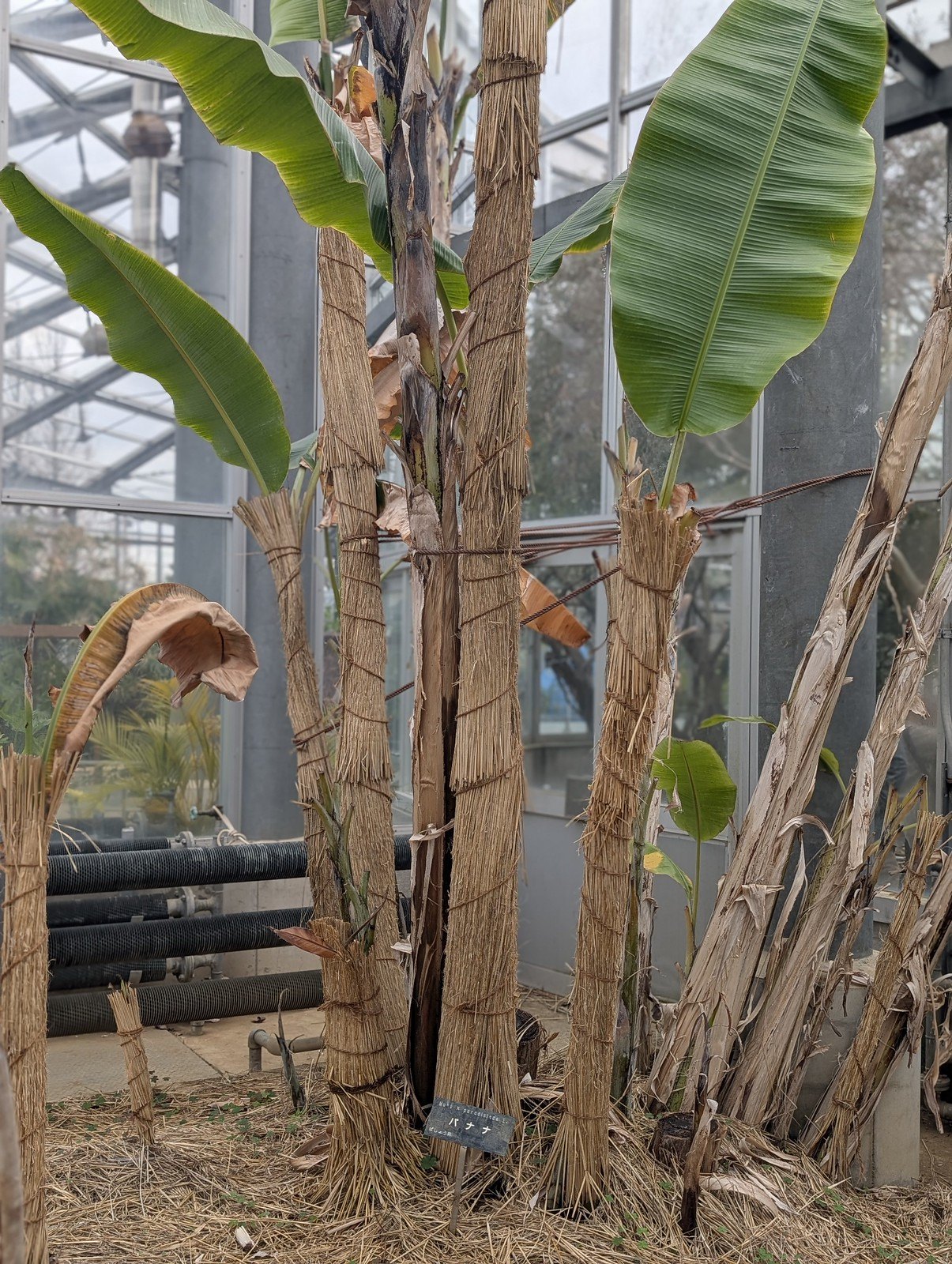
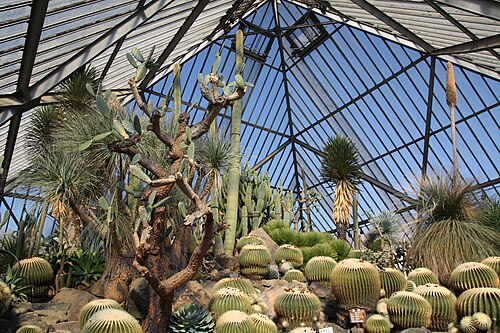
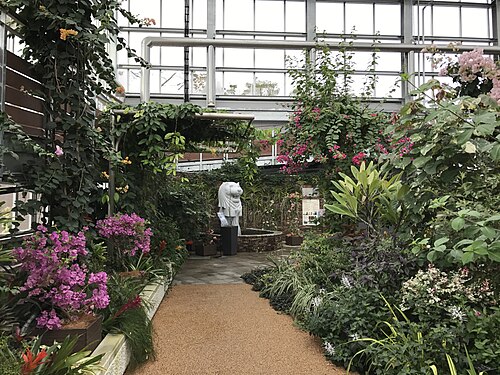
Before 2018 the ornamental greenhouse held tropical and subtropical plants, including the jade vine, water lilies and hibiscus. Today the Green House shows, in the words of the official guide, "beautiful plants" and stages flower-and-greenery exhibitions through the year; a family outings guide notes a range running from hibiscus to banana trees. The surrounding garden is best known for its herbaceous peonies: 210 cultivars and some 2,000 plants (2,500 according to the site's English page), including Ōfuna-strain varieties such as 'Shōgankō' that are seen nowhere else; the peony garden was enlarged by about half in 2018. There are also 370 rose varieties, 120 Japanese irises, tree peonies, camellias, azaleas and rhododendrons, Japanese apricots and the early-flowering Tamanawa cherry, bred on the site from Somei-yoshino and first in bloom in 1974.
Visiting
The Green House stands beside the main lawn, which the official guide still places "in front of the ornamental greenhouse". An hour covers the glasshouse and its exhibitions, but the garden, about six hectares, deserves half a day in May, when peonies and roses peak, or in June for the irises; from mid-February the Tamanawa cherry opens the season for about a month. The centre is a quarter of an hour on foot from the west exit of Ōfuna Station, the hub for the Shōnan Monorail and trains into central Kamakura, and the Okamoto bus stop is a minute away.
35.35° N, 139.52° E
Greenhouses nearby
More greenhouses — Japan
Do you have a good photo of this greenhouse? Suggest it for this page →
Affiliate links — booking through Verrière helps fund our research, at no extra cost to you.