Greenhouse of the Higashiyama Botanical Garden (Nagoya)
Nagoya

Sources checked September 2026
- Year
- 1936–1937
- Style
- Western-style metal-framed glasshouse, nicknamed the 'Crystal Palace of the Orient'
- Dimensions
- A front-facing structure, 温室前館
- Status
- Designated an Important Cultural Property of Japan in 2006; restored from 2014 to 2020, reopened to the public in April 2021
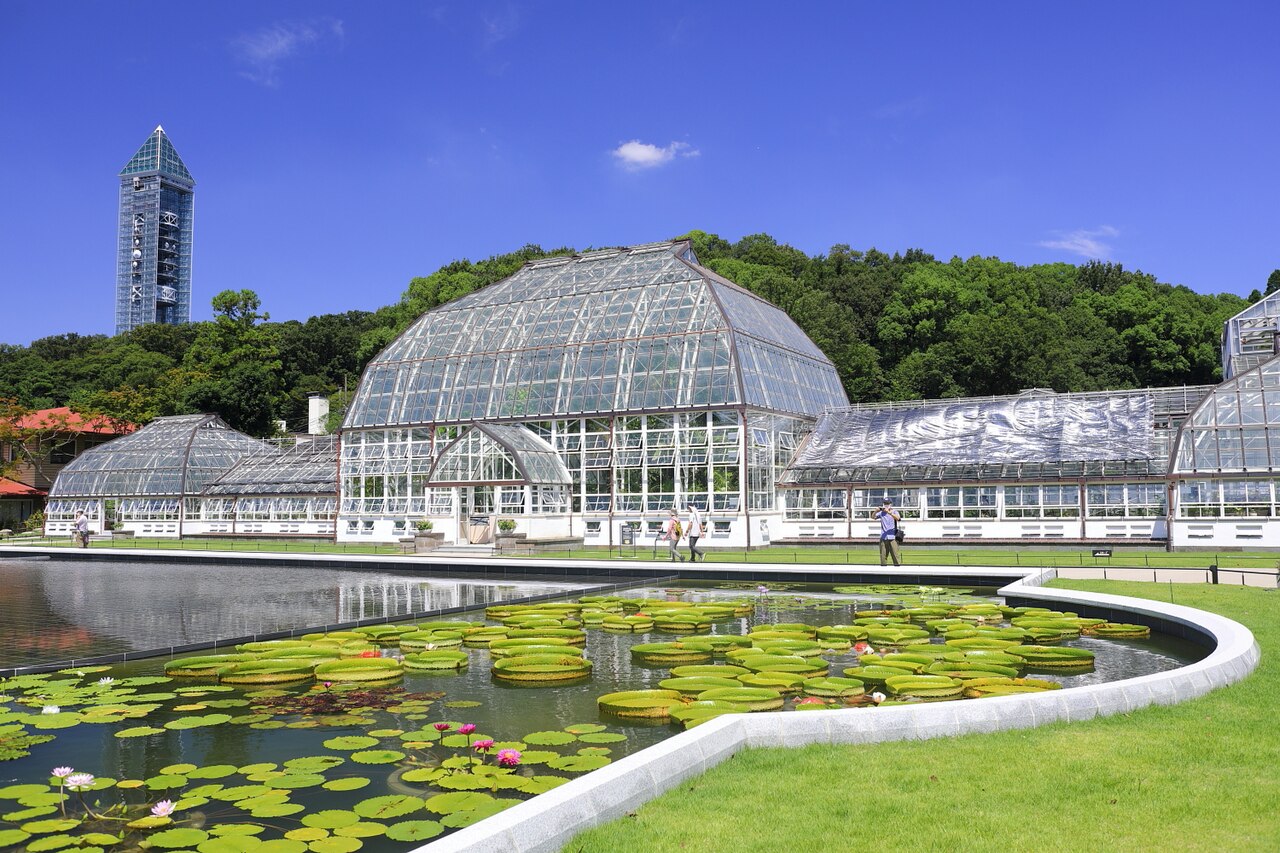
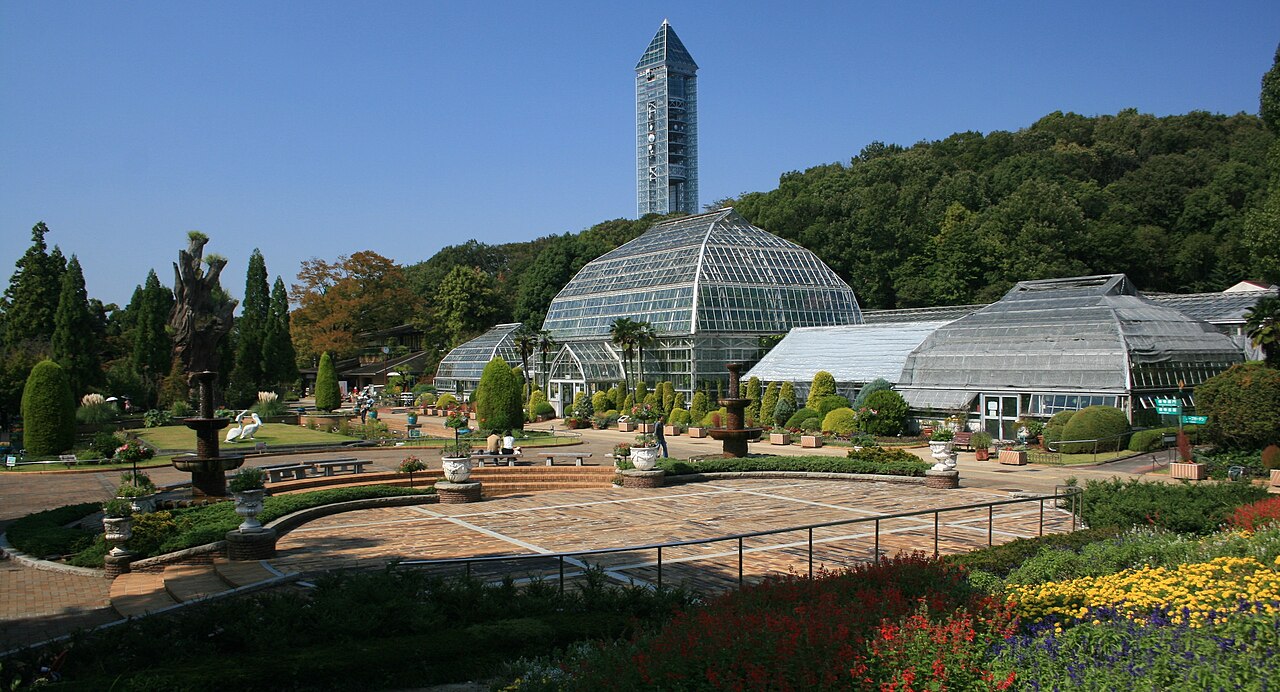
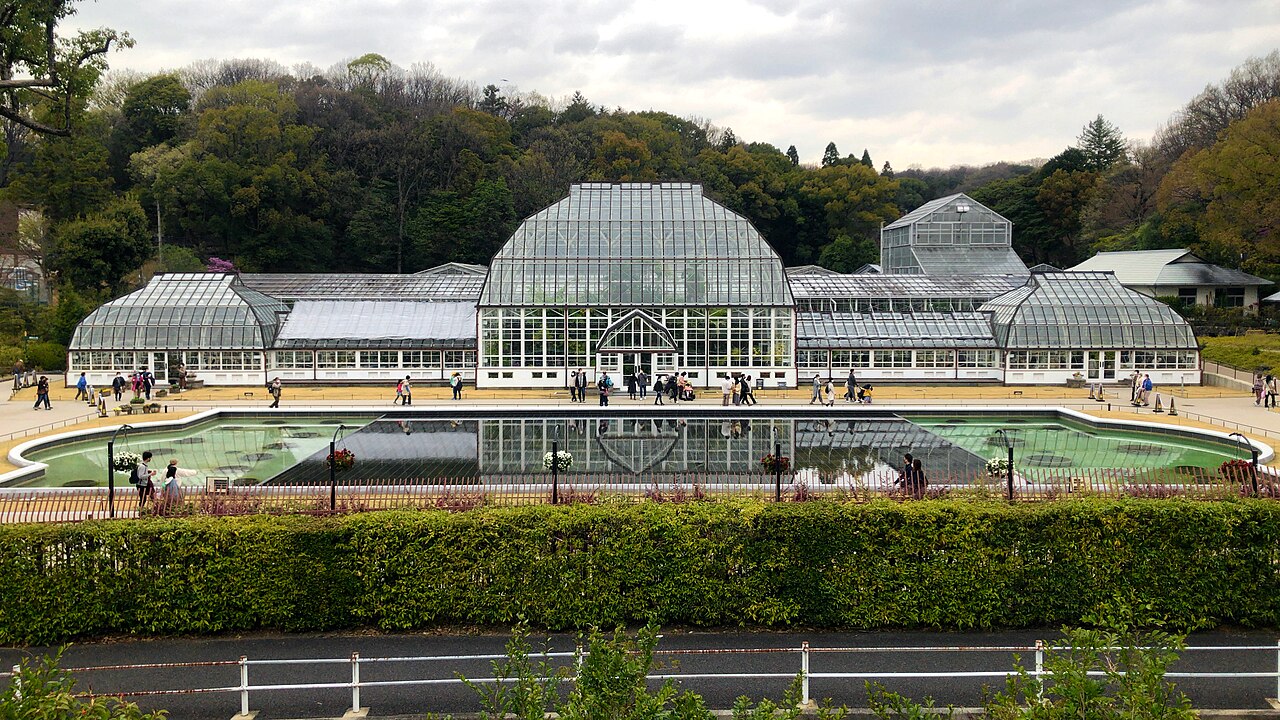
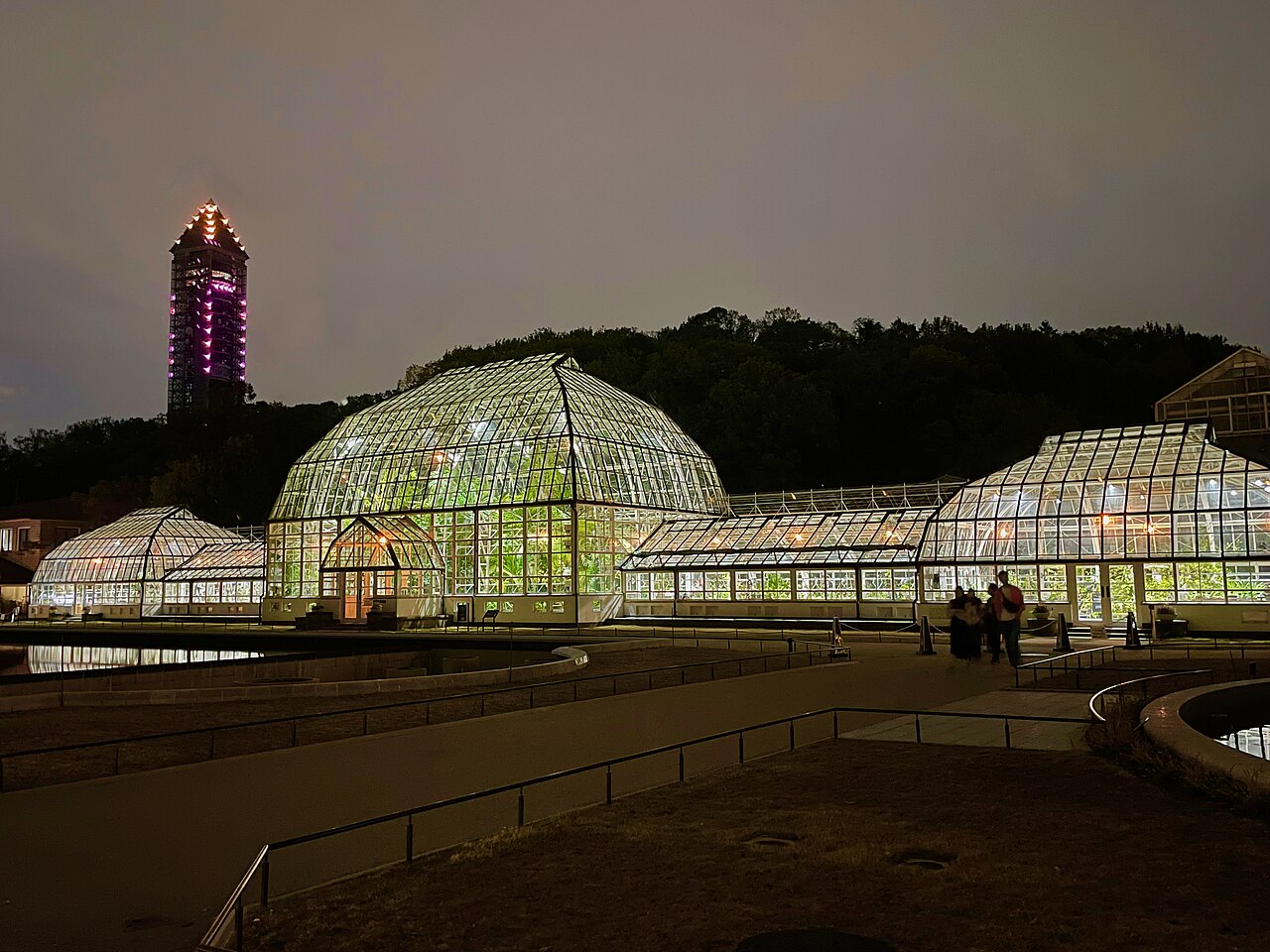
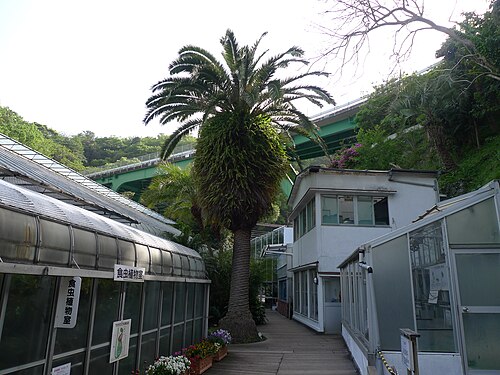
Built in 1937 when the Higashiyama Botanical Garden first opened, this metal-framed greenhouse is now the oldest Japanese greenhouse still standing. Its striking architecture earned it, at the time, the nickname 'Crystal Palace of the Orient,' a direct nod to the Victorian masterpiece in London. It still shelters about ten palm species planted at its inauguration, living witnesses to nearly a century of history. Designated an Important Cultural Property of Japan in 2006, it underwent a meticulous seven-year restoration completed in 2020, before reopening in 2021 with a restored Italianate garden. It remains a powerful architectural symbol of the heritage revival of Japan's historic greenhouses.
Affiliate links — booking through Verrière helps fund our research, at no extra cost to you.
History
Higashiyama Botanical Garden opened on 3 March 1937 in the hills of eastern Nagoya, shortly before the neighbouring zoo with which it now forms a large municipal park. The great greenhouse was part of the original facilities. The register of Important Cultural Properties dates it to 1936, while most accounts use 1937, the year the garden opened. At the time it was nicknamed the 'Crystal Palace of the Orient', after the Crystal Palace in London.
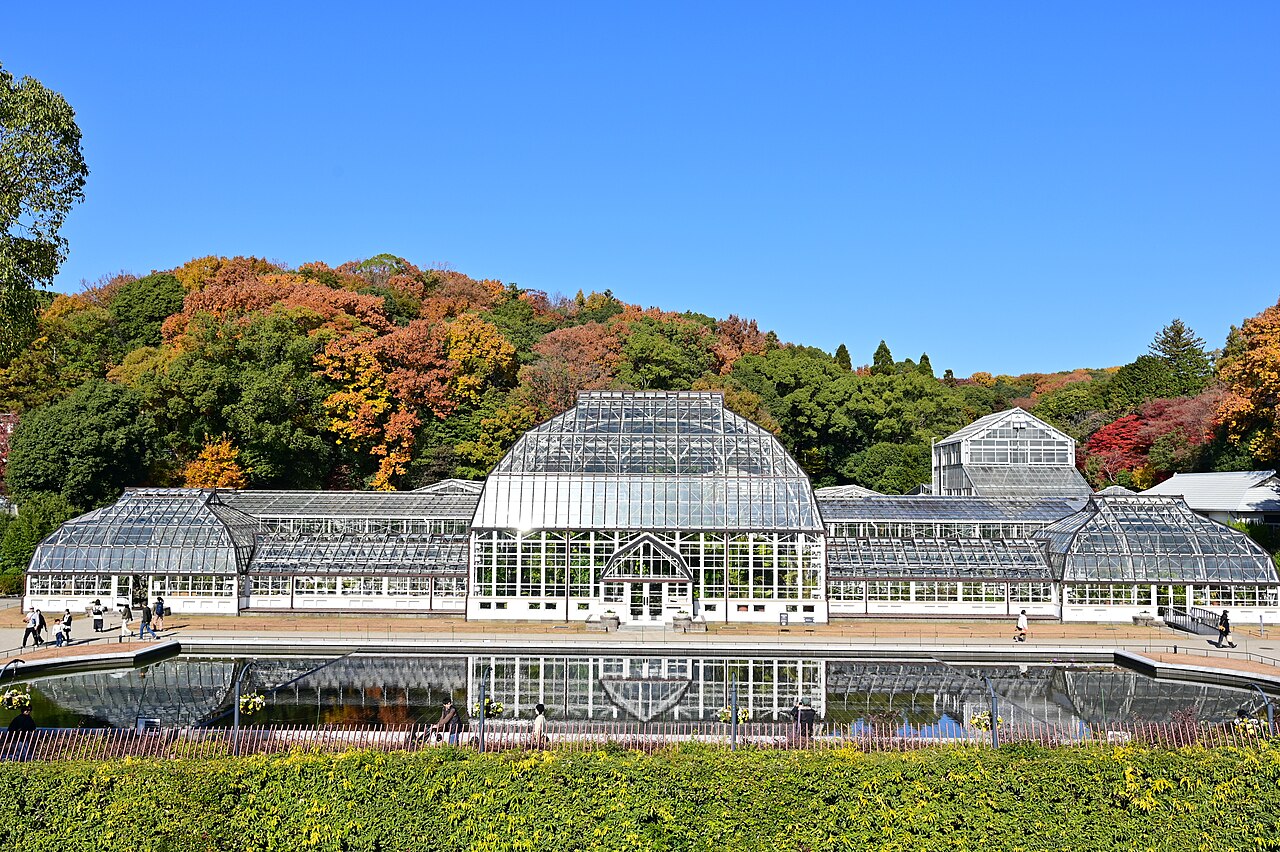
The front building (onshitsu zenkan) is the part that has survived the century, and it is regarded as the oldest greenhouse still standing in Japan. The state designated it an Important Cultural Property in December 2006, describing it as one of the country's first iron-and-glass buildings.
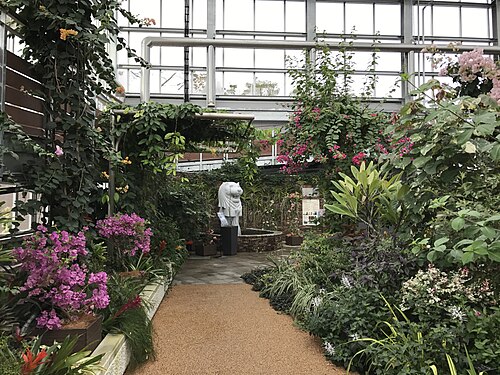
From 2010 the park embarked on a large-scale regeneration plan. As part of it, the greenhouse underwent conservation and restoration work from 2014 to September 2020. The plants were then returned, and the building reopened to the public on 23 April 2021, together with a newly created Italian-style garden.
Architecture and engineering
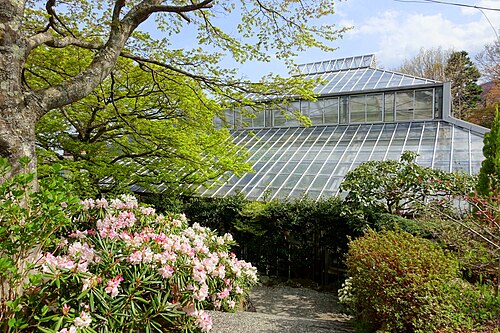
The greenhouse is built of iron and glass, a building type still rare in Japan in the 1930s, and it was this pioneering character that led to its designation. The complex consists of a front building, preserved since the garden opened, and a rear building that extends the display space.
The 2014–2020 restoration concentrated on the historic front building, whose plants were moved out during the works and then replanted.
Plant collections
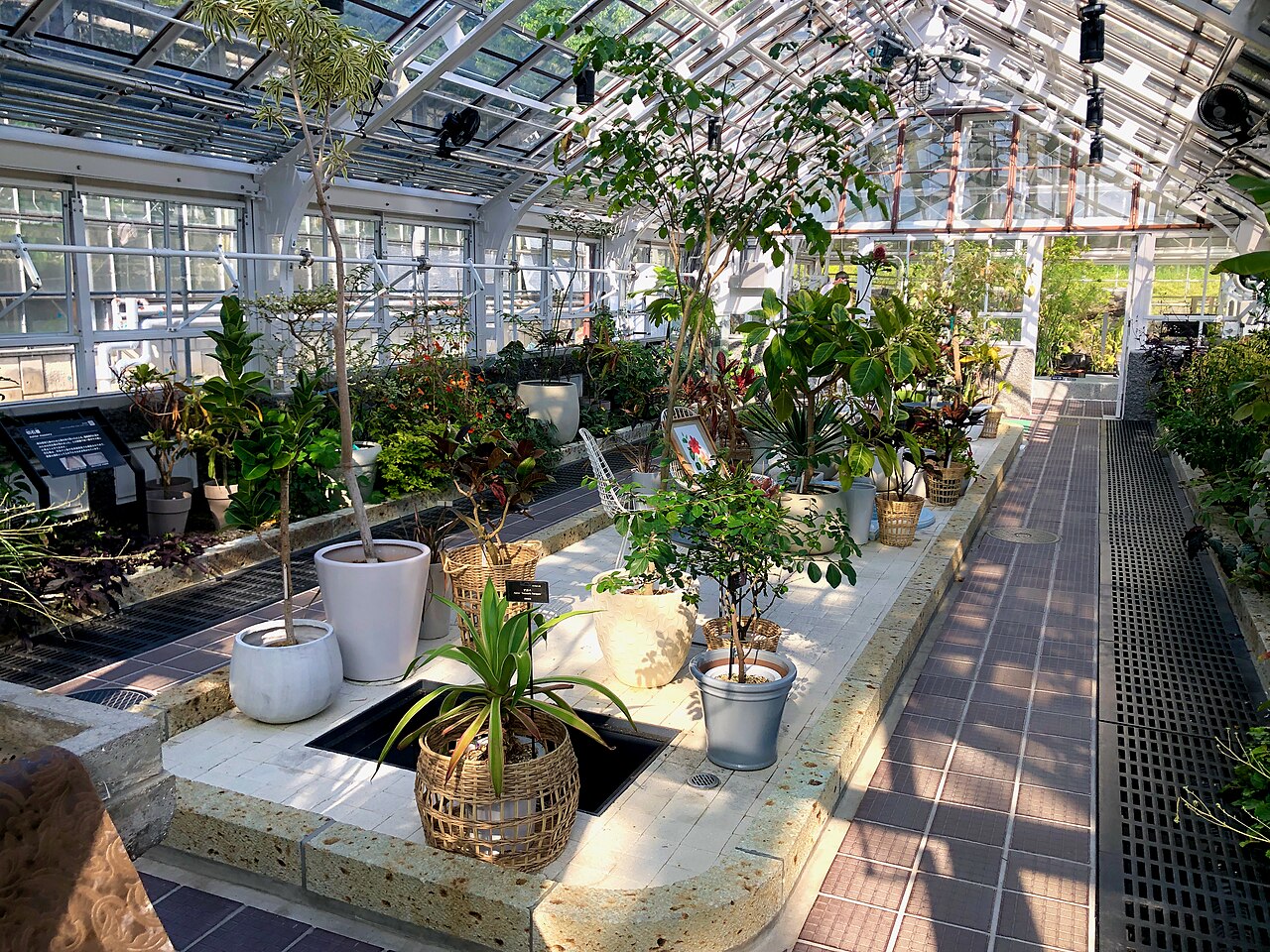
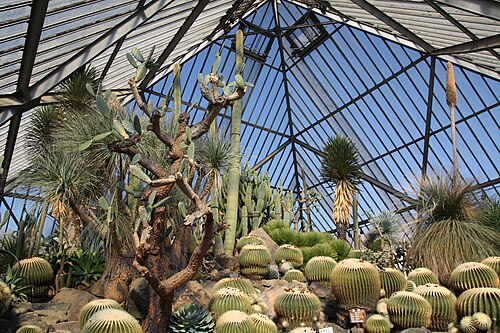
The front building still houses more than ten species of palms and other plants that were put in when the garden opened in 1937, making them among the oldest living witnesses to the site's history.
The greenhouse belongs to a botanical garden holding around 7,000 species over more than 27 hectares. The outdoor collections, laid out to follow the natural contours of the hills, include a collection of camellia cultivars from the Chūbu region recognised as a 'National Collection', along with themed trails devoted to plants of the Man'yōshū anthology, medicinal plants and the forests of the Tōkai region.
Visiting
The greenhouse stands within the botanical garden, which is linked to Higashiyama Zoo, so the two can easily be combined in a single day. The Italian-style garden created for the reopening now accompanies the historic building. An hour covers the greenhouse and its surroundings, but the botanical garden deserves half a day: it also contains a thatched gasshō-zukuri farmhouse moved from Shirakawa-gō in 1956 to the edge of Okuike pond. The park regularly holds guided talks in the greenhouse.
35.15° N, 136.98° E
Greenhouses nearby
Architecture nearby
More greenhouses — Japan
Do you have a good photo of this greenhouse? Suggest it for this page →
Sources (6)
- higashiyama.city.nagoya.jp/05_plant
- higashiyama.city.nagoya.jp/
- ja.wikipedia.org/wiki/%E6%9D%B1%E5%B1%B1%E5%8B%95%E6%A4%8D%E7%89%A9%E5%9C%92
- en.wikipedia.org/wiki/List_of_Important_Cultural_Properties_of_Japan_(Sh%C5%8Dwa_period:_s
- en.wikipedia.org/wiki/Higashiyama_Zoo_and_Botanical_Gardens
- wikidata.org/wiki/Q115557160
Affiliate links — booking through Verrière helps fund our research, at no extra cost to you.