Orangeries of the Karazin University Botanical Garden (Харківський ботанічний сад)
Kharkiv, Kharkiv Oblast

Sources checked October 2026
- Style
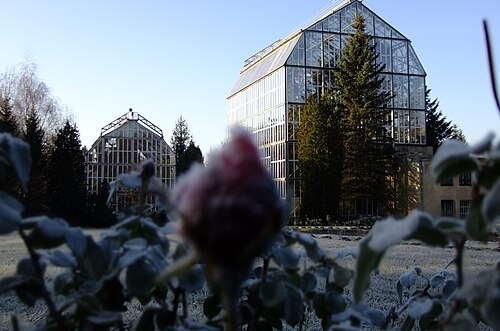
- Group of orangeries with a metal frame, glazed roofs and façades, and a brick gable
- Dimensions
- About 1,000 m² of orangeries
- Status
- Open to the public a few days a week; technical pauses possible in the orangeries
Founded in 1804 with the university, the botanical garden of Karazin University is the oldest in Ukraine. On its plot on Klochkivska Street, a group of orangeries of about 1,000 m² shelters plants of humid tropical forests, humid and dry subtropics, deserts and semi-deserts; the garden counts about 3,000 tropical and subtropical taxa, mostly aroids, bromeliads and succulents, including a cactus collection. Free photographs show glazed roofs and façades on a metal frame. The garden opens only a few days a week.
Affiliate links — booking through Verrière helps fund our research, at no extra cost to you.
History
The botanical garden of Kharkiv University was founded in 1804, together with the university, and is regarded as the oldest in Ukraine. For lack of glasshouses, exotic plants were first kept in rooms, with a small rotunda-shaped orangery in a corner of the university building. Construction of a stone orangery began in 1806; in 1808, according to the garden's official blog, a stone orangery and a wooden glasshouse were built and the plants moved into them. In 1833 the garden had an orangery with three compartments and a wooden glasshouse with two; from 1838 to 1850 a large programme of repair and rebuilding affected the orangeries, and in 1851 Prince V. Y. Meshchersky gave a rich collection of orangery plants. In 1894 the director L. V. Reinhardt secured a building for the Botanical Institute and the rebuilding of orangeries that had become unusable. A glasshouse for Victoria regia was raised between 1903 and 1917 and destroyed after the revolution; in 1914 the garden had seven glasshouses.
During the Second World War the tropical and subtropical collections suffered first; even under the occupation, fuel was allocated to heat the orangeries, and the plants were crowded into a few of them. A Balearic boxwood over 150 years old, a date palm and a holm oak over 80 years old survived there, according to the blog (2020), but a heating failure killed araucarias over 80 years old in 1996. The 5.5-hectare plot on Klochkivska Street received protected status in 1960.
Architecture and engineering
The orangeries stand on the Klochkivska Street plot (5.5 hectares), the garden having received a second plot, on Otakara Yarosha Street, only in the late 1950s. They cover about 1,000 m² according to the outlet Place Kharkiv. OpenStreetMap traces them as one long building of about 1,100 m² on the ground, made up of several attached volumes.
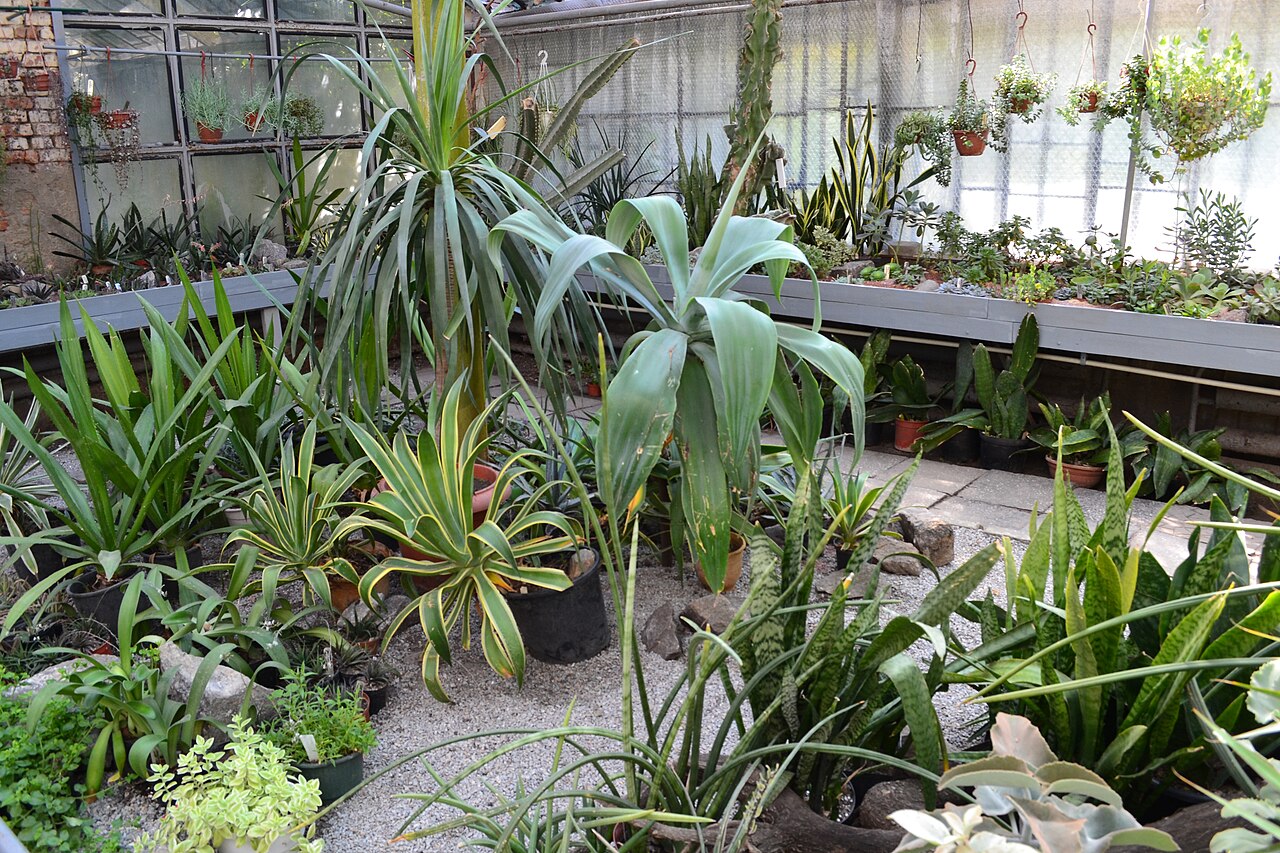
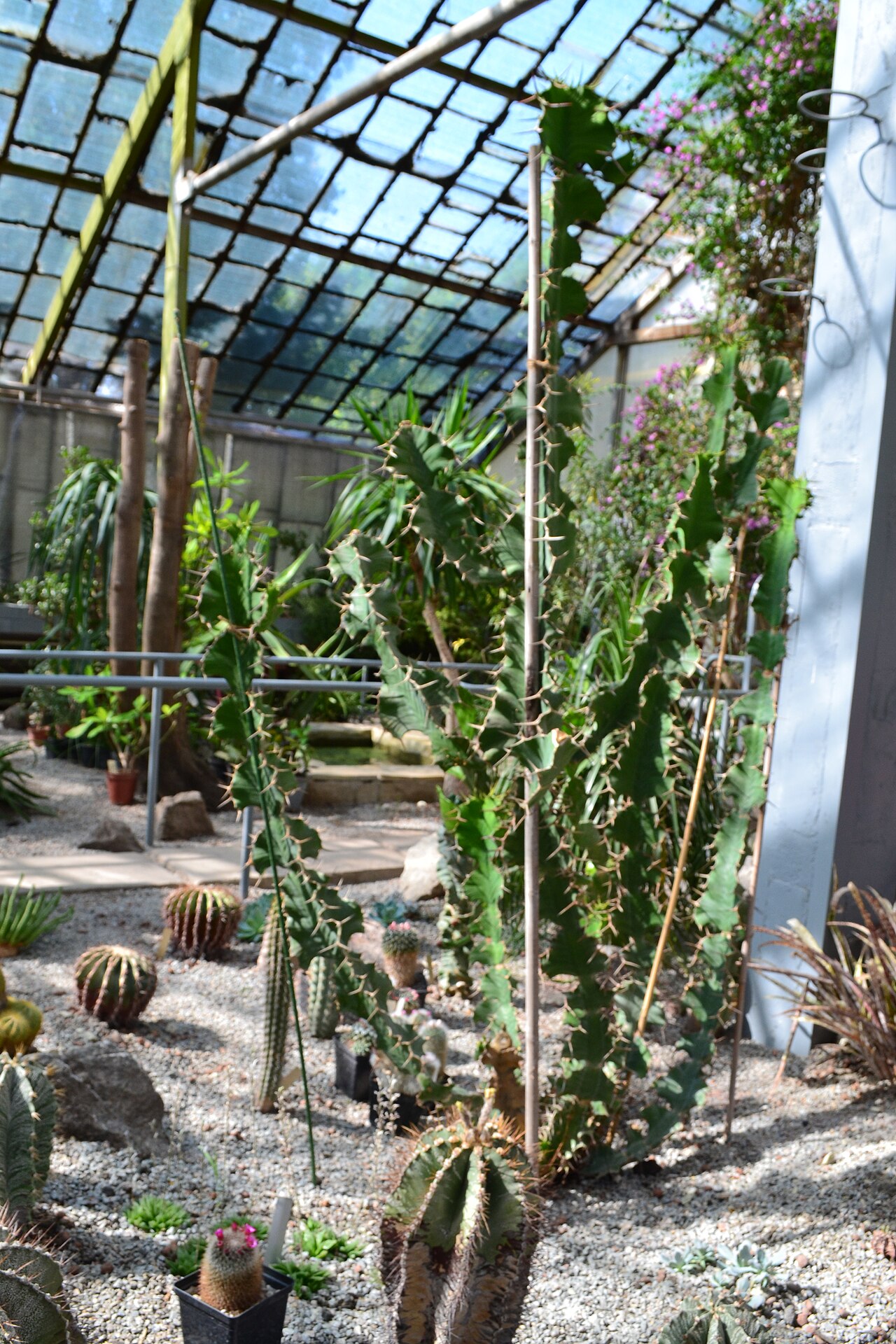
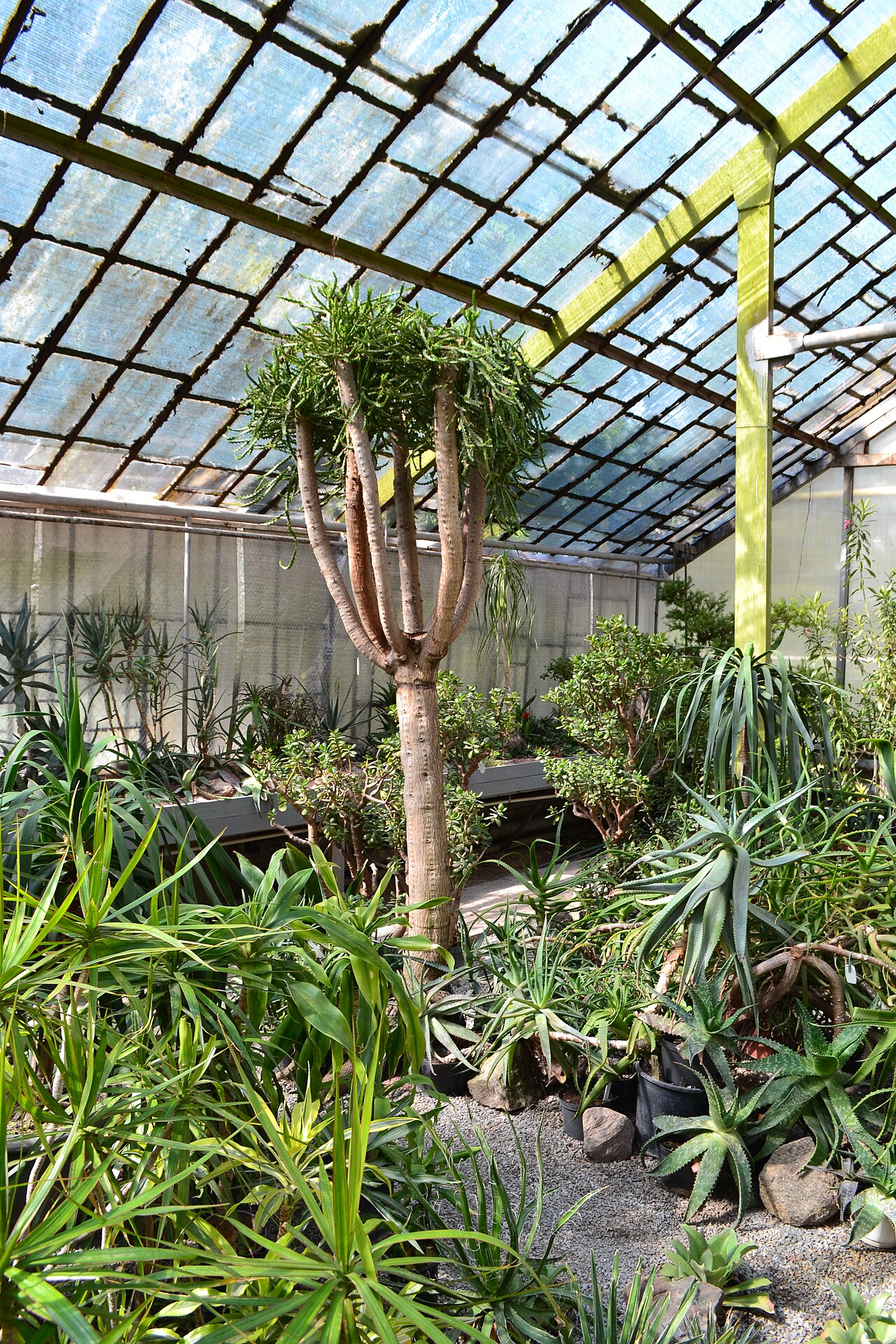
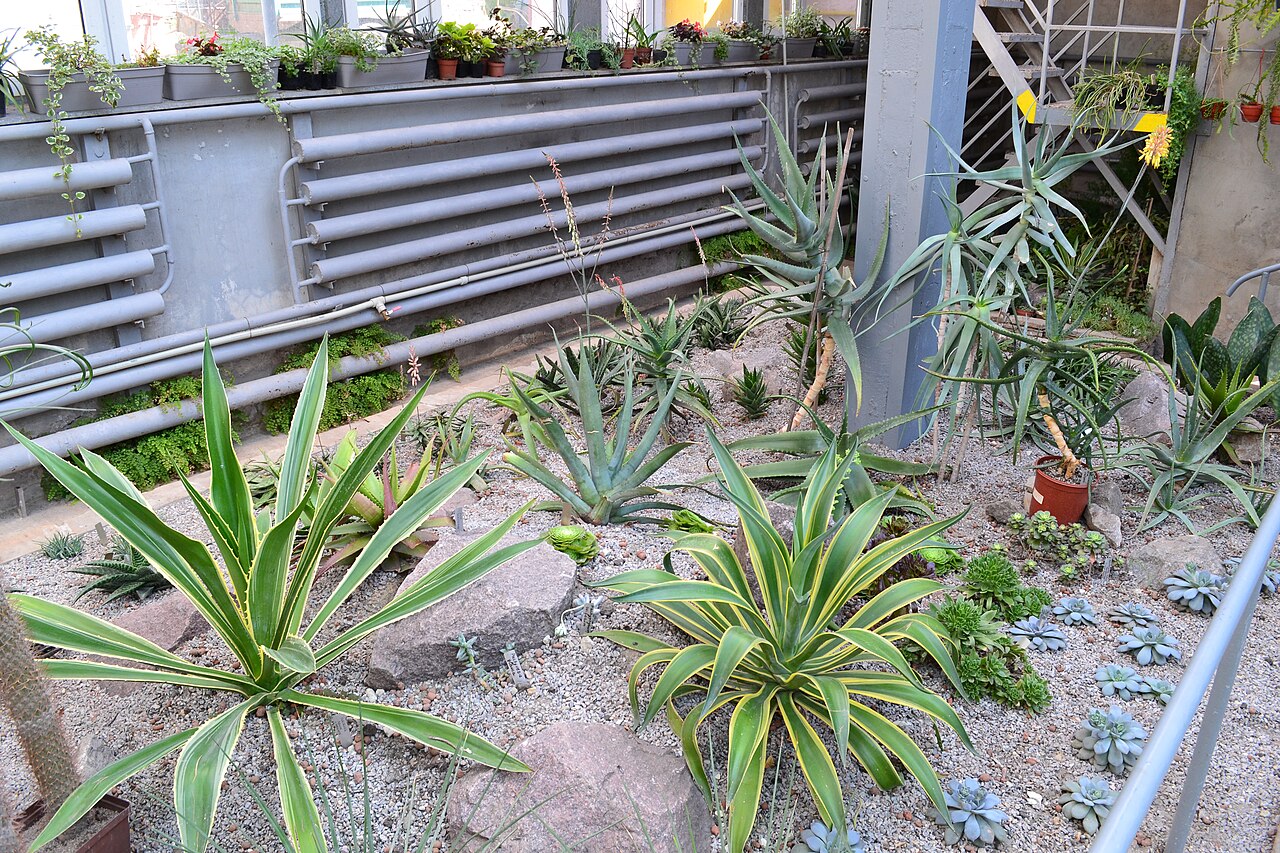
Free photographs on Wikimedia Commons, taken on 14 May 2025 and released into the public domain (CC0), show gabled volumes whose roofs are covered with glass panels, a brick gable, a masonry base and facades with fully glazed metal frames. Inside, under a glazed roof carried on a metal frame, succulents and cacti grow on gravel beds dressed with rocks.
Plant collections
The department of tropical and subtropical plants held more than 2,900 taxa from 550 genera and 129 families according to the garden's blog (2020), and about 3,000 according to Place Kharkiv (2026); Ukrainian Wikipedia speaks of more than 2,000 taxa in the orangery complex, with plants of humid tropical forests, humid and dry subtropics, deserts and semi-deserts. Aroids, bromeliads and succulents are the best represented, and the cactus collection is of particular interest to students and visitors.
A date palm more than 80 years old was presented as one of the pearls of the orangery on a student visit in May 2026. The blog also cites a Balearic boxwood over 150 years old and a holm oak over 80. The photographs on Wikimedia Commons show aloes (including Aloe camperi in flower), cacti and other succulents on gravel beds.
Visiting
The garden manages two plots: Klochkivska Street, where the orangeries are and which receives the public on set days, and Otakara Yarosha Street, which can be visited only on an organised excursion. One ticket covers the grounds, another adds the orangeries; excursions, photo sessions and workshops are by booking. The official blog warns that technical pauses are possible in the orangeries: it is wise to check before coming.
Combine it with the magnolia collection, which counts 58 taxa, and, in May, the tree peonies, which bloom for two to three weeks. The dendrarium, organised by regions of the world, was laid out on the Otakara Yarosha Street plot: it can be visited only on an organised excursion.
50.00° N, 36.22° E
Greenhouses nearby
More greenhouses — Ukraine
Do you have a good photo of this greenhouse? Suggest it for this page →
Sources (6)
- garden-karazin.blogspot.com/2020/05/botanichny-sad-istoriya-ta-suchasnist.html
- garden-karazin.blogspot.com/2026/04/
- place-kharkiv.com/u-kharkovi-startuvav-sezon-tsvitinnia-v-botsadu-karazina-shcho-tam-mozhn
- uk.wikipedia.org/wiki/Харківський_ботанічний_сад
- commons.wikimedia.org/wiki/File:Оранжерея_ХНУ_01.jpg
- gkt.kname.edu.ua/795-znaiomstvo-z-profesiieiu-ekskursiia-do-botanichnoho-sadu-khnu-im-v-n-
Affiliate links — booking through Verrière helps fund our research, at no extra cost to you.