Historic Orangery, Botanical Garden of Odesa National University
Odesa, Odesa Oblast
Entry updated on October 5, 2026
- Year
- 1886
- Style
- Late-19th-century glazed orangery
- Status
- Restored after the March 2024 strike; open during events or by appointment
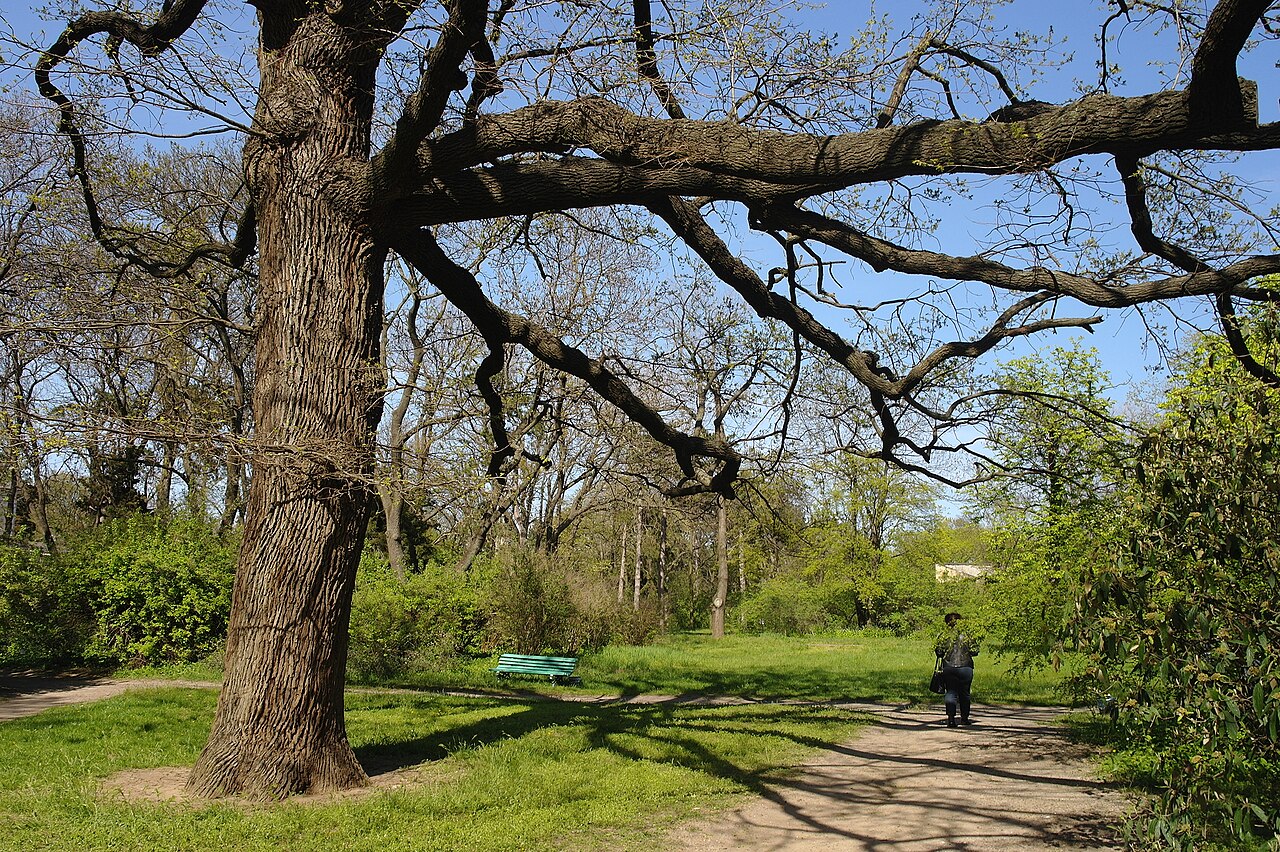
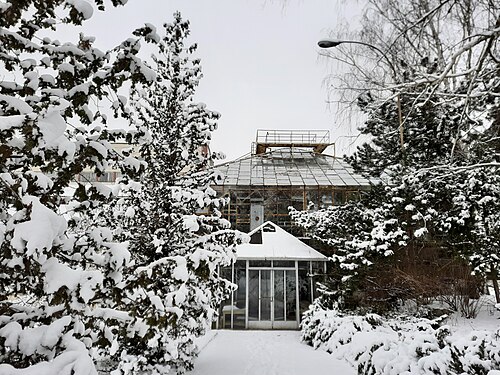
First housed in the university courtyard, where a two-room orangery was built in 1867, Odesa's university botanical garden moved in 1880 to Malyi Fontan, where Professor L. V. Reinhard had an orangery built with warm and cold sections. The surviving orangery, dated by the local press to 1886, belongs to a 16-hectare garden with more than 3,000 species. Damaged in the Russian missile attack of 25 March 2024, which stripped eight greenhouses of more than half their glass, it was restored with donations from Odesa residents and reopened in October 2024; it can be visited during events or by appointment.
Affiliate links — booking through Verrière helps fund our research, at no extra cost to you.
History
1 min
Sources differ on when the botanical garden of Odesa's university was founded, giving either 1842 or 1867. It was in 1867 that a first two-room orangery was built in the university courtyard, at a cost of 2,000 roubles. Short of space, the garden moved in 1880, at the initiative of Professor L. V. Reinhard, to a university estate at Malyi Fontan, where an orangery with warm and cold sections was built and a plant-systematics plot laid out. An archive file of 1884 concerns the construction of the orangery, and the local press dates the surviving building to 1886. By 1898 the registers listed more than 2,300 plant accession numbers. On 27 July 1911 the building committee of the Ministry of Public Education approved plans and estimates for a 'main orangery', whose construction is not documented in the sources consulted.
The Second World War brought heavy losses; staff saved some of the plants in the park and the orangery, then methodically rebuilt the collections. On 25 March 2024 a Russian missile attack hit the garden: eight greenhouses lost more than half their glass, and the administrative building, the laboratory and the heating were damaged. With no help from the city, the garden launched an appeal that had raised more than 200,000 hryvnias by May 2024, against damage estimated in the millions; the orangery reopened in October 2024. On 7 September 2025 a drone attack destroyed another greenhouse and damaged the citrus house.
Architecture and engineering
1 min
Published sources say little about the structure of the orangery itself; neither its architect nor its dimensions are known. They do, however, trace the development of the facilities: two rooms in the university courtyard in 1867, then at Malyi Fontan an orangery divided into a warm and a cold section; in 1911 the university also secured approval for the plans of a main orangery.
Today the 1886 orangery is part of a group of at least eight greenhouses that the war has put to the test. In March 2024 those eight houses lost more than half their glazing and the heating was damaged. In September 2025 a greenhouse used to prepare autumn plantings was destroyed outright, while the frame and windows of the citrus house were damaged. The director, Liudmyla Levchuk, noted at the time that subtropical plants can withstand 7–8 °C under temporary plastic-film protection.
Plant collections
1 min
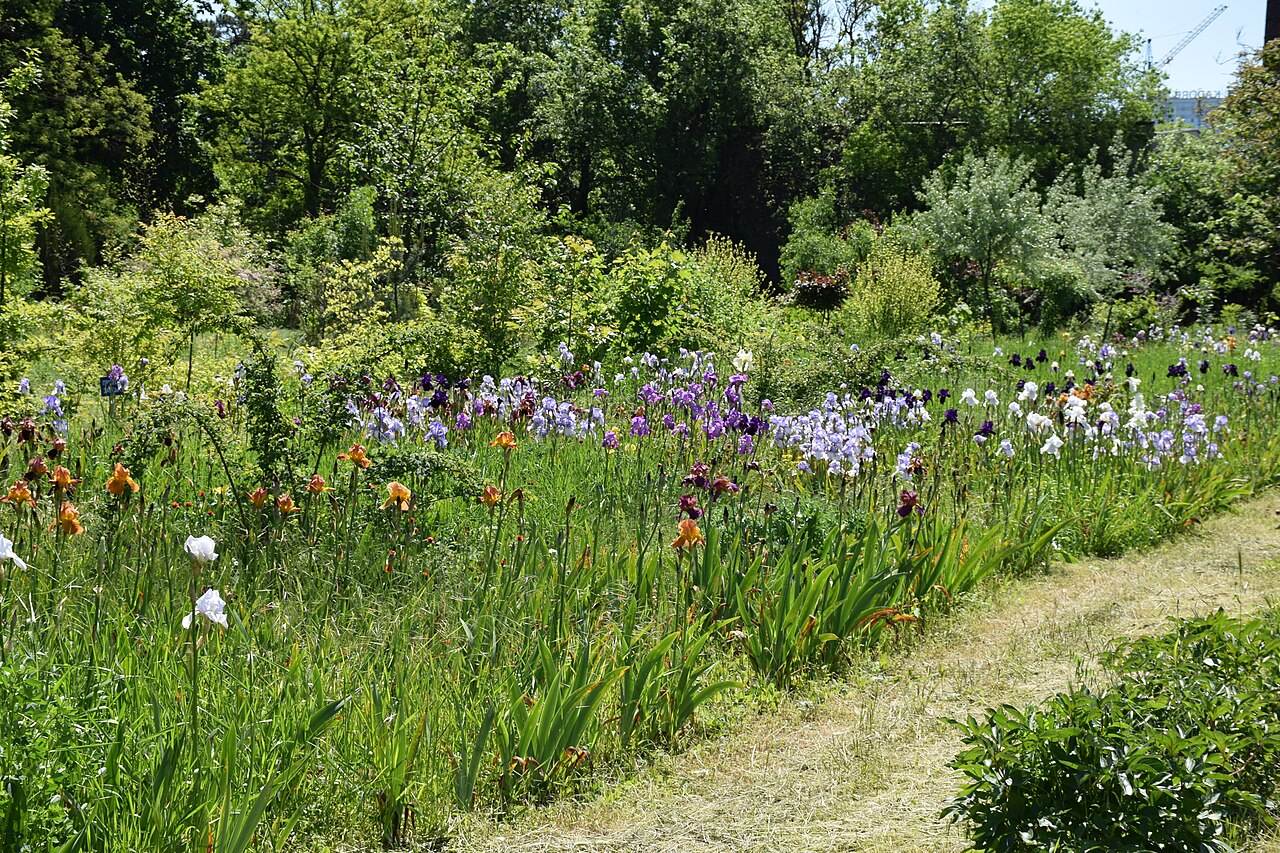
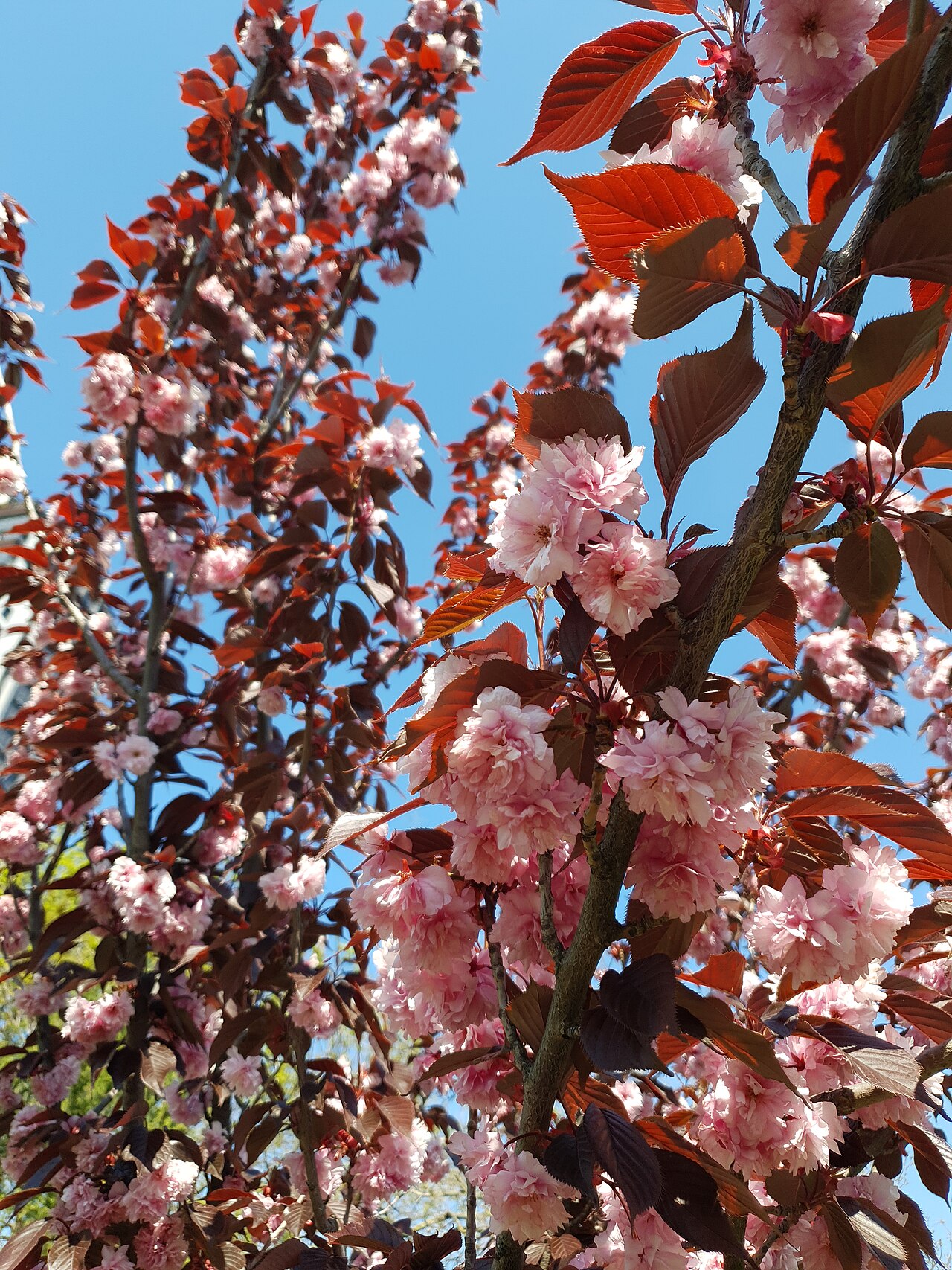
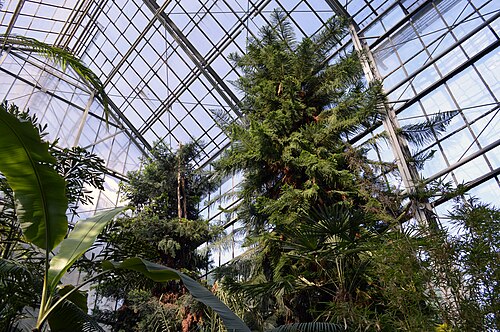
The garden covers 16 hectares and reports more than 3,000 species; a 2024 article puts the figure at 3,500–3,700 taxa, species and varieties included. On reopening, the orangery displayed ficus, bromeliads, strelitzias, succulents, ferns and olive trees among other plants.
The plants hit by flying glass in 2024 show the range of the glasshouses: ficus varieties, strelitzias, monstera, tetrastigma, eupatorium, sparmannia, dracaenas, asparagus, hibiscus, cacti, succulents and ivy. The citrus house keeps a collection more than 70 years old, which survived the 2025 attack, whereas the greenhouse destroyed that year held about a dozen hardy perennials, ornamental thujas and cypresses, and climbers intended for autumn planting.
Visiting
1 min
The garden covers 16 hectares on two sites along French Boulevard, at numbers 48/50 and 87, in the Malyi Fontan district. Since reopening in October 2024, the orangery can be visited only during events organised by the garden or by appointment. Charity events such as the 2024 'October Weekend' or the festival announced for late September 2025 are the best opportunities to see it while contributing to the repair of the greenhouses. The rest of the garden, with its open-air collections, extends the walk.
46.45° N, 30.76° E
Greenhouses nearby
More greenhouses — Ukraine
All greenhouses — Ukraine →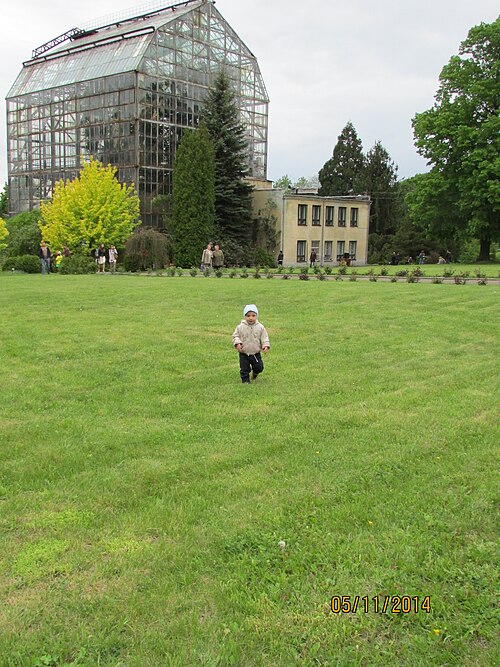
Do you have a good photo of this greenhouse? Suggest it for this page →
Sources (6)
- uk.wikipedia.org/wiki/%D0%9E%D0%B4%D0%B5%D1%81%D1%8C%D0%BA%D0%B8%D0%B9_%D0%B1%D0%BE%D1%82%
- archive.od.gov.ua/main/botanichnyj-sad/
- odesa.rayon.in.ua/news/750617-v-odesi-vidkrili-starovinnu-oranzhereyu
- odesa.rayon.in.ua/topics/705911-roslinam-ne-poyasnish-shcho-u-nas-viyna-odeskiy-botsad-ogo
- bessarabiainform.com/2025/09/pid-chas-vorozhoi-ataky-v-odeskomu-botsadu-znyscheno-teplytsy
- openstreetmap.org/way/232526234