Orangery of the Botanical Garden of Poltava V. G. Korolenko National Pedagogical University
Poltava, Poltava Oblast

Sources checked October 2026
- Year
- 1990
- Style
- Glazed university greenhouse in a teaching botanical garden
- Status
- Open to visitors on weekdays; garden entry free, greenhouse paid, visits on request
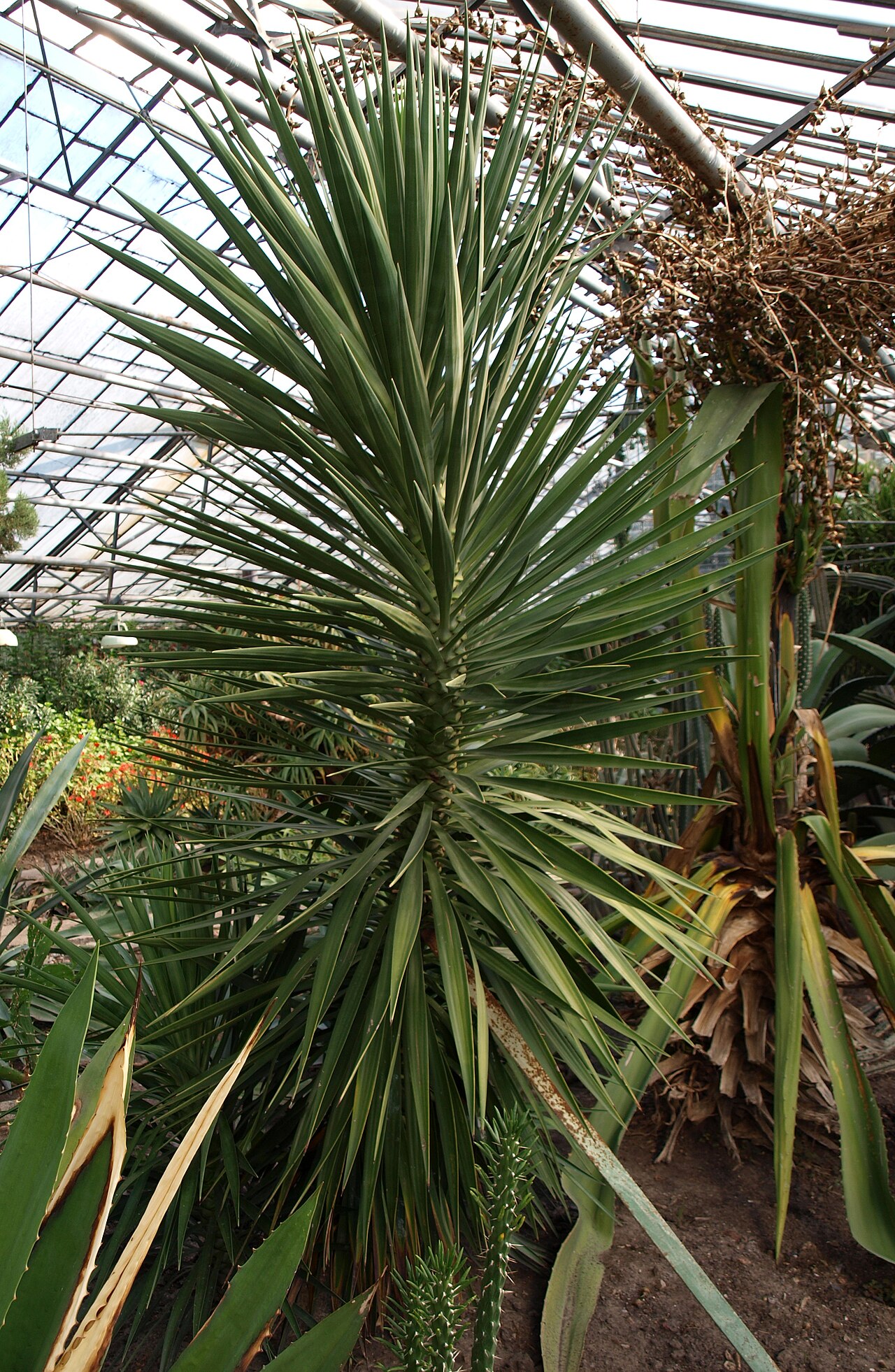
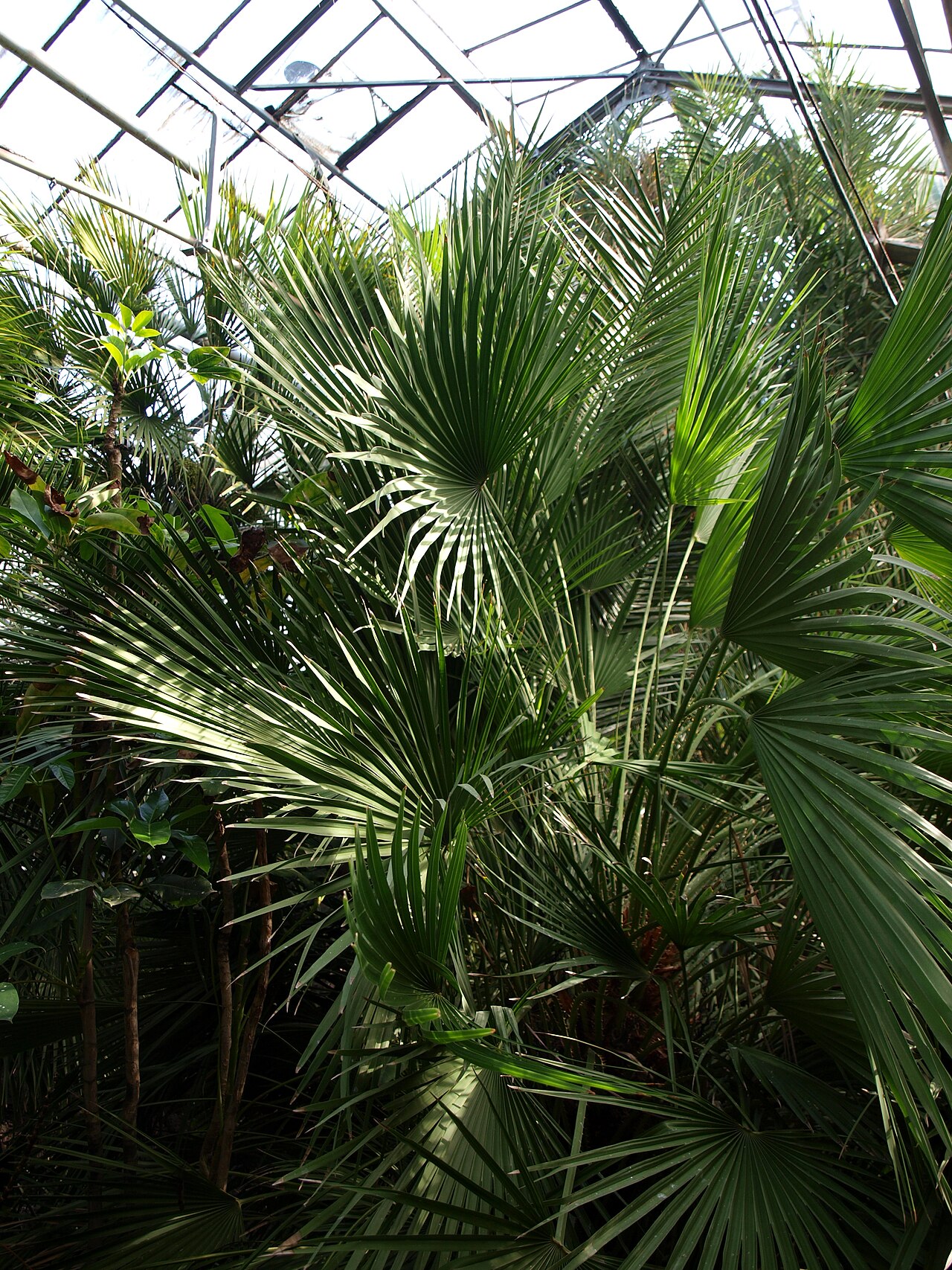
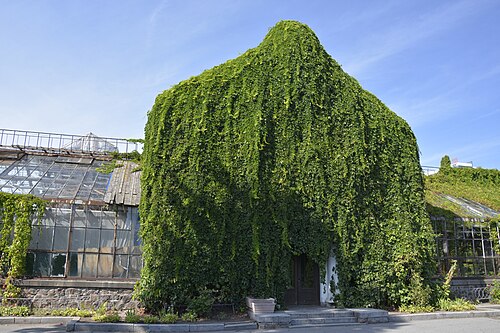
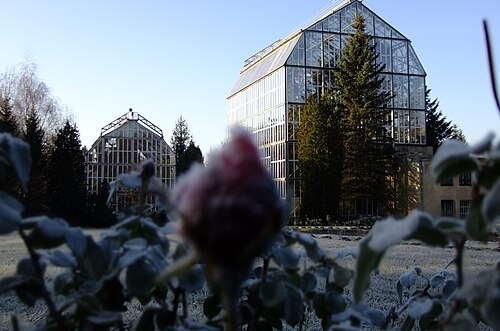
In a former episcopal garden in central Poltava, now the botanical garden of Korolenko Pedagogical University, a greenhouse built in 1990 brings together plants of deserts, semi-deserts, tropics and subtropics: palms, cacti, agaves and aloes, including a 40-year-old agave. Its size is given as 200 m² or 2,000 m²; local press (2024) presents it as open to visitors on weekdays, with free entry to the garden and a charge for the greenhouse.
Affiliate links — booking through Verrière helps fund our research, at no extra cost to you.
History
The garden occupies part of a former episcopal garden: the head of the laboratory traces its history back to 1848, while an article in ZMIST mentions an orchard of the former archimandrite's garden at the end of the 19th century. After 1917 the land passed to the state and lay fallow until the 1930s, when students of the natural sciences faculty of the pedagogical institute took plots there for experiments. An agrobiological station, with orchard, vegetables and cereals, served as a teaching base, and the herbarium of about 10,000 specimens was begun in the 1930s. Wikipedia gives 1927 as the founding date. The 1960s-1980s brought flower beds, alpine rockeries and a large cactus collection. The site was given the status of a garden-art monument in 1964 and that of a botanical garden in 1989; a new 200 m² greenhouse was built in 1990, and the garden has been open to visitors since 1991.
The first years of independence were hard: with no fence, the grounds were stripped, and little remained apart from large, deep-rooted plants and the greenhouse, itself looted and its beds dug over, the head of the laboratory recalls. The revival dates from 1992, when she took charge; it relied on plant exchanges with Sofiyivka park, the Hryshko garden in Kyiv and the gardens of Kryvyi Rih and Kharkiv.
Architecture and engineering
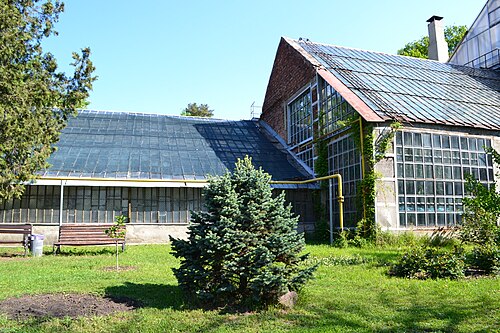
A new 200 m² greenhouse was built in 1990 according to ZMIST (2020), and Wikipedia gives the same area, whereas the Suspilne report (May 2024) and a university note of May 2026 speak of a 2,000 m² greenhouse; the outline of the building labelled 'Оранжерея' in OpenStreetMap covers about 1,650 m². The structure is glazed: at the entrance, the head of the laboratory warned in 2020 that strong wind can bring panes down and that the ceiling drips when it rains.
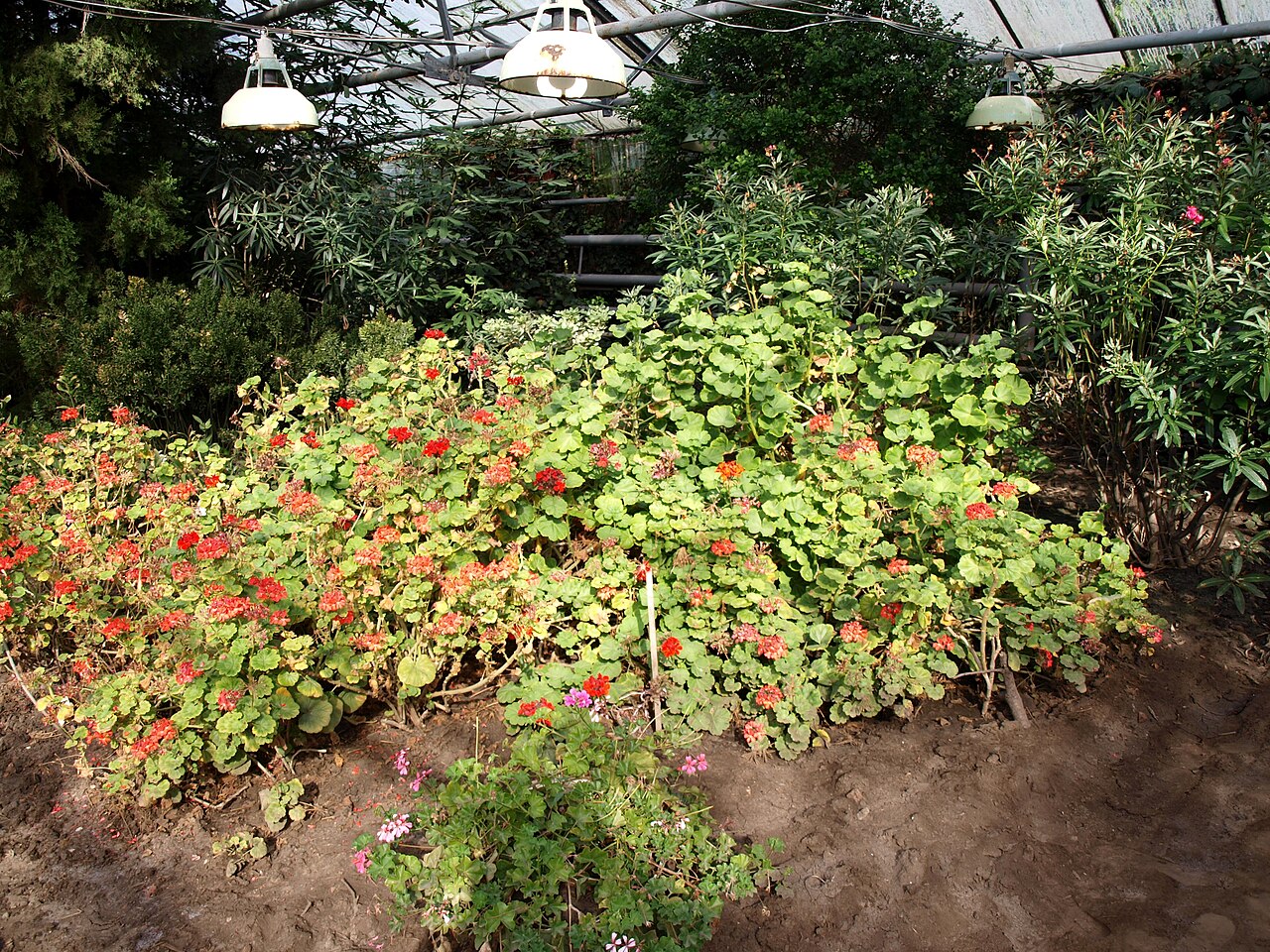
Gas heating was once cut off; the garden switched to pellets, which allowed the greenhouse plant collection to be preserved, one that has vanished from most scientific gardens according to the same source. Repairs are done by the staff, six people in all. The plants are grouped by soil and climate zones: deserts, semi-deserts, tropics and subtropics.
Plant collections
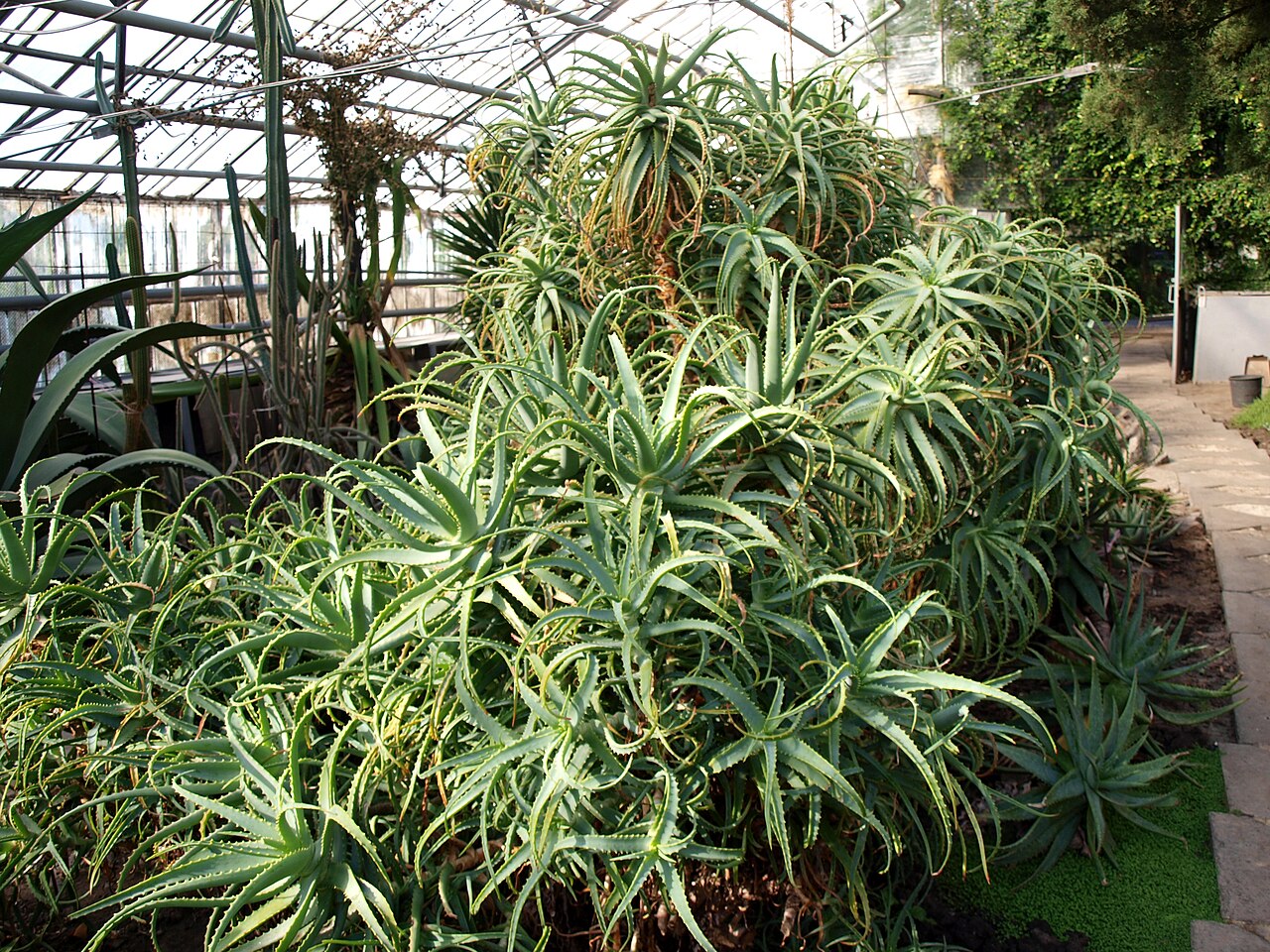
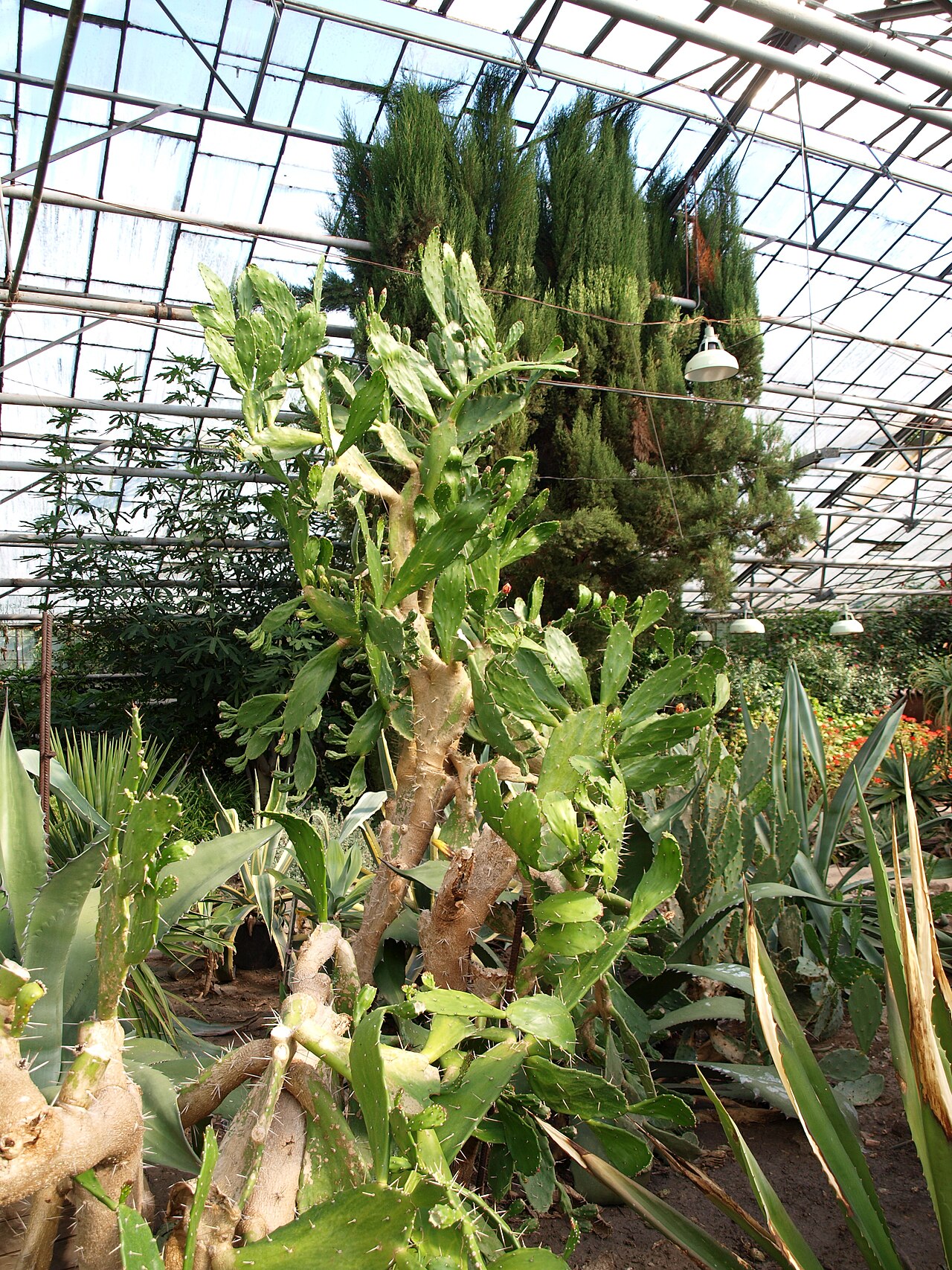
Suspilne cites about 300 species and varieties grown under glass, whereas Wikipedia and a 2026 university note speak of 600 species in the greenhouse; the ZMIST article attributes those 600 species to the whole garden, about 500 of them in the open air. Wikipedia names cacti (Cereus, Echinopsis, Epiphyllum, Mammillaria, Opuntia, Rhipsalis), the Canary Island date palm (Phoenix canariensis) and the tree aloe (Aloe arborescens). A 40-year-old agave is the team's pride: it flowers once in its life and then dies, and the garden hopes it will refrain. The cactus collection has been built up since the 1960s-1980s, and heat-loving plants flower there all year round, ZMIST notes.
Outdoors, Wikipedia counts a dendrarium of 136 tree and shrub species and an alpine rockery of 87 species; a family of patrons gave 16 lilac varieties. From spring, peonies, irises, snowball viburnum, jasmine and ornamental hawthorn bloom, and a pomegranate was planted in 2024 to test how it copes with winter.
Visiting
The garden is at 16 Kirkhova Street (formerly Fedora Morhuna Street, two names the sources still use). It is open to visitors on weekdays: free entry to the grounds, a charge for the greenhouse, guided visits bookable by telephone, weekends included, and paid photo sessions. Attached to the natural sciences faculty, it follows the university schedule, and the head of the laboratory gives the tours herself, on a voluntary basis according to ZMIST (2020).
Visitors are rare in winter, but heat-loving plants flower under glass all year round; spring is the season of peonies, irises and snowball viburnums. A monument to the botanist Mykola Hryshko, born according to ZMIST in a house at the far end of the grounds, stands there. It is wise to check the access conditions before coming.
49.60° N, 34.56° E
Greenhouses nearby
More greenhouses — Ukraine
Do you have a good photo of this greenhouse? Suggest it for this page →
Sources (6)
- suspilne.media/poltava/753235-botanicnij-sad-u-poltavi-akij-mae-viglad-ta-ak-vidvidati/
- zmist.pl.ua/publications/vosme-chudo-poltavi-chomu-varto-pobuvati-v-universitetskomu-botan
- uk.wikipedia.org/wiki/Ботанічний_сад_Полтавського_національного_педагогічного_університету
- pdau.edu.ua/sites/default/files/academicdepartment/kafedra-selekciyi-nasinnyctva-i-genetyk
- dumka.poltava.ua/botanichnyy-sad-u-poltavi-iak-vidvidaty-ta-shcho-mozhna-pobachyty/
- wikidata.org/wiki/Q20073888
Affiliate links — booking through Verrière helps fund our research, at no extra cost to you.