Makino Botanical Garden Greenhouse (高知県立牧野植物園 温室)
Kōchi, Kōchi Prefecture
Entry updated on October 5, 2026
- Year
- 2010
- Style
- Contemporary glasshouse entered through a stone tower
- Dimensions
- About 14 m high, floor sunk 2 m below ground
- Status
- Open to the public
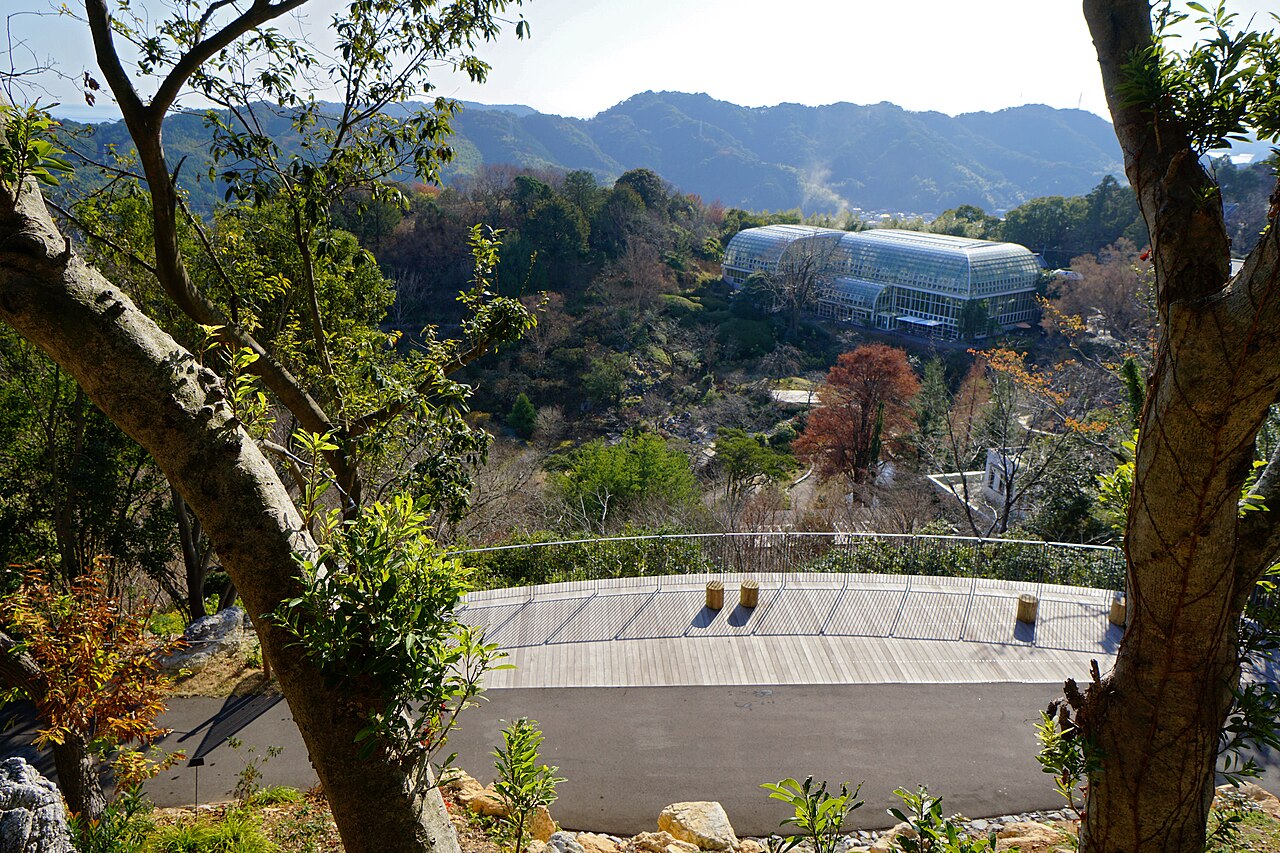
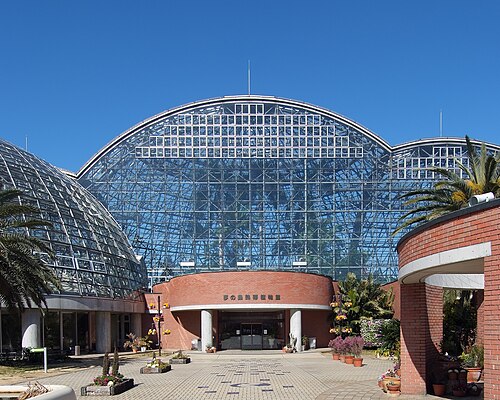
The Kōchi Prefectural Makino Botanical Garden, founded in 1958 on Mount Godai in Kōchi in honour of the botanist Makino Tomitarō (1862-1957), opened a new tropical greenhouse on 24 April 2010. It is entered through the 'Green Tower', a 9 m stone cylinder whose openings are planted with akō figs. About 14 m high and sunk 2 m into the ground, the greenhouse grows some 1,000 tropical species arranged in zones: plants of arid lands, a water garden set around a waterfall, a jungle of ferns and aroids, and a viewing deck where the jade vine flowers.
Affiliate links — booking through Verrière helps fund our research, at no extra cost to you.
History
1 min
The garden is named after Makino Tomitarō (1862-1957), often described as the father of Japanese botany. It was founded in 1958, the year after the scientist's death, near the summit of Mount Godai (Godaisan), which overlooks the city of Kōchi. Run by the prefecture, it now covers 17.8 hectares and grows nearly 3,000 species.
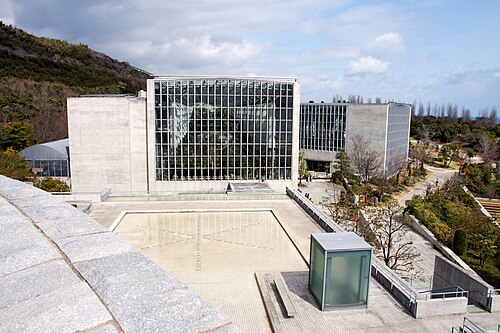
The site was extensively developed at the end of the 1990s. In 1999 the main building of the Makino Tomitarō Memorial Museum opened, designed by the architect Naitō Hiroshi around the idea of sustainability; the garden stresses that it combines advanced computer analysis with traditional Tosa craftsmanship, and the building received, among other awards, the 13th Murano Tōgo Prize and the grand prize of the InterArchi 2000 triennale.
The tropical greenhouse was renewed a decade later: the new greenhouse opened on 24 April 2010, with a jungle zone, a water garden, the 'Green Tower' and its corridor, and a viewing deck. The garden has kept growing since, notably with the opening on 20 May 2023 of a centre for botanical research and exchange. The sources consulted do not name the designer of the 2010 greenhouse.
Architecture and engineering
1 min
According to a study published by Kyoto University of the Arts, the glasshouse rises 14 metres above the ground and its lower level was dug 2 metres into the hillside. Visitors enter through the 'Green Tower' (みどりの塔), a 9-metre stone cylinder that the garden likens to the hollow of a great tree. Akō figs are planted in its openings: the tower's name refers to its future appearance, when their aerial roots and foliage will gradually cover it with a living net.
A corridor leads from the tower to the different zones. The water garden is composed around a waterfall, framed by symmetrically placed columns that evoke a temple, in a wide open space. The jungle zone is bathed in the spray of another cascade, while a viewing deck looks down on the canopy and the climbers. The Kyoto study also identifies a dry zone, a tropical living zone with a hut inspired by South-East Asia, a zone of useful plants and a heliconia tunnel.
Plant collections
1 min
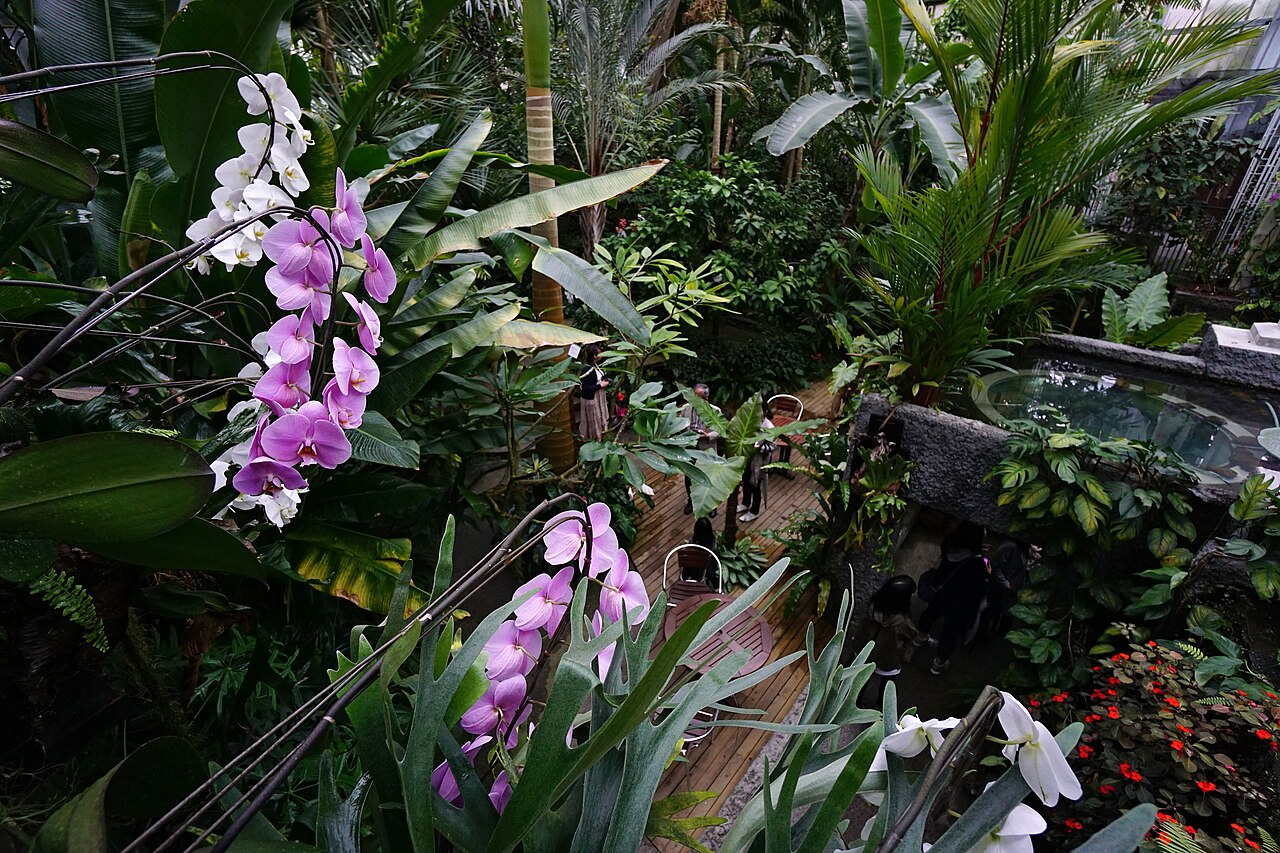
The greenhouse grows about 1,000 tropical species. In the tower and the corridor, akō figs spread their aerial roots alongside staghorn ferns, Dicksonia tree ferns and Cissus. The arid zone brings together agaves, bottle trees, columnar cacti, euphorbias, aloes, baobabs and sansevierias.
The water garden combines Barringtonia racemosa with its hanging flowers, tropical water lilies, the giant Victoria cruziana, mangrove relatives and wetland species. In the jungle, the spray keeps a setting of ferns, aroids and gesneriads lush and green. The viewing deck shows off the flowers of the Aristolochia and the emerald-green blooms of the jade vine (Strongylodon macrobotrys).
Visiting
1 min
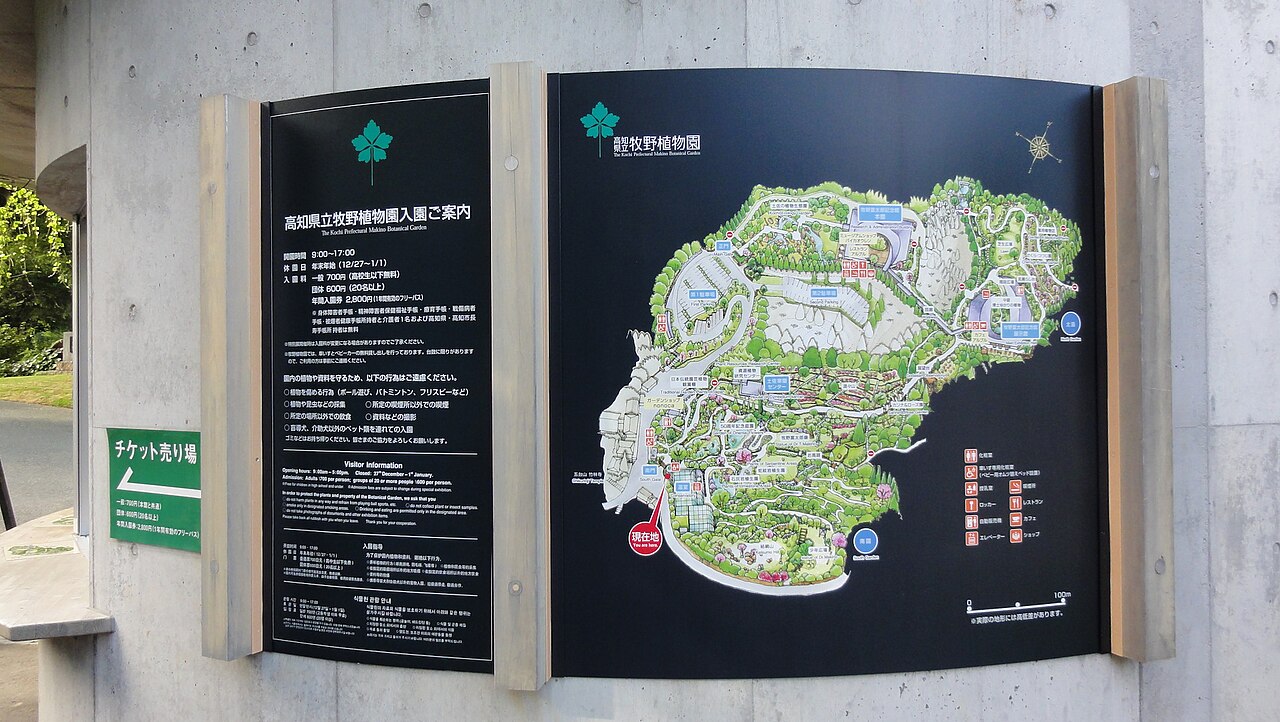
The greenhouse stands in the Makino Botanical Garden on Mount Godai, east of central Kōchi. An hour is enough for the greenhouse, but the 17.8-hectare garden calls for at least half a day. Its outdoor collections include Japanese rhododendrons, maples and chrysanthemums, plants of serpentine and limestone soils, and the wild flora of the prefecture.
The visit can be completed with the Makino Tomitarō Memorial Museum, whose award-winning architecture is the work of Naitō Hiroshi. Being covered, the greenhouse is also a convenient stop on a rainy day.
33.55° N, 133.58° E
Greenhouses nearby
More greenhouses — Japan
Do you have a good photo of this greenhouse? Suggest it for this page →