Conservatory of the Kyoto Botanical Garden
Kyoto

Sources checked September 2026
- Year
- 1992
- Style
- Iron and glass inspired by the surrounding landscape
- Dimensions
- 4,694 m² · 25,000 specimens
- Status
- Open to the public
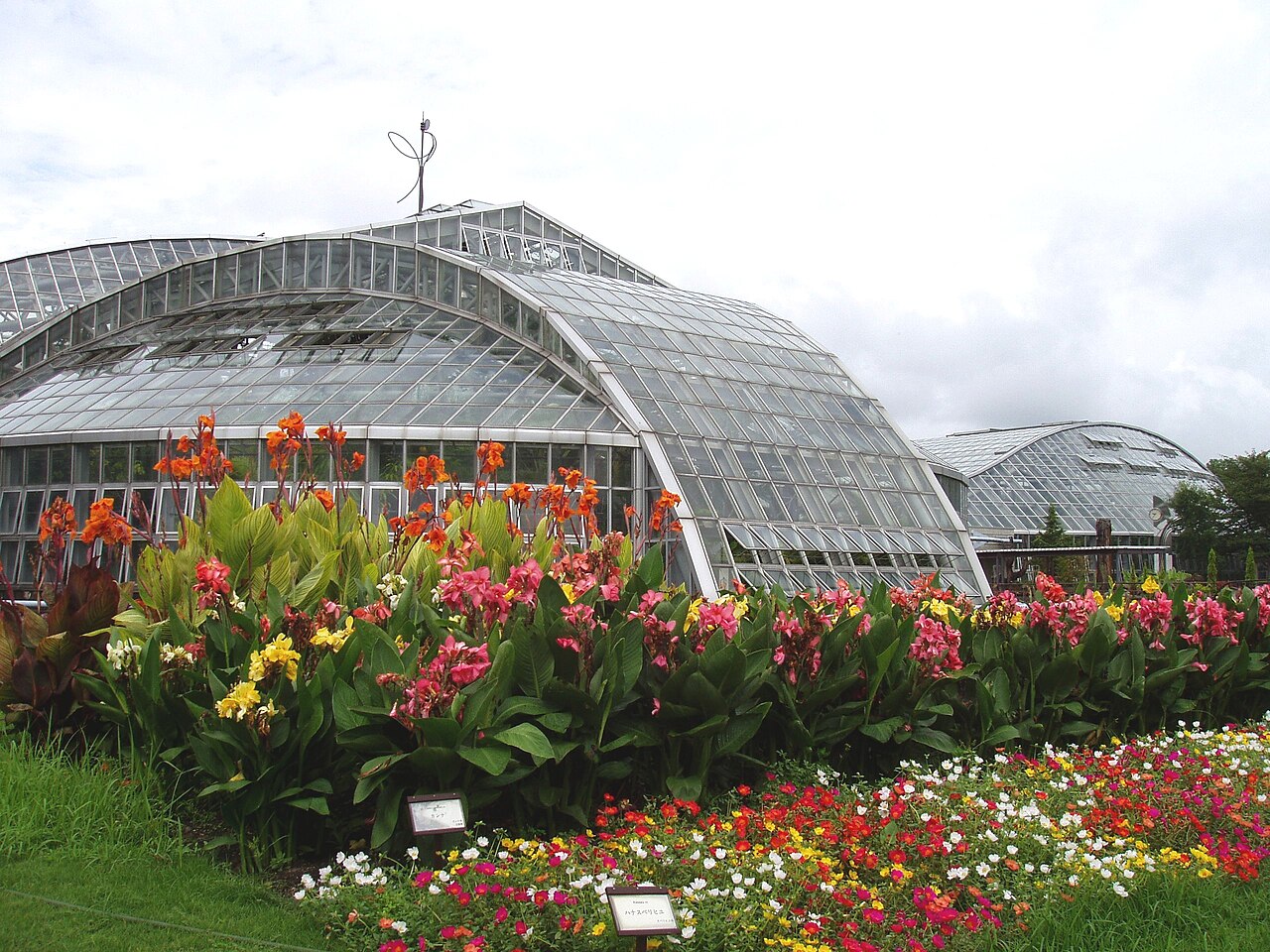
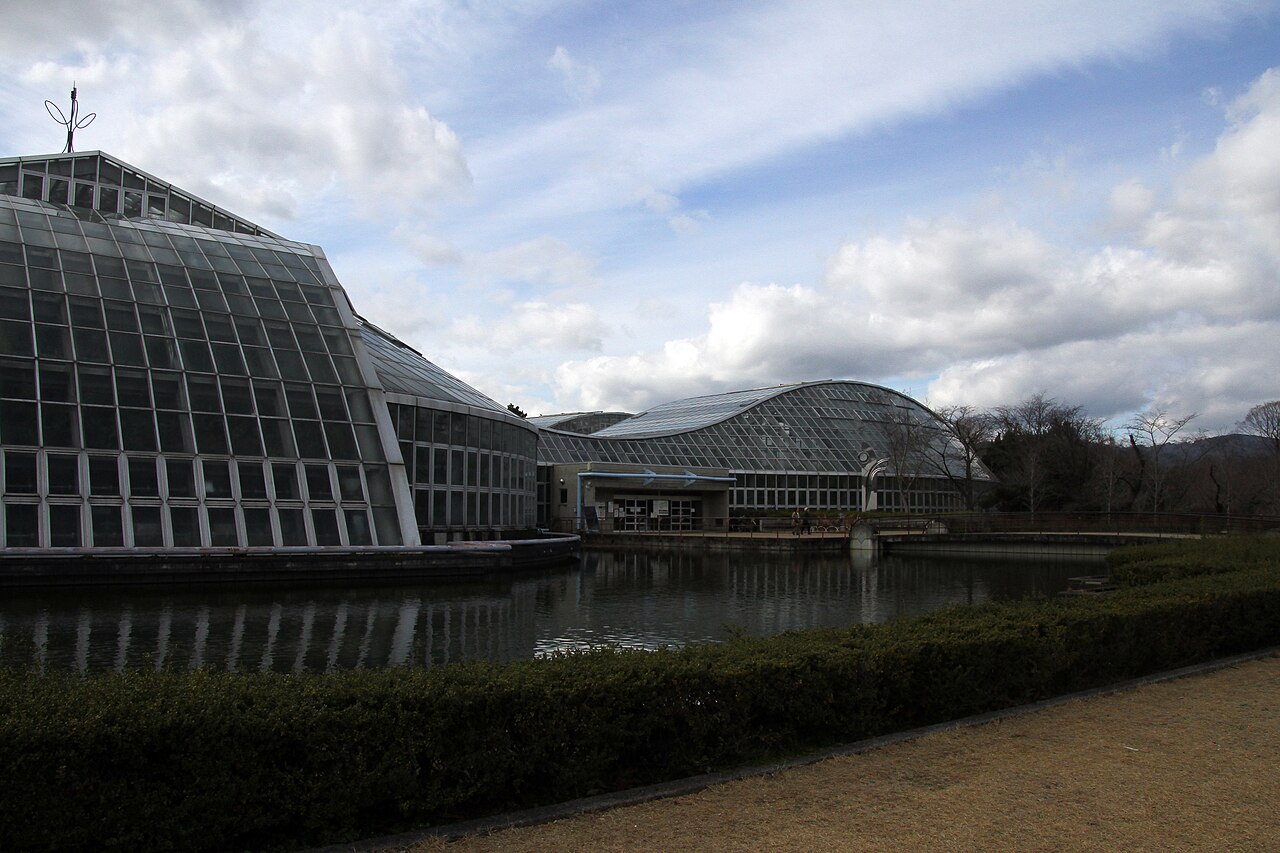
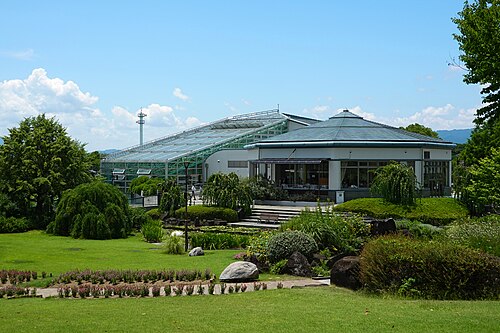
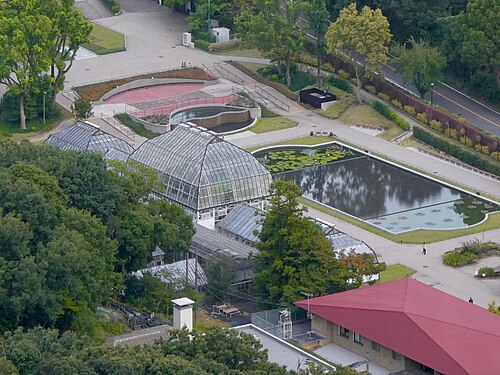
Rebuilt in 1992 within Japan's oldest public botanical garden, founded in 1924, this iron-and-glass greenhouse was designed to echo the mountains north of Kyoto and the nearby Golden Pavilion of Kinkaku-ji. Nine themed zones bring together around 25,000 specimens from 4,500 species, ranging from tropical plants and orchids to carnivorous and desert plants.
Affiliate links — booking through Verrière helps fund our research, at no extra cost to you.
History
Kyoto's botanical garden grew out of a project begun in 1917. The land had first been earmarked for an exposition marking Emperor Taishō's enthronement, but with support from the Mitsui family it was laid out instead as a botanical garden, designed by Terasaki Ryōsaku. Billed as Japan's first public botanical garden, it opened in 1924 as the enthronement commemorative garden.
After the Second World War the grounds were requisitioned in 1946 by the Occupation forces, who built housing there for American personnel. The damage was severe: the garden's roughly 25,000 trees were reduced to fewer than 6,000, flower beds were bulldozed and ponds drained. Returned to the prefecture in the late 1950s, the garden reopened on 24 April 1961, with the ceremony held in front of a newly built dome-shaped glasshouse.
The present conservatory, completed in 1992 together with a plant museum building, is the garden's third exhibition glasshouse and was among the largest in Japan at the time. From 2009 it gained two specialised rooms, one with a reversed day-night cycle and one for alpine plants. The garden marked its centenary in 2024, while a redevelopment plan for the surrounding Kitayama district has, since 2021, drawn concern from local residents.
Architecture and engineering
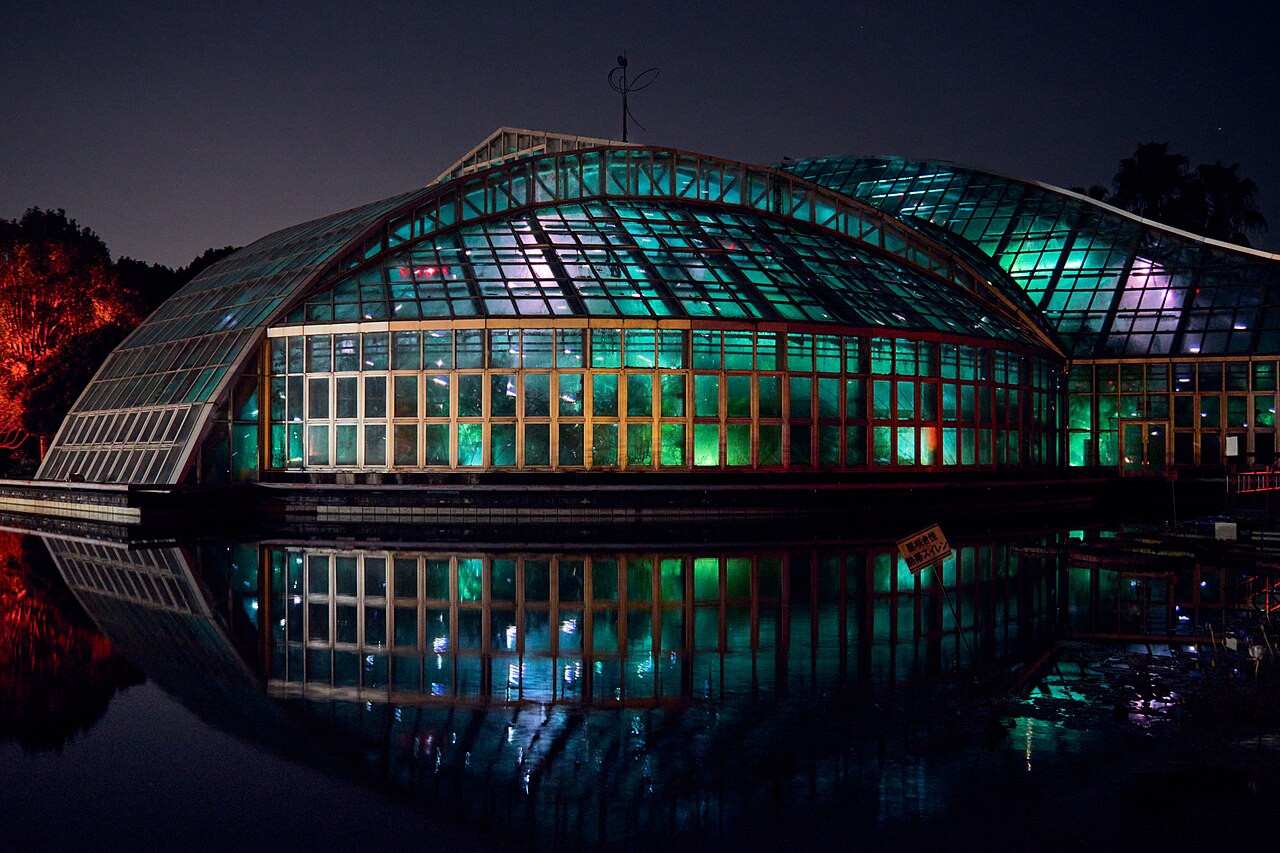
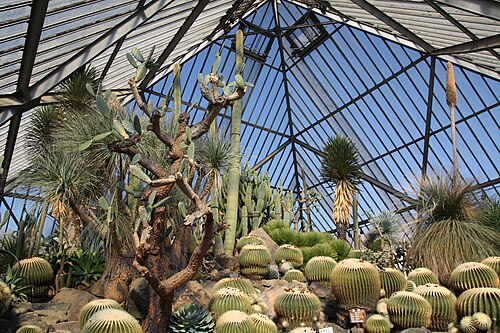
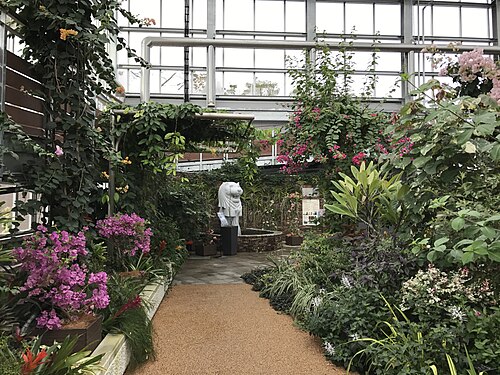
The building combines an iron frame with extensive glazing over 4,694 m². Its outline was conceived to echo two landmarks of the local scenery: the Golden Pavilion of Kinkaku-ji and the ridgeline of the Kitayama hills that close off the city to the north. Rather than a single volume, the conservatory strings together about ten rooms with distinct conditions: a jungle zone, an Ananas room, a bromeliad room, aquatic and carnivorous plants, orchids, desert and savanna plants, forest succulents, tropical alpine plants, useful tropical crops and potted plants. Despite being called a greenhouse, it is not only heated: some rooms are cooled for mountain species, and the reversed day-night room lets visitors see night-flowering plants in bloom during the day.
Plant collections
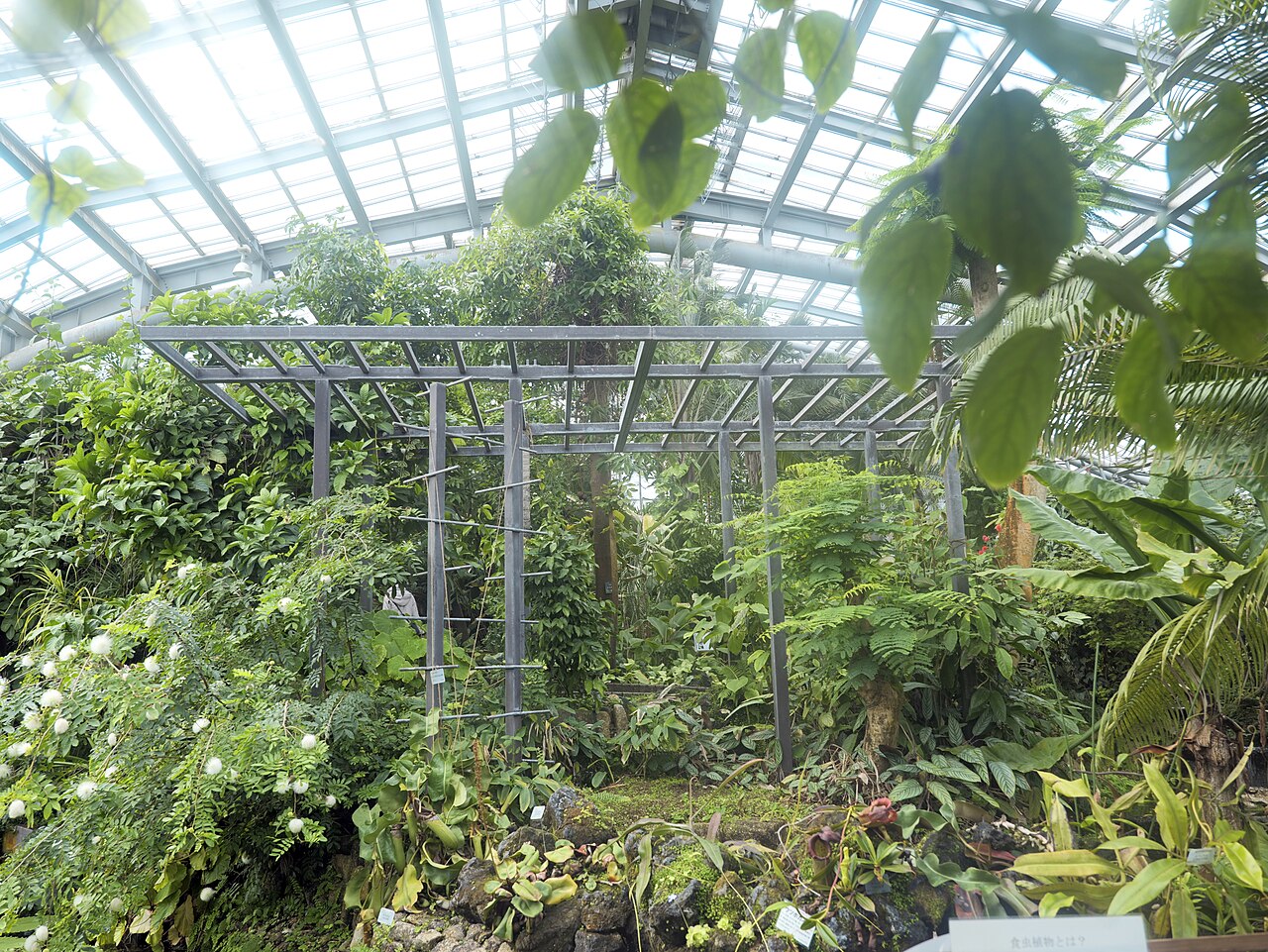
The conservatory displays around 25,000 plants of some 4,500 species and cultivars, one of the richest collections under glass in Japan. The route runs from humid rainforest to savanna and high-altitude habitats. Plants singled out by the garden include the cannonball tree (Couroupita guianensis), the plant nicknamed 'hot lips', Medinilla with their pink flower clusters and a baobab, as well as the titan arum (Amorphophallus titanum), grown in the Ananas room, whose blooms draw large crowds. Flowering charts published by the garden make it possible to follow what is in bloom through the year.
Visiting
The conservatory stands within a 24-hectare garden divided into some twenty areas, including a rose garden, a lotus pond and formal beds by the main gate. The most direct entrance is the north gate, reached from exit 3 of Kitayama Station on the Karasuma subway line; the main gate is about a ten-minute walk from Kitaōji Station. The conservatory closes earlier than the rest of the garden and shuts over the New Year holiday, so it is best seen earlier in the day, leaving an hour or two for the outdoor gardens afterwards. Short guided walks are offered on Saturdays.
35.05° N, 135.76° E
Greenhouses nearby
Architecture nearby
More greenhouses — Japan
Do you have a good photo of this greenhouse? Suggest it for this page →
Affiliate links — booking through Verrière helps fund our research, at no extra cost to you.