Yumenoshima Tropical Greenhouse Dome
Kōtō, Tokyo

Sources checked September 2026
- Year
- 1988
- Style
- Three interconnected themed glass domes
- Dimensions
- Main dome of about 1,500 m², home to nearly 900 tropical species
- Status
- Open to the public
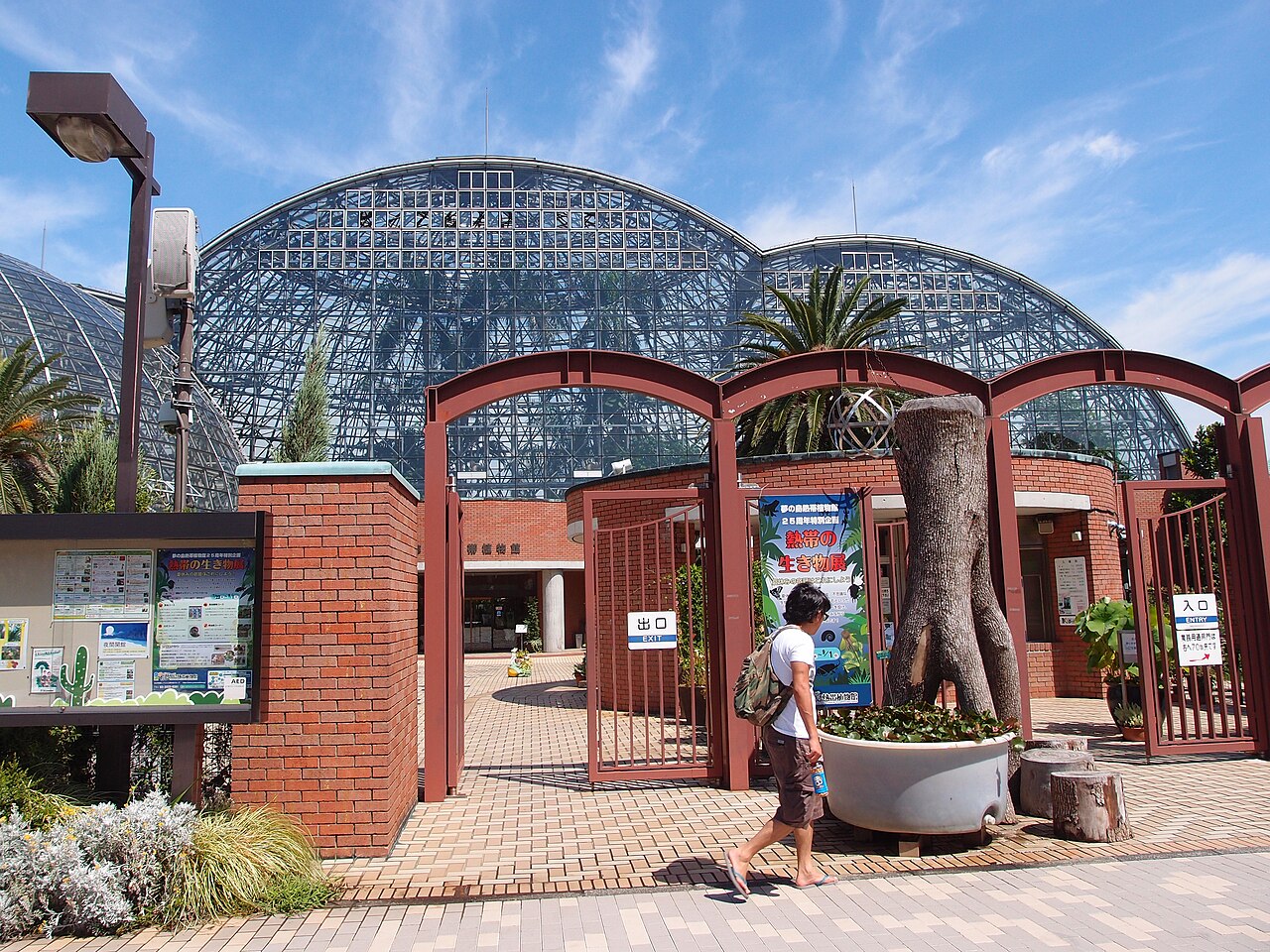
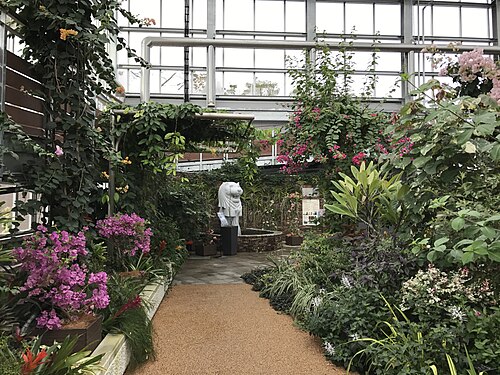
Opened in 1988 in Yumenoshima Park, on an artificial island built up from landfill in Tokyo Bay, this complex consists of three interconnected themed glass domes. The largest, devoted to the humid rainforest, covers about 1,500 m² and houses a waterfall along with nearly 900 species of tropical and subtropical plants; the other two evoke a tropical village and the endemic flora of the Ogasawara Islands. In a feature unique to the site, the whole complex is heated using waste heat recovered from the neighboring Shin-Koto incineration plant, a symbol of circular economy thinking ahead of its time.
Affiliate links — booking through Verrière helps fund our research, at no extra cost to you.
History
Yumenoshima, the 'island of dreams', is reclaimed land in Tokyo Bay: from 1957 to 1967 it served as the final dumping ground for the capital's refuse. Once the fill had been stabilised and landscaped, Yumenoshima Park opened on 1 October 1978.
The tropical plant conservatory, known in Japanese as the Yumenoshima Nettai Shokubutsukan, opened in the park in 1988. From the start it was designed to exploit a neighbouring resource: surplus heat from the Shin-Kōtō incineration plant, delivered as very hot water. The venue now points out that the system has been running for more than thirty years, making it an early example of waste-to-energy heating applied to a botanical garden.
Since April 2006 the park and the conservatory have been run by a consortium of six companies operating as the Hibiya Amenis Yumenoshima group. The park gained wider attention when it hosted the archery events of the Tokyo 2020 Olympic and Paralympic Games.
Architecture and engineering
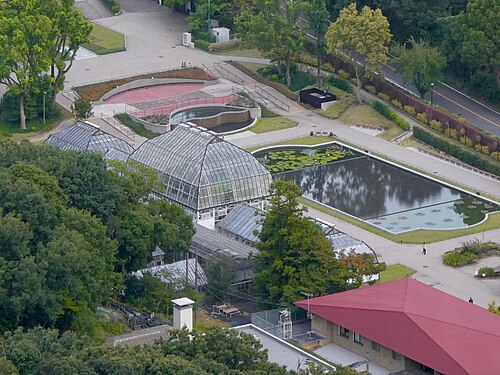
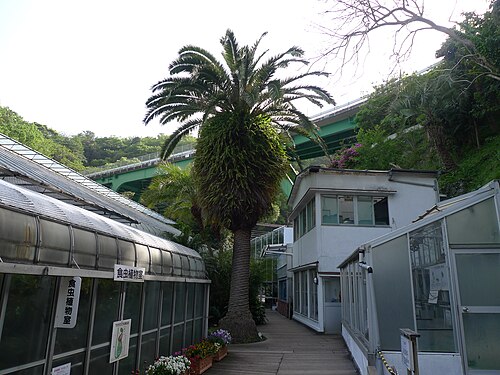
The main glasshouse is made up of three linked glass domes, labelled A, B and C, each with its own theme. Dome A recreates a tropical waterside, with a waterfall feeding a pool; Dome B is arranged around a traditional thatched-roof structure beneath tall palms; Dome C evokes the Ogasawara Islands and Madagascar. A smaller glasshouse for carnivorous plants, a screening hall, an exhibition room and an event hall complete the complex.
Heating relies on a pipeline that continuously carries 125 °C water from the neighbouring incinerator; according to the official site, this energy is used for both heating and cooling the building.
Plant collections
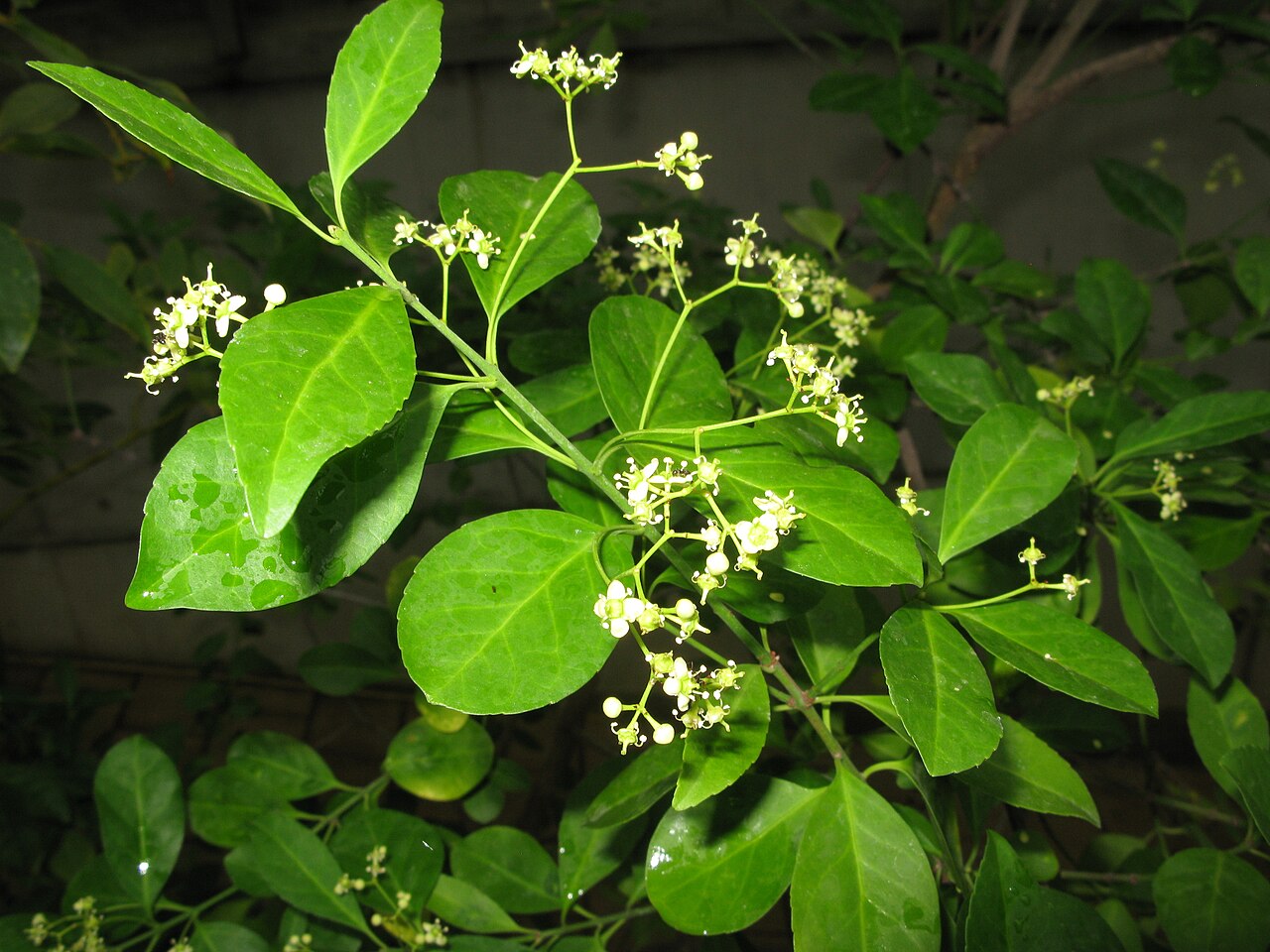
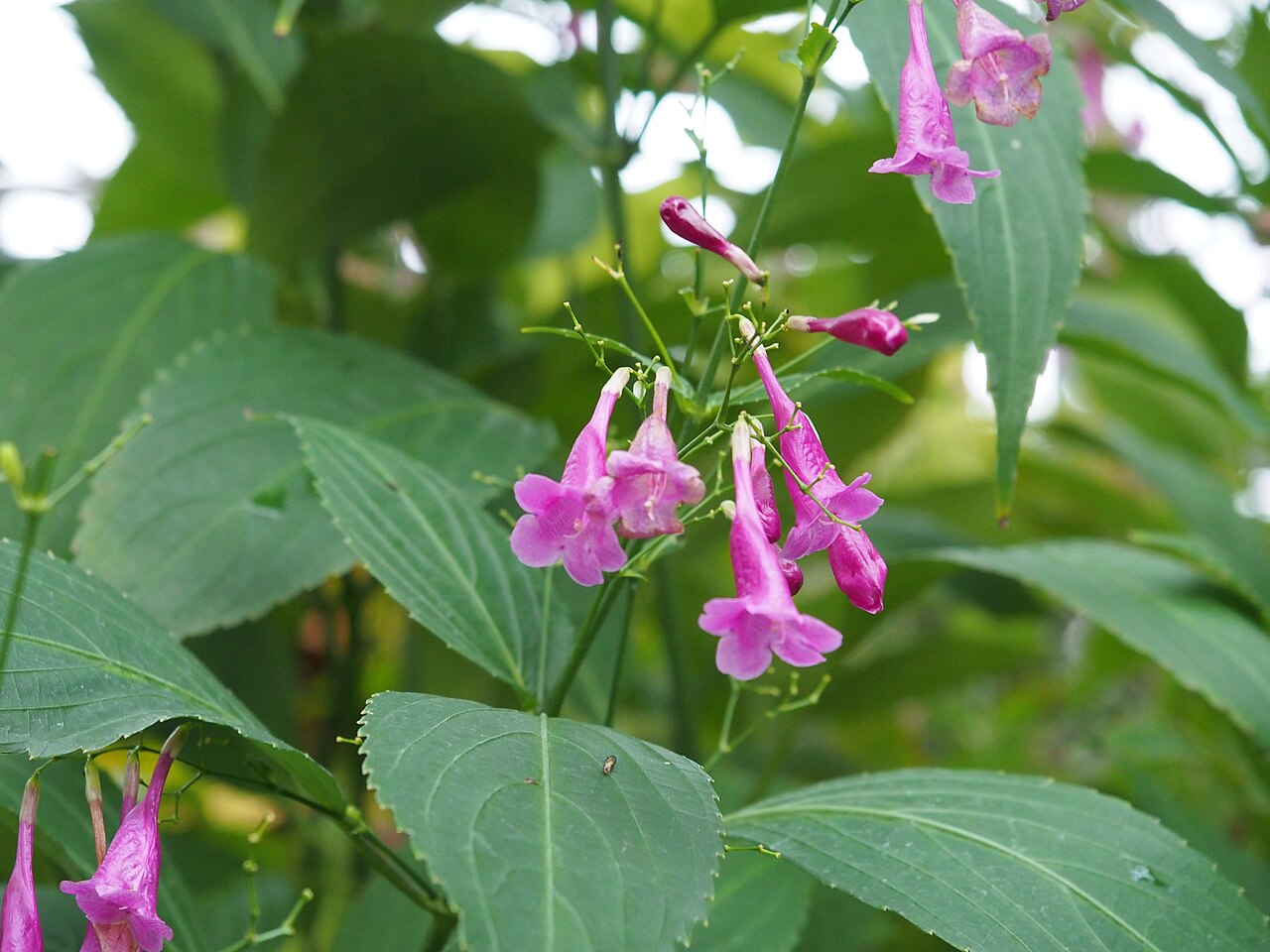
The garden cites more than 1,000 tropical plant species. Dome A brings together tropical water lilies, tree ferns (Cyathea podophylla), mangrove plants, the fringed hibiscus (Hibiscus schizopetalus) and a giant bamboo that can reach 30 metres. Dome B is devoted to useful plants: plantains, cacao, royal palms and the jade vine (Strongylodon macrobotrys), which is endangered in its native Philippines. Dome C pairs species endemic to the World Heritage-listed Ogasawara Islands, such as a screw pine with prominent aerial roots, with Madagascar's traveller's palm. The carnivorous plant house holds around nine species, including Nepenthes and the Venus flytrap. A flowering calendar tracks the seasons, from vanilla in spring to jacarandas and water lilies in summer.
Visiting
The conservatory lies about a 13-minute walk from Shin-Kiba Station, served by the Yūrakuchō subway line, the JR Keiyō Line and the Rinkai Line. The park itself is free, but the conservatory requires a separate ticket. One to two hours is enough for the three domes, the carnivorous plant house and the outdoor gardens, which include an Australian garden, a herb garden and jacarandas that flower around June. Temporary exhibitions run throughout the year. In the same park, the exhibition hall devoted to the Daigo Fukuryū Maru, the tuna boat caught in the fallout of a nuclear test, makes a sobering companion visit.
35.65° N, 139.83° E
Greenhouses nearby
Architecture nearby
More greenhouses — Japan
Do you have a good photo of this greenhouse? Suggest it for this page →
Affiliate links — booking through Verrière helps fund our research, at no extra cost to you.