Sakuya Konohana Kan (咲くやこの花館)
Tsurumi-ku, Osaka
Entry updated on October 3, 2026
- Year
- 1990
- Architect
- Nikken Sekkei with ランテック計画事務所
- Style
- Contemporary steel-framed glass conservatory
- Dimensions
- About 6,900 m² of floor space, up to 30 m high
- Status
- Open to the public
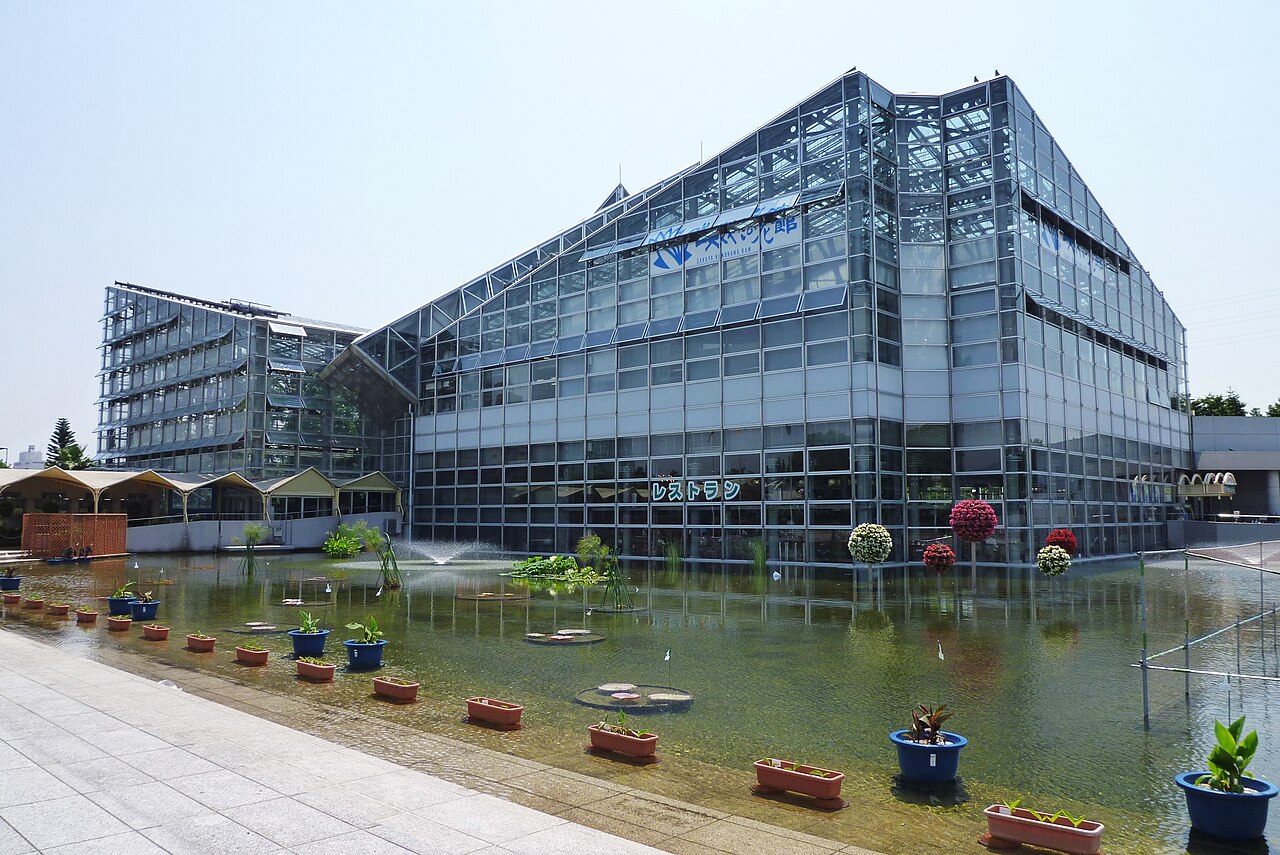
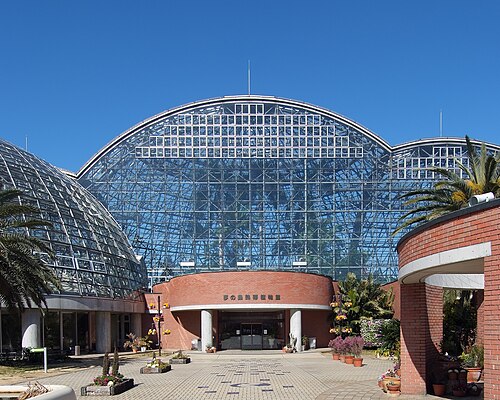
Sakuya Konohana Kan is an indoor botanical garden in Tsurumi Ryokuchi park, Osaka, built between 1987 and 1990 as the city's pavilion for the 1990 International Garden and Greenery Exposition. Designed by Nikken Sekkei, the steel-framed building is glazed with some 5,000 panes and offers about 6,900 m² of floor space, which its operators describe as the largest greenhouse in Japan. Around 15,000 plants are spread between tropical rainforest, tropical flowering trees, arid lands, alpine flora and a display devoted to plants of the polar regions.
Affiliate links — booking through Verrière helps fund our research, at no extra cost to you.
History
1 min
Sakuya Konohana Kan was created for the International Garden and Greenery Exposition (国際花と緑の博覧会), known as Expo '90, held in 1990 in Tsurumi Ryokuchi park in Osaka. The City of Osaka presented the large indoor botanical garden as its own pavilion. Work began in June 1987, the building was finished in March 1989 and the whole complex was completed in March 1990.
The design came from Nikken Sekkei working with the planning office ランテック計画事務所. The name was chosen through a public call for proposals: it takes the opening words, 'sakuya konohana', of the so-called Naniwazu poem (難波津の歌), collected in the Kokin Wakashū, the imperial poetry anthology edited in 905.
Once the exposition was over, the pavilion stayed in use as a covered botanical garden. It still belongs to the City of Osaka, which entrusts its running to a foundation, 大阪スポーツみどり財団 (Osaka Sports and Greenery Foundation). The surrounding park, the Expo '90 Commemorative Park Tsurumi Ryokuchi (花博記念公園鶴見緑地), carries a name that recalls the 1990 exhibition.
![Sakuya Konohana Kan (咲くやこの花館), Tsurumi-ku, Osaka — 全緣葉綠絨蒿 Meconopsis integrifolia [日本大阪鮮花競放館 Osaka Sakuya Konohana Kan, Japan]](/assets/photos/gallery/osaka-sakuya-konohana-kan-g1.jpg)
Architecture and engineering
1 min
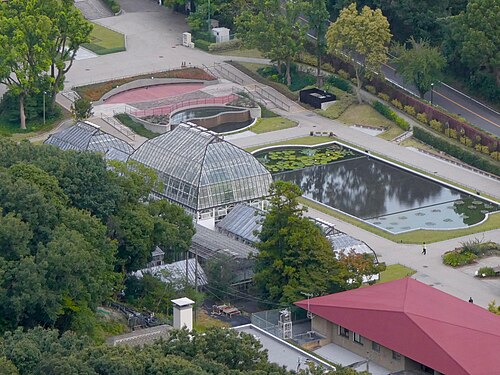
The building has a steel frame with some reinforced-concrete sections. It rises two storeys above ground, with a rooftop penthouse level and a basement. Its total floor area is 6,890 m² and its highest point reaches about 30 metres, figures behind its billing as the largest greenhouse in Japan. The glazed envelope is made up of roughly 5,000 panes of glass.
Inside, the volume is divided into separate climate zones, so that environments as different as a humid tropical forest, a desert, high mountains and the polar regions are shown side by side under one roof. A multi-purpose space, the Flower Hall, is used for exhibitions and concerts. Outdoor gardens extend the glasshouses and form part of the same visitor route.
Plant collections
1 min
The collection numbers around 15,000 plants; the species count differs between sources, 5,500 according to the Japanese Wikipedia and 2,600 according to the English one. The tropical rainforest room brings together palms, figs including banyans, and orchids. The tropical flowering-tree room evokes the vegetation of Hawaii and Tahiti, while the arid-land room gathers cacti and succulents from Africa and the Americas.
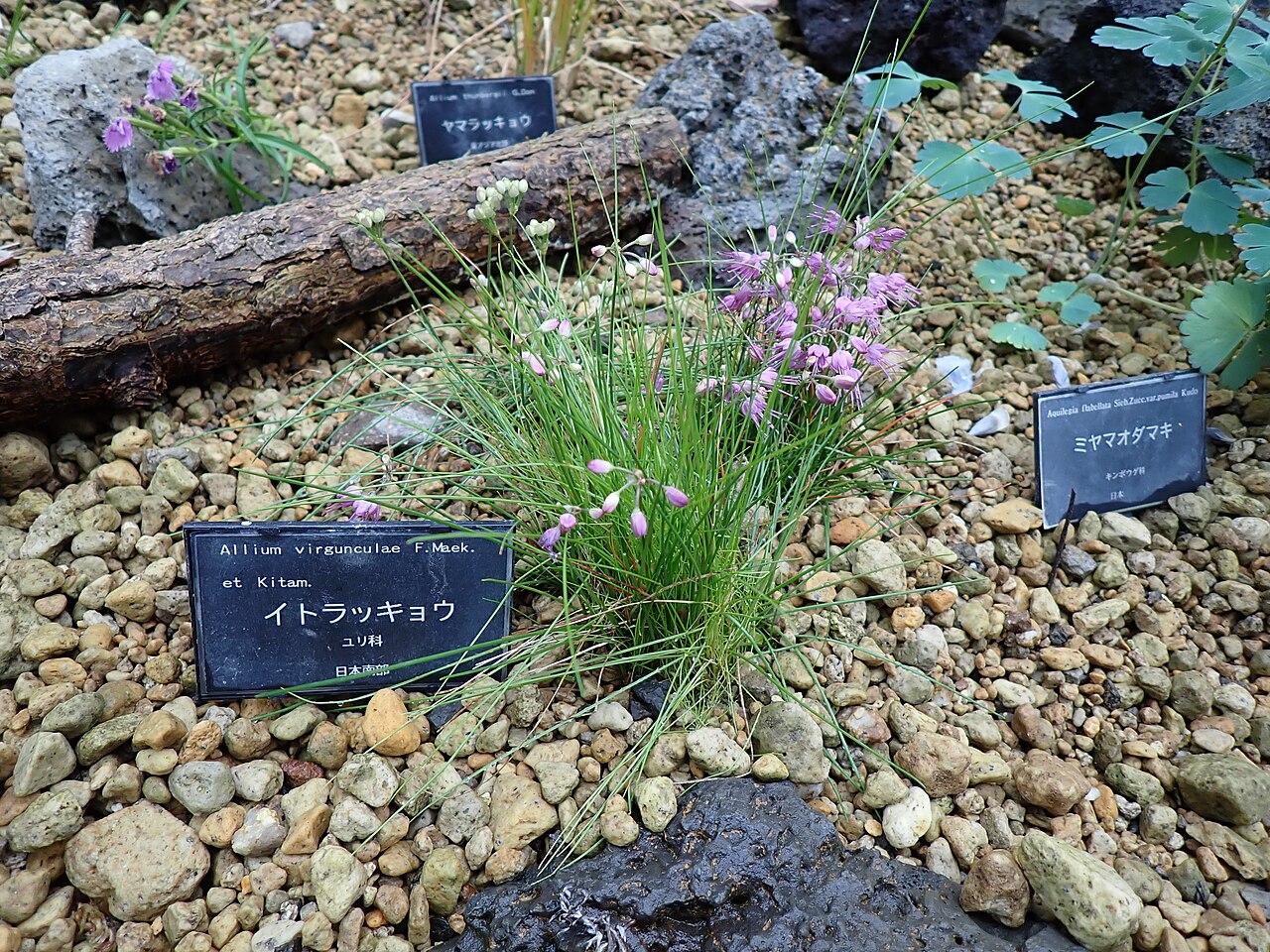
The alpine room holds around 200 mountain species, among them blue poppies (Meconopsis). One section is devoted to Arctic and Antarctic plants. Other areas display tropical aquatic plants and carnivorous plants such as Nepenthes. A Rafflesia flower and bud, preserved in resin, are also on show; they belong to the association that commemorates Expo '90.
Visiting
1 min
Sakuya Konohana Kan stands in the Expo '90 Commemorative Park Tsurumi Ryokuchi, in Osaka's Tsurumi ward. The route leads from the tropical rooms to the arid, alpine and polar ones and then out into the gardens; one to two hours allow an unhurried visit. Free guided 'flower tours' are offered, and site maps are available in English, Chinese and Korean. The Flower Hall hosts exhibitions and concerts. A visit combines naturally with a walk through the rest of the park, which hosted the 1990 exhibition.
34.71° N, 135.57° E
Greenhouses nearby
More greenhouses — Japan
Do you have a good photo of this greenhouse? Suggest it for this page →