EGG (Ever Green Garden), Kushiro Fisherman's Wharf
Kushiro, Hokkaido

Sources checked October 2026
- Year
- 1989
- Architect
- Kikō Mozuna (毛綱毅曠), architect of the MOO-EGG complex
- Style
- Garden under a glass barrel vault ("kamaboko" shape), attached to the MOO shopping complex
- Dimensions
- 1,477.757 m² of floor area
- Status
- Open to the public, free admission
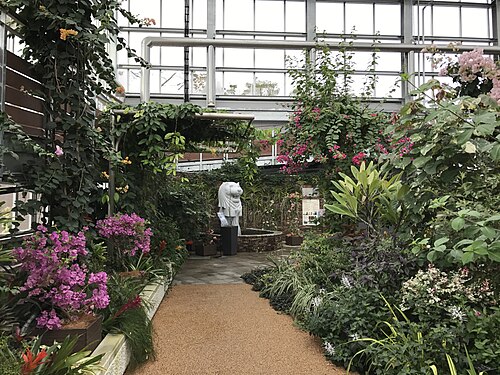
The "Ever Green Garden", known as EGG, is the plant-filled counterpart of the MOO shopping complex, on the bank of the Kushiro River near Nusamai Bridge. Designed by the Kushiro-born architect Kikō Mozuna and opened in 1989 with the complex, it is a fully glazed barrel vault with a floor area of 1,478 m², whose two levels connect with the neighbouring building. It shelters trees, flowering shrubs and a water feature, along with benches, a café and, on some days, small concerts. Admission is free.
Affiliate links — booking through Verrière helps fund our research, at no extra cost to you.
History
The EGG grew out of Kushiro's "Fisherman's Wharf" plan, a development scheme for the right bank of the Kushiro River beside Nusamai Bridge. The first phase, on about 1.6 hectares, was to combine a passenger terminal, the MOO shopping complex and a "cold-climate green space", which is the EGG; works were scheduled for 1987 and completion for 1992. The whole was designed by Kikō Mozuna (1941-2001), an architect born in Kushiro, and the semi-public company Kushiro Kahan Kaihatsu Kōsha, founded in 1968, was its first operator.
The green building was nicknamed EGG on 5 June 1989; the first-phase facilities were completed on 12 July and opened on 14 July 1989, the opening date of the complex. The official website presents the EGG and MOO as the two central facilities of the Fisherman's Wharf, opened together in 1989.
After the bubble burst, MOO lost its large tenants, including Seibu, between 1998 and 2003; the city of Kushiro bought the facilities in 2005 after the management company's debt was restructured. A renovation of the complex began in 2007, and the March 2011 tsunami flooded its underground electrical equipment: the complex closed for more than three weeks and reopened in stages from 5 April 2011. The EGG Café opened in October 2022. In 2025 the city publicly answered a resident who found the garden short of flowers: it said it had placed flower planters there, noted that the air is kept humid for the plants' sake and explained that the limited maintenance budget for the whole building prevents modernising the toilets.
Architecture and engineering
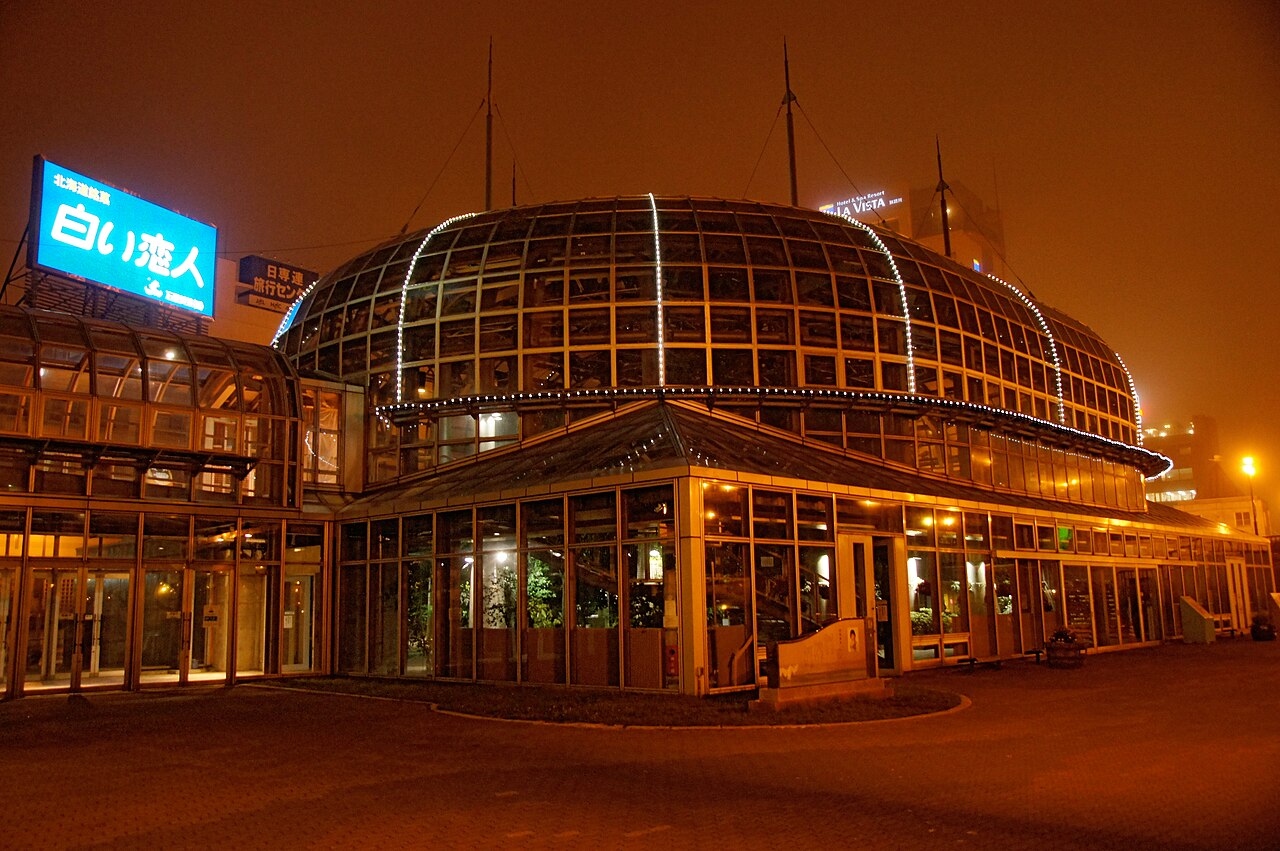
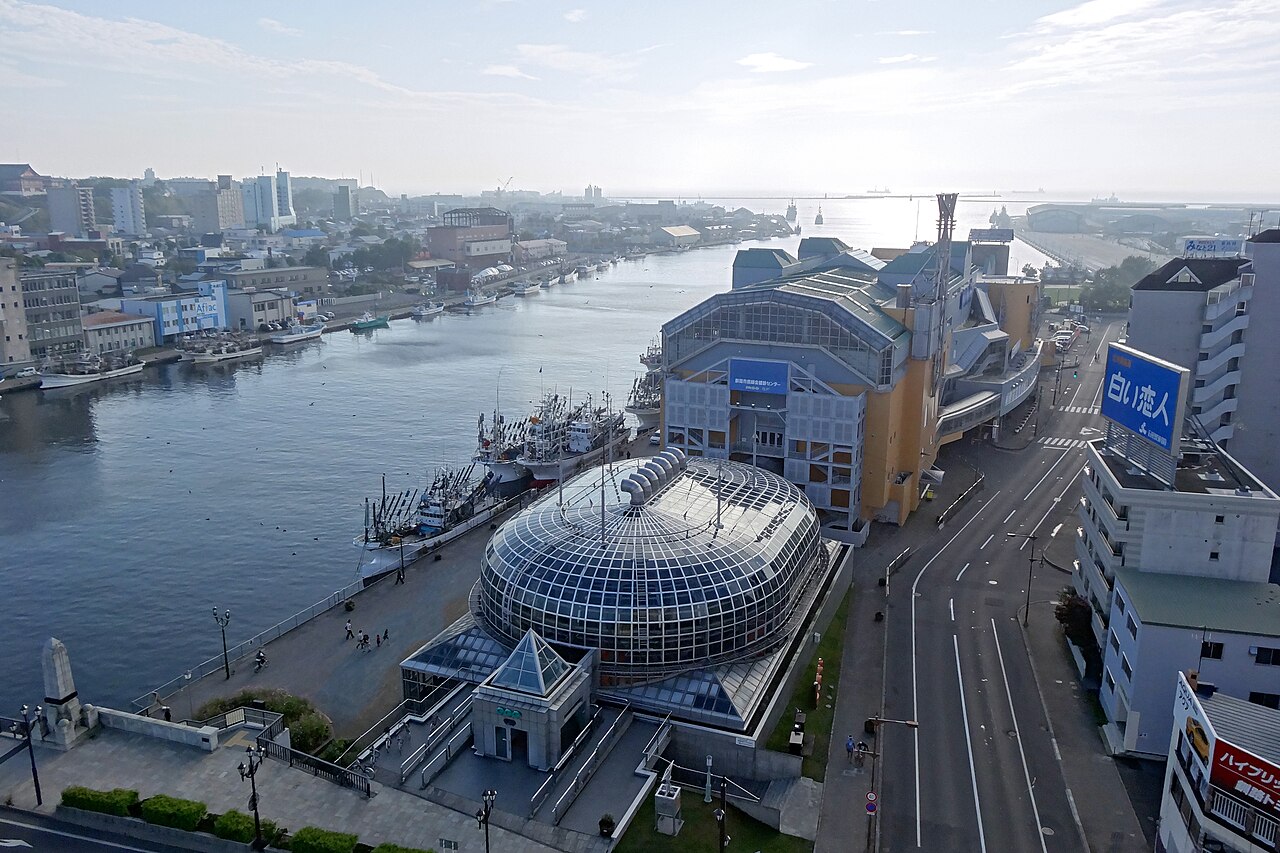
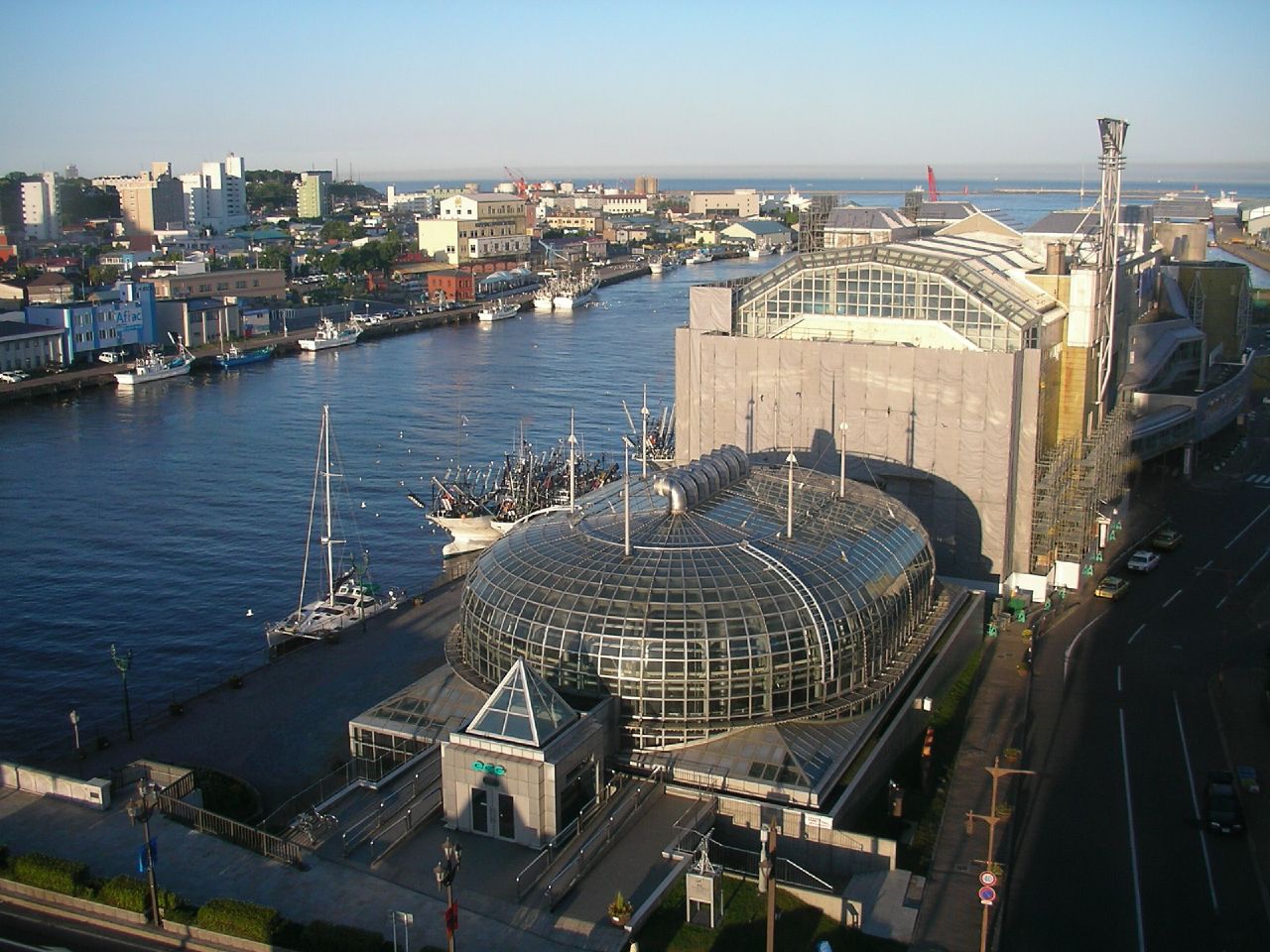
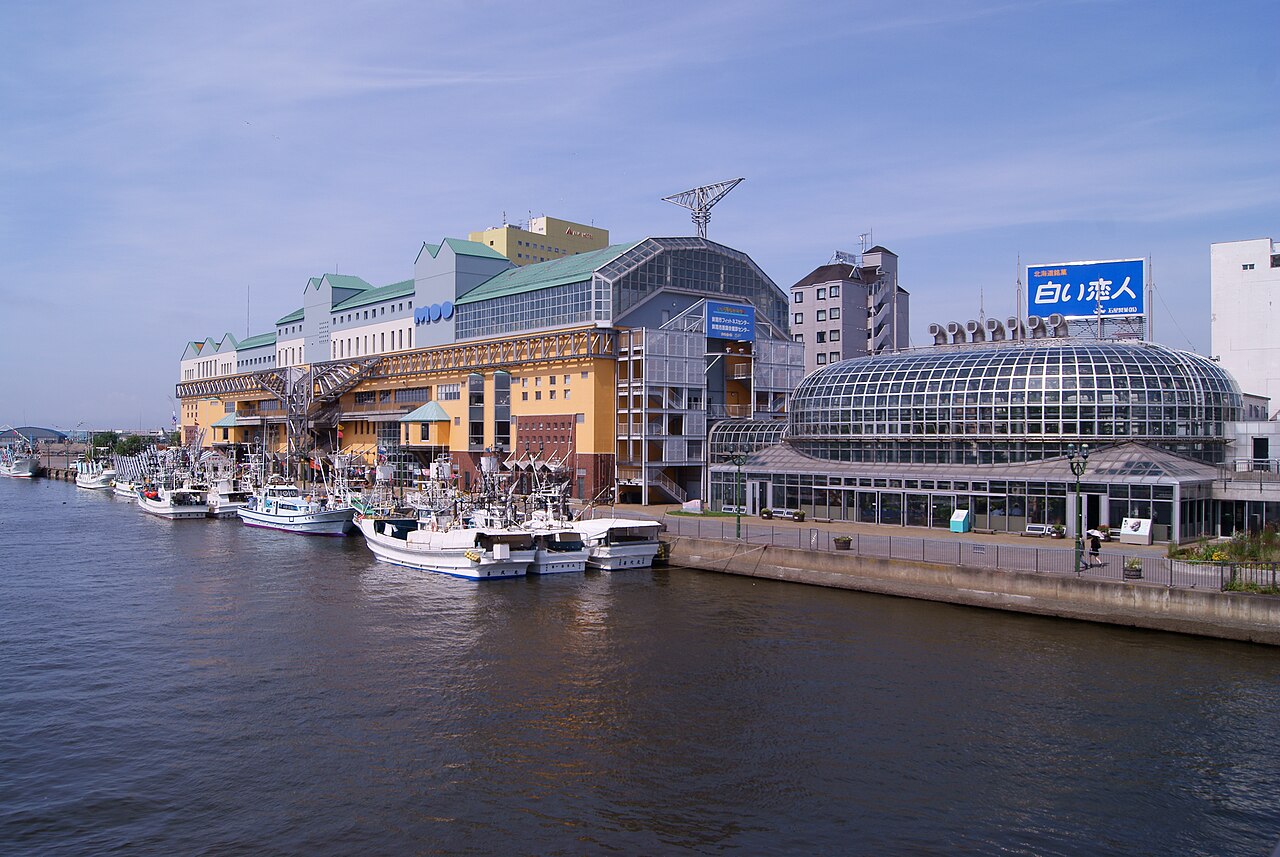
Japanese Wikipedia describes the EGG as a barrel-vault dome ("kamaboko", a half-cylinder shape), fully glazed all the way round, with a total floor area of 1,477.757 m². Its two levels connect directly with the main MOO building. The Hokkaido prefectural page speaks of a round, fully glazed building, and the Japanese transport ministry's (MLIT) multilingual database, in 2018, of a greenhouse whose glass dome hosts small concerts from spring to autumn.
According to a local information site, the structure is of steel, partly reinforced concrete, with a central atrium linking the two levels; the upper floor forms a circular gallery fitted with wooden benches, and a footbridge leads to MOO. The same source says the temperature is kept at 5 °C or above in winter, and mentions a small indoor stream. Photographs on Wikimedia Commons show a gridded glass skin over an oval vault, with lower glazed volumes leaning against it at the entrance.
Plant collections
The plantings are temperate-climate trees and shrubs rather than tropical plants. Local sources give similar but not identical totals: about forty tree species, mostly evergreen broadleaves from the Kantō region, according to an information site; about 35 tree species according to a family-outings portal; about 36 kinds of plants according to a 2018 listing. The Hokkaido prefectural page names azaleas (March to June), rhododendrons (April to mid-June), flowering dogwoods (April-May), sasanqua camellias (November-December) and camellias (January to mid-April).
Trees donated by towns linked to Kushiro grow there: in 2003, a "Golden Nijisseiki" pear from Tottori and a "Satonishiki" cherry from Yuzawa, for the 40th anniversary of the twinning; the family portal adds an aogiri from Hiroshima and a camphor tree from Nagasaki, second-generation trees grown from atomic-bomb survivors. Panels introduce the trees. In 2025 the city also said it had placed flower planters, some of the existing trees flowering on their own.
Visiting
The EGG stands next to MOO, on the Nusamai Bridge side, about ten minutes on foot from JR Kushiro station according to the prefecture. Admission is free; the place is conceived as a rest area for residents and visitors alike, with a café open since October 2022. Flowering follows on from January to June, from camellias to azaleas and rhododendrons, and the sasanquas open in November-December: in winter it is a sheltered green space in the middle of the city.
The MOO website states that concerts and exhibitions, even small ones, can be held there, with a stage, chairs, acoustic panels and a piano provided. A visit combines easily with the shops on MOO's ground floor, which sell produce from Kushiro and Hokkaido, and with the nearby Nusamai Bridge.
42.98° N, 144.38° E
Greenhouses nearby
More greenhouses — Japan
Do you have a good photo of this greenhouse? Suggest it for this page →
Sources (8)
- moo946.com/about/
- pref.hokkaido.lg.jp/kn/tkn/hana/place/e002.html
- ja.wikipedia.org/wiki/%E9%87%A7%E8%B7%AF%E3%83%95%E3%82%A3%E3%83%83%E3%82%B7%E3%83%A3%E3%8
- mlit.go.jp/tagengo-db/H30-00097.html
- city.kushiro.lg.jp/shisei/kouhoukouchou/1003403/1018351/1018556/1018372.html
- tokukita.jp/botanical-garden/egg.html/
- iko-yo.net/facilities/4968
- wikidata.org/wiki/Special:EntityData/Q11648257.json
Affiliate links — booking through Verrière helps fund our research, at no extra cost to you.