Orangery Complex and Glass Dome, Hryshko National Botanical Garden
Kyiv (Pechersk)

Sources checked October 2026
- Year
- Soviet-era dome
- Style
- Large pentagonal glass dome and glazed pavilions from the Soviet era
- Dimensions
- Over 2,000 m² of displays; glass roof about 30 m high
- Status
- Open to the public; heating strained by the war
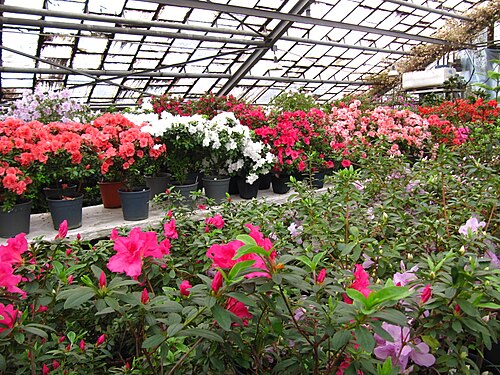
At the foot of the main staircase of the Hryshko National Botanical Garden in Kyiv, a large pentagonal glass dome inherited from the Soviet era covers the main orangery. Around it, glazed pavilions present the humid tropics, azaleas and camellias, orchids, exotic fruit trees, cacti and aquatic plants. The garden gives over 2,000 m² of displays. The tropical and subtropical collection, about 4,000 plants according to The Guardian, has the status of Ukrainian national heritage according to Science at Risk; since the war, power and heating cuts have put it to the test.
Affiliate links — booking through Verrière helps fund our research, at no extra cost to you.
History
Construction of the Kyiv botanical garden began in the autumn of 1935, according to Ukrainian Wikipedia, and it opened to visitors only on 29 May 1964. Its tropical and subtropical collection was built up in stages: in a 2023 interview with a department head published by Science at Risk, collecting is said to have begun in the 1930s, with most of the greenhouse expansion coming after the war. Botanists then set off on expeditions that could last up to a year: one brought back an azalea collection bought in postwar Germany, another rare orchids from Madagascar. The azalea display still holds 25 old German cultivars from the 1920s and 1930s, among them 'Professor Walters' and 'Adventsglocken', and 29 cultivars and hybrids created at the garden itself in the 1960s and 1970s.
The glass roof of the main orangery is described as a Soviet-era construction; the bromeliad house dates from 1976, according to a researcher quoted by The Guardian. Since 2022 the complex's story has also been one of survival: in 2023 the cold caused by power cuts killed two twenty-year-old cacao trees; in January 2024 a fragment of shrapnel hit a window of the main orangery, though the greenhouses took no direct hit; in February 2026 staff heated some halls with wood and spread the collections across several greenhouses.
Architecture and engineering
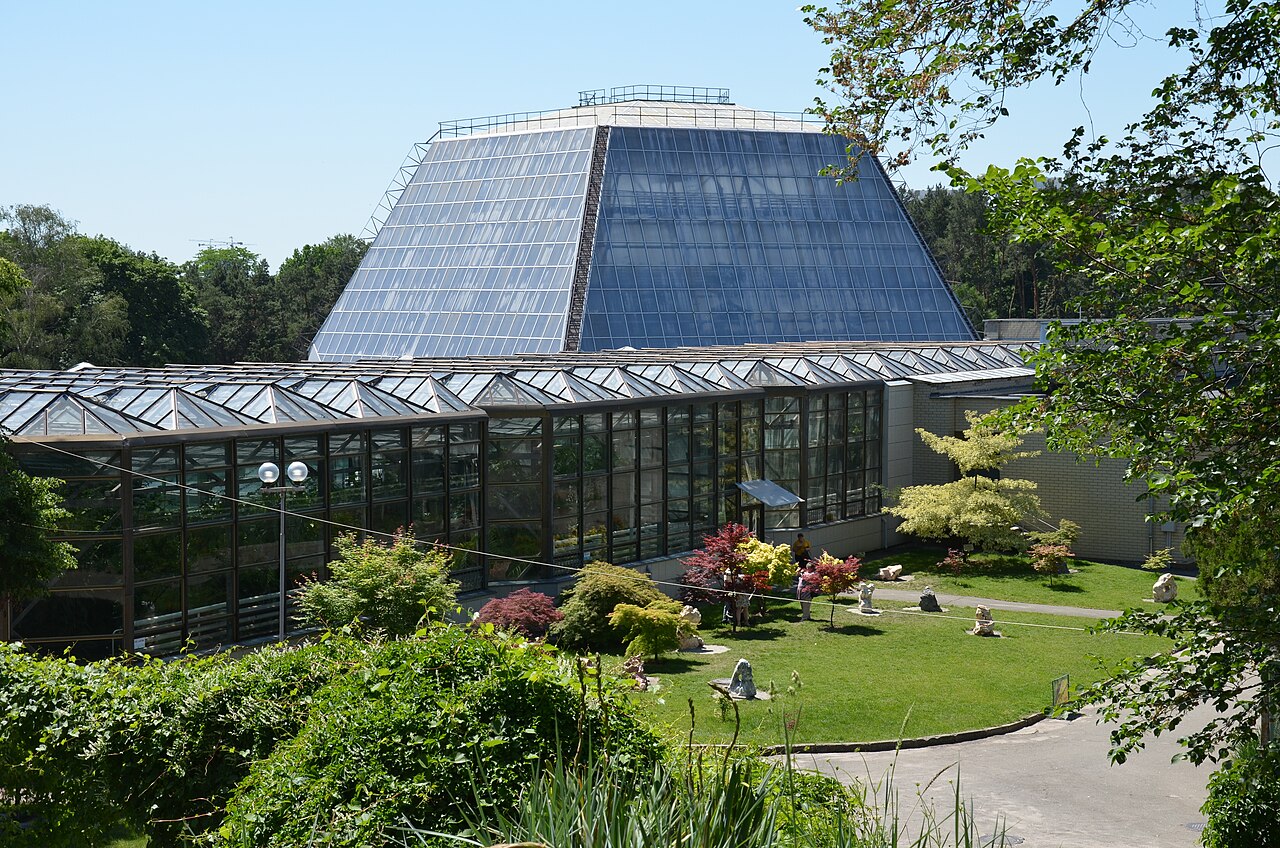
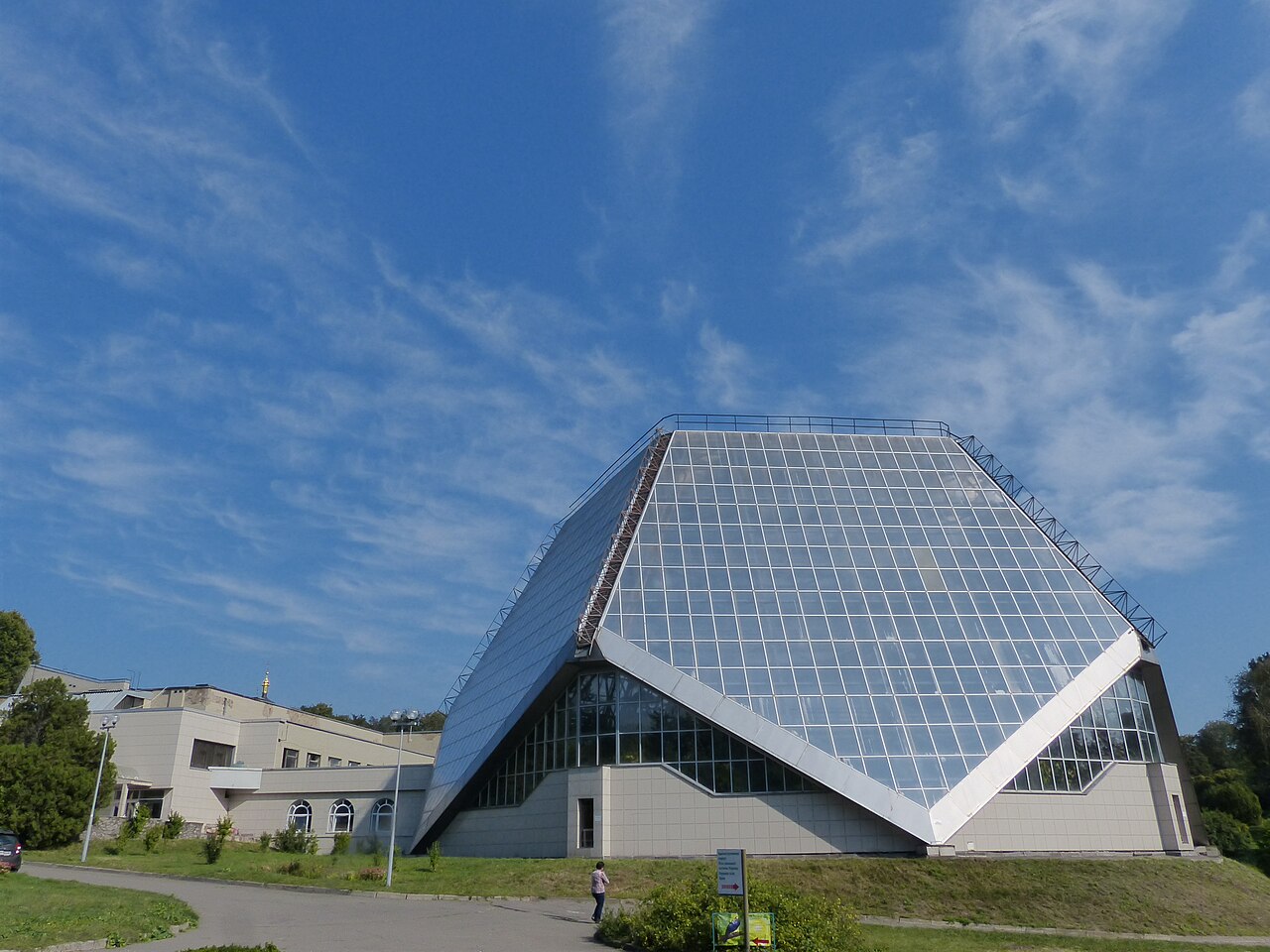
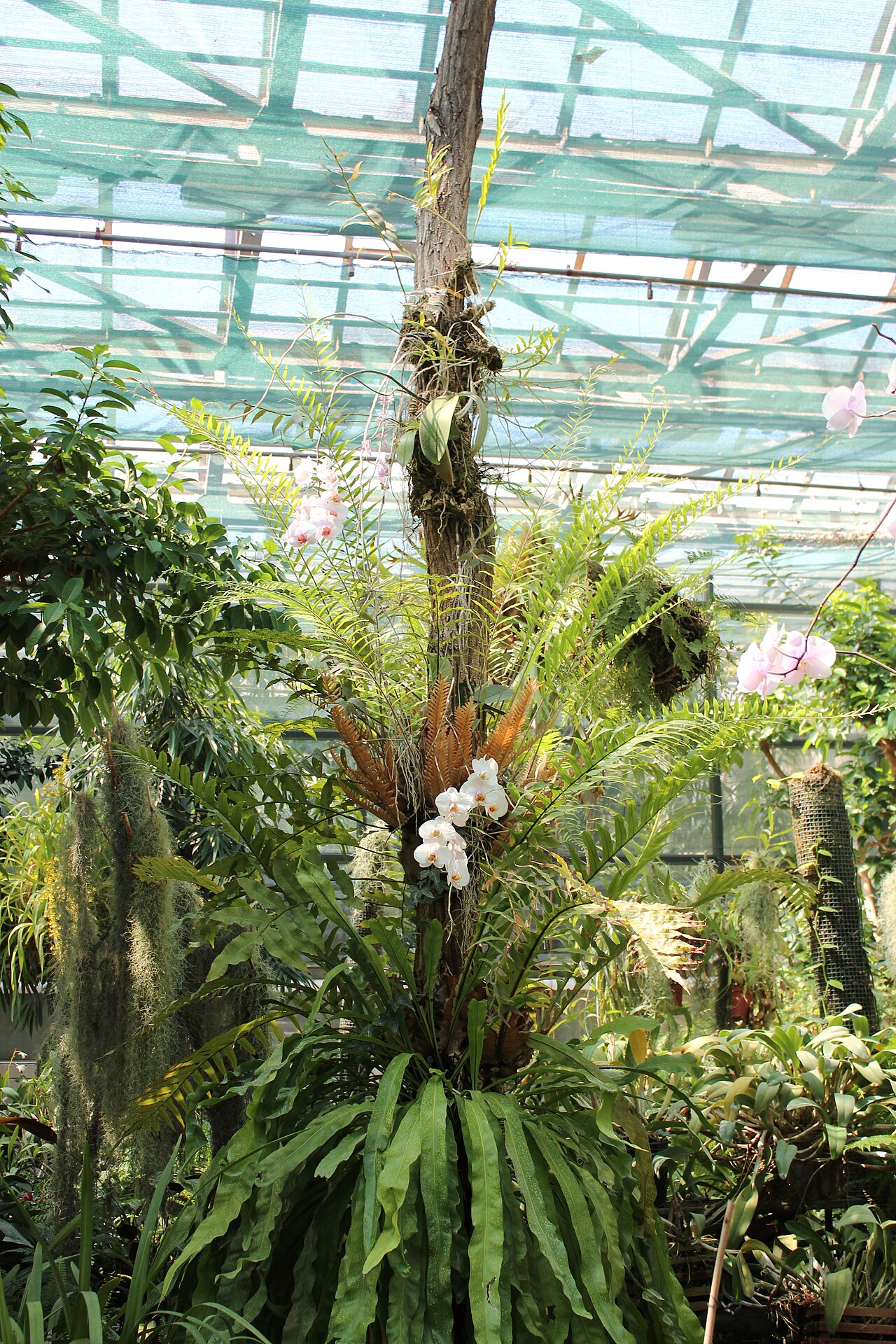
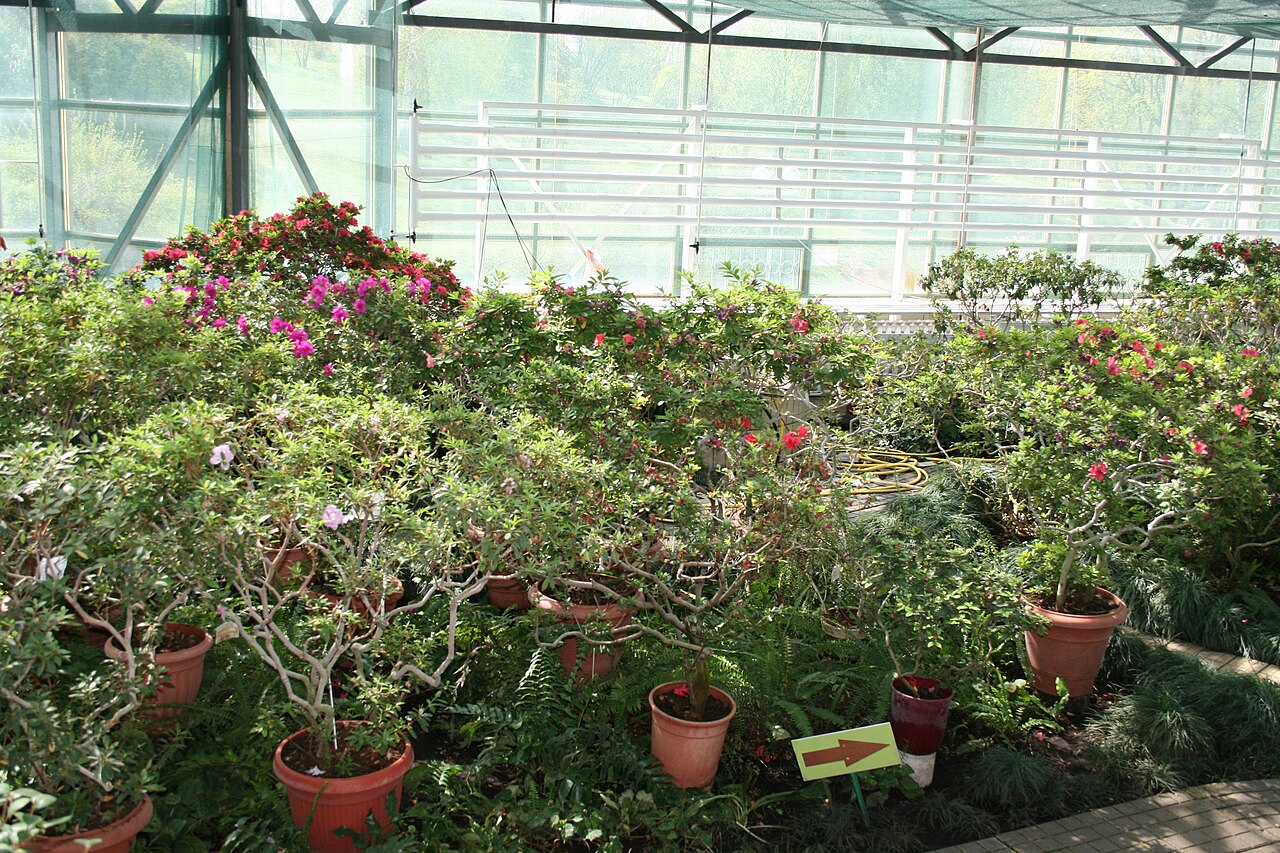
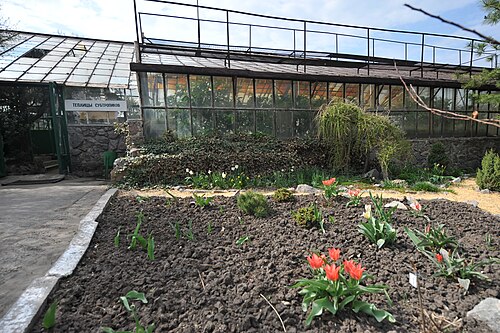
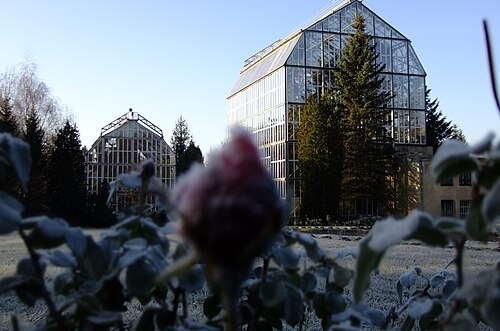
The main orangery can be spotted from afar. Science at Risk describes it as a large pentagonal dome at the foot of the main staircase, under a glass roof about 30 m high, designed in the Soviet period; a guided-tour operator speaks of a 32 m glass dome, and photographs on Wikimedia Commons show a faceted glazed volume resting on a lower glazed base. The same interview lists its weak points: condensation drips from the roof, the structure has no natural ventilation, and powerful air conditioners, expensive in electricity, move the air. Around the dome, glazed pavilions house the displays the garden itemises: tropics (456 m²), azaleas and camellias (424 m²), orchidarium (123.5 m²), tropical fruit trees and cacti (358 m² together), plus sections for arid-zone and aquatic plants. The garden gives over 2,000 m² for the whole; its head of tropical plants speaks of more than 3,000 m² of greenhouses in total, all dependent on city heating. The Guardian adds that the garden has eight greenhouses.
Plant collections
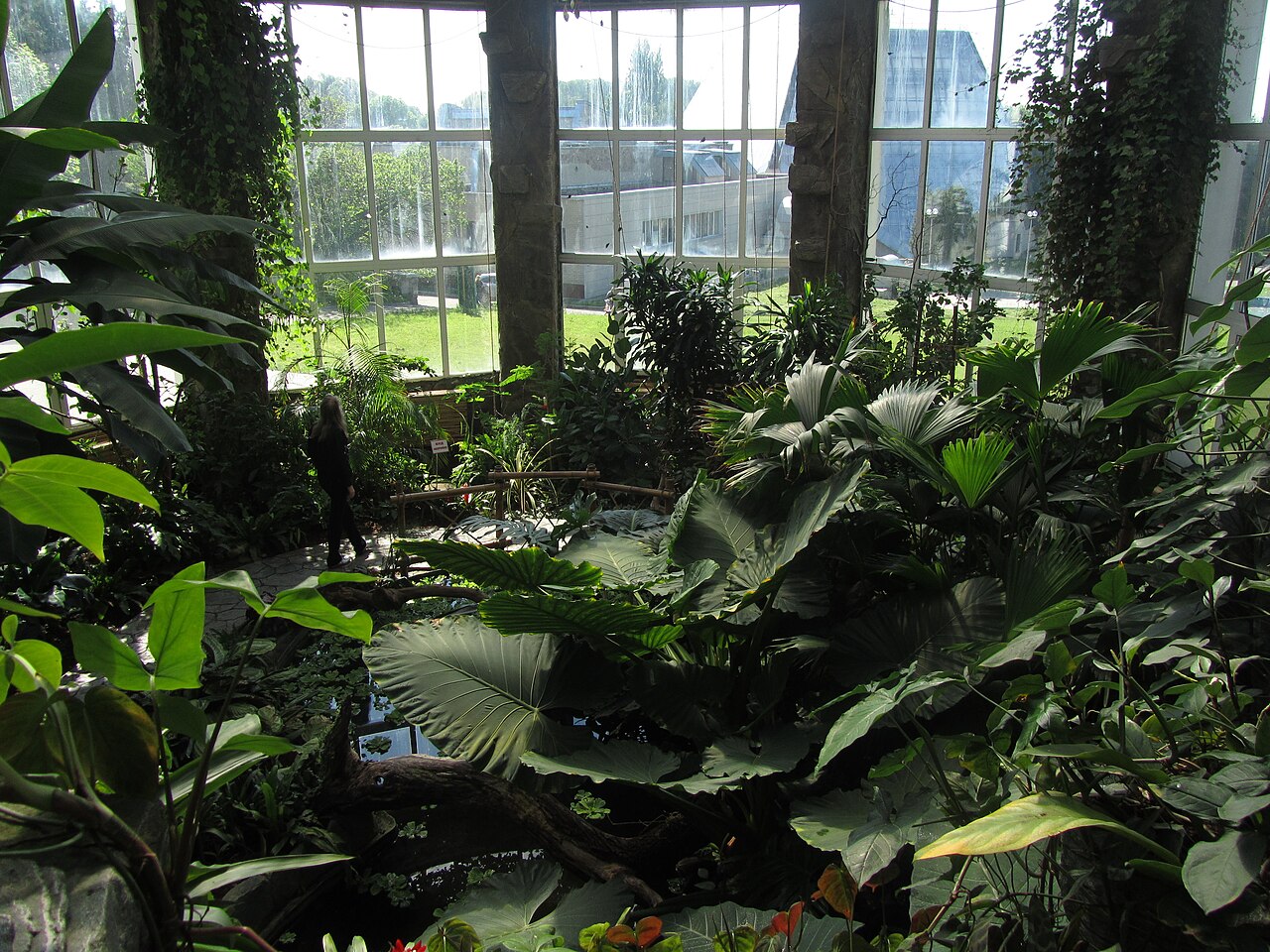
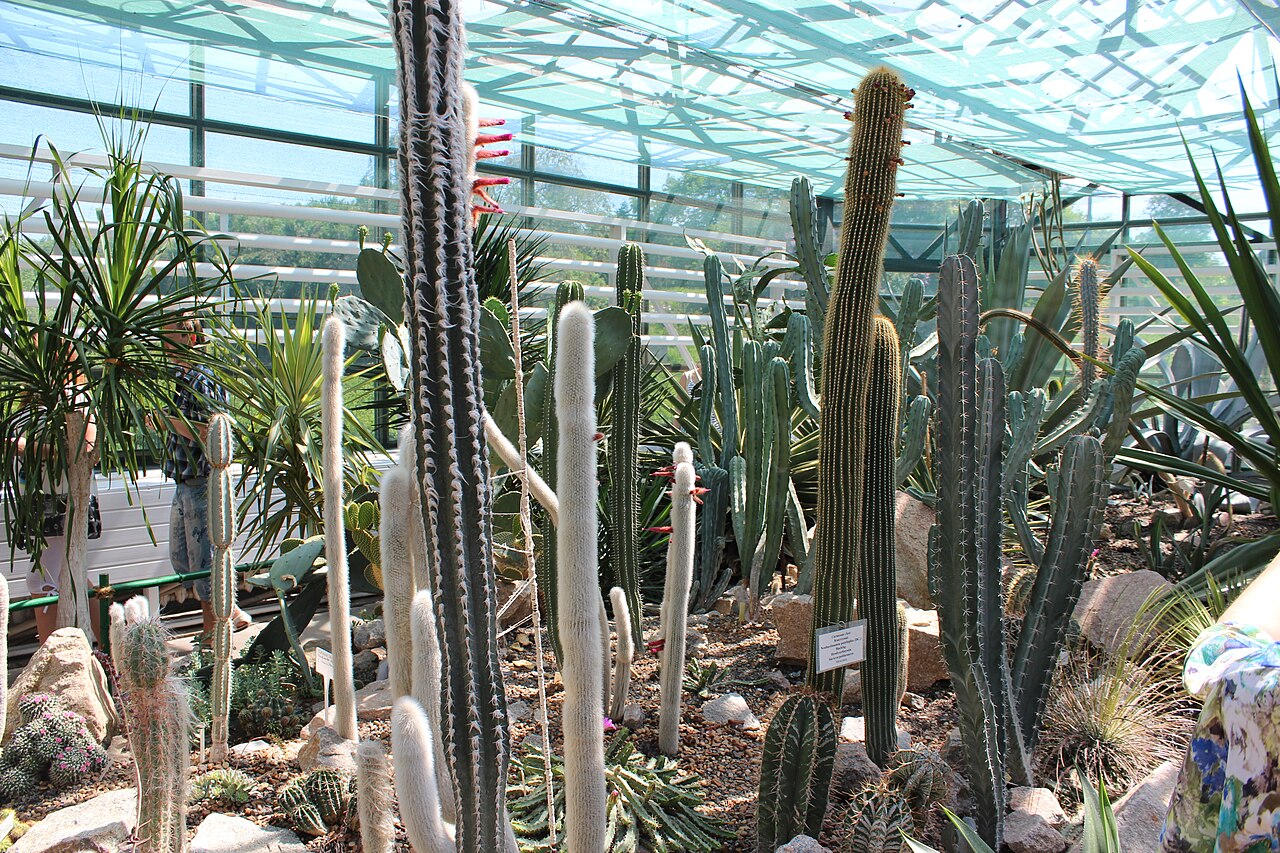
The tropics section, built on a botanical-geographical principle, brings together more than 350 species from 40 families, dominated by aroids (198) and bromeliads (51), with palms and figs. Science at Risk credits the main orangery with about 800 species on 1,000 m²; The Guardian notes a king palm brushing the roof. The Indian azaleas (30 cultivars) and the camellias (15, of two species) bloom en masse from January to mid-March. The orchidarium, presented as unique in Ukraine, shows about 80 species and cultivars, including 15 Dendrobium species; The Guardian points to a descendant of a Doritis pulcherrima sent into space in 1986. Citrus, mango, fig and pomegranate trees, many close to 50 years old, stand alongside a collection of 50 cacti and more than 70 succulents, among them Madagascan Didiereaceae; 70-year-old Echinocactus grusonii guard the entrance to the hall. In all, The Guardian counts 4,000 tropical and subtropical plants. In 2026 the garden also shelters private plants from combat zones, such as a pomegranate rescued from Kherson.
Visiting
For the orangery's opening days, check the garden's website before coming. A guided visit offered by a Kyiv tour operator allots about 1 h 15 in the greenhouses, after 1 h 15 of walking in the park. The best period is January to March for azaleas and camellias; Cattleya orchids bloom mostly in October and November according to the garden. The rest of the park follows the seasons: lilac garden, magnolia garden, then peonies. Allow two hours for the complex and the nearby park, half a day for the whole garden, which covers 129.86 hectares according to Ukrainian Wikipedia.
50.41° N, 30.56° E
Greenhouses nearby
More greenhouses — Ukraine
Do you have a good photo of this greenhouse? Suggest it for this page →
Sources (8)
- nbg.kyiv.ua/ua/oranjereni-kompleks.html
- nbg.kiev.ua/collections_expositions/index.php?SECTION_ID=274&SHOWALL_2=1
- nbg.kyiv.ua/ua/kvitujut-azaliii-ta-kameliii.html
- scienceatrisk.org/uk/story/zyma-u-tropikakh-yak-botanichnyi-sad-pratsiuie-pid-chas-viiny
- theguardian.com/world/2024/sep/15/kyivs-botanical-garden-staring-at-disaster-as-russia-tar
- frontliner.ua/en/preserving-the-unique-collection-of-the-botanical-garden/
- uk.wikipedia.org/wiki/Національний_ботанічний_сад_імені_М._М._Гришка
- captain.kiev.ua/excursions/tropicalkyivbotsadgryshko
Affiliate links — booking through Verrière helps fund our research, at no extra cost to you.