Lincoln Park Conservatory
Chicago, Illinois

Sources checked September 2026
- Year
- 1890–1895
- Architect
- Joseph Lyman Silsbee and Mifflin E. Bell
- Style
- Victorian, with ogee-arched trusses
- Dimensions
- 1.2 hectares; one vestibule, four exhibition rooms, and fifteen growing houses
- Status
- Open to the public, free admission
Built in stages between 1890 and 1895 under architects Joseph Lyman Silsbee and Mifflin E. Bell, Chicago's Lincoln Park Conservatory combines a vestibule, Palm House, and Fern Room within a Victorian structure marked by its ogee-arched trusses. The complex, which covers 1.2 hectares with fifteen attached growing houses, has kept a ficus planted as early as 1891, now standing more than 15 meters tall. In 1897, the Egyptian government even requested water-lily seeds from the establishment; renovated in 1925 and again in 1954, it remains free and open year-round.
Affiliate links — booking through Verrière helps fund our research, at no extra cost to you.
History
The Lincoln Park Commission put up a first greenhouse on the site in 1877 and planted a formal garden beside it in the late 1870s, one of the oldest public gardens in Chicago. That early structure was replaced between 1890 and 1895 by a conservatory built in phases, meant both to show exotic plants to the public and to raise the thousands of plants needed for the city's parks. It was designed by the renowned architect Joseph Lyman Silsbee together with a fellow Chicago architect, Mifflin E. Bell.
The vestibule and Palm House opened to the public in 1892, followed in 1895 by the Fern Room and the hothouse, then known as the stove house and now the Orchid Room. Aquatic plants were propagated in tanks and planted out in artificially heated lily ponds, and their fame was such that in 1897 the Egyptian government asked for seeds of the conservatory's water lilies.
Major alterations in 1925 removed the original terrace and vestibule and replaced the entrance's gabled roof with the bell-shaped roof seen today. The front was altered and enlarged again in 1954, in part to add public washrooms. Care and restoration of the site now receive support from the Lincoln Park Conservancy, founded in 1984.
Architecture and engineering
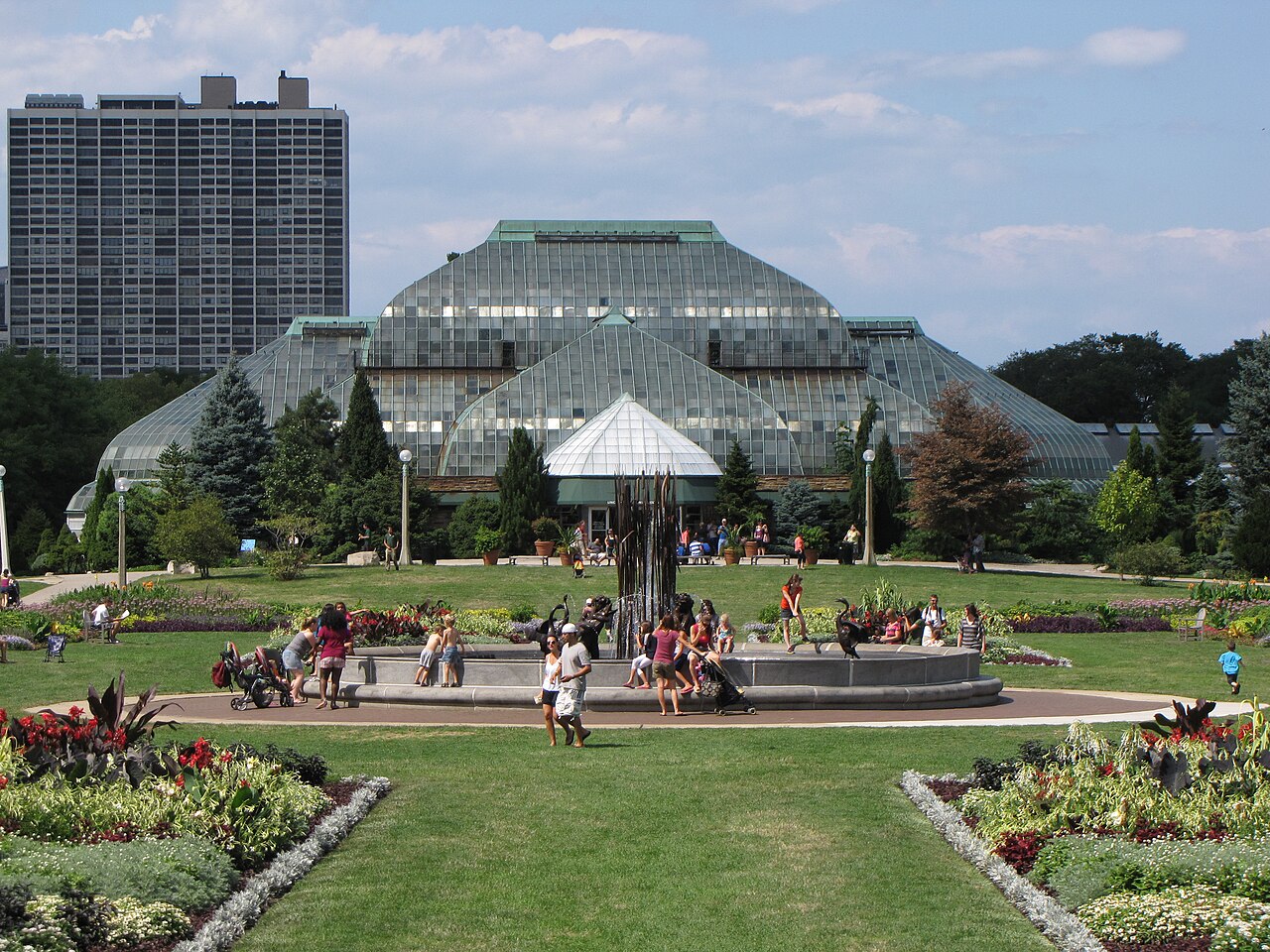
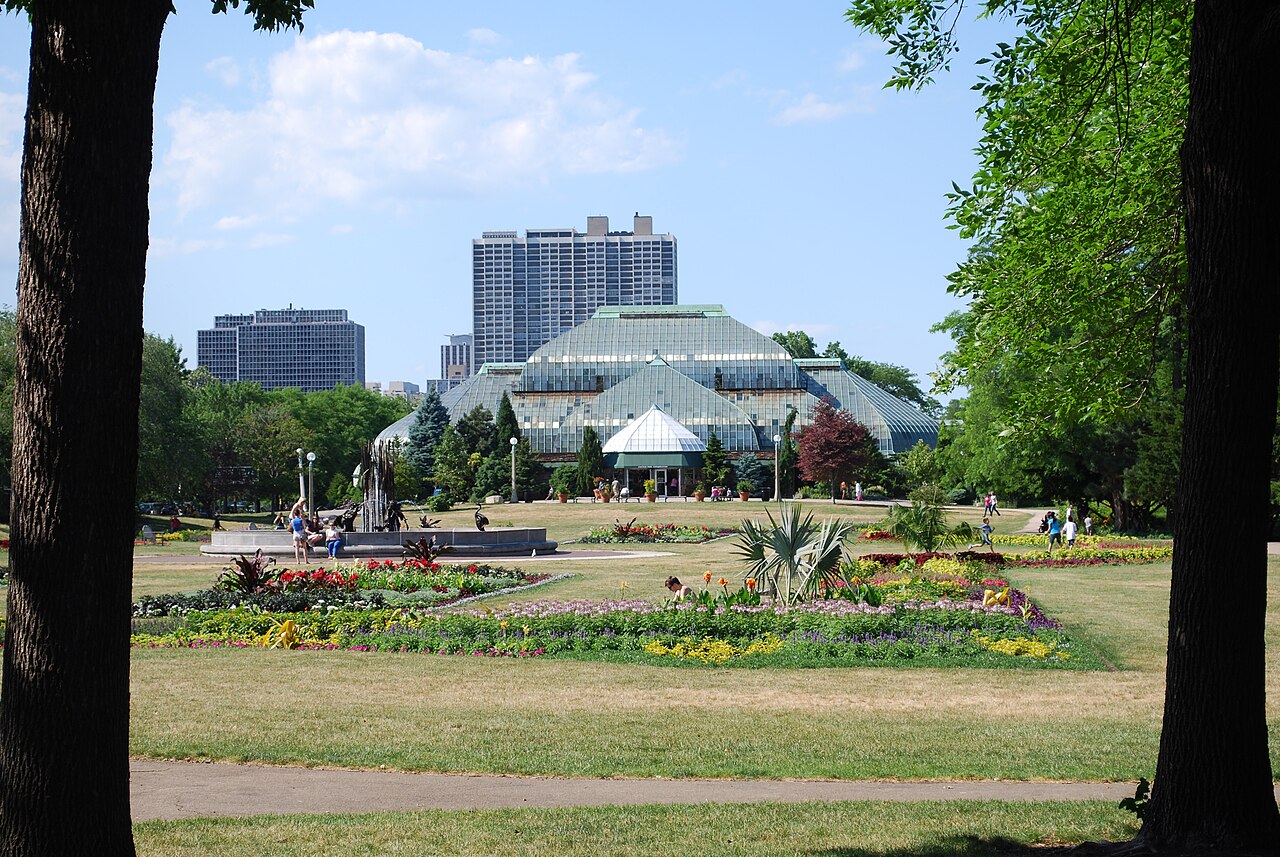
The complex covers about 3 acres (1.2 hectares). It consists of a vestibule, four display halls, the Palm House, the Fern Room, the Orchid Room and the Show House, and fifteen propagating and growing houses.
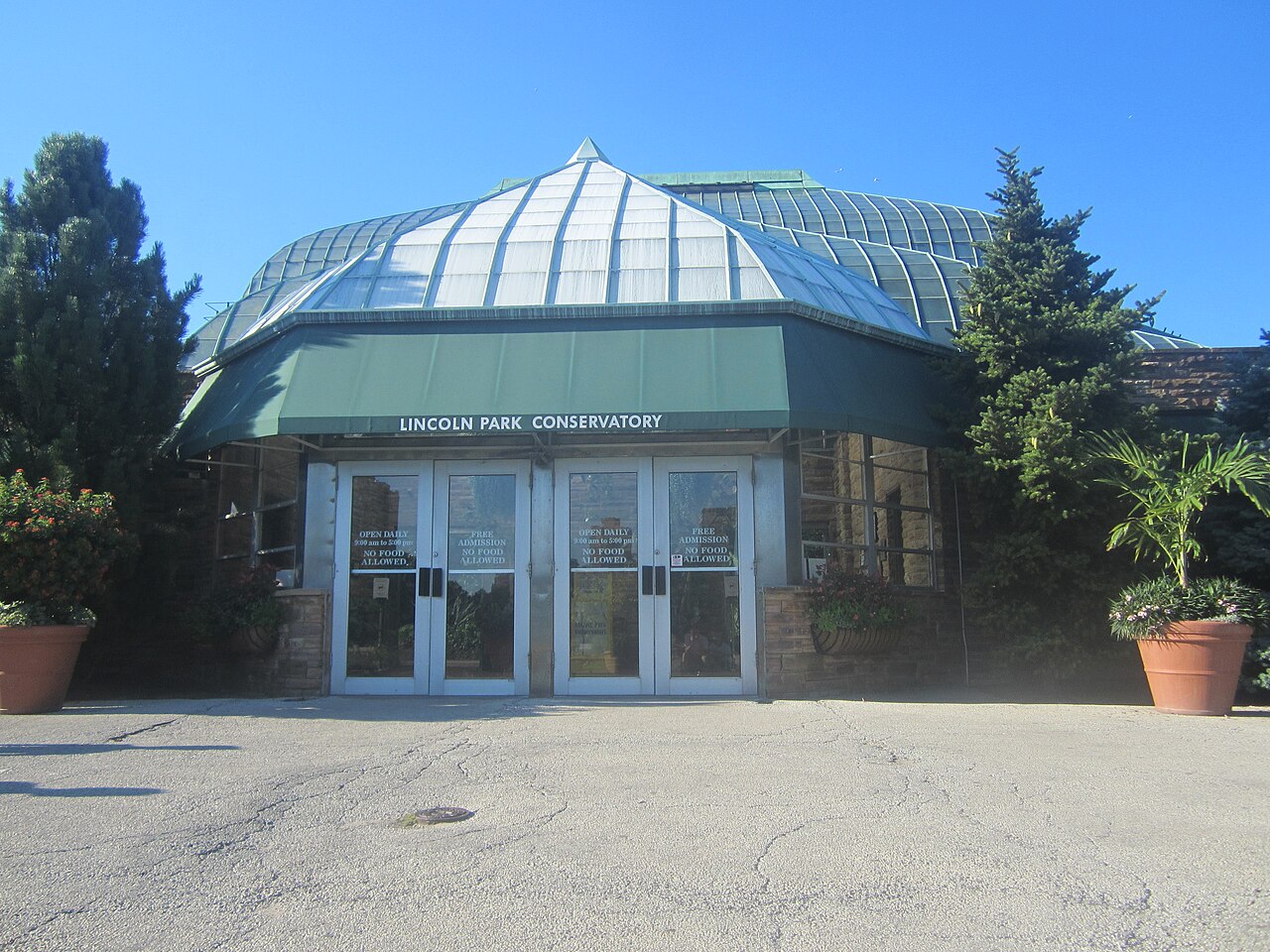
Silsbee gave this glass building an exotic outline through a series of trusses shaped as ogee arches, whose double curve sets the rhythm of the roofs. The bell-shaped roof over the entrance dates from the 1925 alterations.
The Fern Room is unusual in being set about five and a half feet (1.7 metres) below ground level, sunk below the level of the rest of the building.
Plant collections
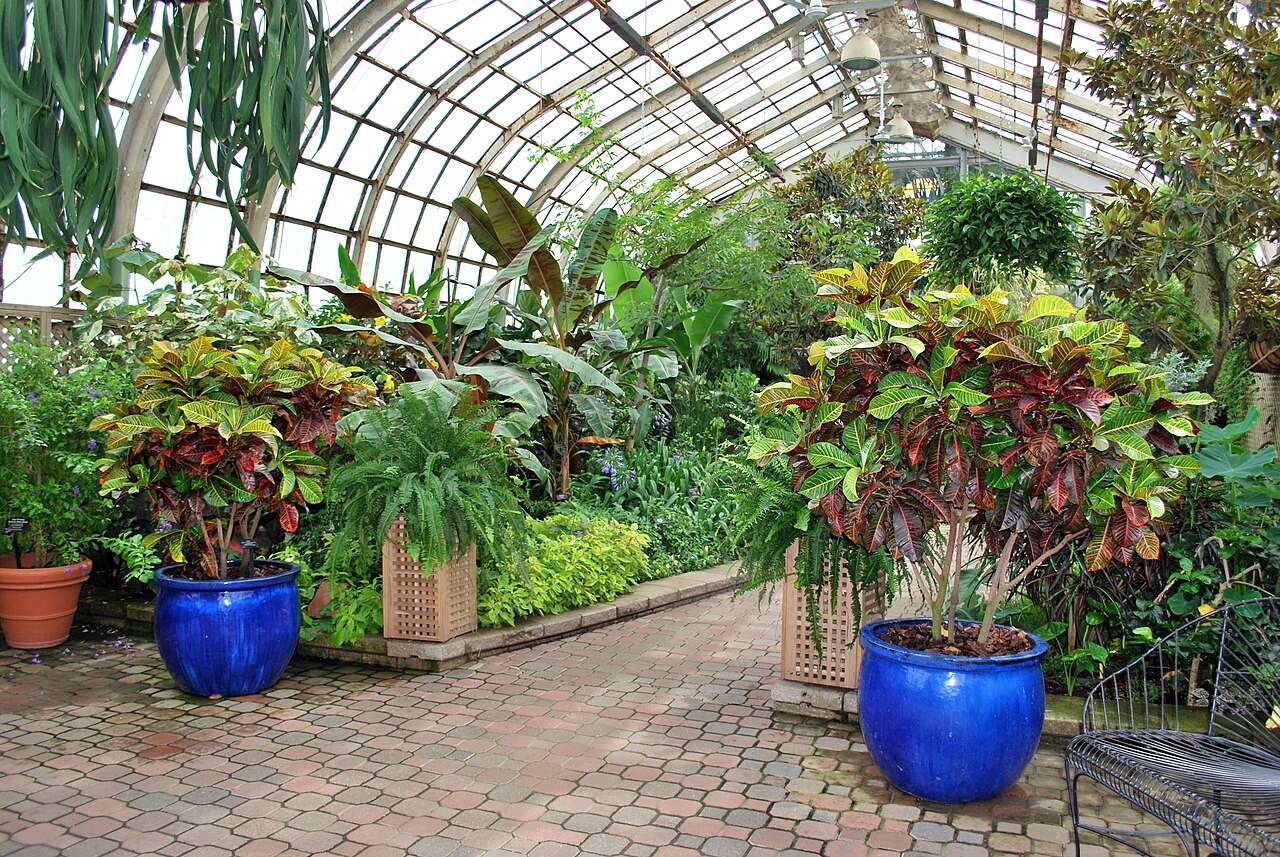
The Palm House displays more than a dozen kinds of palm along with useful tropical plants: bananas, a grapefruit tree, orange trees, papayas, a coffee tree and a cacao tree. Its most famous specimen is a fiddle-leaf rubber tree planted in 1891, now about 50 feet (15 metres) tall.
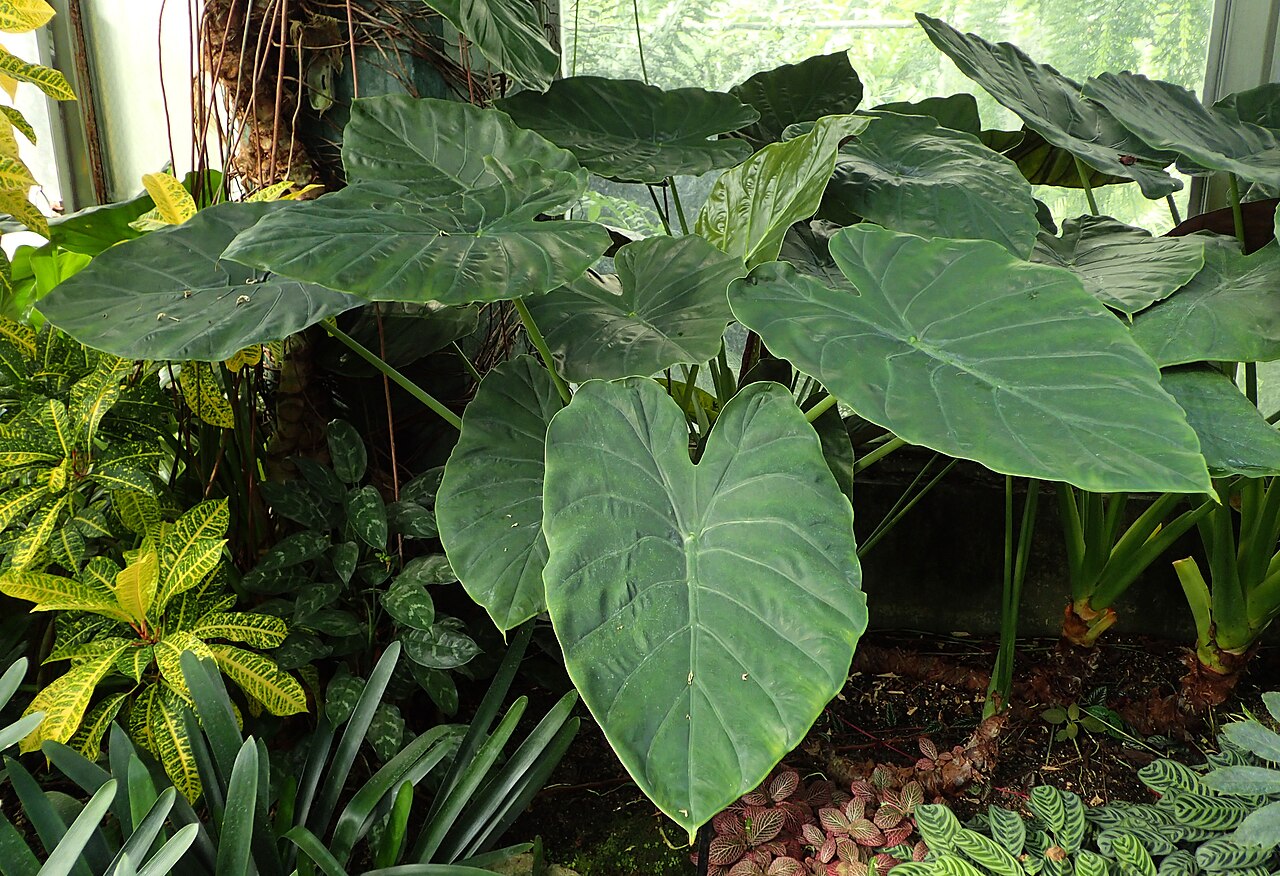
The Fern Room holds plants of the forest floor, chiefly a large collection of ferns, along with cycads, one of the most ancient plant lineages. The Orchid Room shows hundreds of orchids, bromeliads and a few tropical carnivorous plants.
The Show House stages three shows a year: a spring flower show from late January into May, a summer show of tropical plants, and a winter holiday show that pairs flowers with model trains.
Visiting
The conservatory stands in Lincoln Park, Chicago's largest park, on Stockton Drive alongside the Lincoln Park Zoo. Admission is free, with timed-entry reservations. Allow about an hour for the four display halls.
In front of the building, the formal garden sets twelve beds of annuals and tropical plants around the Storks at Play fountain, also called the Bates Fountain, and across the street the Grandmother's Garden holds a monument to Shakespeare. A visit combines easily with the neighbouring zoo or with the Alfred Caldwell Lily Pool, also cared for by the Lincoln Park Conservancy. In winter, the holiday show is a highlight of the year.
41.92° N, 87.64° W
Greenhouses nearby
More greenhouses — United States
Do you have a good photo of this greenhouse? Suggest it for this page →
Affiliate links — booking through Verrière helps fund our research, at no extra cost to you.