Monk's House Conservatory (Leonard Woolf's cactus collection)
Rodmell, near Lewes, East Sussex

Sources checked October 2026
- Style
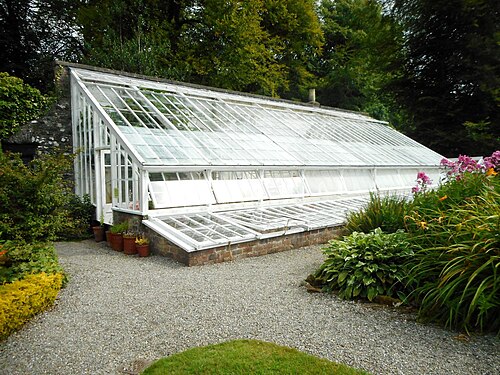
- Lean-to conservatory against the cottage, glazed roof and walls with white-painted bars on a low brick base
- Status
- Open to the public with the National Trust house and garden, on selected days and with compulsory booking; a 2023 visitor account says the visit route passes through the conservatory
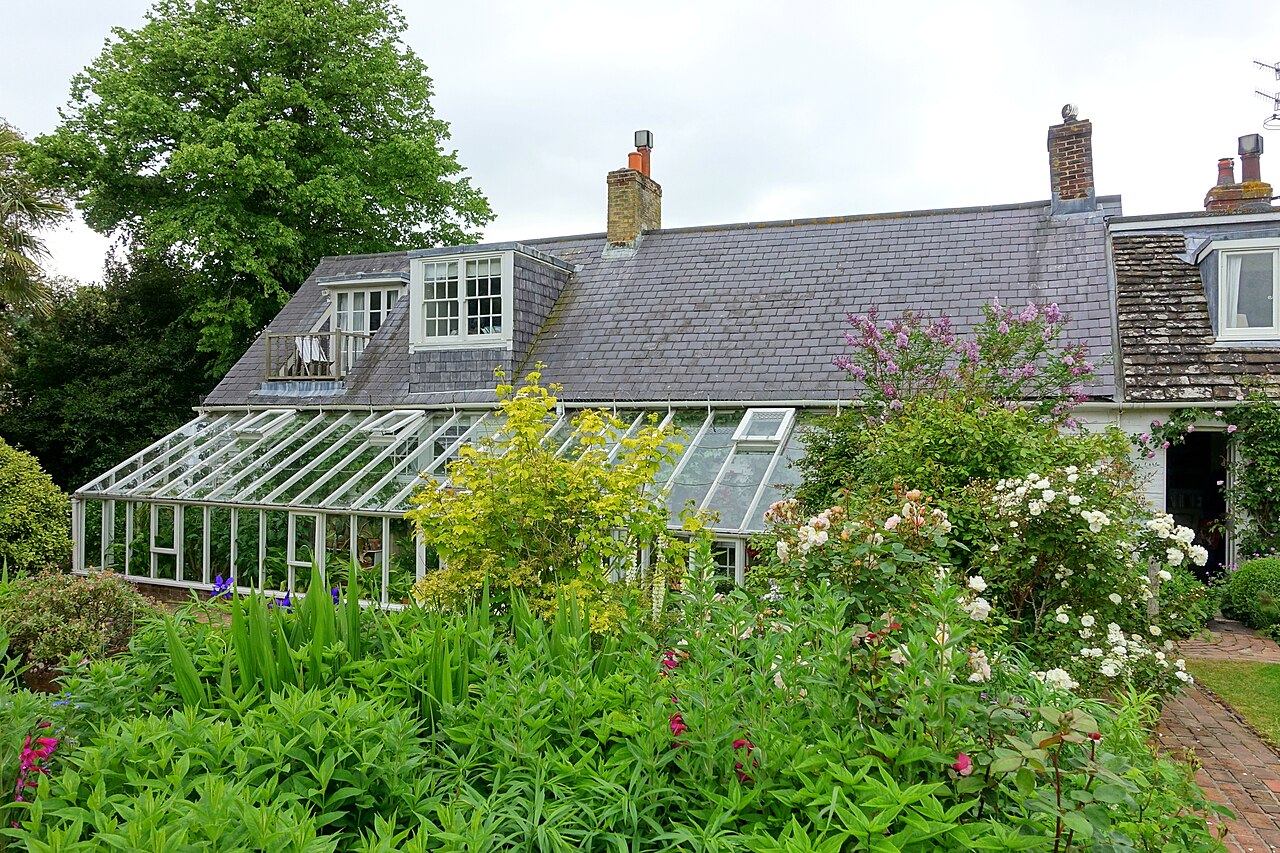
Monk's House, in Rodmell, is the country cottage that Virginia and Leonard Woolf bought in 1919 and that the National Trust has owned since 1980 or 1981. On the garden side, a lean-to conservatory with a glazed roof and glazed walls stands against the house; according to a 2023 visitor account, visitors walk through it to get in. It holds Leonard Woolf's cactus and succulent collection, built up over nearly thirty years until his death in 1969, which the Trust says was first kept in a dedicated cactus house.
Affiliate links — booking through Verrière helps fund our research, at no extra cost to you.
History
The cottage at Rodmell dates from the seventeenth century according to the National Trust, which sees it as originally a timber-framed house; the Historic England listing, which protects it at Grade II since 1979, dates it instead to the eighteenth century and describes weatherboarding on a stuccoed base under a slate roof. Virginia and Leonard Woolf bought it at auction in Lewes on 1 July 1919 for 700 pounds. The Trust traces their improvements: the kitchen was extended in 1920, a bathroom with hot water completed in 1926, and in 1929 the garden gained a terrace, a pond and beehives.
Virginia Woolf died in March 1941; Leonard stayed at Monk's House until his own death in 1969. According to the National Trust, he collected cacti and succulents for nearly thirty years, until he died, keeping lists and notes with purchase and flowering dates that now help trace his rarer plants. The Trust says the collection was first kept in a dedicated cacti house and is now housed in the conservatory, alongside other tender plants. A 2015 garden blog ties the conservatory and the collection to Leonard's later years, without citing archive sources.
The house, left by Leonard, was sold to the University of Sussex in 1972 and handed to the National Trust in 1980 or 1981.
Architecture and engineering
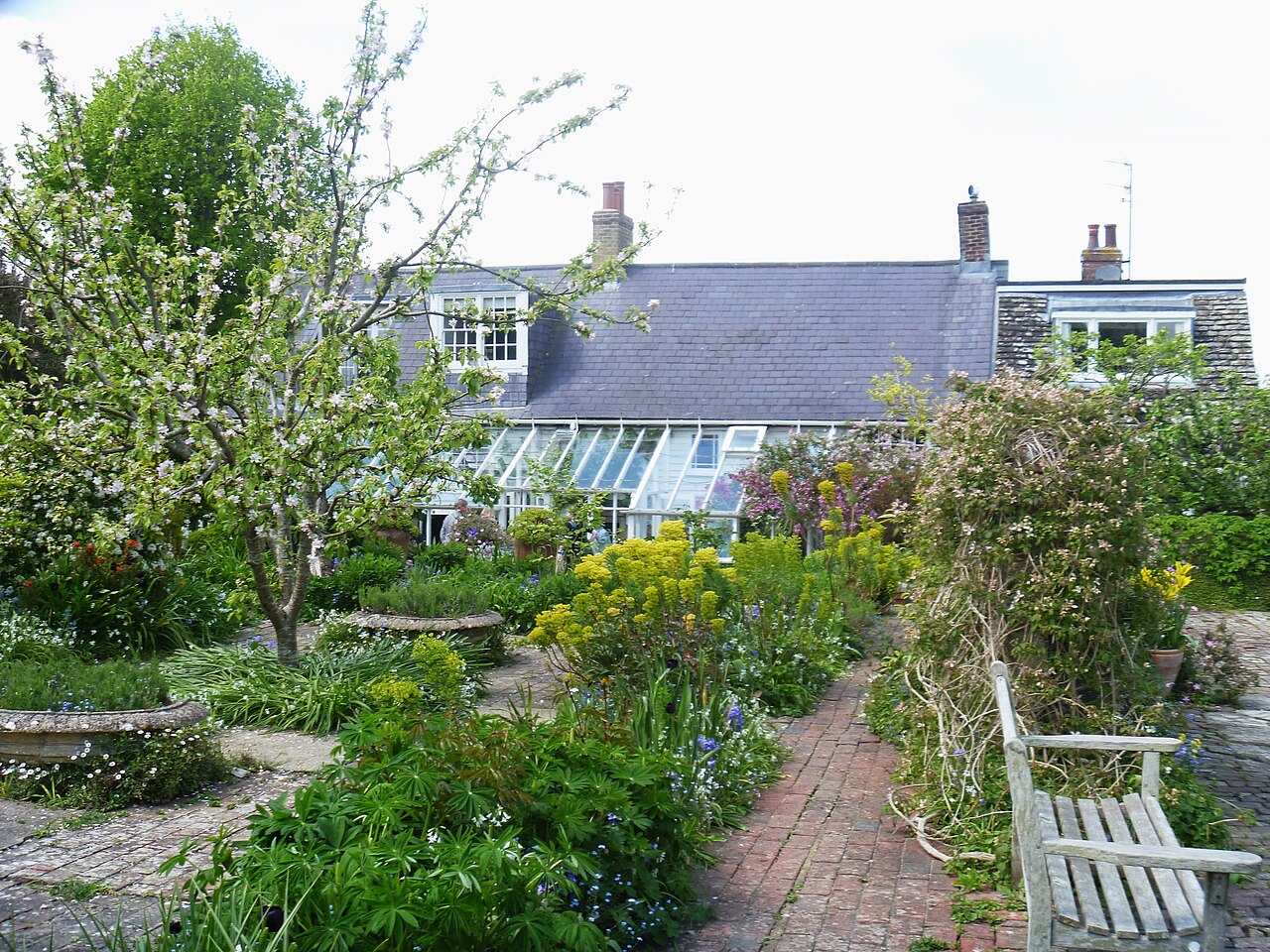
The Historic England listing describes the house (two storeys, four windows, weatherboarding on a stuccoed base, slate roof, a later porch and addition at the north end) without mentioning the conservatory, which is known only from accounts and photographs. A 2015 garden blog says the entire back of the house is formed of a lean-to conservatory. Photographs of June 2016 on Wikimedia Commons (public domain, CC0) show it across part of the garden front, beneath the line of the slate roof with its dormers: a glazed roof sloping one way and fitted with opening lights, glazed walls with white-painted bars above a low brick base, a glazed door in the centre, and terracotta pots set on a brick path.
A visitor reports in 2023 that one does not enter by the front door: one passes the garden gate, follows a mossy brick path and goes through a greenhouse before stepping down to the green-walled sitting room.
Plant collections
The conservatory is the home of Leonard Woolf's cacti and succulents. The National Trust lists the collection, built up over nearly thirty years, in its selection of houseplants to see in its conservatories and glasshouses, and says it sits alongside other tender plants. Woolf's lists and notes, with purchase and flowering dates, make it possible to trace rarer plants that he owned.
A 2015 blog describes, at the entrance to the house, a very personal collection of cactus, succulents and climbers, with pelargoniums, and notes a tall palm beside the conservatory; the author sees the scene of a passionate gardener who has just stepped out.
Visiting
According to one visitor's account from 2023, the route begins in the conservatory: one enters by the garden gate and the brick path, then walks through the greenhouse to reach the house. The National Trust says Monk's House opens on selected days only and that booking is essential, the small size of the house dictating the rule. The garden, designed by Leonard Woolf as a series of rooms linked by brick paths, has an Italian garden and an orchard; the Trust's history page also mentions a pavilion created for Virginia. Charleston Farmhouse, where her sister Vanessa Bell lived, is nearby, according to one visitor's account.
50.84° N, 0.02° E
Greenhouses nearby
More greenhouses — United Kingdom
Do you have a good photo of this greenhouse? Suggest it for this page →
Sources (8)
- nationaltrust.org.uk/visit/gardens-parks/houseplants-to-see-in-our-conservatories-and-glas
- nationaltrust.org.uk/visit/sussex/monks-house
- nationaltrust.org.uk/visit/sussex/monks-house/the-history-of-monks-house
- nationaltrust.org.uk/visit/sussex/monks-house/the-garden-at-monks-house
- modernistreviewcouk.wordpress.com/2023/01/30/walking-with-woolf-a-day-at-monks-house/
- thedahliapapers.com/2015/07/04/violently-in-favour-of-a-country-life-virginia-woolf/
- historicengland.org.uk/listing/the-list/list-entry/1273935?section=official-list-entry
- en.wikipedia.org/wiki/Monk%27s_House
Affiliate links — booking through Verrière helps fund our research, at no extra cost to you.