Boulton & Paul glasshouse range, Raveningham Hall Gardens
Raveningham, Norfolk
No freely licensed photo of this greenhouse yet. Do you have one? Suggest it for this page →
Sources checked October 2026
- Year
- Late 19th century
- Architect
- Boulton & Paul (maker)
- Style
- Lean-to iron-and-timber glasshouse on a brick plinth, in a walled kitchen garden
- Status
- Open in season (2026 season ended 30 September; next opening announced for February 2027)
At the centre of the north wall of the walled kitchen garden at Raveningham Hall, in Norfolk, a lean-to glasshouse of iron and timber stands on a red-brick plinth. The owners describe it as a fine late 19th-century Boulton & Paul range of glasshouses, with a stocked conservatory and melon pits, all in working order. Restored to full production over roughly the last twenty years, the kitchen garden yields fruit, vegetables and cut flowers. The garden opens only in season: the 2026 season ended on 30 September and the next opening is announced for February 2027.
Affiliate links — booking through Verrière helps fund our research, at no extra cost to you.
History
The Bacon family has held the Raveningham estate since 1735. The house, by an unknown architect, was built in the 18th century for Sir Edmund Bacon, and the walled kitchen garden lies off the north-west corner of the stable courtyard. On its age, Parks & Gardens UK says it was built in the early 18th century, when the Bacons inherited the site, whereas the Historic England list entry dates the "garden wall and glasshouse" group to the early 19th century. That entry, at Grade II, dates from 22 February 1988 and includes the group for its group value.
The range of glasshouses is assigned to the late 19th century by the estate's own website and by Parks & Gardens UK, which both call it a "Boulton and Paul range". According to Wikipedia, Boulton & Paul was a Norwich firm that grew out of an ironmonger's shop founded in 1797.
In the early 20th century the architect Somers Clarke (spelled Somers Clark by Parks & Gardens UK) was commissioned to improve the house and lay out the gardens. A restoration programme began in 1950, according to the same database, enlarging the garden and reinstating original features; Historic Houses credits most of the present garden to the mother of the current baronet, who lived there for fifty years. The kitchen garden, brought back to full working order over the last twenty years according to the estate, again supplies the house with fruit and vegetables, and the Boulton & Paul glasshouse is described as restored.
Architecture and engineering
The list entry describes, in the centre of the north wall, a lean-to glasshouse of iron and timber construction set on a red-brick plinth. It has a central gabled projection, a crested ridge and vents below the ridge. The wall that carries it is of red brick with a coped top and encloses the garden.
The estate's website adds that the range includes a conservatory and melon pits, all in working order, without saying how these elements relate to one another. Wikipedia mentions a "restored Victorian conservatory" among the garden's features without locating it. Parks & Gardens UK describes a kitchen garden divided into four quarters with a central apple tunnel, a small herb garden on the east side and a herbaceous border on the south; it places the glasshouse in the middle of the north wall. The Grade II* hall stands about a hundred metres to the south-east, going by the distance given in the list entry.
Plant collections
In the kitchen garden, the estate's website mentions fruit, vegetables and cut flowers such as sweet peas, and says the glasshouses, conservatory and melon pits are stocked. Parks & Gardens UK notes the apple tunnel and the small herb garden.
Beyond the kitchen garden, the ten acres of garden include herbaceous borders, wildflower meadows, an arboretum planted after the 1987 gale and a stumpery devoted to tree ferns, the newest project according to the estate. The Royal Horticultural Society, whose partner garden this is, says it peaks in late July, when the agapanthus are in flower. The estate also sells plants, by pre-order or in person during opening hours.
Visiting
The glasshouse stands in the walled kitchen garden, about a hundred metres north-west of the hall according to the list entry. The garden opens seasonally: in 2026, in February and then from May to September; it closed on 30 September and the estate announces a reopening in February 2027, for the snowdrops. The RHS page lists the glasshouse among the garden's features as "open to public"; it is worth checking before travelling whether visitors may enter.
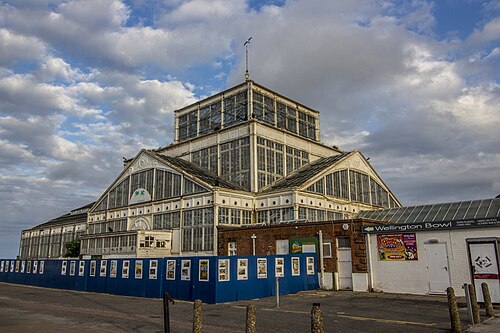
Flower lovers will aim for February (snowdrops) or late July (agapanthus). St Andrew's church stands close to the hall; the Great Yarmouth Winter Gardens, in the catalogue, lie about 17 km away as the crow flies.
52.51° N, 1.53° E
Greenhouses nearby
More greenhouses — United Kingdom
Do you have a good photo of this greenhouse? Suggest it for this page →
Sources (7)
- raveningham.com/gardens/
- britishlistedbuildings.co.uk/101050484-garden-wall-and-glasshouse-100-metres-north-west-of
- parksandgardens.org/places/raveningham-hall
- historichouses.org/house/raveningham-hall-gardens/
- rhs.org.uk/gardens/gardendetails/raveningham-hall-gardens
- en.wikipedia.org/wiki/Raveningham_Hall
- en.wikipedia.org/wiki/Boulton_%26_Paul
Affiliate links — booking through Verrière helps fund our research, at no extra cost to you.