Orangery and Winter Garden of Světlá nad Sázavou Château (zámecký skleník)
Světlá nad Sázavou, Vysočina Region

Sources checked October 2026
- Year
- 1865–1868
- Architect
- Svatoš (Austrian architect)
- Style
- Cast-iron winter garden flanked by two pavilions, with a grotto and waterfall
- Dimensions
- Glazed part about 10 × 22 m, over 8 m high
- Status
- Open to château visitors; glazing replaced in 2020
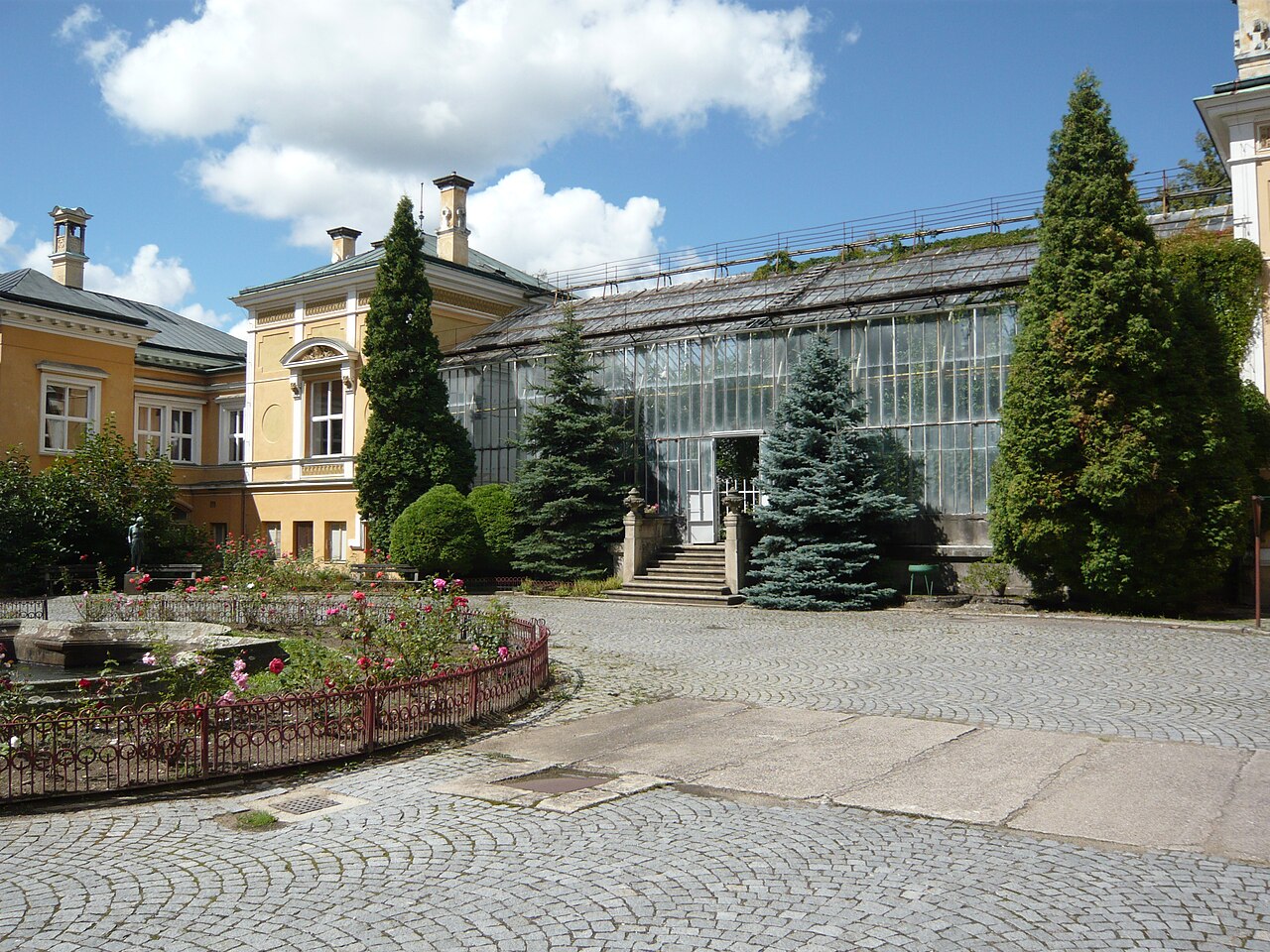
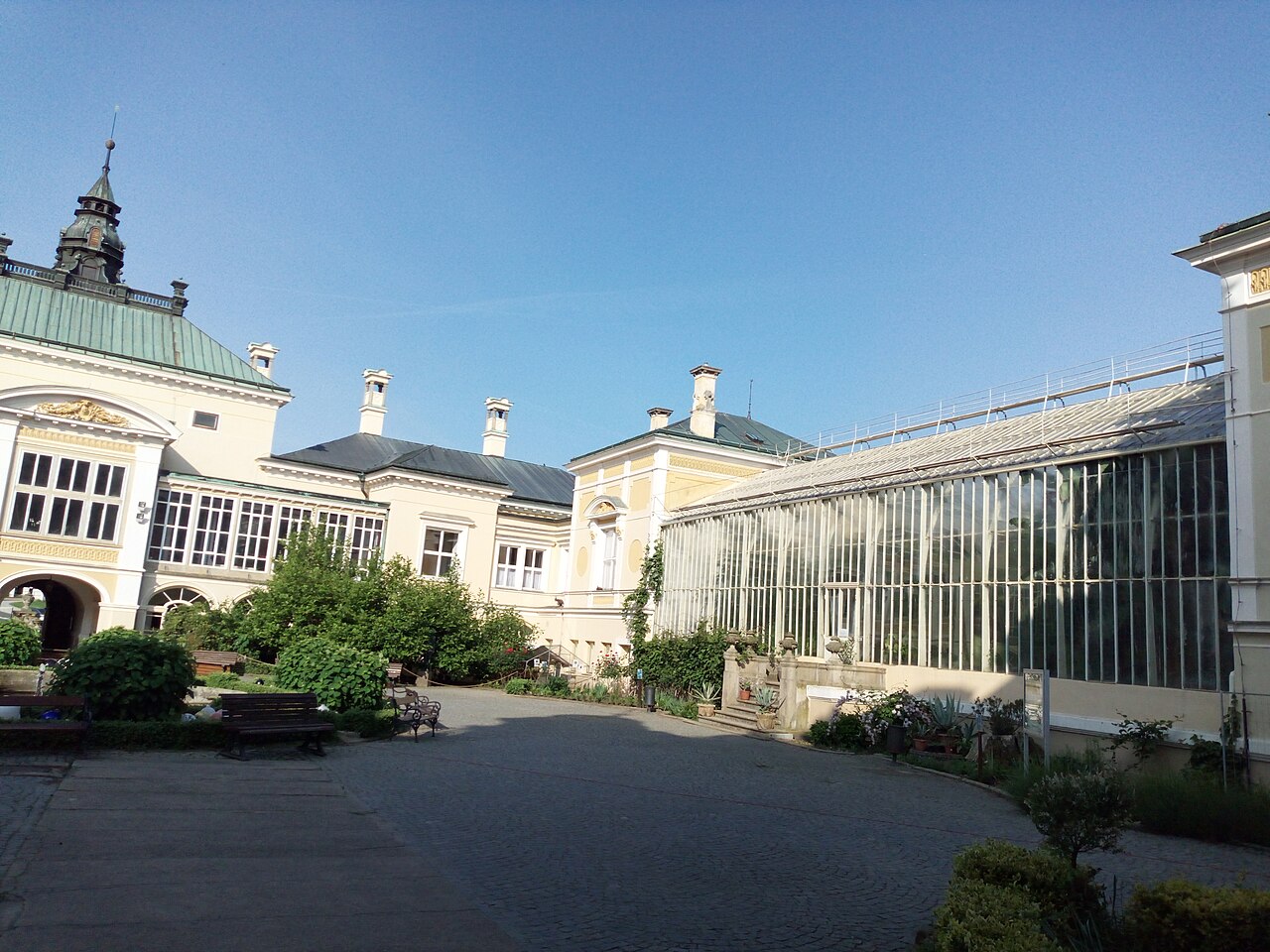
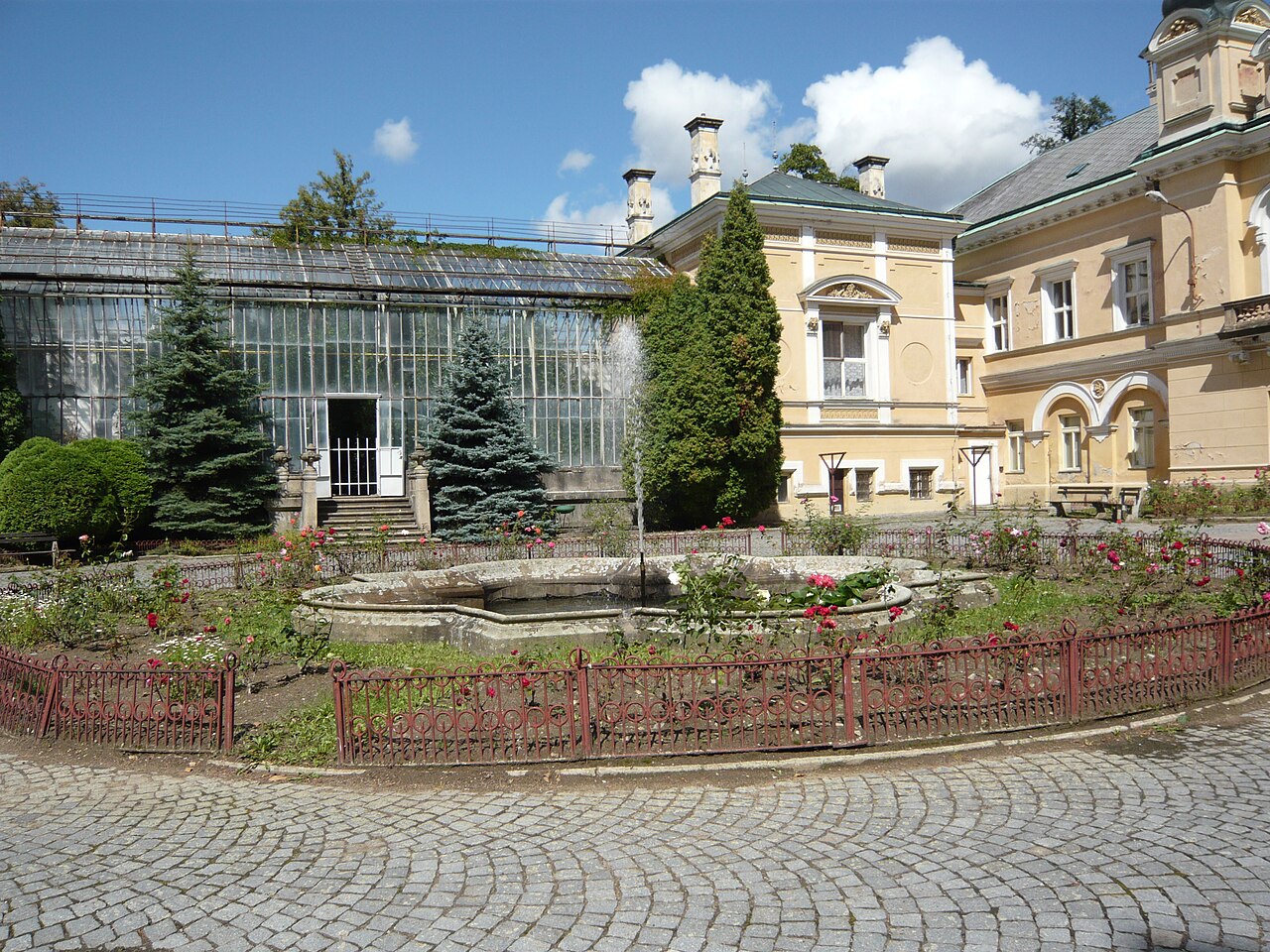
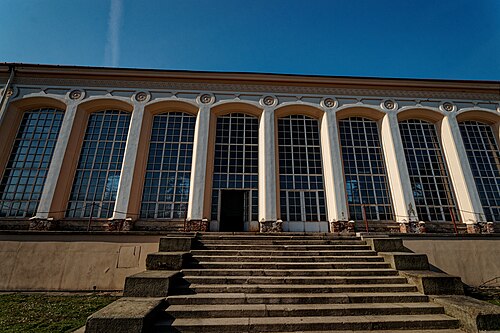
In the north wing of Světlá nad Sázavou Château, the greenhouse-orangery is a cast-iron winter garden of about 10 × 22 m and over 8 m high, flanked by two square pavilions attached to the château. Dated 1865-1868 by the town, it holds a romantic grotto with a waterfall and a fountain, preserved since the beginning. Run down, it had all its glazing replaced in autumn 2020 and was then replanted with subtropical plants: hardy banana, fig, coffee and citrus, while exotic birds live in an aviary.
Affiliate links — booking through Verrière helps fund our research, at no extra cost to you.
History
Světlá nad Sázavou Château, on the left bank of the Sázava, grew out of a fourteenth-century fortress and changed hands several times. Its present form is owed to František Josef Salm-Reifferscheidt, who had it rebuilt in neo-Renaissance style between 1868 and 1873 under a Viennese architect named Svatoš. According to the town, it was during this vast building campaign that the count had the orangery built, from 1865 to 1868: a winter garden designed by the Austrian architect Svatoš, on the site of a demolished part of the baroque north wing. A grotto with a waterfall and a fountain were built inside and have survived.
Dates differ. The château's page ties the greenhouse to the last rebuilding of the château "in the second half of the 18th century", which it says gave the whole north wing the form of a classical-type greenhouse building, and adds that it replaced an older orangery at the edge of the park, near today's rose pavilion according to the 1838 cadastre. The Mendel University survey, for its part, lists Světlá's winter garden among those of the second half of the nineteenth century.
Through lack of maintenance the greenhouse decayed: badly damaged cast iron, many cracked or fallen panes that exposed the plants to frost, and groundwater soaking the grotto and walls. Visitors were temporarily barred. In autumn 2020 all the glazing was taken down and replaced, the metal frame was flame-cleaned and repainted, and drainage and masonry were repaired. Most plants, affected by mould, were removed; gradual replanting began with the help of volunteer growers, and in June 2021 the town announced a reopening once it was complete.
Architecture and engineering
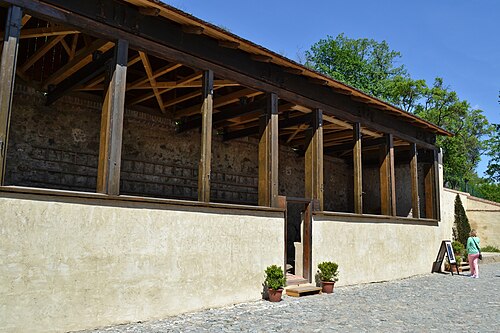
The glazed part, with a cast-iron frame, measures about 10 m by 22 and stands over 8 m high, which makes it, according to the château, one of the larger Czech greenhouses. It is flanked by two square pavilions joined to the château: the left one has a reception salon on its upper floor with a door opening into the greenhouse; the right one would have housed the technical equipment and, upstairs, the gardener's flat. The 2021 Mendel University survey classes it as a type 4 greenhouse (at least one wall and the roof glazed), joined to other buildings, with distinct flanks, and in the "complete" (kompletní) condition class: all the main original parts are preserved or well restored, together with a good share of the details. It also counts it among six Czech structures set in a courtyard.
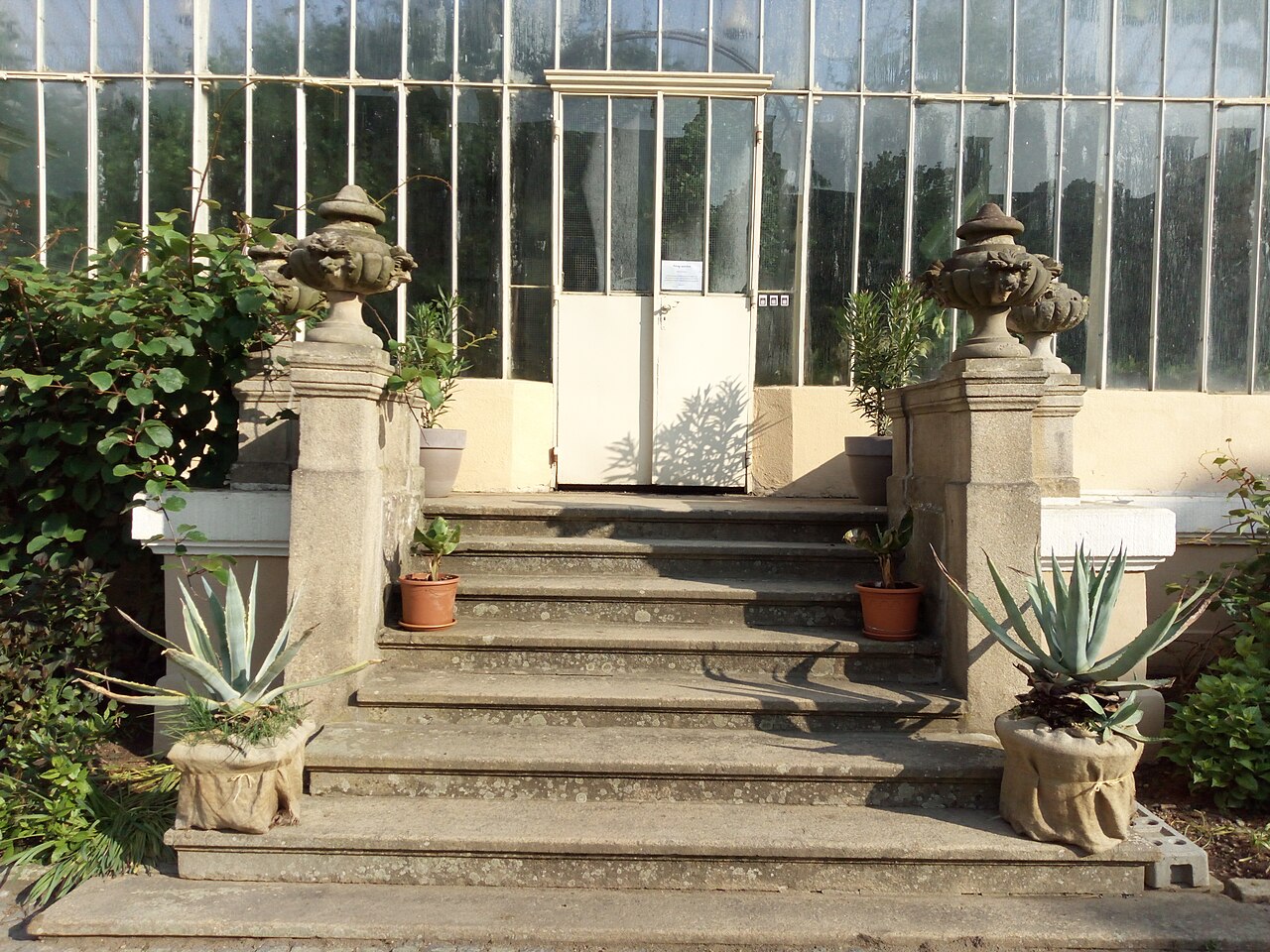
The dominant feature is a romantic grotto with a waterfall, which the château says is the only one preserved in a Czech greenhouse. Heating has left its traces: four chimneys on the side pavilions, a floor channel and metal hot-water pipes. The greenhouse is no longer heated in winter; its climate is subtropical, but frost can occur. The glazing was entirely replaced in 2020.
Plant collections
The greenhouse has been replanted with subtropical plants since the 2020 restoration. The château mentions a hardy banana, a fig, coffee plants and a citrus collection, along with fruit, aromatic and ornamental plants from around the world; some plants are on sale at the ticket desk. The greenhouse also serves as an aviary for exotic birds: their song can be heard and their colourful plumage seen.
In the town's 2021 appeal for plant donations, the plants sought were hardy evergreen shrubs, palms, lemon trees, flowering climbers such as Chinese wisteria, perennials and ground-cover plants; specialists recommended among others Crinodendron patagua, Fuchsia magellanica and Griselinia.
Visiting
The greenhouse occupies the north wing of the château, a few metres from the town centre, on the left bank of the Sázava. It is included in the château's basic ticket and, according to the winter programme, every guided tour includes it; it can also be visited on its own, with the exhibition on the history of the Světelsko region. The château is open all year, with a reduced programme in winter.
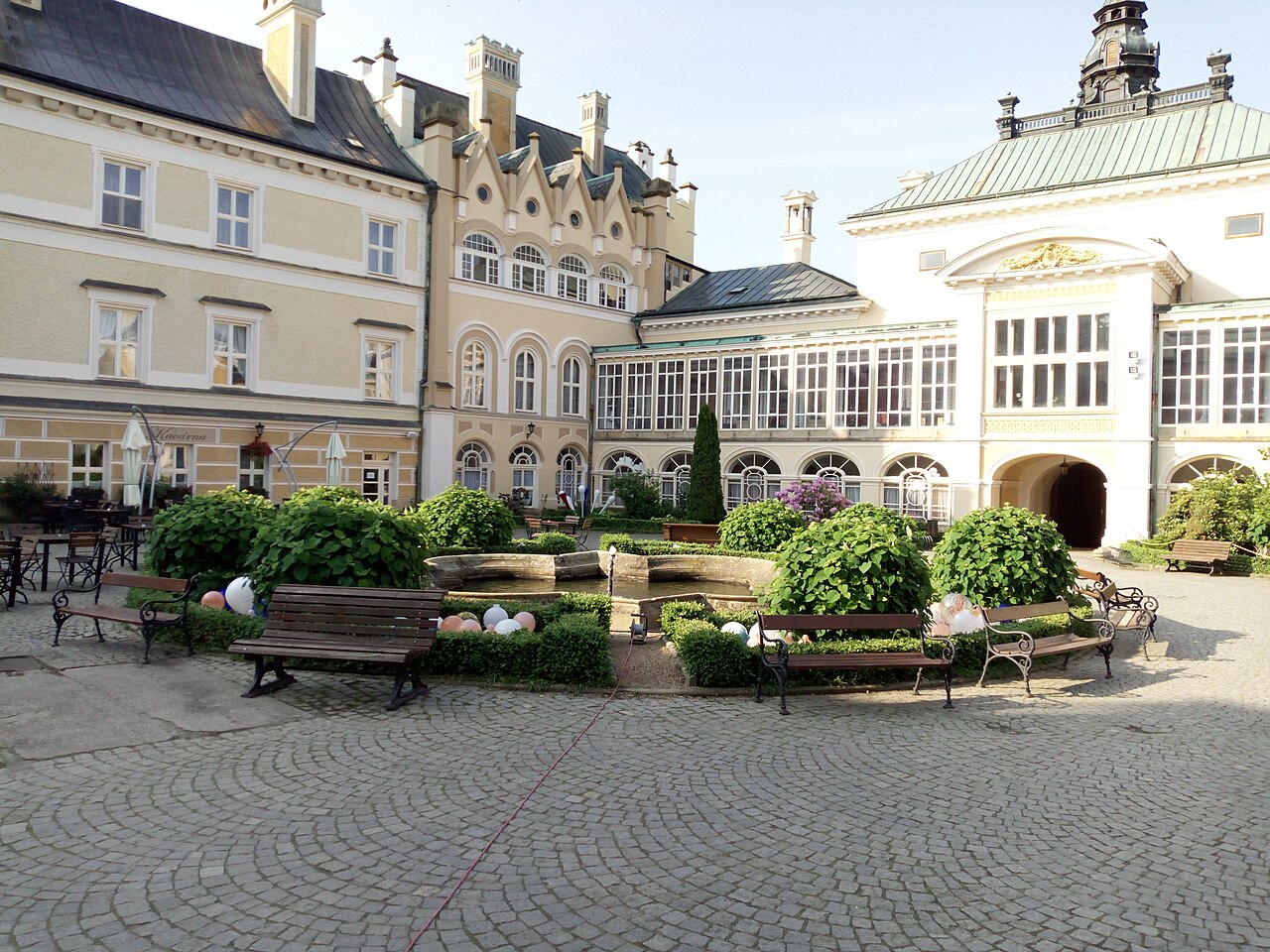
It combines with the exhibition of historic European glass (opened in 2014), the Světelsko museum, the 18-hectare English park and its cascade of ponds, and the château café.
49.67° N, 15.41° E
Greenhouses nearby
More greenhouses — Czech Republic
Do you have a good photo of this greenhouse? Suggest it for this page →
Sources (7)
- zameksvetla.cz/zamecky-sklenik/
- svetlans.cz/zamecka-oranzerie-prosla-narocnou-opravou-zajemci-do-ni-mohou-darovat-rostliny
- zameksvetla.cz/expozice/
- zameksvetla.cz/l/oteviraci-doba-pro-zimni-obdobi/
- cs.wikipedia.org/wiki/Světlá_nad_Sázavou_(zámek)
- wikidata.org/wiki/Q14329487
- ubz.zf.mendelu.cz/wcd/w-zf-ubz/projekty/naki-dg18p02ovv007/nmap-historicke-oranzerie/nmap0
Affiliate links — booking through Verrière helps fund our research, at no extra cost to you.