Orangery of the Botanical Garden of Uzhhorod National University (Botanichnyi sad UzhNU)
Uzhhorod, Zakarpattia Oblast

Sources checked October 2026
- Style
- Soviet-era university orangery, steel frame and polycarbonate covering
- Status
- Open to the public, free entry according to the director (Oct. 2026); opening times to be checked with the garden
In Transcarpathia, the botanical garden of Uzhhorod University, founded in 1945 on Olbrakhta Street, has an orangery built from 1964 for tropical plants. Run down in the 1990s, it held only 60 to 70 species in 2000; since then the garden has restored its three temperature sections and replaced the glazing with a modern covering. According to the university, more than 900 tropical and subtropical species, forms and cultivars are grown in the orangery and greenhouses, among them bananas, camellias, citrus and cacti. The director says in 2026 that entry is free.
Affiliate links — booking through Verrière helps fund our research, at no extra cost to you.
History
The botanical garden of Uzhhorod University was founded by an official decision of 28 November 1945 (Ukrainian Wikipedia and Wikidata give 1948). The plot, 4.5 ha of former walnut and fruit orchards on the right bank of the Uzh, lies on Olbrakhta Street. The history published by the university says that work on a greenhouse complex began in 1952; from 1964, under the directorship of S. I. Zaitsev, a modern orangery, greenhouses and a boiler house were built to enrich the collections of tropical plants and succulents under cover. A local journalist describes it in 2024 as designed from the outset for tropical plants and about half a century old, gradually turned into a winter garden.
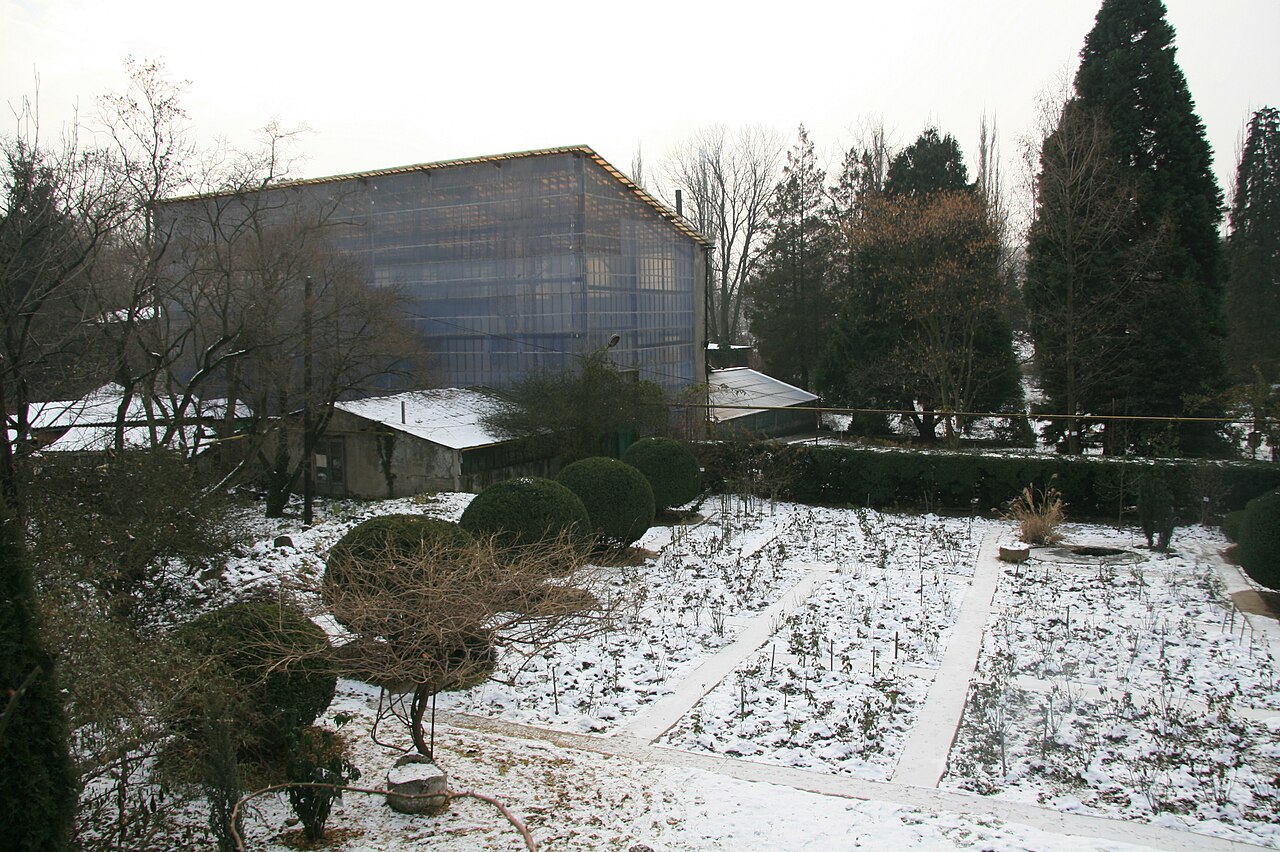
The 1990s were a time of crisis, with budget and staff shrinking. An autumn flood in 1998 devastated the perennial plots and nurseries; then, in winter, heavy snowfalls destroyed more than 300 m² of greenhouses, and with them a significant part of the protected-cultivation collections. The director who arrived in 2000 recalls in 2025 finding an orangery reduced to 60 or 70 species, with much of its glass broken and lorries having driven in to unload clay and stones. It was covered with plastic to keep the heat in, and its cold, middle and warm sections were then restored. The official history records a major overhaul of the orangery in 2000, a modern 180 m² gas-heated greenhouse commissioned in 2003 and, in 2004-2005, repairs to the roof, with glass replaced by a modern covering. According to the director, replacing polycarbonate has cost roughly 700,000 to 800,000 hryvnias a year over the last three or four years and has greatly improved heat retention.
Architecture and engineering
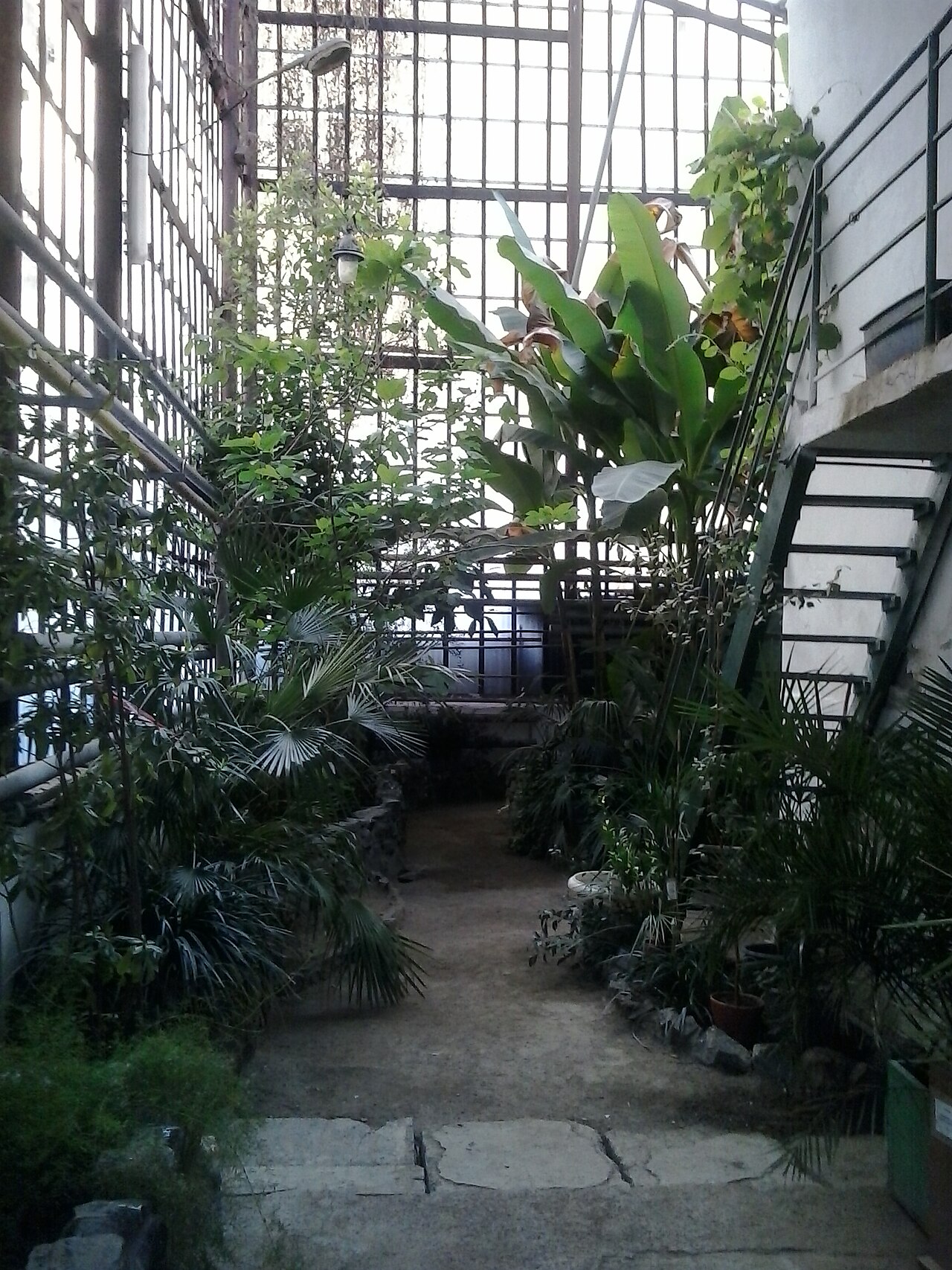
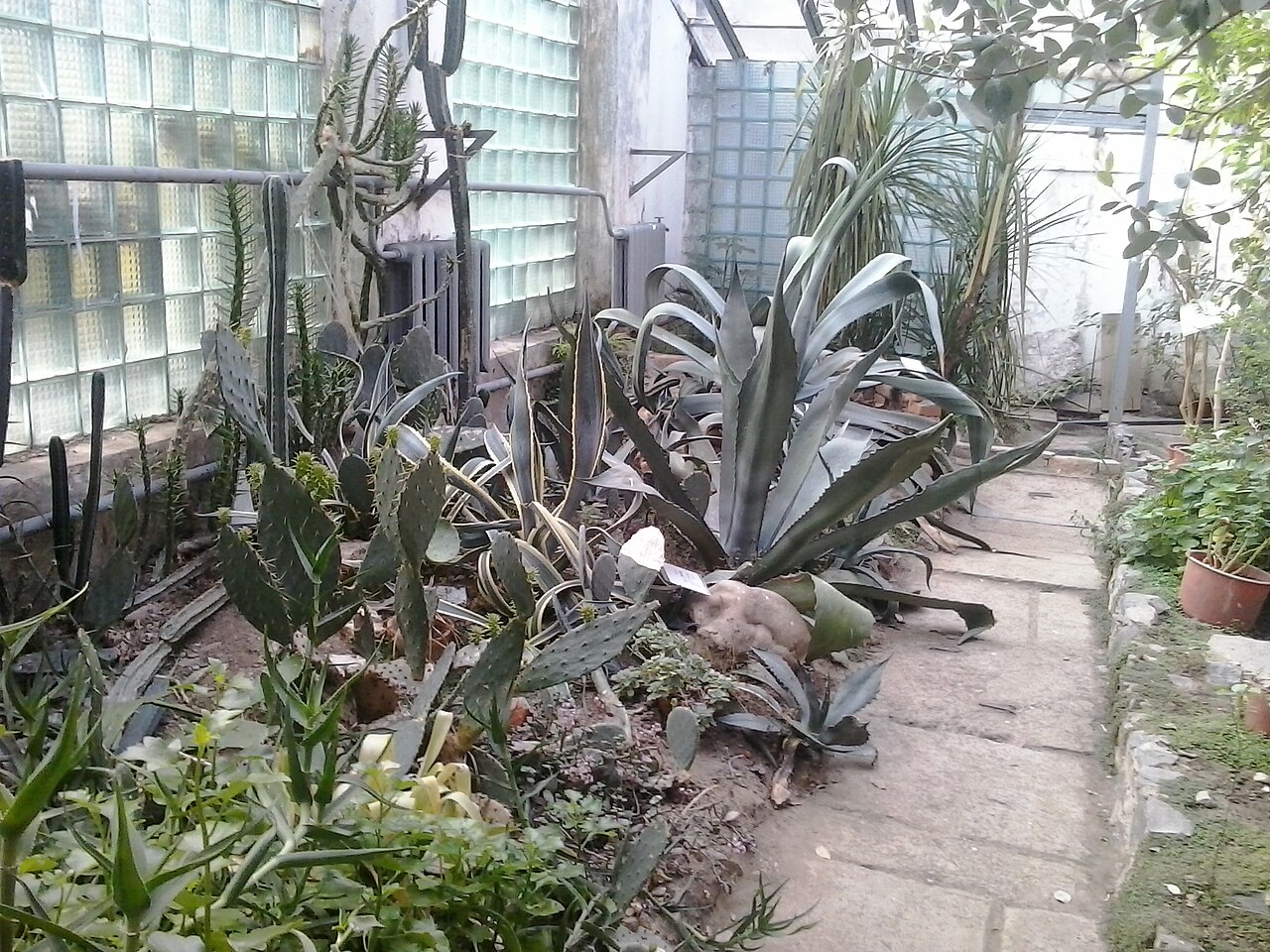
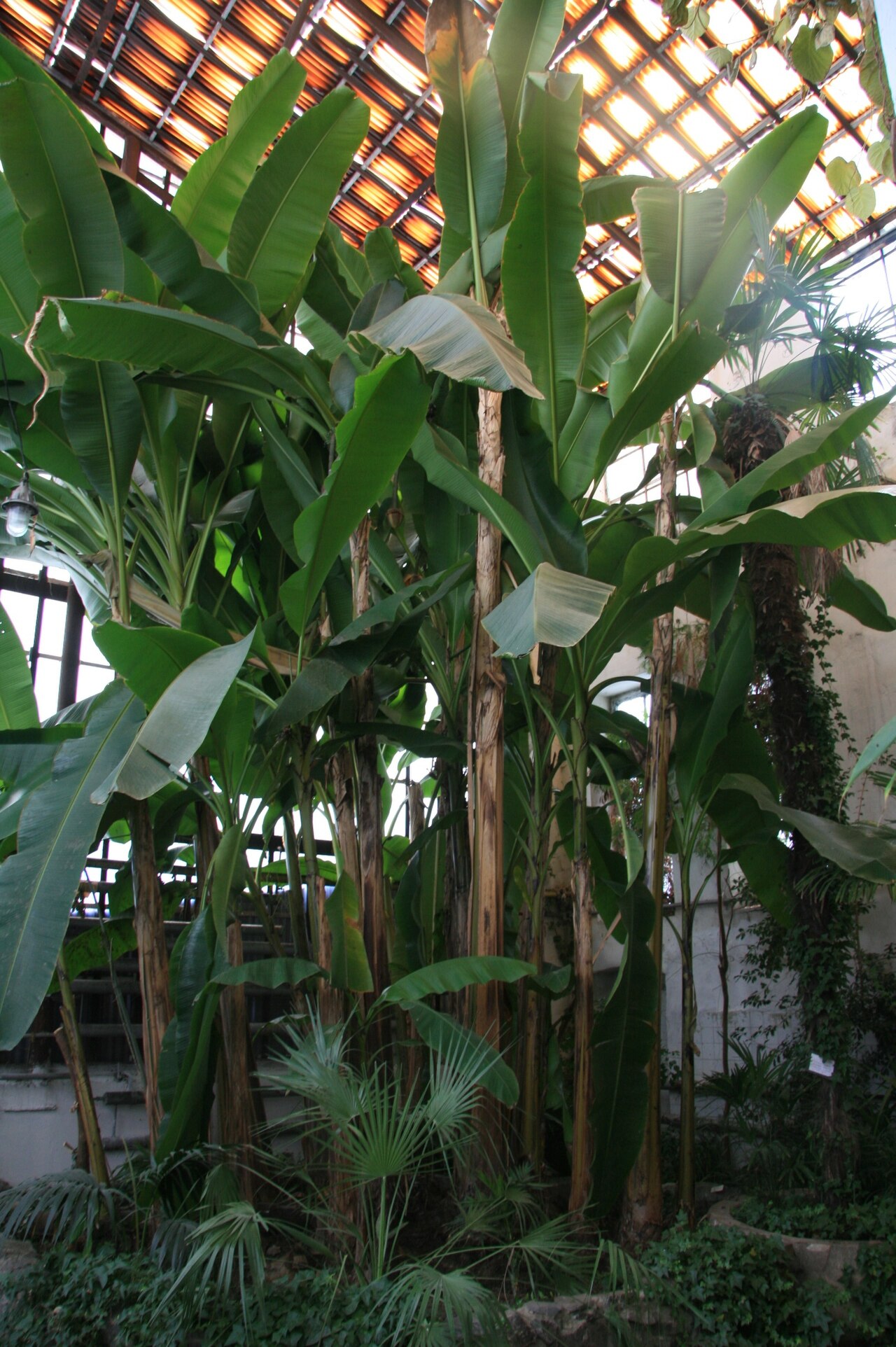
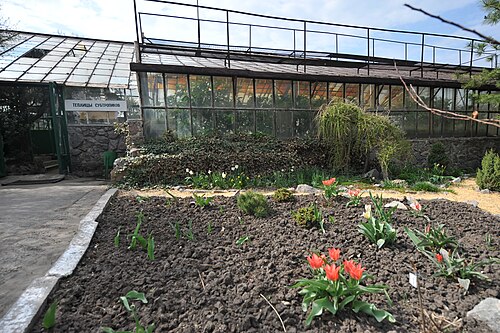
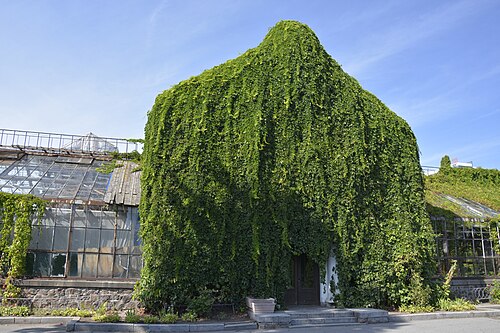
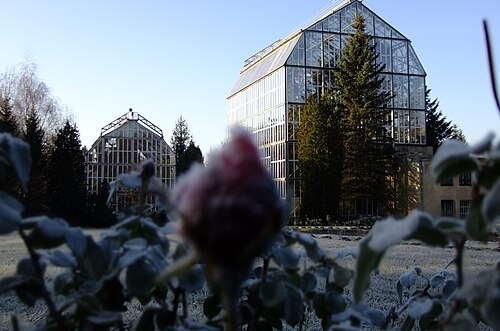
The building is a tall, steel-framed volume whose covering is now polycarbonate. Photographs published on Wikimedia Commons show, from outside, a translucent-walled block among conifers and, from inside, a grid of metal profiles beneath which banana plants reach the ceiling. The original covering was glass; it was replaced during the 2004-2005 works, and the director says that the polycarbonate replacement carried out in recent years has greatly improved heat retention. In at least one photograph a glass-block wall stands behind agaves.
The interior has three sections, cold, middle and warm, because the plants do not need the same conditions. A large wood stove, installed at the entrance during the first winter of the war to cope with power cuts, has stayed there for emergencies. A garden laboratory assistant in charge of the orangery explained in 2024 that a tropical house should not fall below 20 °C, whereas here the thermometer can drop to around 8 °C depending on the winter, and that the building needs heavy investment. Behind the orangery a more modern greenhouse is used for sowing and cuttings; the official history dates the commissioning of a 180 m² greenhouse to 2003, without saying whether it is the same one.
Plant collections
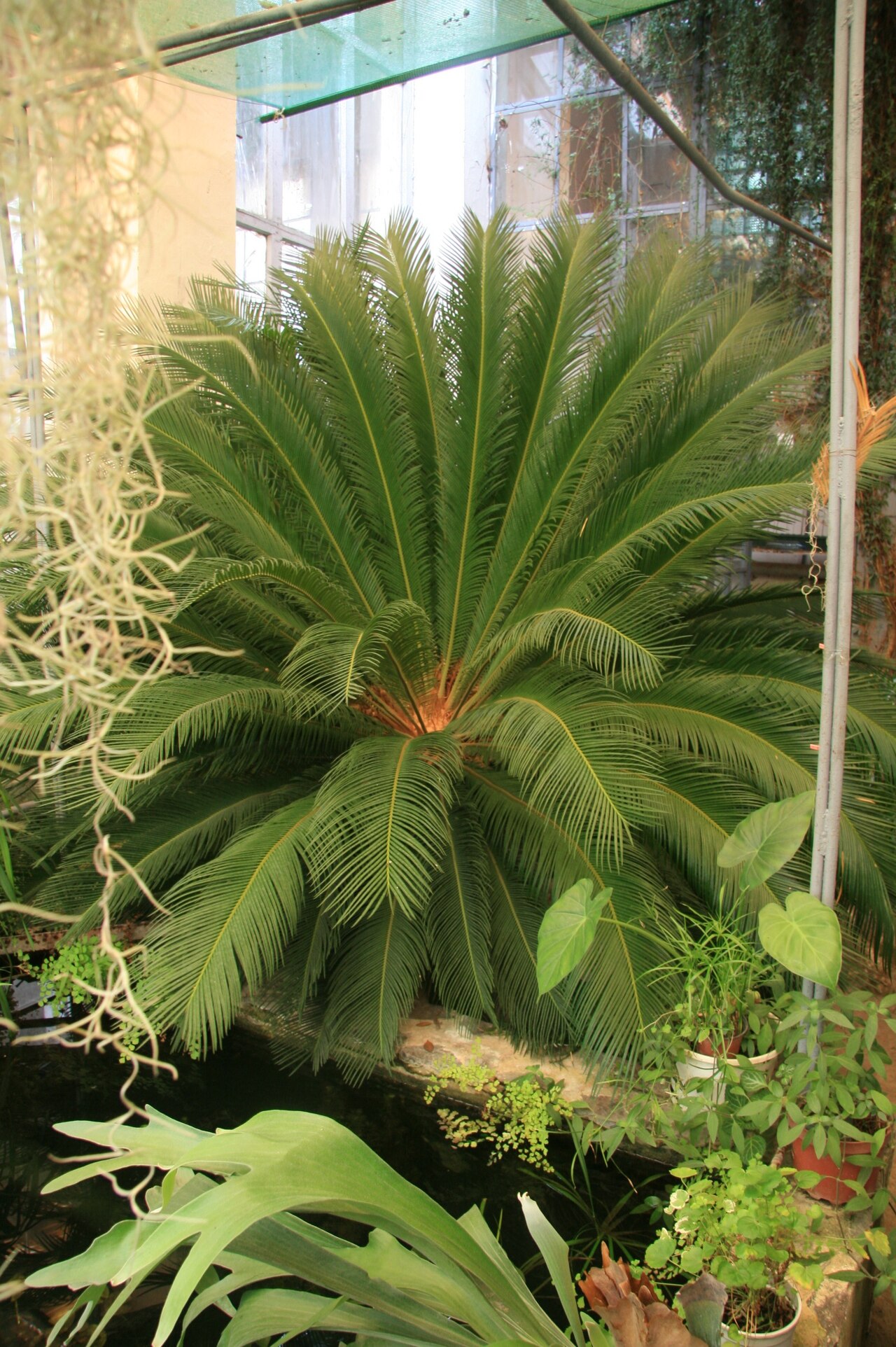
According to the university (November 2025), the display orangery and the greenhouses together hold more than 900 tropical and subtropical species, forms and cultivars, coming mainly from the Mediterranean, India, China, Central and South America, Africa and Japan. The city's tourism portal (2024) speaks of about 500 species in the orangery, and Ukrainian Wikipedia of 1,100 greenhouse species and varieties: counts vary with scope and date. The garden names as its pearl a cycad with hard, glossy fronds up to 1.5 m long, along with the Japanese loquat, Japanese camellia, Japanese aucuba and Indian azalea. The portal also lists gardenias, figs, aloes, agaves, mimosa, laurel, eucalyptus, papaya, about ten palm species and hundreds of cacti and succulents; banana and fig flower and fruit all year, though the banana bunches do not ripen for lack of warmth.
A laboratory assistant adds in 2024 jasmine, mandarin, pomegranate, carob, guava (which has fruited for several years), carambola, cherimoya and kumquat. The camellias flower towards the end of February, when the temperature is close to 10 °C. In 2025, rhododendron seedlings grown from seed from Poland, Romania and the Baltic states can be seen there before joining the open-air collection.
Visiting
The garden and its orangery lie on Olbrakhta Street, on the right bank of the Uzh; the garden steps up over three terraces with a 22 m difference in height. Allow half an hour to an hour for the greenhouses, more for the rest: magnolias, the rose garden, rhododendrons, an alpine rockery with edelweiss. According to the director (October 2026), the orangery has not closed during the war and entry is free; the garden welcomes many displaced people, and school groups come on excursions. The camellias flower towards the end of February and the rhododendrons from early spring to early June. The university's website points to the garden's Facebook page for up-to-date visiting information. According to Russian Wikipedia, the Uzhhorod children's railway runs alongside the garden.
48.62° N, 22.30° E
Greenhouses nearby
More greenhouses — Ukraine
Do you have a good photo of this greenhouse? Suggest it for this page →
Sources (8)
- uzhnu.edu.ua/uk/history-745
- uzhnu.edu.ua/uk/novyny/visimdesyat-rokiv-sered-magiji-prirodi-botanichnij-sad-uzhnu-ro
- uzhnu.edu.ua/uk/about-746
- varosh.com.ua/miscya/progulyanka-misczem-zhyttya-ta-syly-notatky-z-botsadu-uzhnu/
- visit-uzhhorod.itc.gov.ua/2024/03/01/botanichnyj-sad/
- shpalta.media/2026/10/13/sekretna-vizitivka-chernivciv-chomu-botanichnij-sad-zakritij-dlya
- uk.wikipedia.org/wiki/Ужгородський_ботанічний_сад
- wikidata.org/wiki/Q4469636
Affiliate links — booking through Verrière helps fund our research, at no extra cost to you.