Palm House and Succulent House of the University of Debrecen Botanical Garden
Debrecen, Hajdú-Bihar County
Entry updated on October 5, 2026
- Year
- 1975
- Style
- Late 20th-century glasshouses (1975 and 1986)
- Status
- Open to the public (propagation houses by appointment)
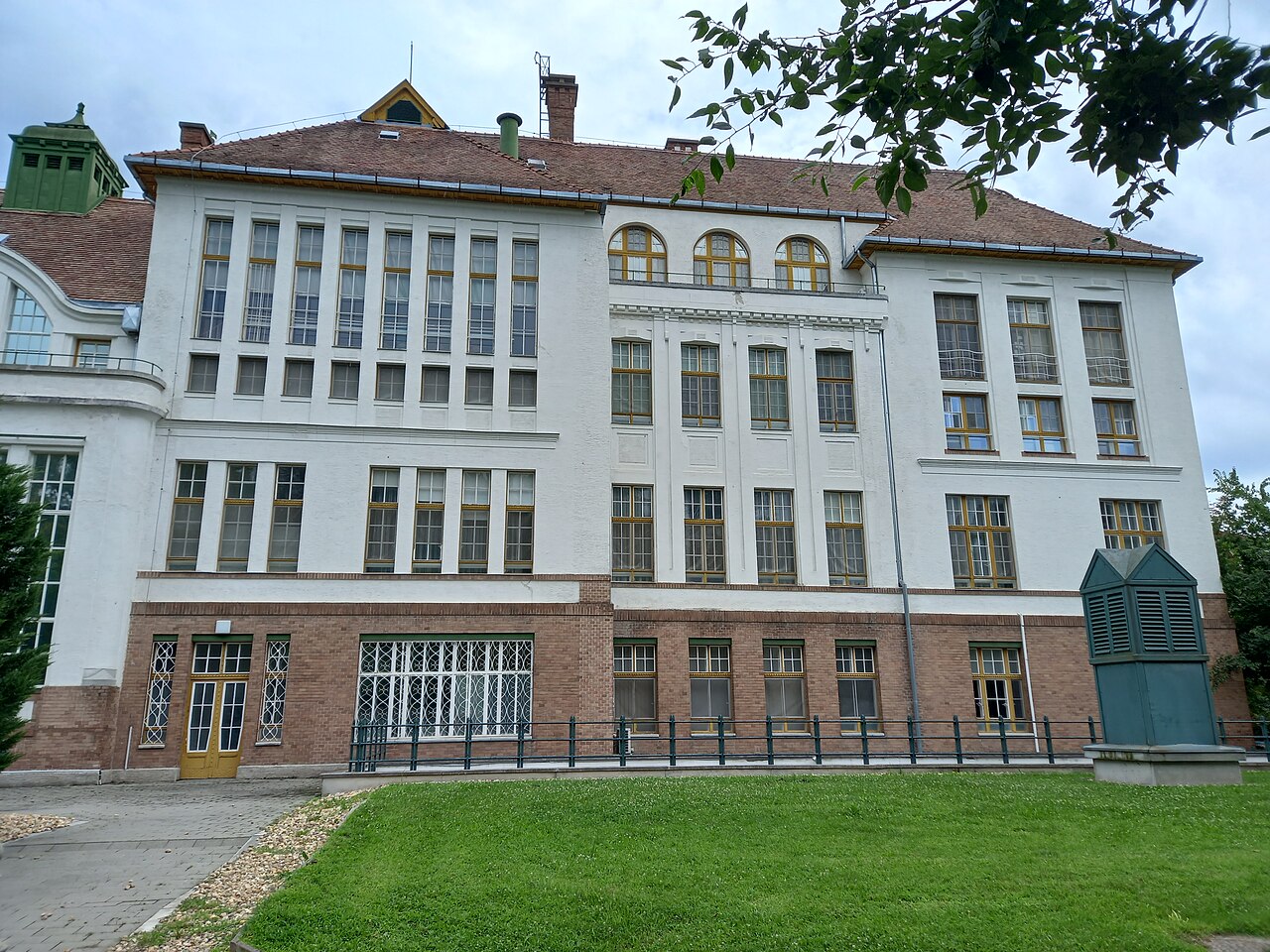
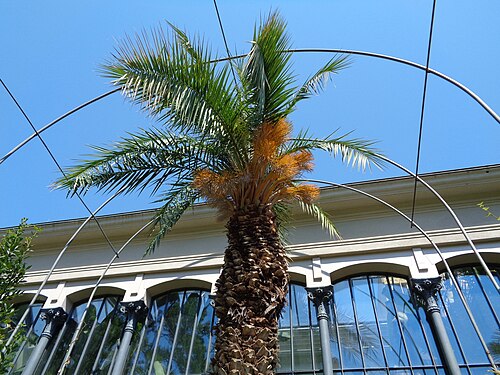
On the Nagyerdő campus, the University of Debrecen Botanical Garden, founded in 1928 by Rezső Soó and his colleagues on 17 hectares given by the city, opens two glasshouses to the public: the Pálmaház, a palm house opened in 1975, and a phytogeographic succulent house. Since 1986 the cactus collection, made famous across Europe by Lajos Nemes, has had its own three-nave block of glasshouses. The garden grows more than 5,000 species, including some 2,000 tropical and subtropical species and about 1,300 species of cacti.
Affiliate links — booking through Verrière helps fund our research, at no extra cost to you.
History
1 min
Debrecen's botanical tradition goes back, according to the garden, to 1840, but the present garden was founded in 1928. For this purpose the city gave 17 hectares, or 30 cadastral holds, behind the university in the Nagyerdő area. Its founders, Rezső Soó, Pál Greguss, Béla Rerrich and József Schneider, set it both scientific and aesthetic aims. In the 1930s an observatory and a log house were built there under Soó's direction; in 1940 a monument to Sámuel Diószegi and Mihály Fazekas, authors of the celebrated Magyar Füvész Könyv, made by the sculptor Ede Kallós and donated by the Minister of Religion and Public Education, was set up on the shore of the pond.
The glasshouses came after the war: the first was built in the 1950s. A new palm house was opened in 1975; its construction made it possible to assemble a very rich tropical collection, and the following spring the garden built its own overhead sprinkler system. In 1986 the cactus collection in turn received a three-nave block of glasshouses. By then, thanks to the direction and devoted care of Lajos Nemes, it was already known throughout Europe and had reached 1,200 species.
Today part of the University of Debrecen, the garden opens its two display glasshouses to the public every day, while the propagation houses can be seen only by appointment.
Architecture and engineering
1 min
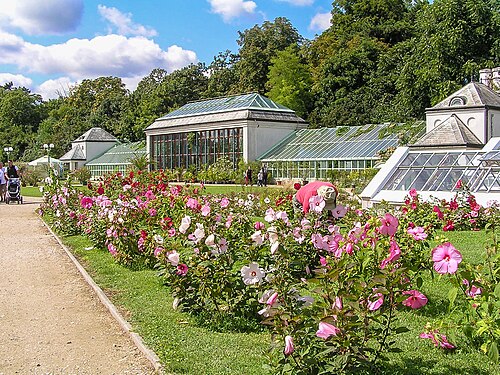
The glasshouses occupy part of a 17-hectare garden dominated by the arboretum. Two of them are open to the public: the Pálmaház, or palm house, and the phytogeographic succulent house (növényföldrajzi pozsgásház). Together they form the garden's largest glasshouse complex. Two propagation houses, one for cacti and the other for other succulents, can only be visited by appointment and with a guide.
The palm house, brought into use in 1975, was fitted in the spring of 1976 with an overhead sprinkler system built by the garden's own staff. The three-nave block of 1986 was built for the cactus collection; in the cactus house the plants are displayed on six growing tables. The sources consulted give neither the architect's name nor the dimensions of the buildings.
Plant collections
1 min
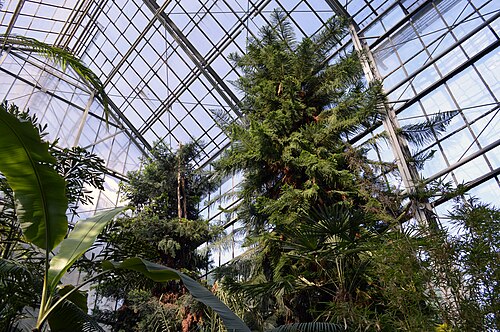
The garden grows more than 5,000 species: about 1,500 outdoors, some 2,000 tropical and subtropical species, more than 1,000 succulents other than cacti and around 1,300 species of cacti. Together, the palm house and the phytogeographic house display tropical and subtropical plants, orchids, bromeliads and drought-adapted succulents.
The cactus collection made the garden's reputation: 1,200 species as early as 1986, and today more than 150 genera and some 2,500 species, subspecies, varieties and forms, of all sizes, displayed on six tables. The garden also keeps nearly 30 protected or strictly protected Hungarian plant species for conservation and reintroduction.
Visiting
1 min
The garden lies behind the university, at Egyetem tér 1, on the Nagyerdő campus. The glasshouses open to the public can be visited every day, with shorter hours than the garden itself; the propagation houses open only by appointment.
An hour is enough to see the two glasshouses and walk round the garden, with its central promenade lined with perennial borders, its artificial lake in the south-west, Rezső Soó's memorial plaque and the 1930s university observatory. The garden also runs educational programmes on medicinal plants, poisonous plants, succulents and fungi.
47.56° N, 21.62° E
Greenhouses nearby
More greenhouses — Hungary
Do you have a good photo of this greenhouse? Suggest it for this page →