United States Holocaust Memorial Museum
Washington, D.C.
Sources checked November 2026
- Year
- 1993
- Architect
- I. M. Pei
- Type
- Museum and memorial
- Access
- Open to the public; free timed tickets are required for the permanent exhibition (official site, November 2026)
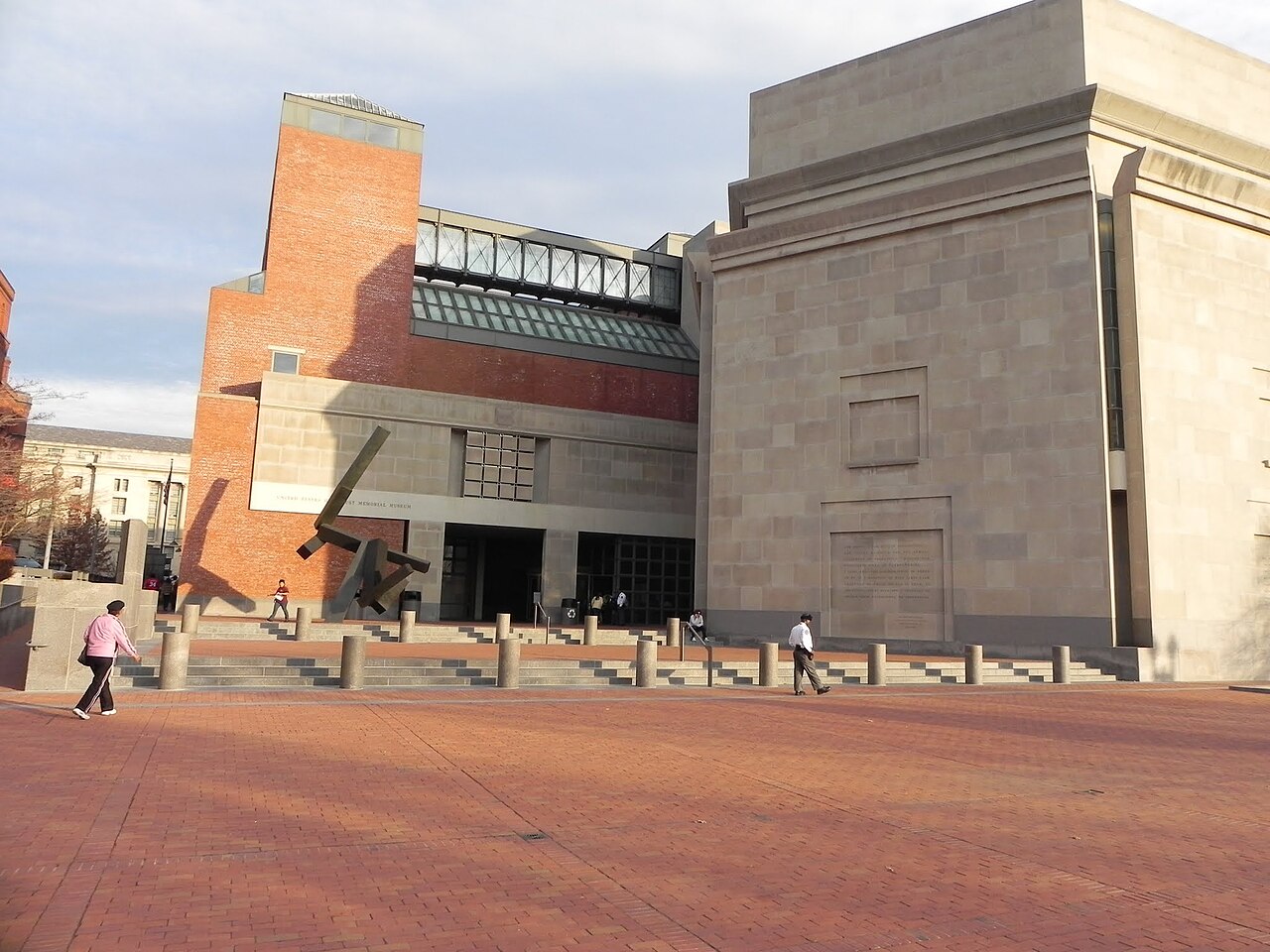
James Ingo Freed, of the Pei Cobb Freed & Partners office, was the architect of this museum, dedicated in April 1993 on the National Mall in Washington. Its abstract forms imitate no particular site; Freed wanted the building to act as a "resonator of memory".
Affiliate links — booking through Verrière helps fund our research, at no extra cost to you.
History
In 1980 the US Congress voted unanimously to create the museum, and the federal government set aside a 1.9-acre (0.77 ha) site beside the Washington Monument. Nearly $190 million was raised from private donors for the building's design, the acquisition of artifacts and the creation of the exhibitions. President Ronald Reagan helped lay the cornerstone in October 1988; the dedication took place on 22 April 1993, with a speech by President Bill Clinton among others.
The design is by James Ingo Freed, of the Pei Cobb Freed & Partners office, who worked with Finegold Alexander & Associates. Born in Essen in 1930 to a Jewish family, Freed saw Kristallnacht as a boy in 1938; at eight he and his younger sister were sent out of Europe, the two children made their home in Chicago from late 1939, and their parents came to join them later. He joined I. M. Pei's office in 1956. Before drawing the museum he toured Holocaust sites, camps and ghettos among them, to examine how they were built and with what materials. In 1994 the American Institute of Architects gave the building its National Honor Award.
Architecture
Freed refused any literal reference to a particular place or event: the architectural form is left open so that the museum becomes a "resonator of memory". The building is not a neutral container; its abstract forms, partly invented and partly drawn from memory, allude to the history it tells.
Exterior. At first glance the exterior looks benign. Limestone, the commonest material of official Washington, wraps the east, south and west sides, and a large portal bows outward toward 14th Street. On the north side, four red-brick towers carry pyramid-shaped roofs. On the west, along Raoul Wallenberg Place, stands the hexagonal Hall of Remembrance. The curved portico at the 14th Street entrance is a mere screen, open to the sky, that hides the real entrance behind it, made of skewed lines and hard surfaces: Freed said that visitors have to cross a limestone screen to reach a world of concrete. Seen from the north, the roofline recalls a row of camp guard towers.
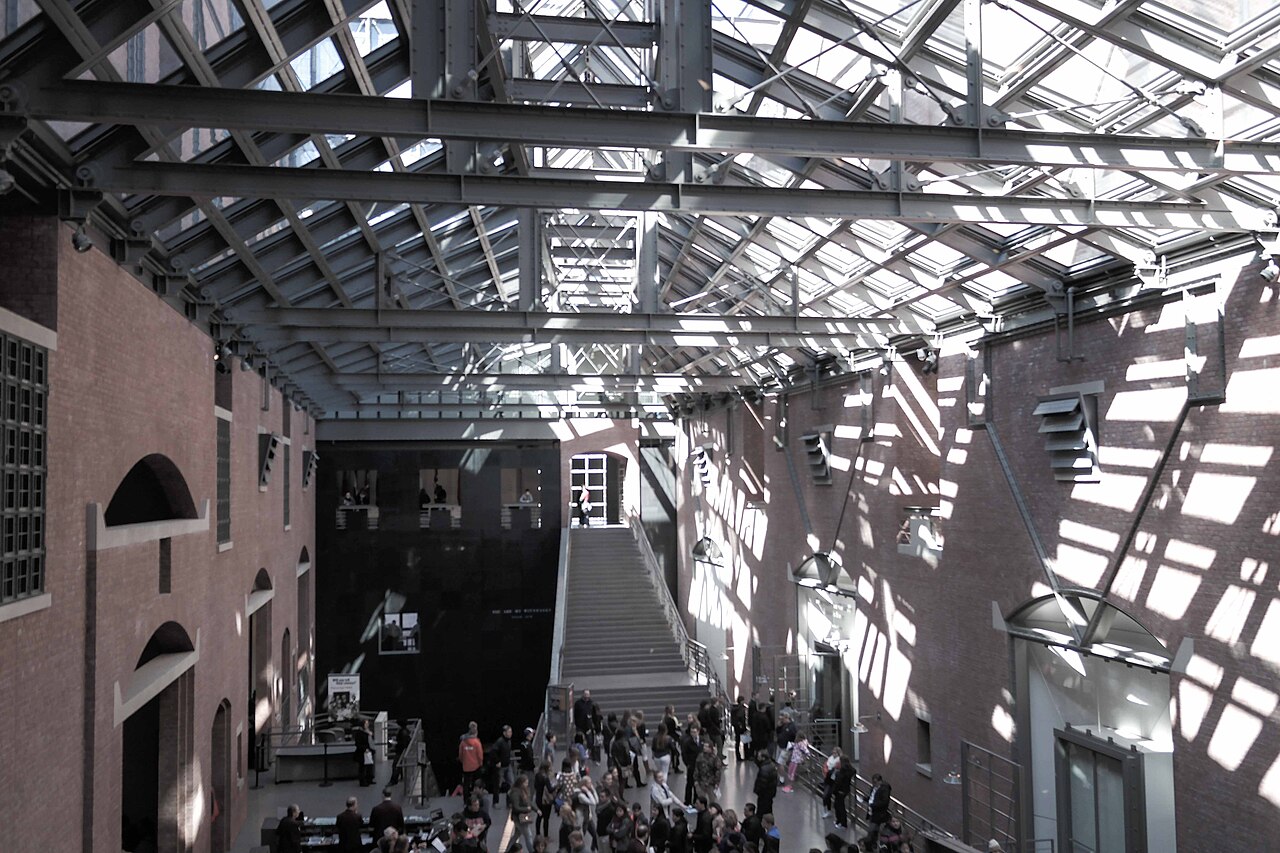
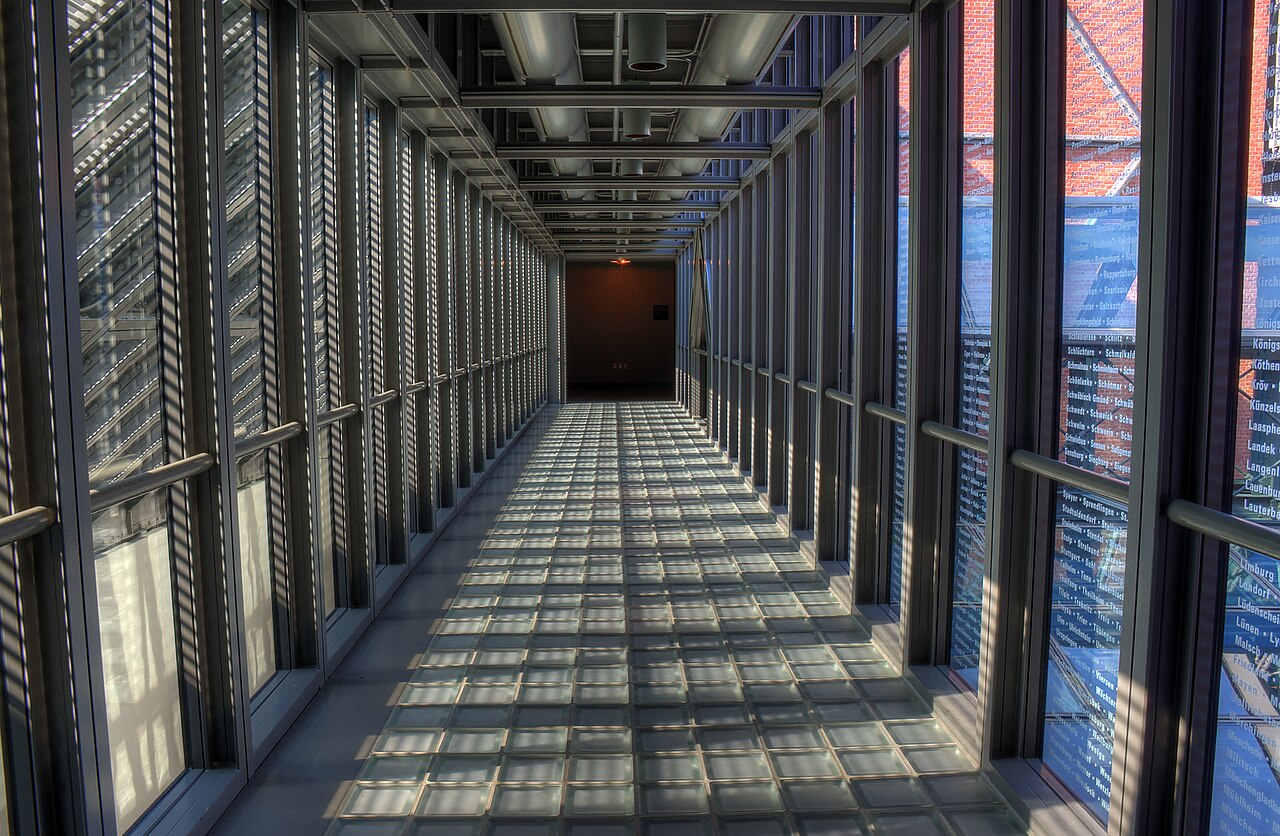
Hall of Witness. This three-storey, skylit hall is on the ground floor; visitors coming from 14th Street step into it across a raw steel platform. It puts on show building methods of the industrial past: steel plates, bolted metal, rivets, load-bearing raw brick and exposed structure. A skewed, twisted skylight lets fragmented light through heavy steel trusses, and glass bridges link the north and south towers above visitors' heads. The west wall is black granite, the east wall white marble.
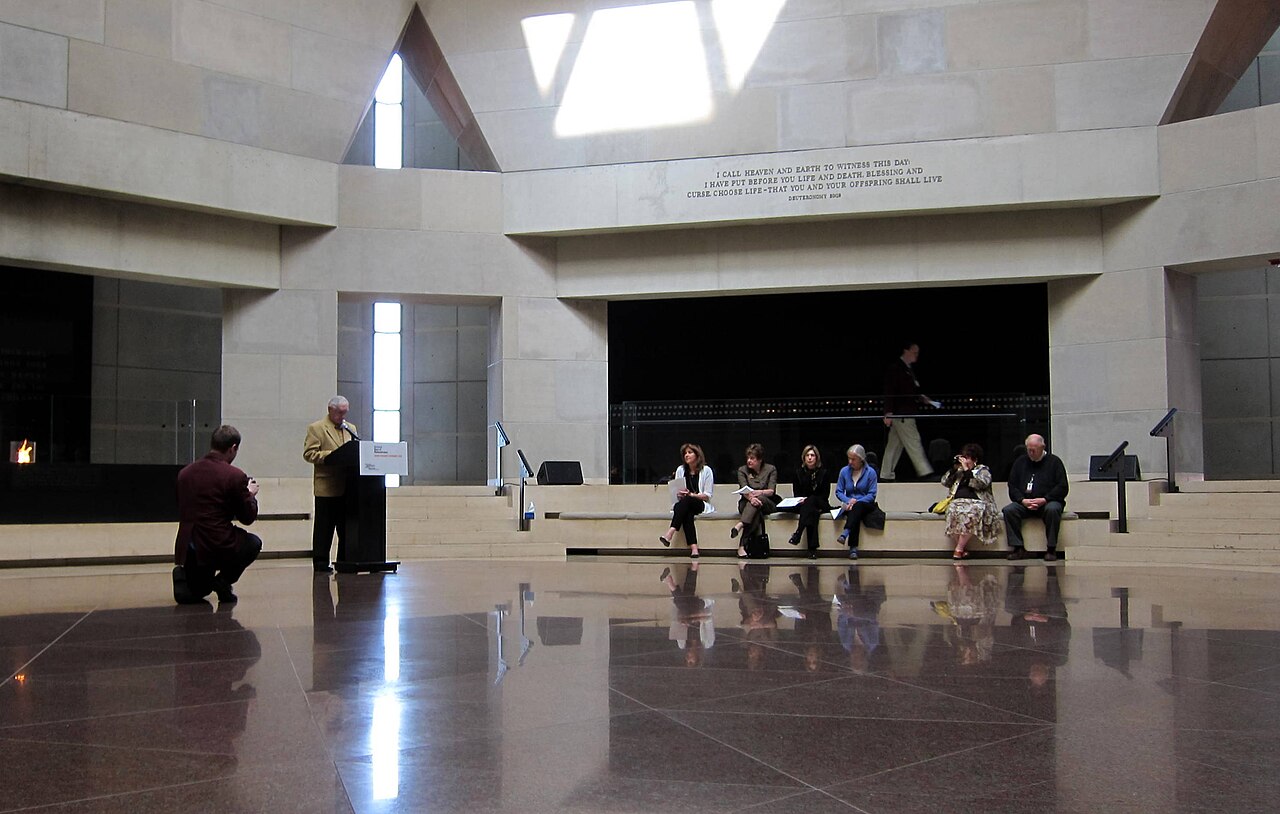
Hall of Remembrance. This hexagonal space, simple and solemn, is designed for public ceremonies and quiet reflection. Its walls surround an eternal flame and bear the names of concentration and death camps. A central skylight diffuses daylight, the floor is red granite, and slim openings in the side walls frame glimpses of the Washington Monument and the Jefferson Memorial.
Four site-specific works of art, chosen by an independent jury, complete the building; Freed worked with each artist. They are Sol LeWitt's Consequence in the first-floor lounge, Richard Serra's Gravity in the Hall of Witness, Joel Shapiro's Loss and Regeneration on the plaza, and Ellsworth Kelly's Memorial in the second-floor lounge.
Use today
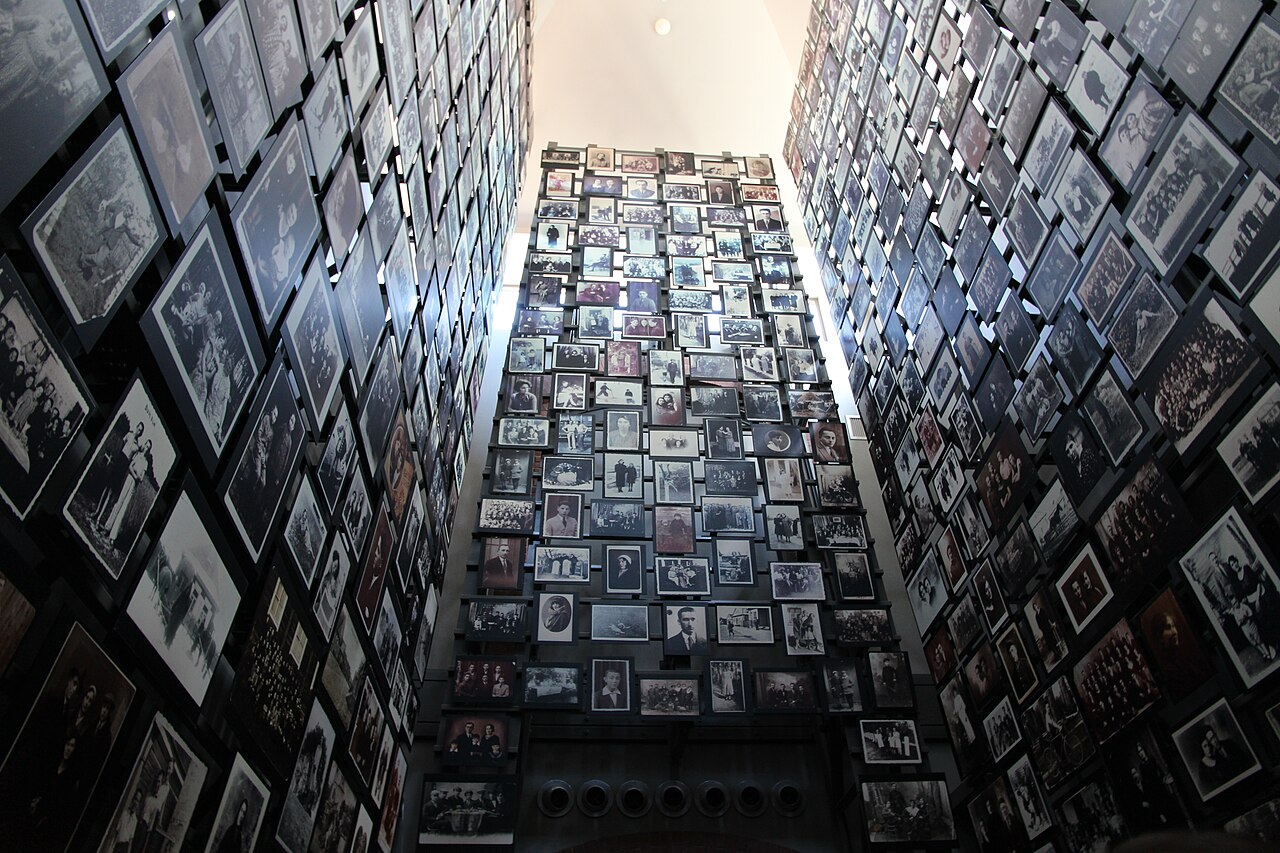
It serves as the official American memorial and museum of the Holocaust. Its work covers permanent and travelling exhibitions, teaching programmes, accounts by survivors, and archives.
Visiting
The museum stands on the National Mall between 14th and 15th Streets; visiting hours run from ten in the morning until half past five. The permanent exhibition requires a free ticket with a fixed entry time.
Photos
38.89° N, 77.03° W
Greenhouses nearby
Architecture nearby
Sources (7)
- ushmm.org/information/about-the-museum/architecture-and-art
- ushmm.org/information/about-the-museum/architecture-and-art/exterior
- ushmm.org/information/about-the-museum/architecture-and-art/hall-of-witness
- ushmm.org/information/about-the-museum/architecture-and-art/hall-of-remembrance
- ushmm.org/information/visit-the-museum/
- ushmm.org/information/press/in-memoriam/james-ingo-freed-1930-2005
- en.wikipedia.org/wiki/United_States_Holocaust_Memorial_Museum
Affiliate links — booking through Verrière helps fund our research, at no extra cost to you.