I. M. Pei
貝聿銘
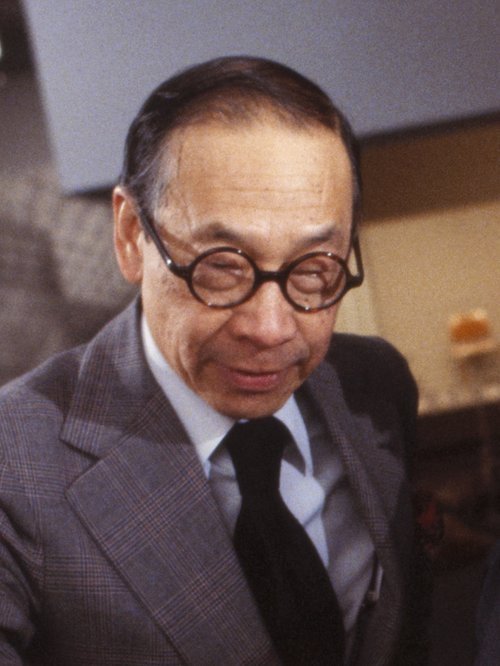
Ieoh Ming Pei was born in Canton on 26 April 1917, the son of a banker, into a family that had been landowners for generations. As a child he moved with them to the Shanghai French Concession, where he was exposed to Western culture and education; an uncle owned the famous Lion Grove Garden (獅子林), whose oddly shaped rocks would later influence his architecture. He left for the United States in 1935, planning to study architecture and then return to practise in China, but the Second World War and the revolution prevented him. He studied at the University of Pennsylvania, then at the Massachusetts Institute of Technology (B. Arch. 1940) and the Harvard Graduate School of Design (M. Arch. 1946), where Walter Gropius was among his professors. In 1948 the New York developer William Zeckendorf hired him as director of architecture at Webb & Knapp, where he worked on large urban projects, from the Mile High Center in Denver to the Society Hill complex in Philadelphia. He became a US citizen in 1954 and founded I. M. Pei & Associates in 1955; it became I. M. Pei & Partners in 1966, then Pei Cobb Freed & Partners in 1989. He officially retired in 1990 but continued to work on projects; his sons Li Chung and Chien Chung Pei founded Pei Partnership Architects in 1992.
The 1983 Pritzker Prize citation, read by Carleton Smith, secretary to the jury, says that he "has given this century some of its most beautiful interior spaces and exterior forms" and that his "concern has always been the surroundings in which his buildings would rise". As a student at Harvard, Pei doubted that modernism would become an international style and began to think of a modernism adapted to cultural diversity. For him, "it is not an exaggeration to say that light is the key to architecture". The National Center for Atmospheric Research in Boulder (1967) raises chiselled towers that blend into the reddish mountains of Colorado; their sculpted, geometric forms broke with the Mies van der Rohe style and later brought him acclaim as "the Magician of Geometry". At the Rock and Roll Hall of Fame in Cleveland (1995), on the shore of Lake Erie, he topped the building with a transparent tent-like structure, "open — like the music", as he put it. At the Fragrant Hill Hotel near Beijing (1982), the inner courtyard draws on a Chinese garden in Suzhou that he had seen as a child; he persuaded the Chinese government not to build a high-rise hotel near the Forbidden City and proposed a low one on a former hunting ground. At the Miho Museum in Shiga Prefecture (1997), about 80% of the museum lies underground to preserve its natural environment, and light enters through a glass roof built from space frames of triangles.
He was chosen in 1964 to design the John F. Kennedy Library; Jacqueline Kennedy said all the candidates were excellent, "But Pei! He loves things to be beautiful." It opened in 1979 near Boston, a year after the East Building of the National Gallery of Art in Washington (1978). Named architect of the Grand Louvre in July 1983 with the backing of President François Mitterrand, he conceived a central underground reception area giving direct access to the museum's three wings, whose monumental entrance takes the form of a glass pyramid, inaugurated on 29 March 1989. The plan, unveiled by President Mitterrand in 1984, met a barrage of criticism in France. "All through the centuries, the Louvre has undergone violent change," Pei said. He wanted glazing of absolute transparency, so that the palace's historic façades could be seen from inside the pyramid as from outside: it took two years of research to develop this extra-white glass. "I acted as a landscape architect rather than an architect," he said.
Beyond the United States and Paris he also designed the Bank of China Tower in Hong Kong, a tall high-tech tower, the new exhibition building of the Deutsches Historisches Museum in Berlin, behind the Zeughaus (2003), the Musée d'Art Moderne in Luxembourg (2006) and the Suzhou Museum (2006). The Museum of Islamic Art in Doha (2008) stands on an artificial island just off the waterfront, inspired by Islamic architectural history, the Ibn Tulun mosque in Cairo in particular; its five-storey main building has a domed atrium and a cream-coloured limestone exterior that captures the changes in light during the day, with a 45-metre-tall window on the north side. The Macau Science Center opened in 2009. Pei received the AIA Gold Medal in 1979, the Pritzker Prize in 1983 (presented at the Metropolitan Museum of Art in New York by Jay A. Pritzker), the Praemium Imperiale at its first edition in 1989, the Presidential Medal of Freedom in 1992 from President George H. W. Bush, and the RIBA Royal Gold Medal in 2010. He died in New York in May 2019, aged 102.
Map of the works 121
- Featured work (own page)
- Other work (in the list)
- Work no longer standing
Works in the list: building position when known, otherwise the city; private homes without an address, at a point published by a public source, at neighbourhood or at city level.
Featured works
1000 Connecticut Avenue
16th Street Mall
200 West Street (Goldman Sachs headquarters)
7 Bryant Park
Gulf Oil Building (131 Ponce de Leon Avenue)
Louvre Auditorium (Michel Laclotte auditorium)
Bank of China Head Office, Beijing (中国银行总行大厦)
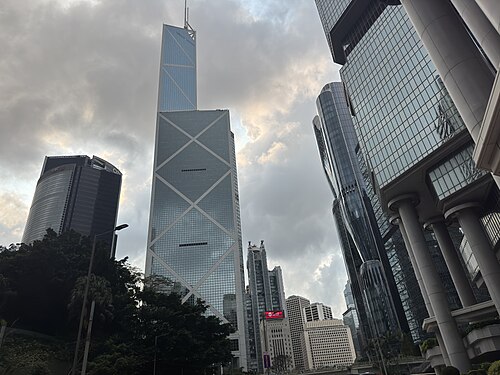
Bank of China Tower (Hong Kong)
Biltmore Building (formerly the Akzona Building)
Buck Institute for Research on Aging
Carrousel du Louvre
CEIBS Shanghai Campus Expansion (China Europe International Business School)
Century Towers (Century City)
Christian Science Plaza (Boston)
City View (formerly Washington Plaza)
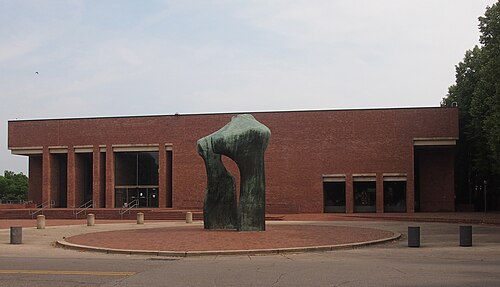
Cleo Rogers Memorial Library
Commerce Court West
Cour Marly, Cour Puget and Cour Khorsabad (Richelieu Wing, Louvre)
Creative Artists Agency headquarters (Beverly Hills)
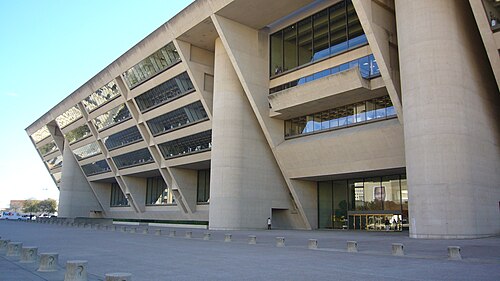
Dallas City Hall
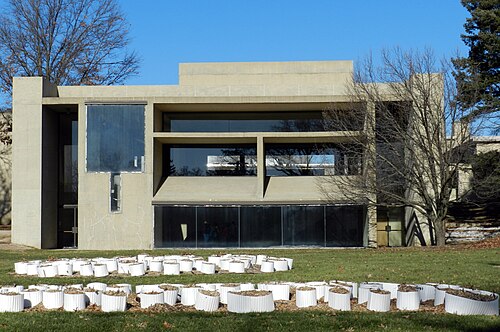
Des Moines Art Center (Pei wing)
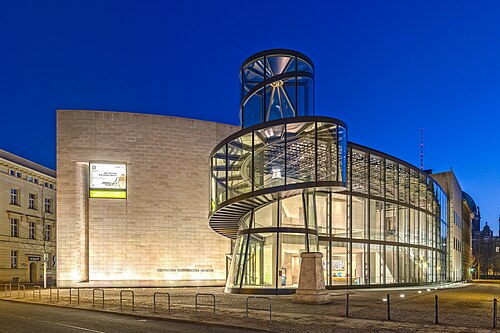
Exhibition Hall of the German Historical Museum (Pei Building)
Camille Edouard Dreyfus Chemistry Building, MIT (Building 18)
Embassy of China in Washington, D.C. (chancery)
Energy Plaza (The Sinclair)
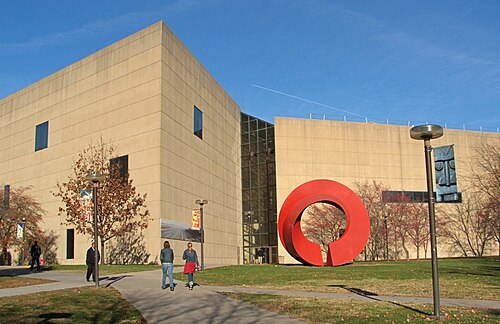
Eskenazi Museum of Art (Indiana University)
Essensa East Forbes (Taguig)
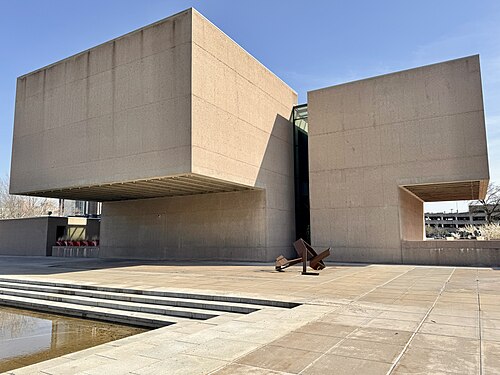
Everson Museum of Art
FAA air traffic control towers
Capella Tower (formerly First Bank Place)
First International Bank Tower (FIBI Tower)
Fiterman Hall (BMCC)
Fordham University School of Law and McKeon Residence Hall (Lincoln Center)
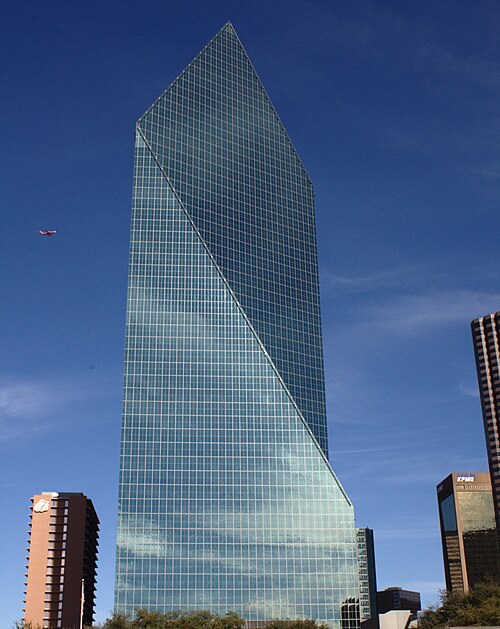
Fountain Place
Four Seasons Hotel New York
Fragrant Hill Hotel (香山饭店)
Grand Louvre
Hale Mānoa (East-West Center)
John Hancock Tower (200 Clarendon)
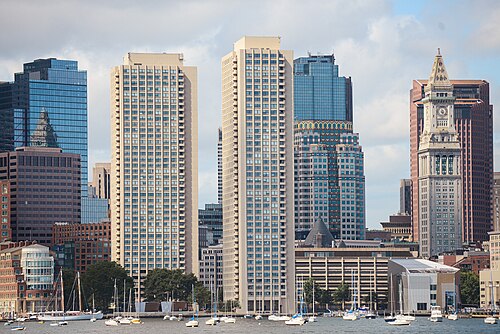
Harbor Towers
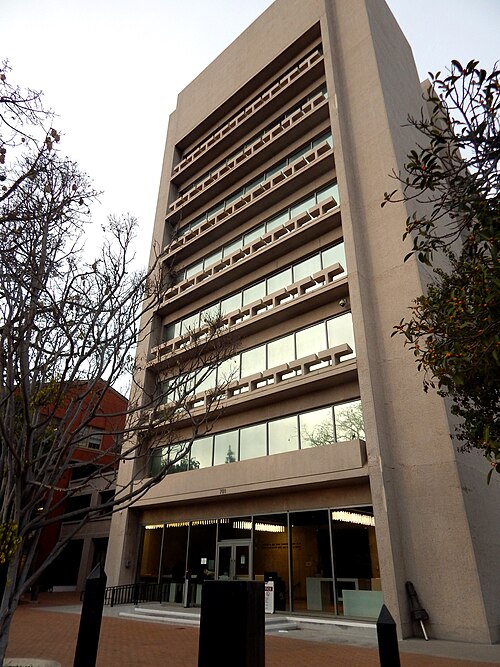
Hoffman Hall (University of Southern California)
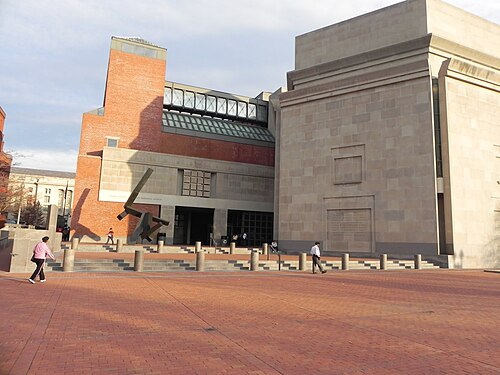
United States Holocaust Memorial Museum
I. M. Pei Building (formerly Wilmington Tower)
IBM Somers Office Complex
Carl C. Icahn Center for Science (Choate Rosemary Hall)
Jacob K. Javits Convention Center
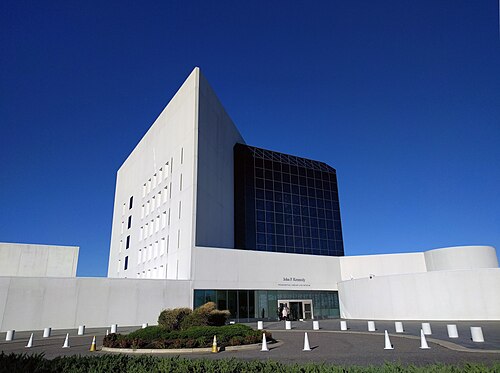
John F. Kennedy Presidential Library and Museum
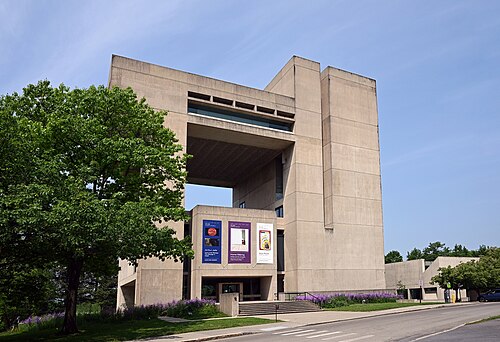
Herbert F. Johnson Museum of Art
Federal Reserve Bank of Kansas City (headquarters)
Kennedy Theatre (University of Hawaii at Mānoa)
Kips Bay Towers (Kips Bay Plaza)
The Kirklin Clinic (UAB)
Permanent Mission of the Republic of Korea to the United Nations
L'Enfant Plaza (plaza and promenade)
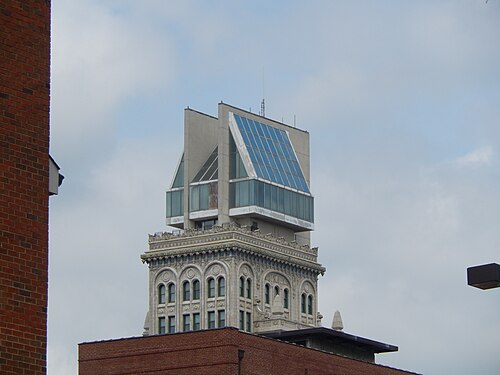
Lamar Building penthouse
Ralph Landau Building for Chemical Engineering (MIT Building 66)
Lodha Place (World Towers and One Lodha Place), Mumbai
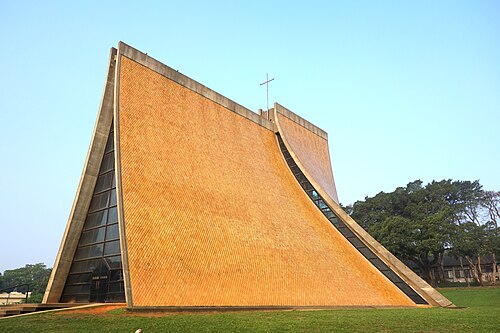
Luce Memorial Chapel (Tunghai University)
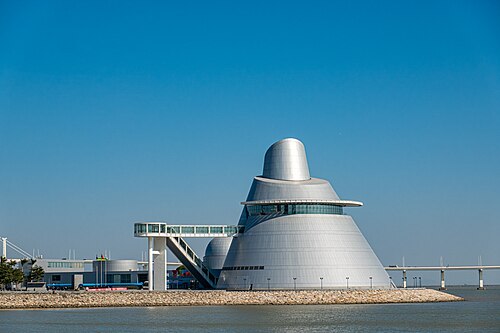
Macao Science Center
Mastercard headquarters, Purchase (formerly IBM Corporate Office Building)
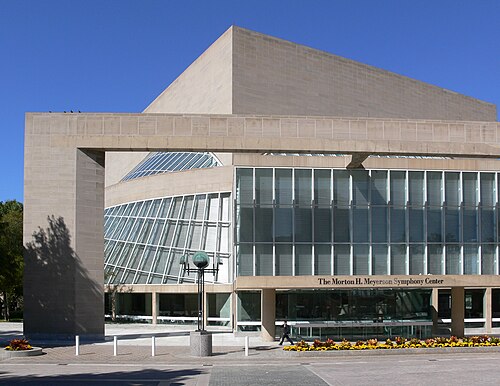
Morton H. Meyerson Symphony Center
West Wing, Museum of Fine Arts, Boston (Linde Family Wing for Contemporary Art)
Miami Tower (formerly CenTrust Tower)
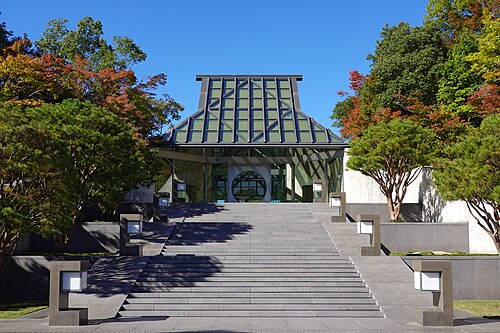
Miho Museum
Mile High Center
Vivian and Seymour Milstein Family Heart Center (New York)
MIT Green Building (Building 54)
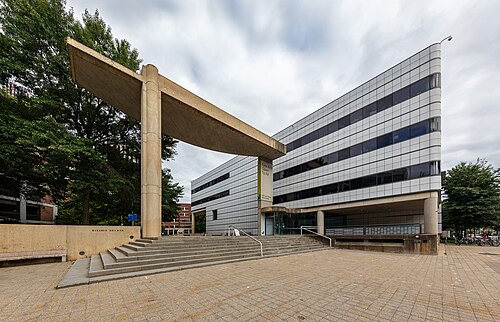
Wiesner Building, MIT (Media Lab, List Visual Arts Center)
John Joseph Moakley United States Courthouse
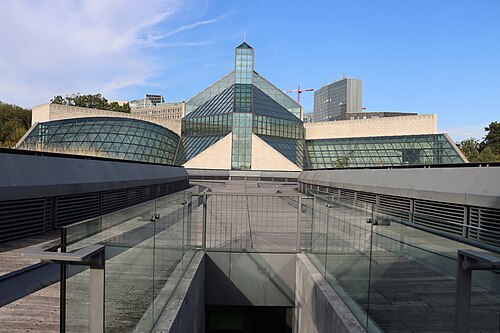
Mudam Luxembourg
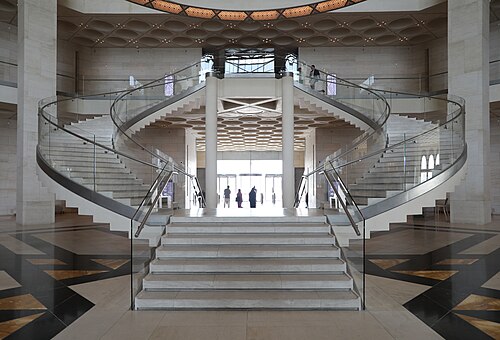
Museum of Islamic Art, Doha
NASCAR Hall of Fame
National Bank of Commerce Building (now Union Bank Place)
National Constitution Center
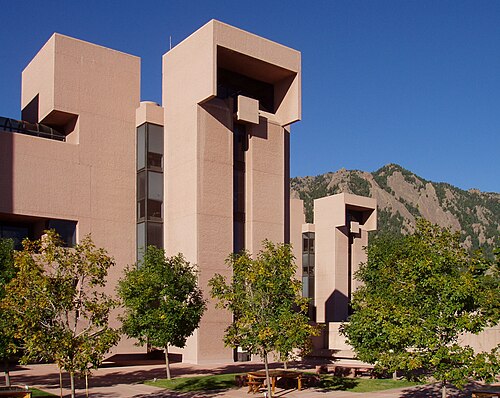
NCAR Mesa Laboratory
Pei Residence Halls, New College of Florida
Newhouse 1 (Syracuse University)
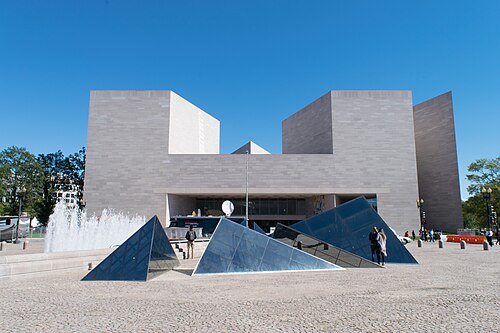
East Building, National Gallery of Art
Oare Pavilion
OCBC Centre
OECD Headquarters, Paris
One Dallas Center
Palazzo Lombardia
Paul Mellon Arts Center (Choate Rosemary Hall)
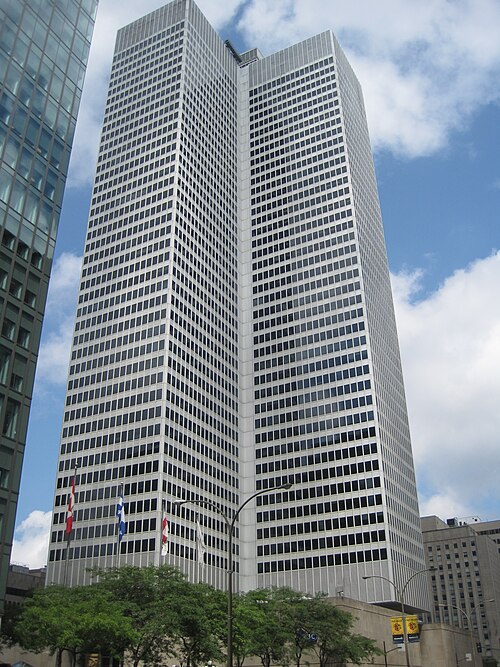
Place Ville Marie
Butler College Dormitories (Princeton University)
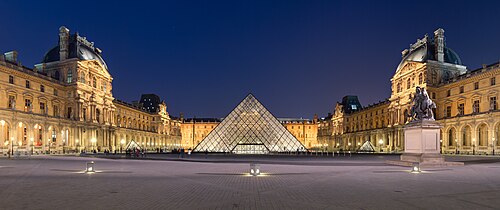
Louvre Pyramid
Louvre Inverted Pyramid
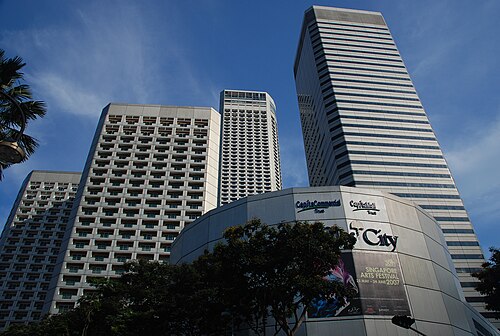
Raffles City
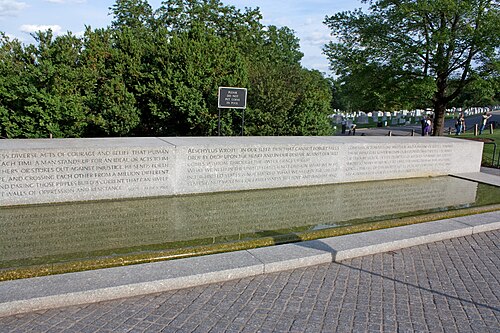
Robert F. Kennedy Gravesite
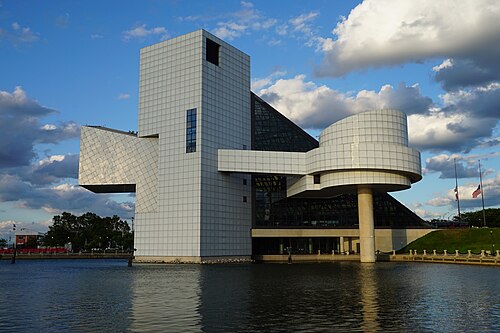
Rock and Roll Hall of Fame
Ronald Reagan Building and International Trade Center
Roosevelt Field Mall
San Francisco Main Library
William L. Slayton House
Society Hill Towers
Soyak Kristalkule (Finansbank Headquarters), Istanbul
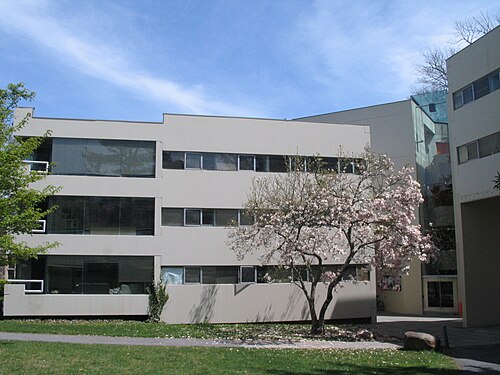
Spelman Halls (Princeton University)
Sundrome (National Airlines Terminal, JFK Airport)
Sunning Plaza (新寧大廈)
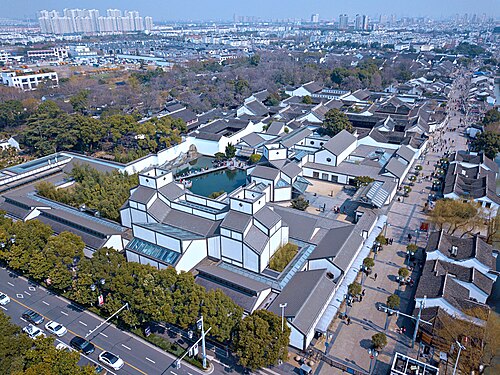
Suzhou Museum, new building
Taishin International Bank Tower (台新金控大樓)
JPMorgan Chase Tower (formerly Texas Commerce Tower)
The Gateway (Singapore)
Tivoli Hjørnet (Tivoli Corner)
Torre Espacio (now Torre Emperador Castellana)
Tour Légende (formerly Tour EDF)
The Towers at Wildwood Plaza
Town Center East
University Apartments (University Park Condominiums)
University Village (Silver Towers), New York University
U.S. Bank Tower (Library Tower)
McGlothlin Medical Education Center (Virginia Commonwealth University)
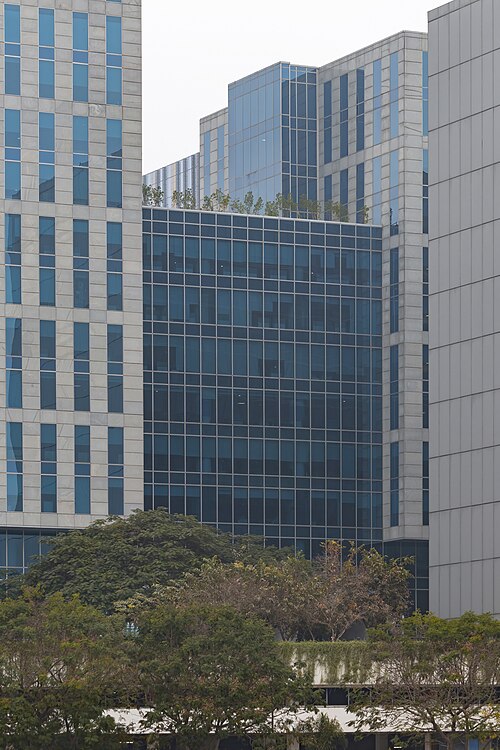
WaveRock, Hyderabad
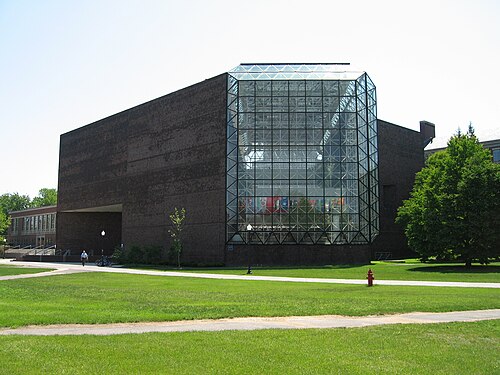
Wilson Commons (University of Rochester)
All works 121 works
Private homes are not open to visitors; they are placed without an address, at a point published by a public source, at neighbourhood or at city level.
United States 82
- Gulf Oil Building (131 Ponce de Leon Avenue) Gulf Oil BuildingAtlanta (Georgia) · 1951Demolished
- Mile High CenterDenver (Colorado) · 1956Seen from outside
- Roosevelt Field MallGarden City / Uniondale (New York) · 1956Open to visitors
- City View (formerly Washington Plaza) City ViewPittsburgh (Pennsylvania) · 1960Seen from outside
- Waterfront Tower (L'Enfant Waterfront Tower) Waterfront TowerWashington, D.C. (Southwest) · 1960Seen from outside
- William L. Slayton HouseWashington, D.C. · 1960Private home, not open to visitors
- Town Center EastWashington, D.C. (Southwest) · 1961Seen from outside
- University Apartments (University Park Condominiums) University ApartmentsChicago (Hyde Park, Illinois) · 1961Seen from outside
- FAA air traffic control towersSeveral US airports (O'Hare, Tampa, St. Louis Lambert, Columbia SC, Indianapolis…) · 1962Not open to the public
- Hale Mānoa (East-West Center) Hale ManoaHonolulu (Hawaii) · 1963Seen from outside
- Kennedy Theatre (University of Hawaii at Mānoa) Kennedy TheatreHonolulu (Hawaii) · 1963Open to visitors
- Century Towers (Century City) Century TowersLos Angeles (Century City, California) · 1964Seen from outside
- MIT Green Building (Building 54) Cecil and Ida Green BuildingCambridge (Massachusetts) · 1964Seen from outside
- Newhouse 1 (Syracuse University) Newhouse 1Syracuse (New York) · 1964Seen from outside
- Society Hill TowersPhiladelphia (Pennsylvania) · 1964Seen from outside
- University Village (Silver Towers), New York University University VillageNew York (Greenwich Village) · 1964Seen from outside
- Hoffman Hall (University of Southern California) Hoffman HallLos Angeles (California) · 1965Seen from outside
- Kips Bay Towers (Kips Bay Plaza) Kips Bay TowersNew York (Manhattan, Kips Bay) · 1965Seen from outside
- Pei Residence Halls, New College of Florida Pei Residence HallsSarasota (Florida) · 1965Seen from outside
- NCAR Mesa Laboratory National Center for Atmospheric Research Mesa LaboratoryBoulder (Colorado) · 1967Open to visitors
- Des Moines Art Center (Pei wing) Des Moines Art CenterDes Moines (Iowa) · 1968Open to visitors
- Everson Museum of ArtSyracuse (New York) · 1968Open to visitors
- L'Enfant Plaza (plaza and promenade) L'Enfant PlazaWashington, D.C. (Southwest) · 1968Open to visitors
- Cleo Rogers Memorial LibraryColumbus (Indiana) · 1969Open to visitors
- Camille Edouard Dreyfus Chemistry Building, MIT (Building 18) Dreyfus Chemistry BuildingCambridge (Massachusetts) · 1970Seen from outside
- Sundrome (National Airlines Terminal, JFK Airport) SundromeNew York (JFK Airport) · 1970Demolished
- Christian Science Plaza (Boston) Christian Science PlazaBoston (Back Bay) · 1971Open to visitors
- Harbor TowersBoston (Massachusetts) · 1971Seen from outside
- I. M. Pei Building (formerly Wilmington Tower) I. M. Pei BuildingWilmington (Delaware) · 1971Seen from outside
- Robert F. Kennedy Gravesite Grave of Robert F. KennedyArlington (Virginia, Arlington National Cemetery) · 1971Open to visitors
- Paul Mellon Arts Center (Choate Rosemary Hall) Paul Mellon Arts CenterWallingford (Connecticut) · 1972Open to visitors
- Herbert F. Johnson Museum of ArtIthaca (New York) · 1973Open to visitors
- Spelman Halls (Princeton University) Spelman HallsPrinceton (New Jersey) · 1973Seen from outside
- Lamar Building penthouse Lamar BuildingAugusta (Georgia) · 1975Seen from outside
- John Hancock Tower (200 Clarendon) John Hancock TowerBoston (Back Bay) · 1976Seen from outside
- National Bank of Commerce Building (now Union Bank Place) National Bank of Commerce BuildingLincoln (Nebraska) · 1976Open to visitors
- Ralph Landau Building for Chemical Engineering (MIT Building 66) Ralph Landau BuildingCambridge (Massachusetts) · 1976Seen from outside
- Wilson Commons (University of Rochester) Wilson CommonsRochester (New York) · 1976Open to visitors
- Dallas City HallDallas (Texas) · 1978Open to visitors
- East Building, National Gallery of ArtWashington, D.C. · 1978Open to visitors
- Gem City Building (Dayton ; later National City Center, PNC Bank Building) Gem City BuildingDayton (Ohio) · 1978
- John F. Kennedy Presidential Library and MuseumBoston (Massachusetts) · 1979Open to visitors
- One Dallas CenterDallas (Texas) · 1979Seen from outside
- Biltmore Building (formerly the Akzona Building) Biltmore BuildingAsheville (North Carolina) · 1981Seen from outside
- West Wing, Museum of Fine Arts, Boston (Linde Family Wing for Contemporary Art) West Wing, Museum of Fine ArtsBoston (Massachusetts) · 1981Open to visitors
- 16th Street MallDenver (Colorado) · 1982Open to visitors
- Eskenazi Museum of Art (Indiana University) Sidney and Lois Eskenazi Museum of ArtBloomington (Indiana) · 1982Open to visitors
- JPMorgan Chase Tower (formerly Texas Commerce Tower) JPMorgan Chase TowerHouston (Texas) · 1982Seen from outside
- Energy Plaza (The Sinclair) Energy PlazaDallas (Texas) · 1983Seen from outside
- Mastercard headquarters, Purchase (formerly IBM Corporate Office Building) Mastercard International Global HeadquartersPurchase (New York) · 1984Not open to the public
- Wiesner Building, MIT (Media Lab, List Visual Arts Center) Wiesner Building (MIT Building E15)Cambridge (Massachusetts) · 1985Open to visitors
- Fountain PlaceDallas (Texas) · 1986Seen from outside
- Jacob K. Javits Convention CenterNew York (Hell's Kitchen) · 1986Seen from outside
- Miami Tower (formerly CenTrust Tower) Miami TowerMiami (Florida) · 1987Seen from outside
- Carl C. Icahn Center for Science (Choate Rosemary Hall) Carl C. Icahn Center for ScienceWallingford (Connecticut) · 1989Not open to the public
- Creative Artists Agency headquarters (Beverly Hills) Creative Artists Agency HeadquartersBeverly Hills (California) · 1989Seen from outside
- IBM Somers Office ComplexSomers (New York) · 1989Not open to the public
- Morton H. Meyerson Symphony CenterDallas (Texas) · 1989Open to visitors
- U.S. Bank Tower (Library Tower) U.S. Bank TowerLos Angeles (California) · 1989Seen from outside
- The Towers at Wildwood PlazaAtlanta (Georgia) · 1991Seen from outside
- Capella Tower (formerly First Bank Place) Capella TowerMinneapolis (Minnesota) · 1992Seen from outside
- The Kirklin Clinic (UAB) The Kirklin ClinicBirmingham (Alabama) · 1992Seen from outside
- Four Seasons Hotel New YorkNew York (Midtown) · 1993Open to visitors
- United States Holocaust Memorial MuseumWashington, D.C. · 1993Open to visitors
- Rock and Roll Hall of FameCleveland (Ohio) · 1995Open to visitors
- San Francisco Main Library San Francisco Public Library (Main Library)San Francisco (California) · 1996Open to visitors
- John Joseph Moakley United States CourthouseBoston (Fan Pier) · 1998Open to visitors
- Ronald Reagan Building and International Trade CenterWashington, D.C. · 1998Open to visitors
- Buck Institute for Research on AgingNovato (California) · 1999Open to visitors
- Permanent Mission of the Republic of Korea to the United Nations Republic of Korea Permanent Mission to the UNNew York · 1999Not open to the public
- National Constitution CenterPhiladelphia (Pennsylvania) · 2003Open to visitors
- Embassy of China in Washington, D.C. (chancery) Embassy of the People's Republic of ChinaWashington, D.C. (International Chancery Center) · 2008Not open to the public
- Federal Reserve Bank of Kansas City (headquarters) Federal Reserve Bank of Kansas CityKansas City (Missouri) · 2008Open to visitors
- Butler College Dormitories (Princeton University) Butler College DormitoriesPrinceton (New Jersey) · 2009Seen from outside
- 200 West Street (Goldman Sachs headquarters) 200 West StreetNew York (Battery Park City) · 2010Seen from outside
- NASCAR Hall of FameCharlotte (North Carolina) · 2010Open to visitors
- Vivian and Seymour Milstein Family Heart Center (New York) Milstein Family Heart CenterNew York · 2010Seen from outside
- 1000 Connecticut AvenueWashington, D.C. · 2012Seen from outside
- Fiterman Hall (BMCC) Fiterman HallNew York (Manhattan) · 2012Open to visitors
- McGlothlin Medical Education Center (Virginia Commonwealth University) McGlothlin Medical Education CenterRichmond (Virginia) · 2013Seen from outside
- Fordham University School of Law and McKeon Residence Hall (Lincoln Center) Fordham Law School and Residence HallNew York (Lincoln Center) · 2014Seen from outside
- 7 Bryant ParkNew York (Midtown) · 2015Seen from outside
France 8
- Grand LouvreParis · 1983Open to visitors
- Louvre Auditorium (Michel Laclotte auditorium) Auditorium du LouvreParis · 1989Open to visitors
- Louvre Pyramid Pyramide du LouvreParis · 1989Open to visitors
- Louvre Inverted Pyramid Pyramide inverséeParis · 1992Open to visitors
- Carrousel du LouvreParis · 1993Open to visitors
- Cour Marly, Cour Puget and Cour Khorsabad (Richelieu Wing, Louvre) Cour Marly, Cour Puget, Cour KhorsabadParis · 1993Open to visitors
- Tour Légende (formerly Tour EDF) Tour EDFPuteaux / La Défense · 2001Seen from outside
- OECD Headquarters, Paris OCDE / OECDParisNot open to the public
Singapore 5
- OCBC CentreSingapore · 1976Seen from outside
- Fairmont Singapore (Raffles City) Fairmont SingaporeSingapore · 1986Open to visitors
- Raffles CitySingapore · 1986Open to visitors
- Swissôtel The Stamford (Raffles City) Swissôtel The StamfordSingapore · 1986Open to visitors
- The Gateway (Singapore) The GatewaySingapore · 1990Seen from outside
China 4
- Fragrant Hill Hotel (香山饭店) 香山饭店 (香山飯店)Beijing (Haidian) · 1982Open to visitors
- Bank of China Head Office, Beijing (中国银行总行大厦) 中国银行总行大厦Beijing · 2001Seen from outside
- Suzhou Museum, new building 苏州博物馆Suzhou (Jiangsu) · 2006Open to visitors
- CEIBS Shanghai Campus Expansion (China Europe International Business School) CEIBS Expansion CampusShanghai · 2013Not open to the public
Canada 3
- Cinéma Place Ville-MarieMontreal (Quebec) · 1962Demolished
- Place Ville MarieMontreal (Quebec) · 1962Open to visitors
- Commerce Court WestToronto (Ontario) · 1972Seen from outside
China (Hong Kong) 2
- Sunning Plaza (新寧大廈) 新寧大廈Hong Kong (Causeway Bay) · 1982Demolished
- Bank of China Tower (Hong Kong) 中銀大廈Hong Kong (Central) · 1990Seen from outside
India 2
- Lodha Place (World Towers and One Lodha Place), Mumbai Lodha PlaceMumbai · 2009Seen from outside
- WaveRock, Hyderabad WaveRockHyderabad · 2010Not open to the public
Japan 2
- Shinji Shumeikai Bell Tower (Misono) Shinji Shumeikai Bell TowerKōka (Shigaraki, Shiga Prefecture) · 1990Seen from outside
- Miho Museum MIHO MUSEUM (ミホ ミュージアム)Kōka (Shigaraki, Shiga Prefecture) · 1997Open to visitors
Taiwan 2
- Luce Memorial Chapel (Tunghai University) 路思義教堂Taichung · 1963Open to visitors
- Taishin International Bank Tower (台新金控大樓) 台新金控大樓Taipei (Daan) · 2005Seen from outside
China (Macau) 1
- Macao Science Center 澳門科學館Macau · 2009Open to visitors
Denmark 1
- Tivoli Hjørnet (Tivoli Corner) Tivoli KantenCopenhagen · 2017Open to visitors
Germany 1
- Exhibition Hall of the German Historical Museum (Pei Building) Ausstellungshalle (Pei-Bau), Deutsches Historisches MuseumBerlin (Mitte) · 2003Open to visitors
Israel 1
- First International Bank Tower (FIBI Tower) מגדל הבנק הבינלאומי הראשוןTel Aviv · 2009Seen from outside
Italy 1
- Palazzo LombardiaMilan · 2010Open to visitors
Luxembourg 1
- Mudam Luxembourg Mudam Luxembourg – Musée d'Art Moderne Grand-Duc JeanLuxembourg (Kirchberg) · 2006Open to visitors
Philippines 1
- Essensa East Forbes (Taguig) Essensa CondominiumTaguig (Metro Manila) · 2001Private home, not open to visitors
Qatar 1
- Museum of Islamic Art, Doha متحف الفن الإسلاميDoha · 2008Open to visitors
Spain 1
- Torre Espacio (now Torre Emperador Castellana) Torre EspacioMadrid · 2008Seen from outside
Turkey 1
- Soyak Kristalkule (Finansbank Headquarters), Istanbul Soyak Krystal KuleIstanbul · 2014Seen from outside
United Kingdom 1
- Oare PavilionOare (Wiltshire) · 2003Private home, not open to visitors
Sources (15)
- nbcnews.com/news/obituaries/i-m-pei-renowned-architect-dies-102-n1006696
- pritzkerprize.com/laureates/1983
- wikidata.org/wiki/Q46868
- enr.com/articles/46891-architect-i-m-pei-dies-at-102-in-new-york
- cbsnews.com/boston/news/i-m-pei-architect-designed-louvre-pyramid-jfk-library-dies
- miho.jp/en/architecture/architect
- miho.jp/architecture/architect/
- praemiumimperiale.org/laureate/pei
- miho.jp/en/architecture/approach
- louvre.fr/decouvrir/le-palais/une-pyramide-pour-symbole
- mia.org.qa/en/about-us/architecture
- dhm.de/archiv/pei/bio.htm
- architecture.com/awards-and-competitions-landing-page/awards/royal-gold-medal
- presidency.ucsb.edu/documents/remarks-presenting-the-presidential-medals-freedom
- dhm.de/archiv/pei/geschichte.htm