Upland Tropical Rain Forest (National Aquarium glass pyramid)
Inner Harbor, Baltimore, Maryland

Sources checked October 2026
- Year
- 1981
- Architect
- Peter Chermayeff (CambridgeSeven) for the aquarium; 2022 glazing: Design Collaborative
- Style
- Glass pyramid over an indoor tropical forest, 1980s
- Dimensions
- Pyramid of 684 glass panes; 160 plant species
- Status
- Open to the public with National Aquarium admission (reopened November 2022 after eight months of work)
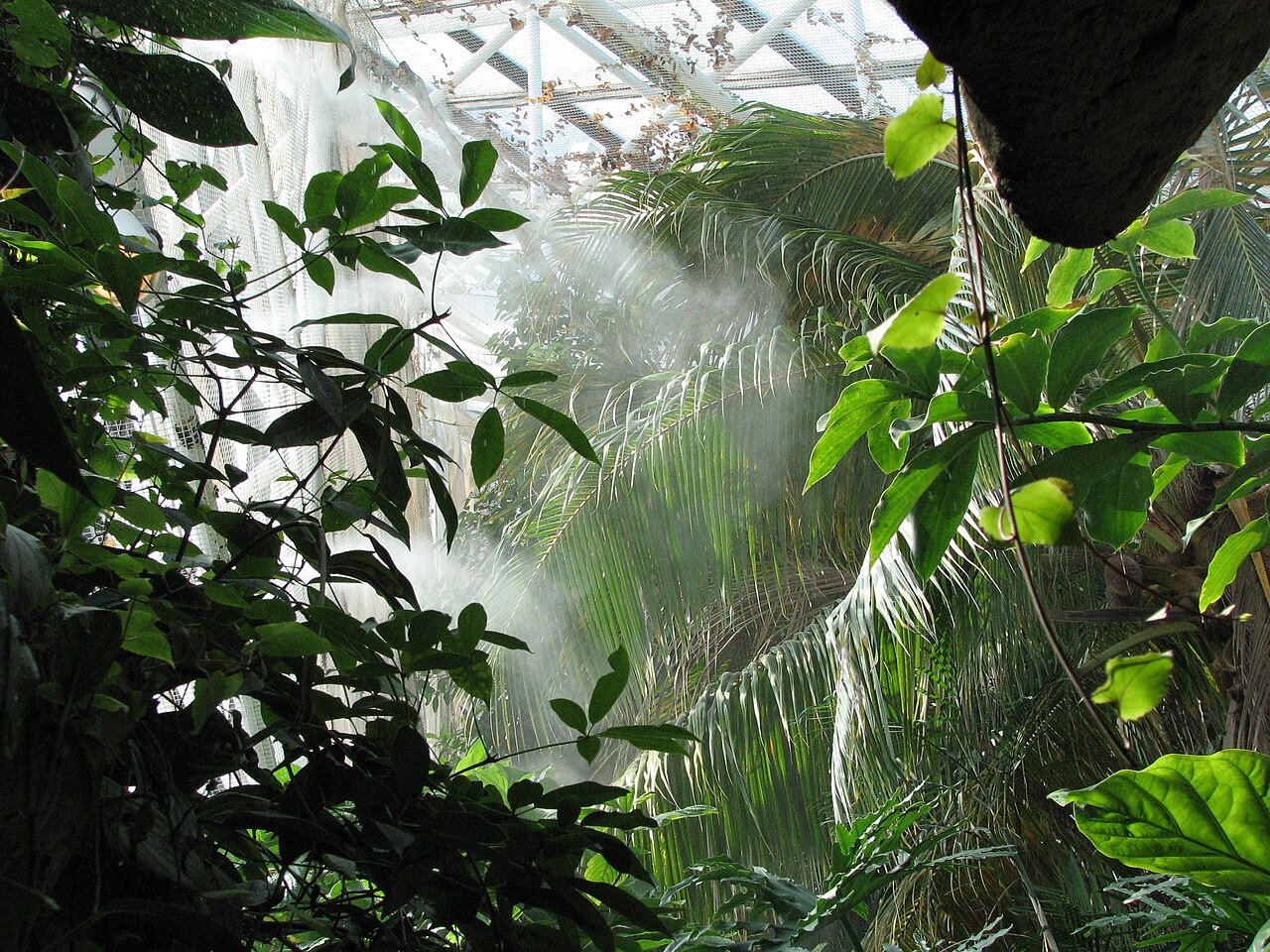
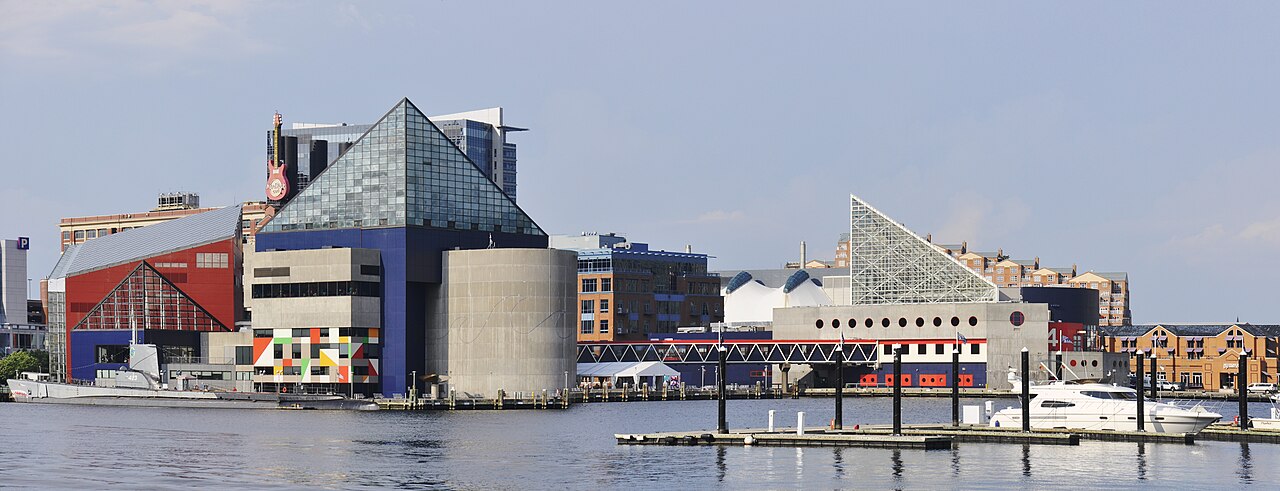
At the top of the National Aquarium's Pier 3 Pavilion in Baltimore, a South American rain forest grows under a glass pyramid crowning the building that opened on the Inner Harbor in 1981. The exhibit holds 160 plant species and 28 animal species, including sloths and free-flying birds, at an average of about 80 °F (27 °C) with a fog-mist system. Closed from March to November 2022, it reopened on 15 November after 684 panes were replaced with acid-etched glass that helps birds see the pyramid. Entry is with the aquarium ticket.
Affiliate links — booking through Verrière helps fund our research, at no extra cost to you.
History
The Upland Tropical Rain Forest occupies level 5 of the Pier 3 Pavilion, at the top of Baltimore's National Aquarium. The aquarium opened to the public on 8 August 1981 on the Inner Harbor. According to Wikipedia, its overall design (architecture and exhibits) is credited to Peter Chermayeff, then at CambridgeSeven, and the glass pyramid belongs to the original construction. The exhibit was formerly called The South American Rainforest.
The original glazing, about 42 years old, was replaced in 2022. The Banner reported that the seals of the double glazing had failed with age and that the glass let in too much ultraviolet light and heat, creating hot spots that harmed the plants. The project officially began on 3 March 2022; exterior work ran from March to October, and the exhibit, closed for eight months, reopened on Tuesday 15 November 2022.
The aquarium states that the project cost $8 million, of which $7 million came from the State of Maryland, with grants from Baltimore City, Baltimore County and the Abell Foundation. The 46 tons of removed glass were recycled into fiberglass insulation and reflective road striping. During the closure some animals were moved to temporary homes; ibis, herons and sloths were the first to return, while others re-acclimated first in protected enclosures.

Architecture and engineering
The glass pyramid crowns the Pier 3 Pavilion, the blue building of the aquarium. According to Vitro, which supplied the glass, the whole was designed in the shape of a ship, with triangles of glazing representing sails. The 2022 replacement covered 684 panes and was designed by Design Collaborative, a Baltimore firm named in the same source. Most of the vertical, rectangular or triangular modules measure 6 ft 1 in by 3 ft 6 in (about 1.85 m by 1.07 m); those on the sloped faces are 4 ft 3 in by 6 ft 1.5 in (about 1.30 m by 1.87 m).
The product chosen is Vitro's Solarban 60 Starphire, a low-iron, very clear glass with a low-emissivity coating. Each unit has two or three layers of glass, and on the sloped faces an ionoplast interlayer forms laminated safety glass. The outer face is acid-etched, a pattern that diffuses light and makes the pyramid visible to migrating birds, following American Bird Conservancy guidelines; unlike a film, the etching is permanent. The glazing had to sustain 75 to 85 °F, 50 to 87% humidity and 54 to 75% light transmittance. Coloured LED lights, added in 2022 according to Wikipedia, illuminate the pyramid from outside without affecting the interior.
Plant collections
The exhibit re-creates an Amazonian forest and, according to the aquarium's website, holds 160 plant species and 28 animal species. Trees and plants form dense foliage, kept up by daily watering and a high-pressure fog-mist system that releases fine droplets through the day; the average temperature is about 80 °F. The aquarium singles out two banana species, cacao and a large-leaved ginger (candlestick ginger). New cecropia trees were planted a few weeks before the 2022 reopening.
Among the animals, birds (green-and-gold and turquoise tanagers, the yellow-headed amazon, scarlet ibis), frogs, toads and turtles live among visitors, while the nocturnal Linnaeus's two-toed sloth can be spotted in the branches. According to Wikipedia, a cave-like space also holds glass-enclosed displays of reptiles and amphibians, including the blue poison dart frog named by the aquarium.
Visiting
The forest is visited with the National Aquarium admission ticket, at Pier 3 on Baltimore's Inner Harbor. The aquarium describes a pathway to follow on foot or stairs climbing into the trees, and Wikipedia mentions two elevated platforms for bird-watching. Animals move freely among the plants: sloths are found by looking up into the branches, frogs by looking at the ground.
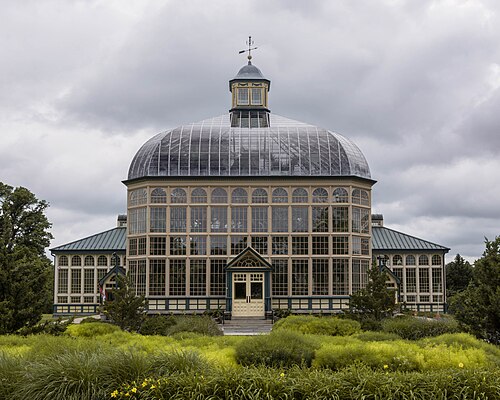
The aquarium notes an average temperature of about 80 °F (27 °C) and daily watering of the plants. The exhibit sits within the aquarium's general route, alongside its other galleries. Elsewhere in Baltimore, the Rawlings Conservatory in Druid Hill Park has its own entry in the atlas.
39.28° N, 76.61° W
Greenhouses nearby
More greenhouses — United States
Do you have a good photo of this greenhouse? Suggest it for this page →
Sources (6)
- aqua.org/explore/exhibits/upland-tropical-rain-forest
- aqua.org/stories/2022-12-05-things-are-looking-up
- thebanner.com/community/national-aquariums-rain-forest-exhibit-reopens-with-684-new-panes-
- glassonweb.com/news/national-aquariums-glass-pyramid-upgrade-with-solarbanr-glass
- en.wikipedia.org/wiki/National_Aquarium_(Baltimore)
- aqua.org/visit
Affiliate links — booking through Verrière helps fund our research, at no extra cost to you.