East Building, National Gallery of Art
Washington, D.C.
Sources checked October 2026
- Year
- 1978
- Architect
- I. M. Pei
- Type
- Wing of a modern and contemporary art museum
- Access
- Open to the public, free admission daily from 10 a.m. to 5 p.m. (official website, October 2026)
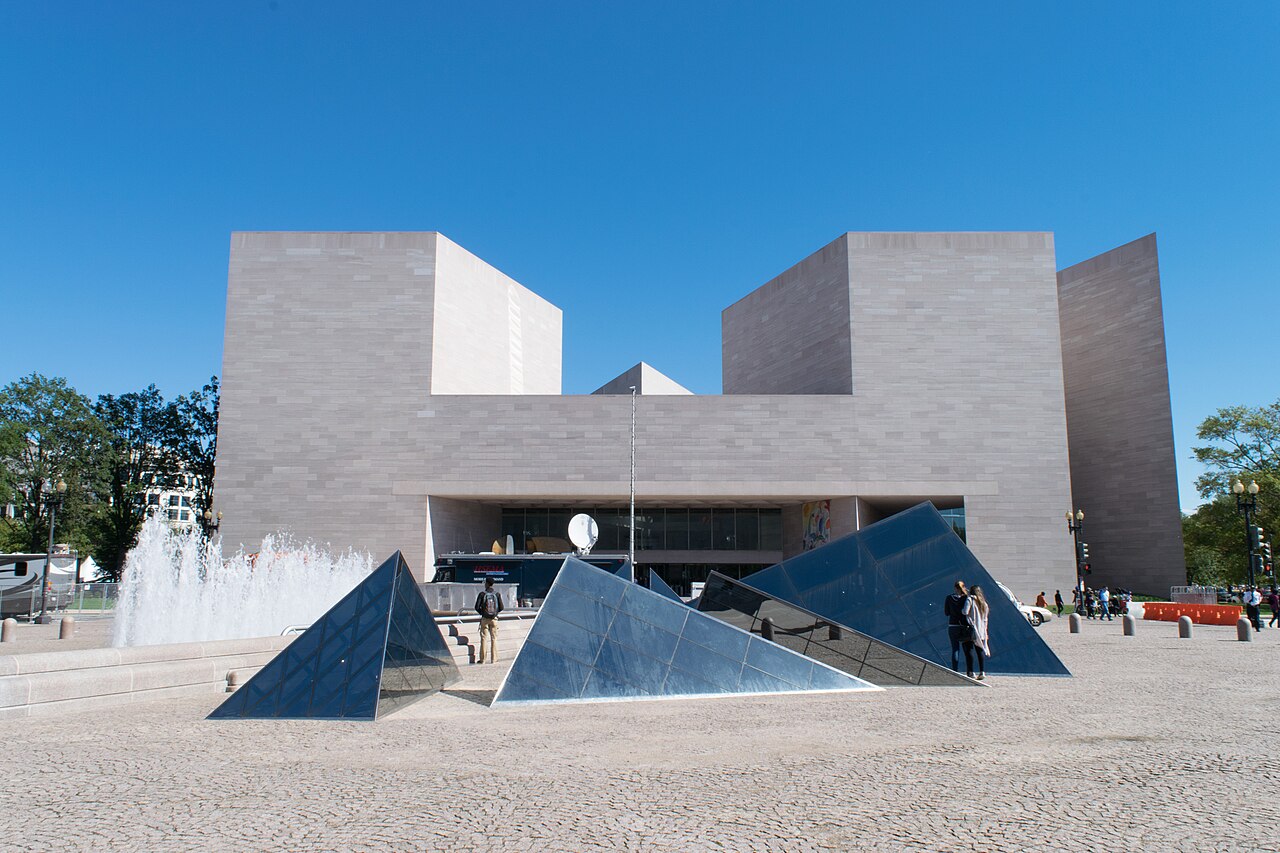
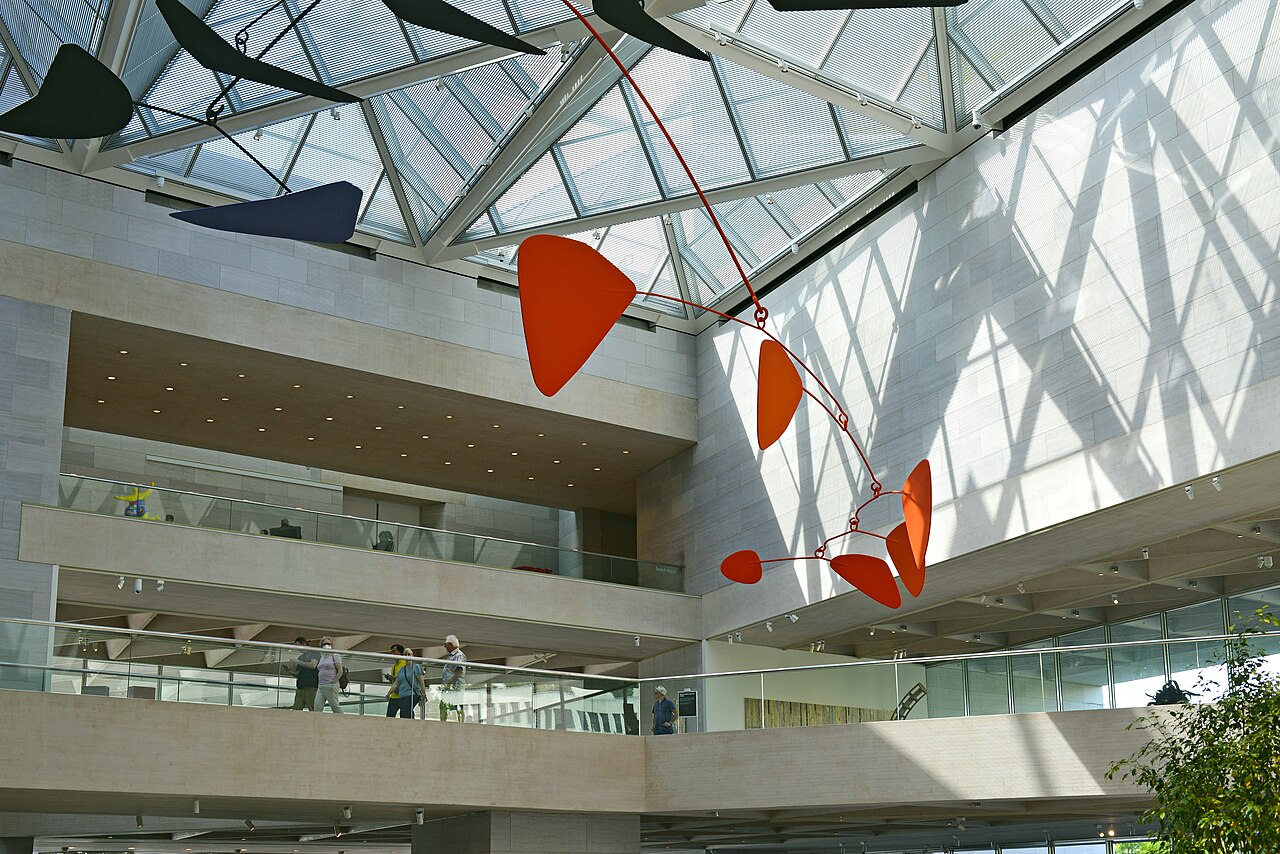
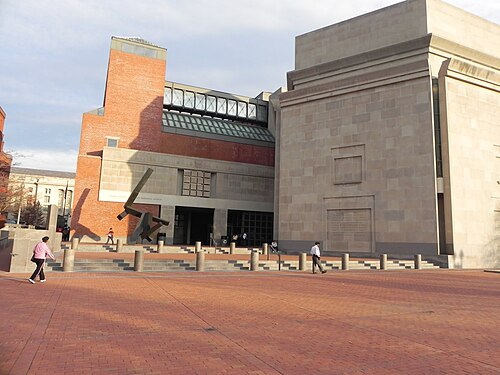
I. M. Pei designed the East Building, which has housed the modern and contemporary art collection of the National Gallery of Art since 1978. Its plan divides a trapezoidal site into two triangles, one for the public galleries and the other for the library and offices. A large triangular atrium holds a monumental mobile by Alexander Calder.
Affiliate links — booking through Verrière helps fund our research, at no extra cost to you.
History
Andrew Mellon had got Congress to reserve a neighbouring plot of land for the future expansion of the National Gallery. By 1966, the museum's 25th anniversary, plans for expansion were taking shape: most of the original galleries were full, and people wished to establish a library and an advanced research center. In 1967 Paul Mellon and Ailsa Mellon Bruce, Andrew Mellon's children, offered to fund a second building, and I. M. Pei was chosen to design it.
Construction began in 1971. A newly founded Collectors Committee then commissioned works for the building from artists including Henry Moore and Alexander Calder. The new museum was dedicated to the people of the United States on June 1, 1978, by Paul Mellon and President Jimmy Carter. With its opening, the Library was expanded and the Center for Advanced Study in the Visual Arts was created.
A renovation completed in 2016 added two lofty tower galleries and a rooftop terrace, intended for outdoor sculpture, that overlooks Pennsylvania Avenue.
Architecture
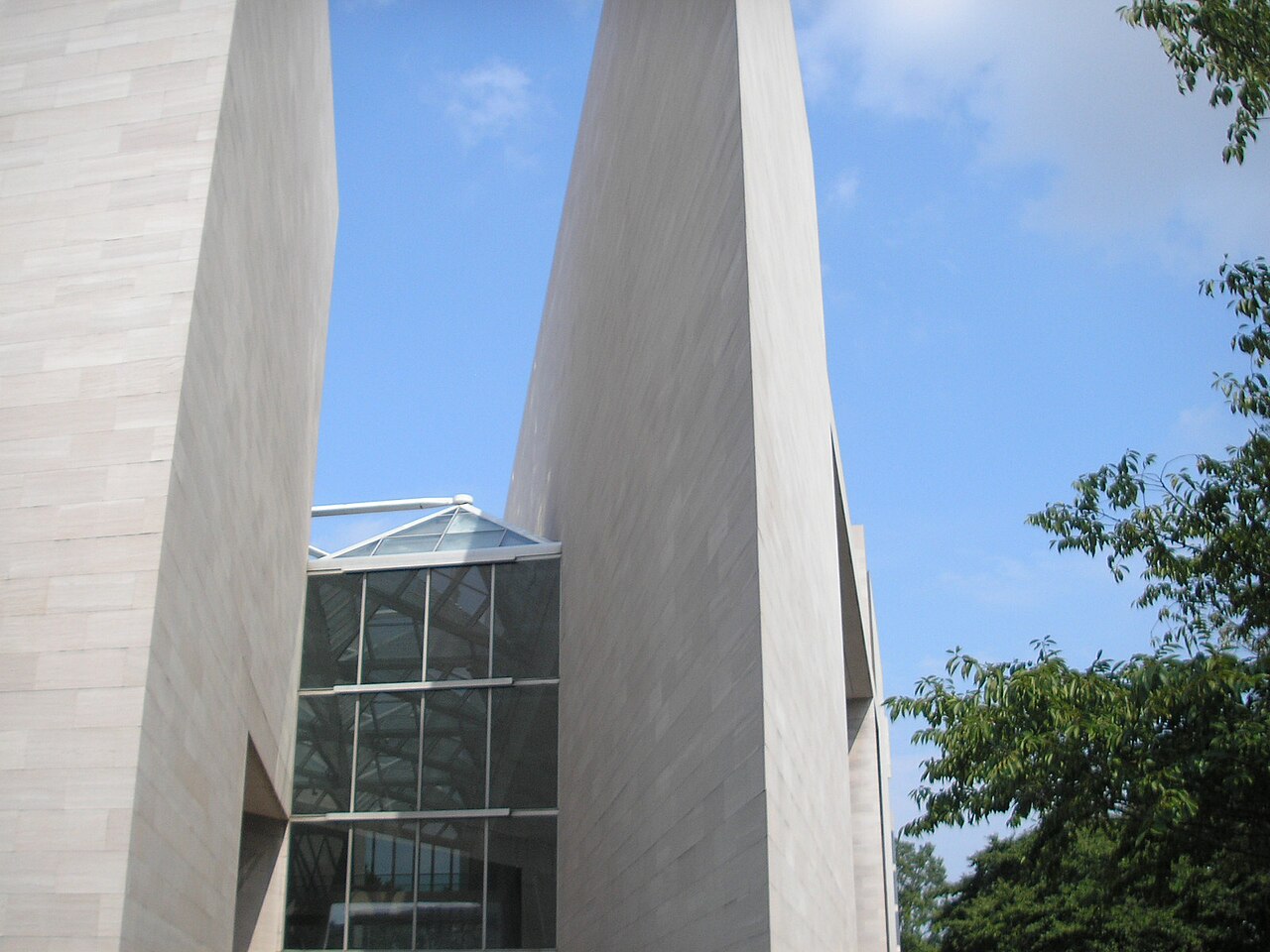
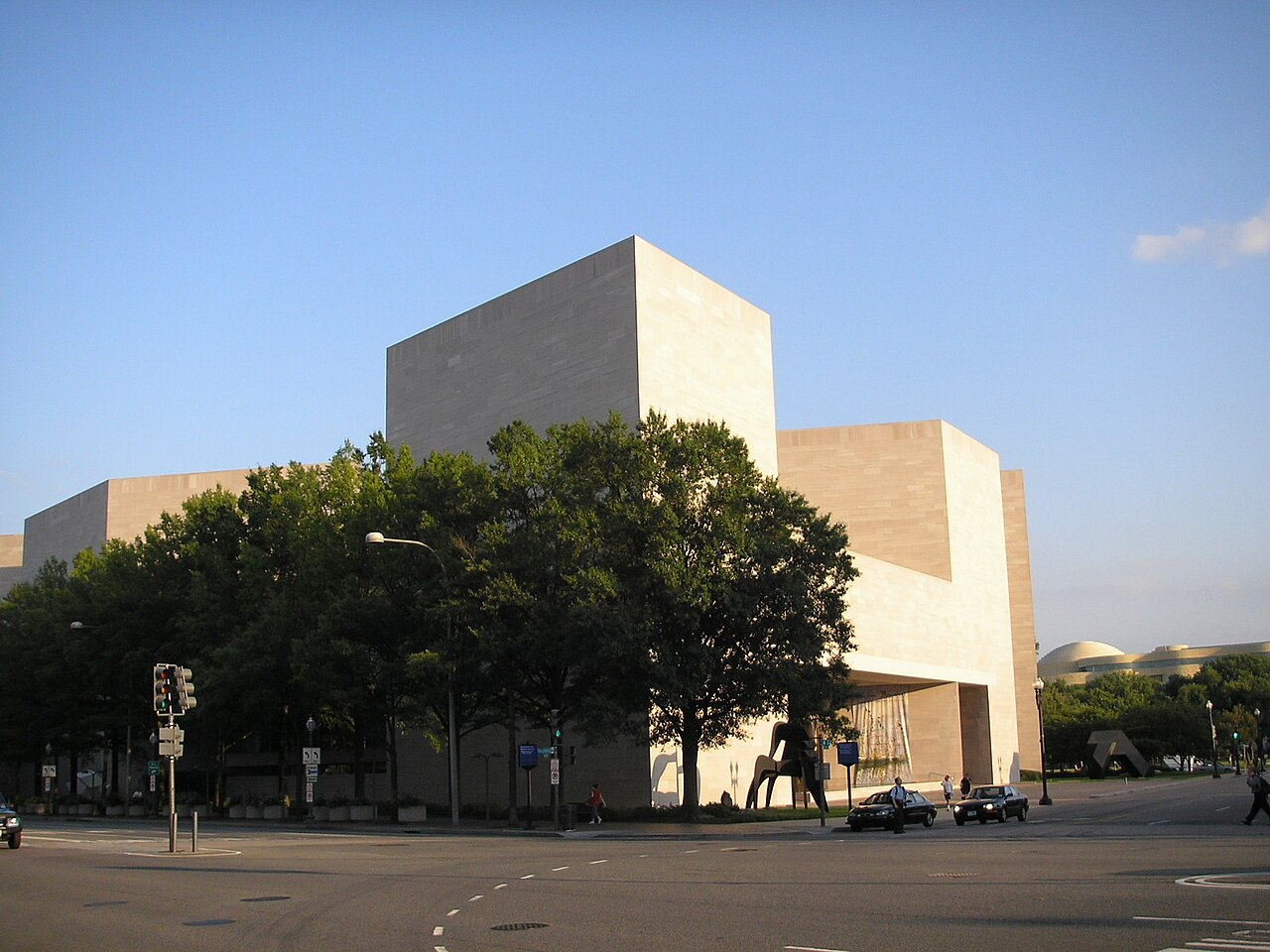
The site is a trapezoid, between Third and Fourth Streets NW and between Pennsylvania Avenue and the National Mall. To accommodate this unusual shape, Pei conceived the East Building as a pair of triangles: one holds a library, offices, and a community of scholars, the other the public galleries for the permanent collection and exhibitions. Triangles recur throughout its architecture.
To link his design to John Russell Pope's neoclassical West Building, Pei asked for an exterior clad in the same Tennessee pink marble. The large triangular atrium is filled with light.
Use today
The East Building is devoted to modern and contemporary art: across five floors, media arts, works on paper, photography, sculpture and paintings are presented in chronological and thematic arrangements.
In the atrium, Alexander Calder's monumental mobile, Untitled (1976), moves solely on the air currents. Its panels, which look solid, are in fact hollow, honeycomb-type structures wrapped in aluminum skins as thin as paper: with a wingspan of just over 85 feet (about 26 m), the whole weighs only 920 pounds (about 417 kg).
Leo Villareal's light work Multiverse (2008) envelops visitors in a tunnel of lights when they pass beneath 4th Street NW; it is in the Concourse, which connects the two buildings.
Visiting
Admission is always free, with no passes or tickets needed for the galleries, exhibitions, or guided tours. The museum is open daily from 10 a.m. to 5 p.m., except on December 25 and January 1.
The East Building's main entrance, which is accessible, is at 4th Street and Constitution Avenue NW.
Photos
38.89° N, 77.02° W
Greenhouses nearby
Architecture nearby
Affiliate links — booking through Verrière helps fund our research, at no extra cost to you.