Princes Park
Liverpool (Toxteth)
Sources checked November 2026
- Year
- 1842
- Architect
- Joseph Paxton
- Type
- Landscaped public park, Grade II* on the Register of Parks and Gardens
- Access
- Municipal park, entered from several streets (Liverpool City Council, November 2026)
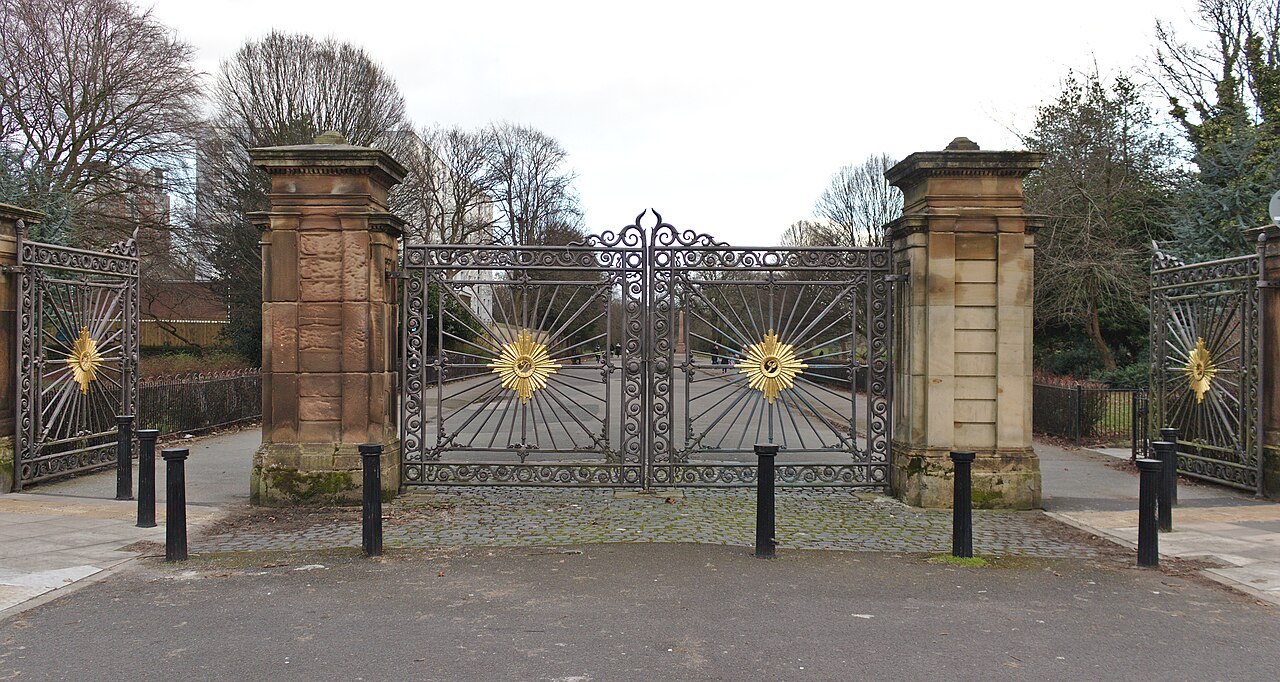
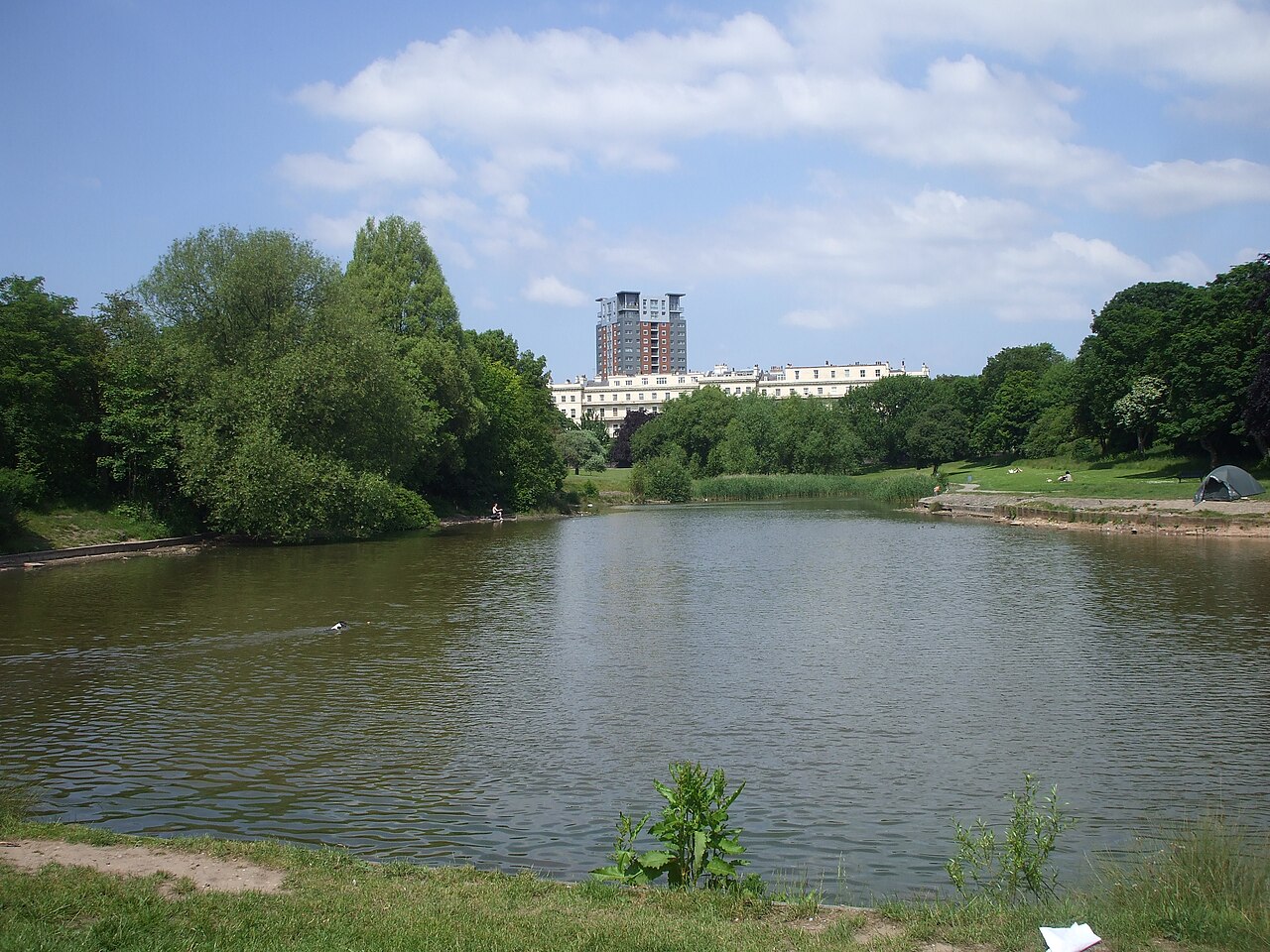
Opened in 1842 in Toxteth, Princes Park is Joseph Paxton's first park, commissioned by the private developer Richard Vaughan Yates, who meant to pay for its upkeep with rents from building plots around its edge. An irregular lake with an island, a carriage drive running right round the park and the Sunburst Gates mark its landscape. It is registered at Grade II* as a historic park and garden.
Affiliate links — booking through Verrière helps fund our research, at no extra cost to you.
History
In 1842 the private developer Richard Vaughan Yates commissioned Joseph Paxton to design a park together with the belt of houses around it. Yates had bought the land from the Earl of Sefton: former farmland that had been part of the old Toxteth deer park. Rents from the building plots were meant to pay for the park's upkeep. Two architects assisted Paxton with the plans: John Robertson and George Henry Stokes. Named to mark the birth of the Prince of Wales in 1841, the park opened in 1842. The Doric lodge that stood by the main entrance, at the Sunburst Gates, was destroyed by bombing in 1940.
In August 1849 a four-day fete drew more than 10,000 people a day, and its profits went to hospitals in the city. After Yates's death the reversionary right to the land passed in 1884 to Liverpool Corporation, which took over the park in 1918 after long negotiations with the Yates family. Repair works on the lake, begun in 2019, improved its banks and installed a borehole that keeps the water level steady.
Architecture
The design was influenced by Regent's Park. It was the first in a line of parks by Paxton and his followers that had a great influence on how public parks were designed. It became the prototype for Paxton's later parks, and its success brought him further commissions, the first of them Birkenhead Park.
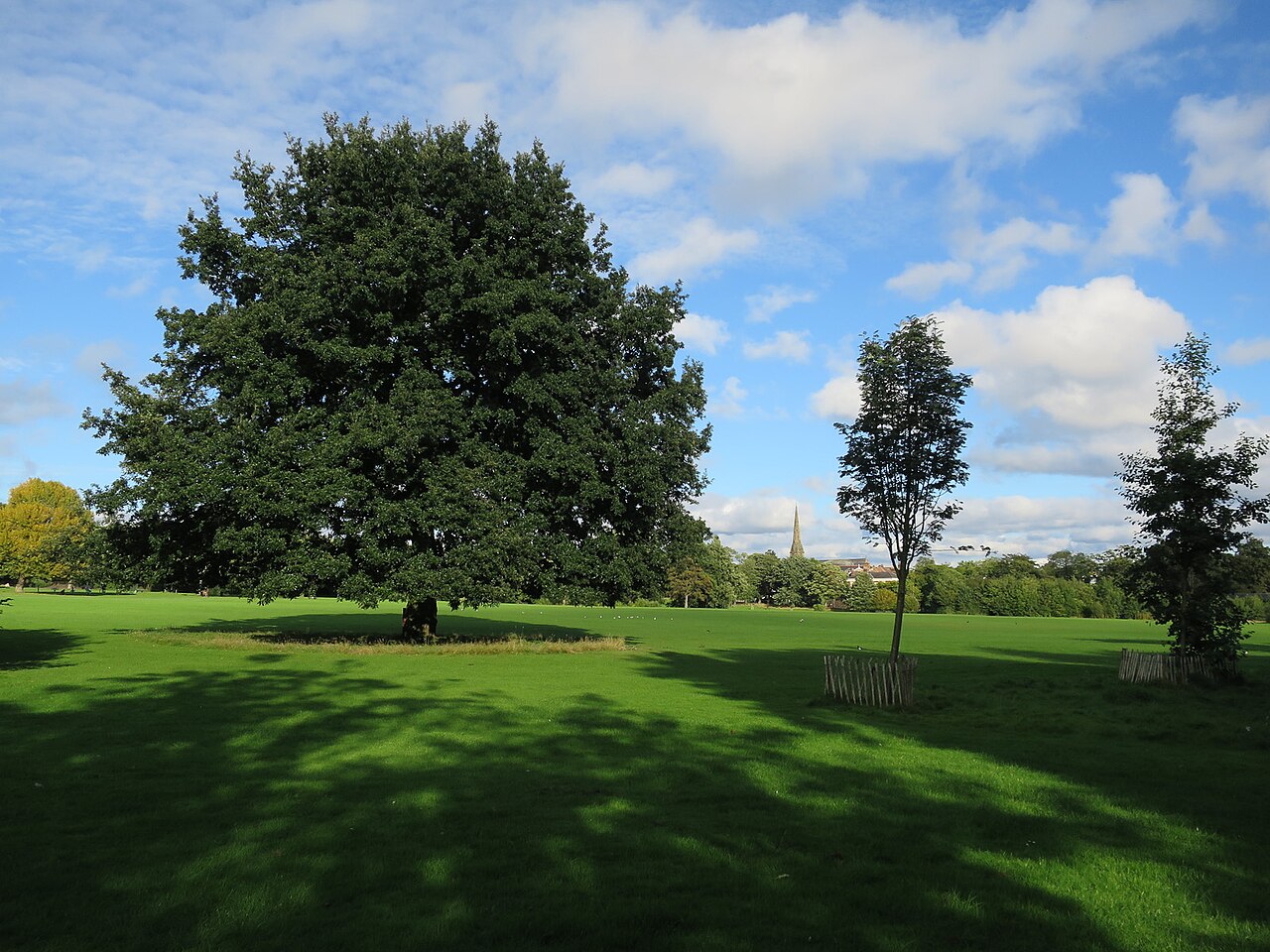
A winding carriage drive runs right round the park. Between the drive and the streets the land was laid out as plots for nineteenth-century villas, whose occupants were to enjoy the park privately. Paxton gave the park a Swiss-inspired touch through rockwork and conifers, and brought in mature trees from neighbouring estates. In 1997 the interior was open grassland planted with single trees or irregular clumps, with belts of trees along Ullet Road and on the north and west sides of the lake; enclosed gardens lay on the slopes of the north-west shore.
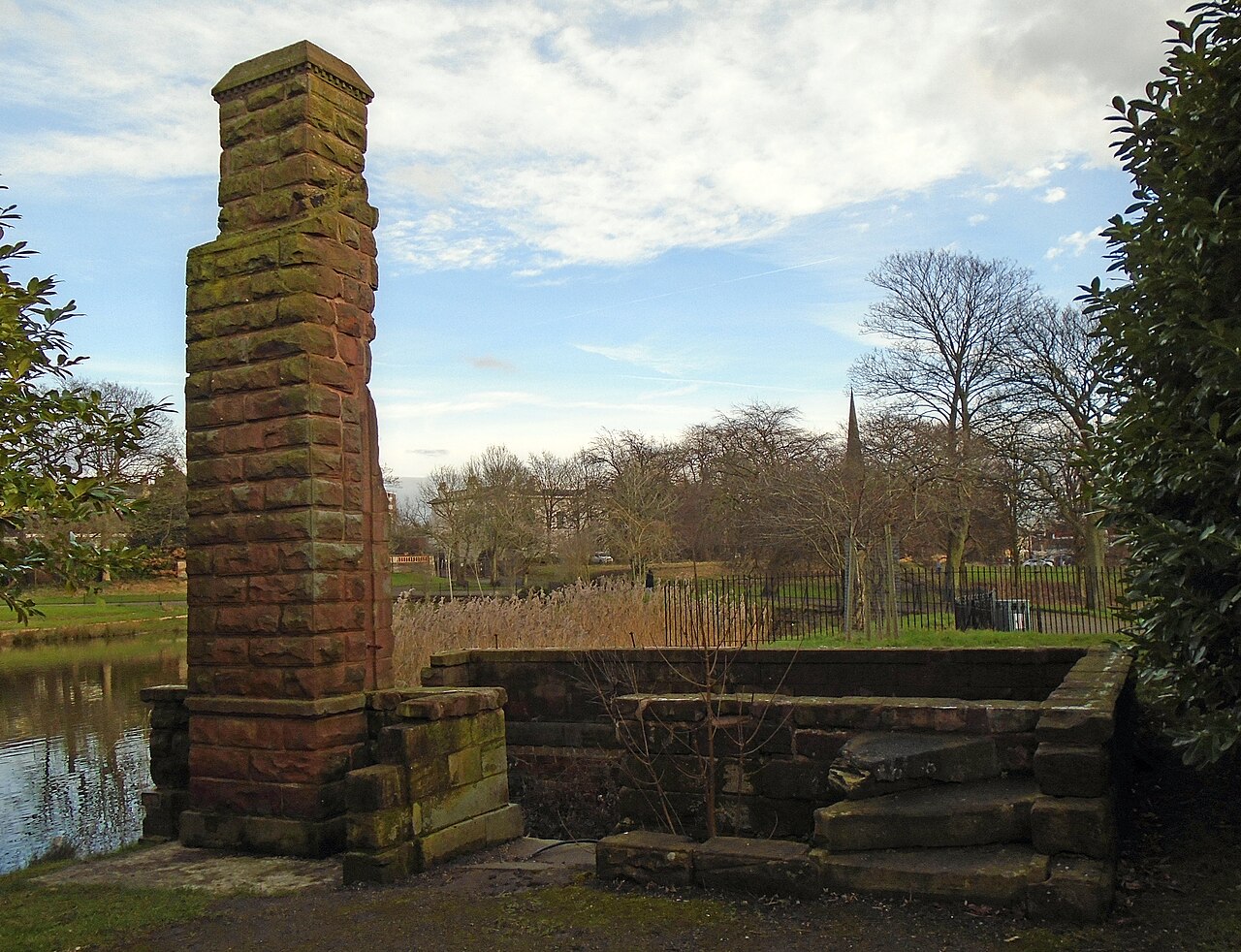
The lake has an irregular outline and an island near its south-west end, once linked to the bank by a Chinese-style bridge. At the water's edge stood a boathouse built as a Swiss chalet: a timber frame on a rock-faced stone base, a stone chimney, a tiled roof and deep eaves over an outside staircase. Fire destroyed what was left of it in the 1990s, and only the foundations remain.
The main entrance opens at the end of Princes Avenue, at the Sunburst Gates: curved walls, stone piers and ornamental iron gates, some parts of which are gilded with gold leaf. Princes Avenue, also called The Boulevard, lines up with this entrance and ends in a circus facing the gates; it was finished in 1853. About a hundred metres inside, on the same axis, an obelisk of polished red granite commemorates Richard Vaughan Yates and long served as a drinking fountain. Together with the axis of the avenue, it gives the entrance a formal character that contrasts with the informality of the rest of the park. The gravestone of Judy, a donkey who gave children rides for 21 years, is dated 1926.
Use today
The park has a children's play area, tennis courts, a labyrinth and a lake used for fishing. The council suggests a 5 km route there, to walk or run.
The Friends of Princes Park, a volunteer group, look after its trees and plant species close to those Paxton had to hand when the park opened in 1842.
Visiting
The park can be entered from Princes Road, Windermere Terrace and Belvidere Road; its address is Devonshire Road. The Friends of Princes Park have drawn up an accessibility map showing the accessible paths.
Fishing in the lake requires a permit from the council.
Photos
53.39° N, 2.95° W
Greenhouses nearby
Architecture nearby
By the same architect
Sources (9)
- liverpool.gov.uk/parks-and-greenspaces/explore-our-parks/princes-park/
- liverpool.gov.uk/parks-and-greenspaces/angling/
- liverpool.gov.uk/parks-and-greenspaces/park-walks-and-runs/
- parksandgardens.org/places/princes-park-toxteth
- friendsofprincesparkl8.org.uk/the-park/park-history
- friendsofprincesparkl8.org.uk/the-park/joseph-paxton
- friendsofprincesparkl8.org.uk/the-park/the-lake
- friendsofprincesparkl8.org.uk/the-park/access-map
- planning.data.gov.uk/entity/11100891.json
Affiliate links — booking through Verrière helps fund our research, at no extra cost to you.