Monsoon Forest (Chester Zoo, Islands)
Chester (Upton-by-Chester), Cheshire
Entry updated on October 5, 2026
- Year
- 2015
- Architect
- dan pearlman (Berlin); AECOM Architects
- Style
- Contemporary tropical hall under ETFE cushions
- Dimensions
- Footprint ≈3,280 m², 5,248 m² gross floor area, 28,819 m³
- Status
- Open to the public (reopened in October 2020 after the 2018 fire)
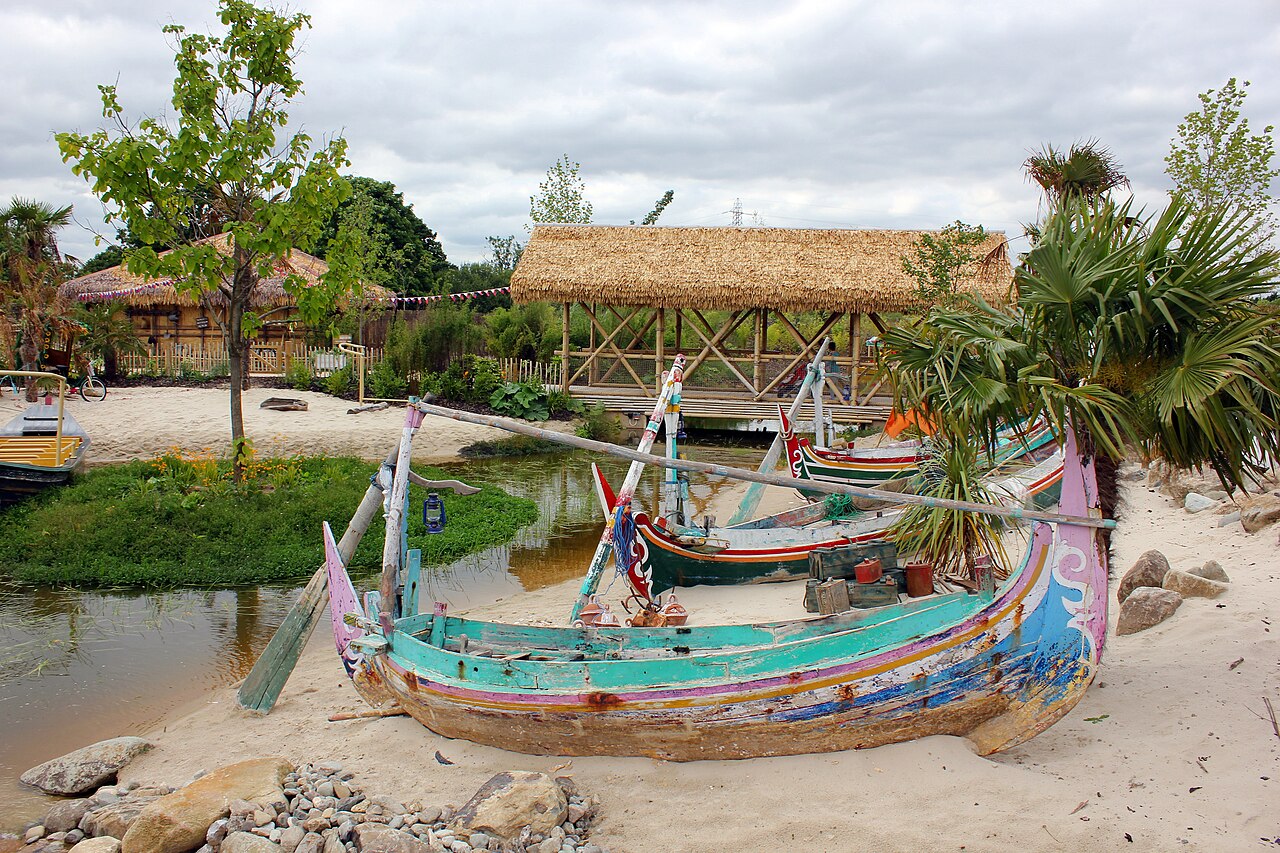
Opened in 2015 at the heart of Islands, Chester Zoo's extension devoted to the islands of South-East Asia, Monsoon Forest is billed as the largest indoor zoo habitat in the United Kingdom. Designed by the Berlin studio dan pearlman, it covers a footprint of about 3,280 m² beneath a roof of ETFE cushions that lets UVA and UVB light through. An electrical fire tore through it on 15 December 2018; stripped of all its soil and given a new roof, it reopened in October 2020 with more than 2,600 new plants and trees.
Affiliate links — booking through Verrière helps fund our research, at no extra cost to you.
History
1 min
Chester Zoo opened to the public on 10 June 1931, the creation of George Mottershead, at Upton-by-Chester; it now covers 51 hectares. As early as 1964 it opened a large animal glasshouse, the Tropical Realm, with a volume of more than 26,000 m³.
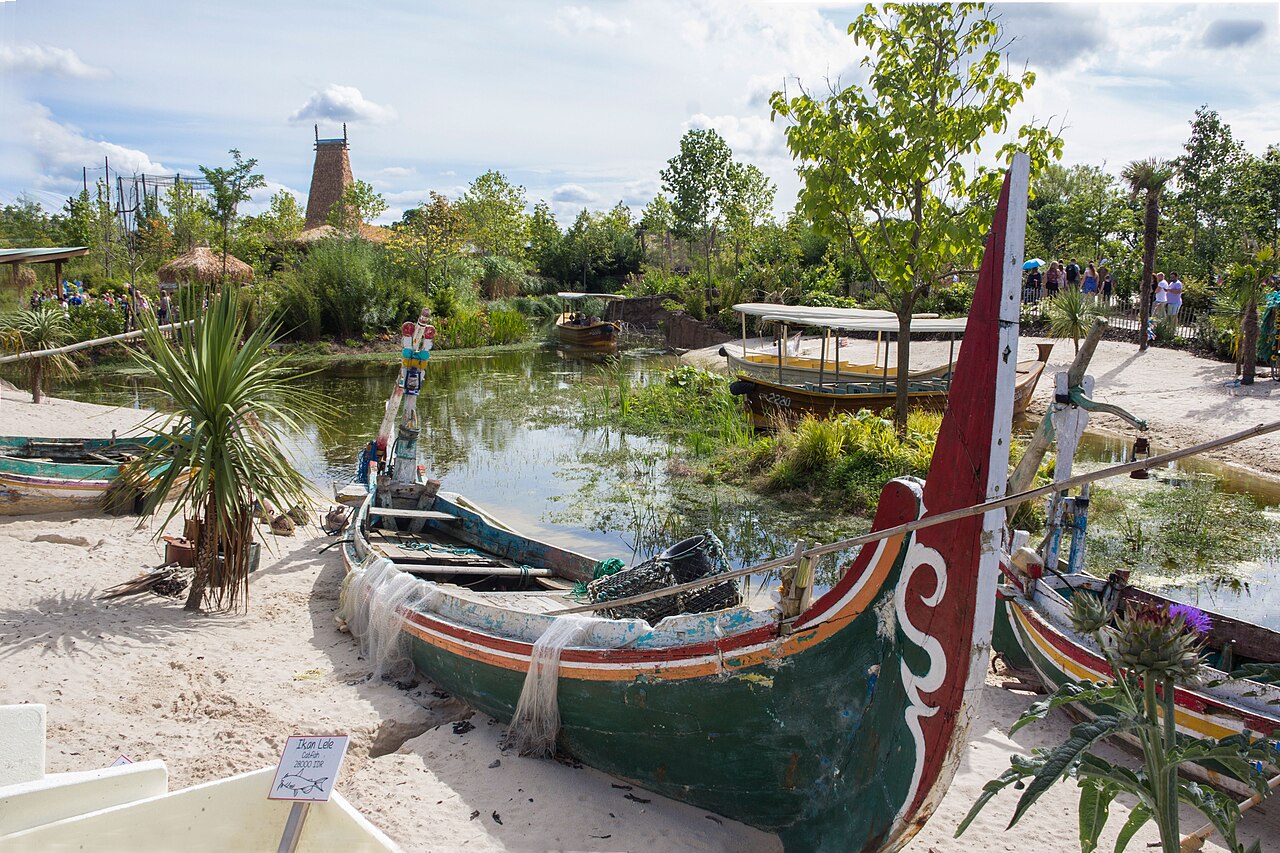
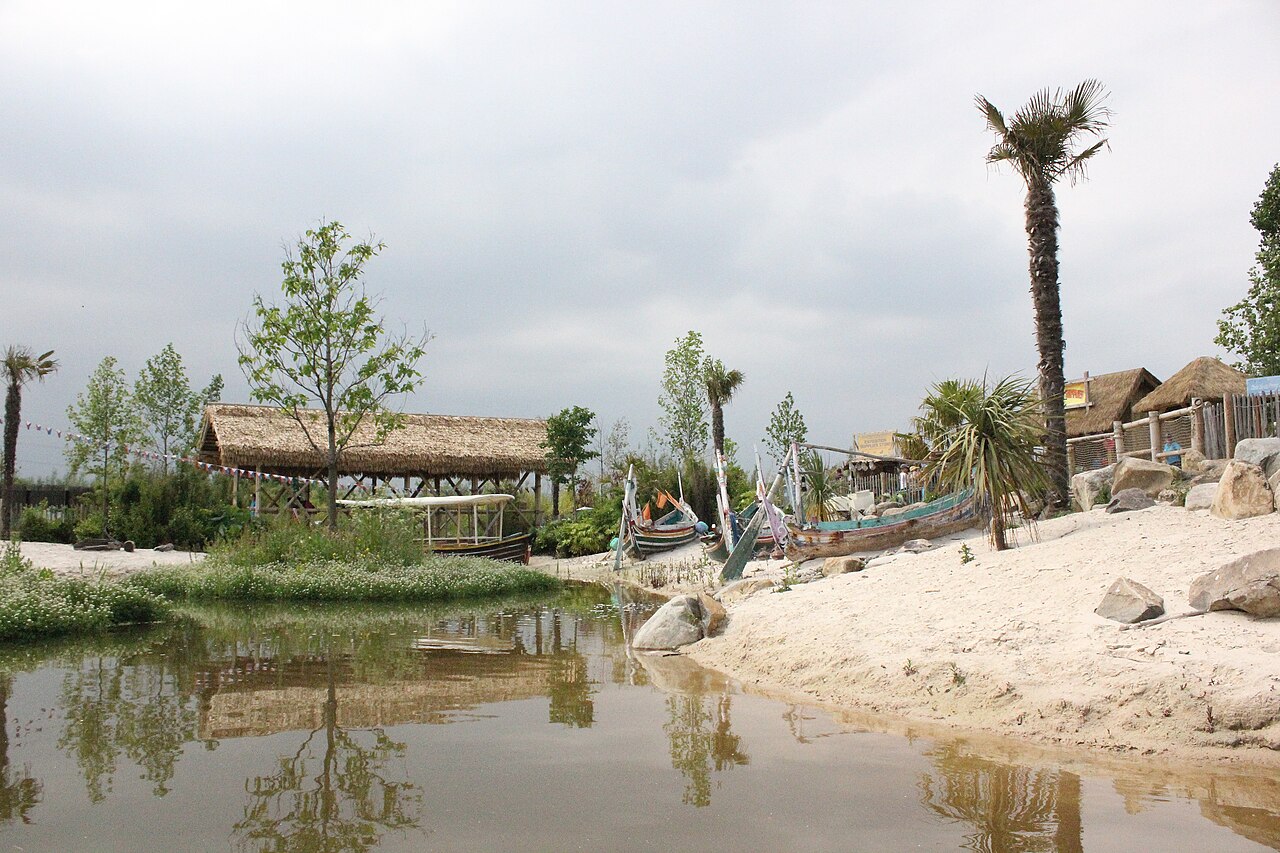
Monsoon Forest belongs to Islands, described by e-architect as the largest development project in the history of British zoos. Design work by the Berlin studio dan pearlman began in 2010 according to the ZooLex database (2011 according to the studio), and the contractor Laing O'Rourke started construction in August 2013. Islands opened in July 2015: the extension, which cost about 40 million pounds in all, enlarged the zoo by 15 acres southwards to the A41 road and unfolded in three phases up to 2017 around six themed islands. The great hall, put at 17 million pounds by ZooLex, opened to visitors on 21 August 2015 according to the trade press (June 2015 according to ZooLex). The project won, among other prizes, the Institution of Structural Engineers award for the best large project and a BIAZA gold award in 2017.
On 15 December 2018 an electrical fault started a fire in the hall; birds, frogs, fish and small insects died. The zoo reopened the next day and a rebuilding fund raised more than 220,000 pounds within a week. All plants, trees, soil and subsoil were removed and a new roof was fitted before the hall reopened in October 2020.
Architecture and engineering
1 min
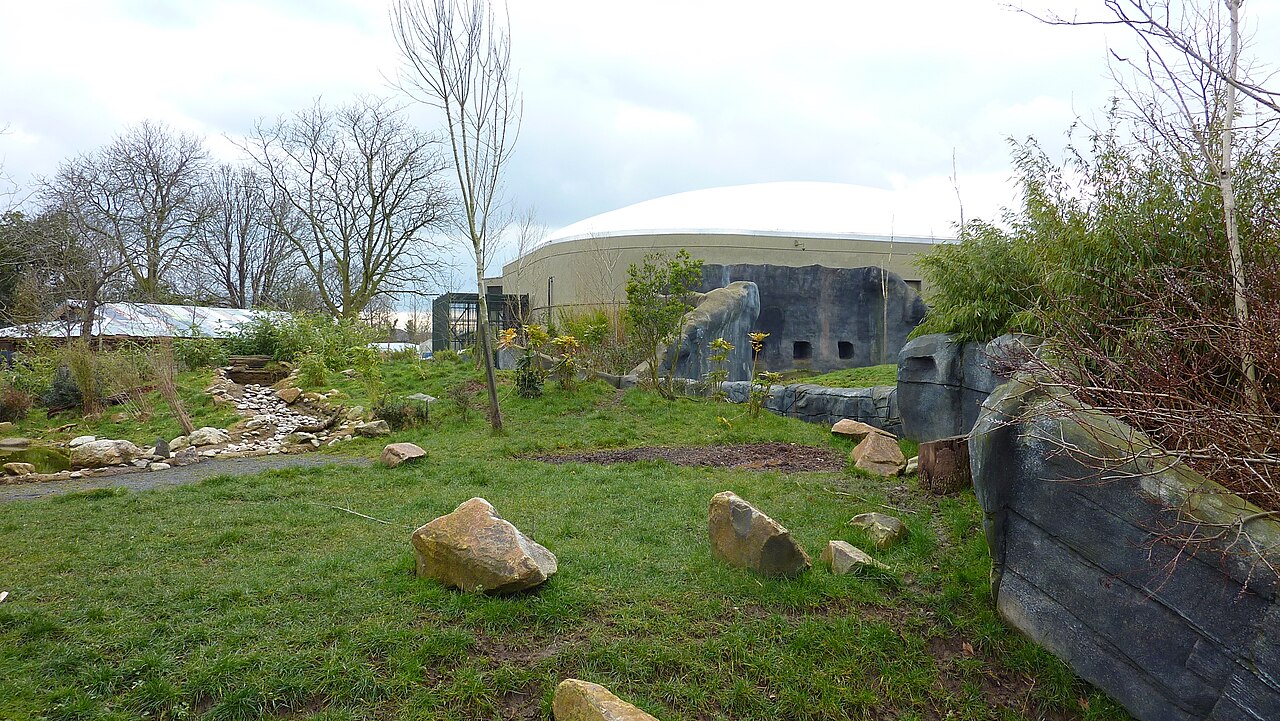
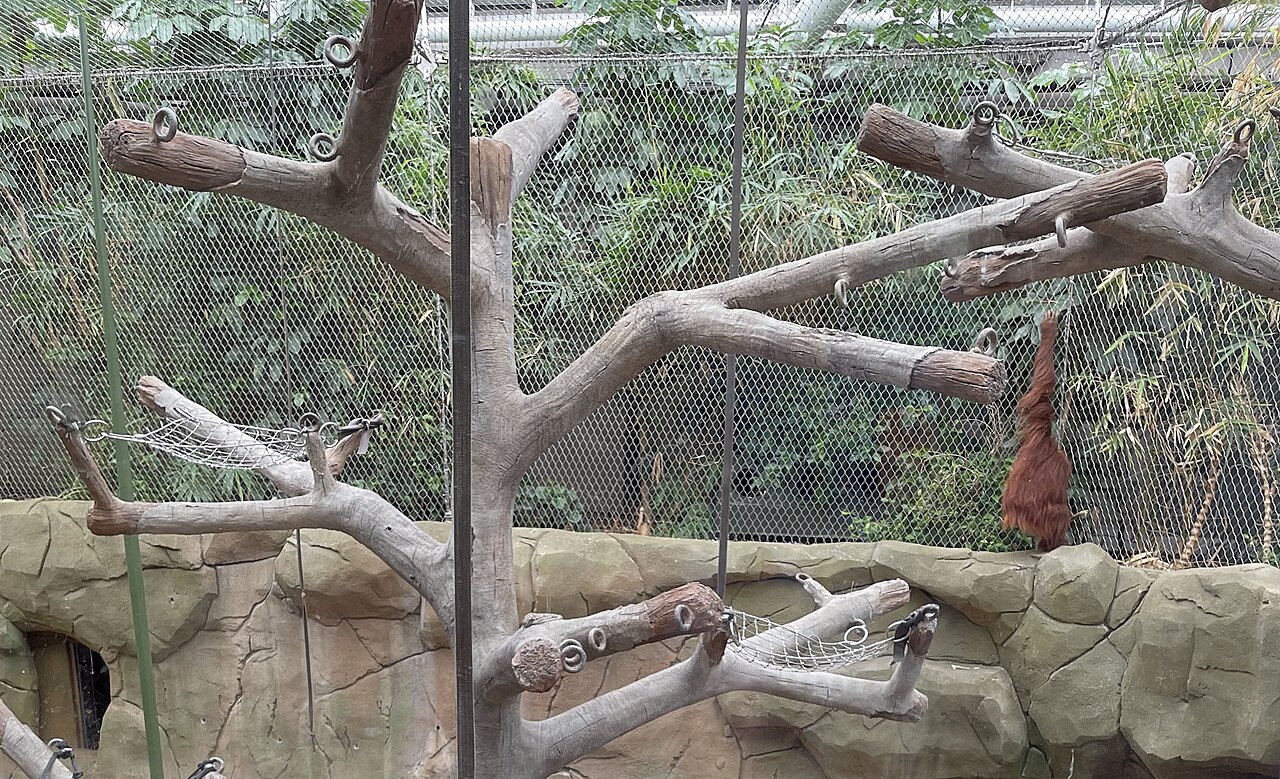
According to dan pearlman, which handled the architecture, landscape and habitats, the building has a footprint of 3,280 m², a gross floor area of 5,248 m² and a volume of 28,819 m³. It is set into valley-like ground, so that only the roof can be seen from outside. That roof is made of three-layer ETFE cushions supplied by Novum Structures, which also engineered the steelwork; the membrane transmits the UVA and UVB light that both animals and plants need. Beneath it, a cable net designed by Tony Hogg Design was sized to carry a 90 kg male orangutan and two 60 kg females hanging from the same point.
Ventilation relies on natural stack effect, assisted by vents built into the ETFE roof. Inside, a gently sloping path climbs through the forest before descending to the exit, between artificial trees 6 to 12 metres tall, carbon-fibre sway poles and some 15,000 metres of webbing. Planting beds drain through perforated pipes, floor-to-ceiling windows look into the enclosures, and a climate system recreates rolling thunder and showers at a temperature of around 27 °C.
Plant collections
1 min
After the fire the hall was replanted with more than 2,600 new plants and trees, carnivorous plants among them. The vegetation forms a South-East Asian forest setting, staged around a fictional field base, the Tripa Research Station.
The animals are arranged according to their natural range. Accounts of the 2015 opening and the 2020 reopening mention Sumatran orangutans, Sulawesi crested macaques, Asian forest tortoises, a pair of Sunda gharials named Frank and Frankie, as well as rhinoceros hornbills and tentacled snakes, two species shown nowhere else in the United Kingdom according to the trade press. The ZooLex record adds silvery gibbons and, in small terrariums, vampire crabs, giant walking leaves and other Asian invertebrates. The 2020 reopening added an area for South-East Asian amphibians, an improved orangutan habitat and a breeding study area for the hornbills.
Visiting
1 min
Monsoon Forest lies in the southern part of the zoo, at the centre of the Islands zone, close to the Sumatran tiger enclosures. A boat trip runs 450 metres along these islands in about fifteen minutes and gives another view of the outdoor enclosures.
With the zoo covering 51 hectares, a full day is well spent; the warm, humid hall makes a good refuge in cold or wet weather. The visit can be rounded off at the Tropical Realm, the large animal glasshouse opened in 1964 in the historic part of the grounds.
53.22° N, 2.88° W
Greenhouses nearby
More greenhouses — United Kingdom
Do you have a good photo of this greenhouse? Suggest it for this page →
Sources (7)
- danpearlman.com/en/work/chester-zoo-islands/
- zoolex.org/gallery/show/2042/
- en.wikipedia.org/wiki/Chester_Zoo
- e-architect.com/england/islands-at-chester-zoo-building
- blooloop.com/animals/news/chester-zoos-monsoon-forest-opens-uks-largest-indoor-zoo-exhibit
- blooloop.com/animals/news/chester-zoo-monsoon-forest/
- openstreetmap.org/way/520981382