Sefton Park Palm House
Sefton Park, Liverpool, England

Sources checked September 2026
- Year
- 1896
- Architect
- Mackenzie & Moncur (Edinburgh and Glasgow)
- Style
- Octagonal Victorian conservatory with tiered domes, iron frame
- Status
- Open to the public (restored and reopened in 2001)
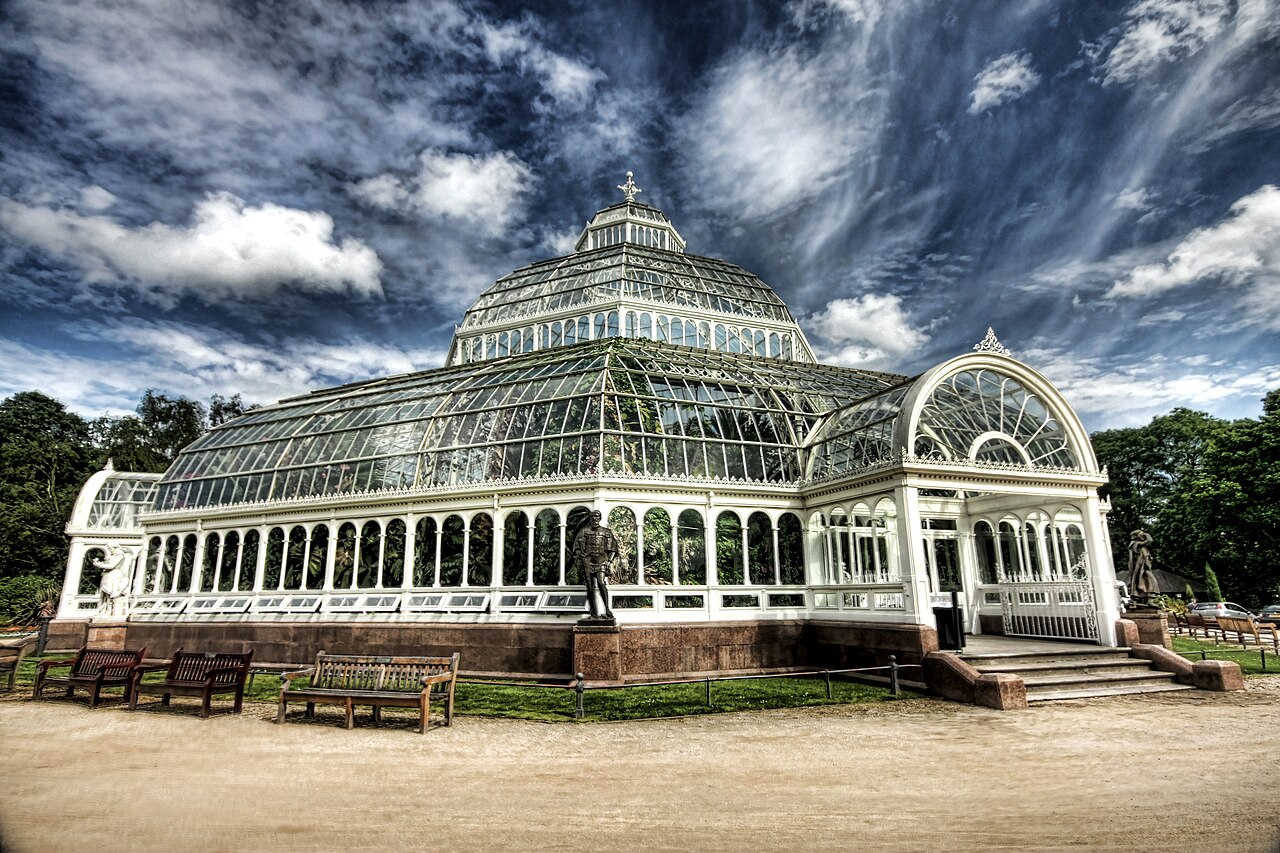
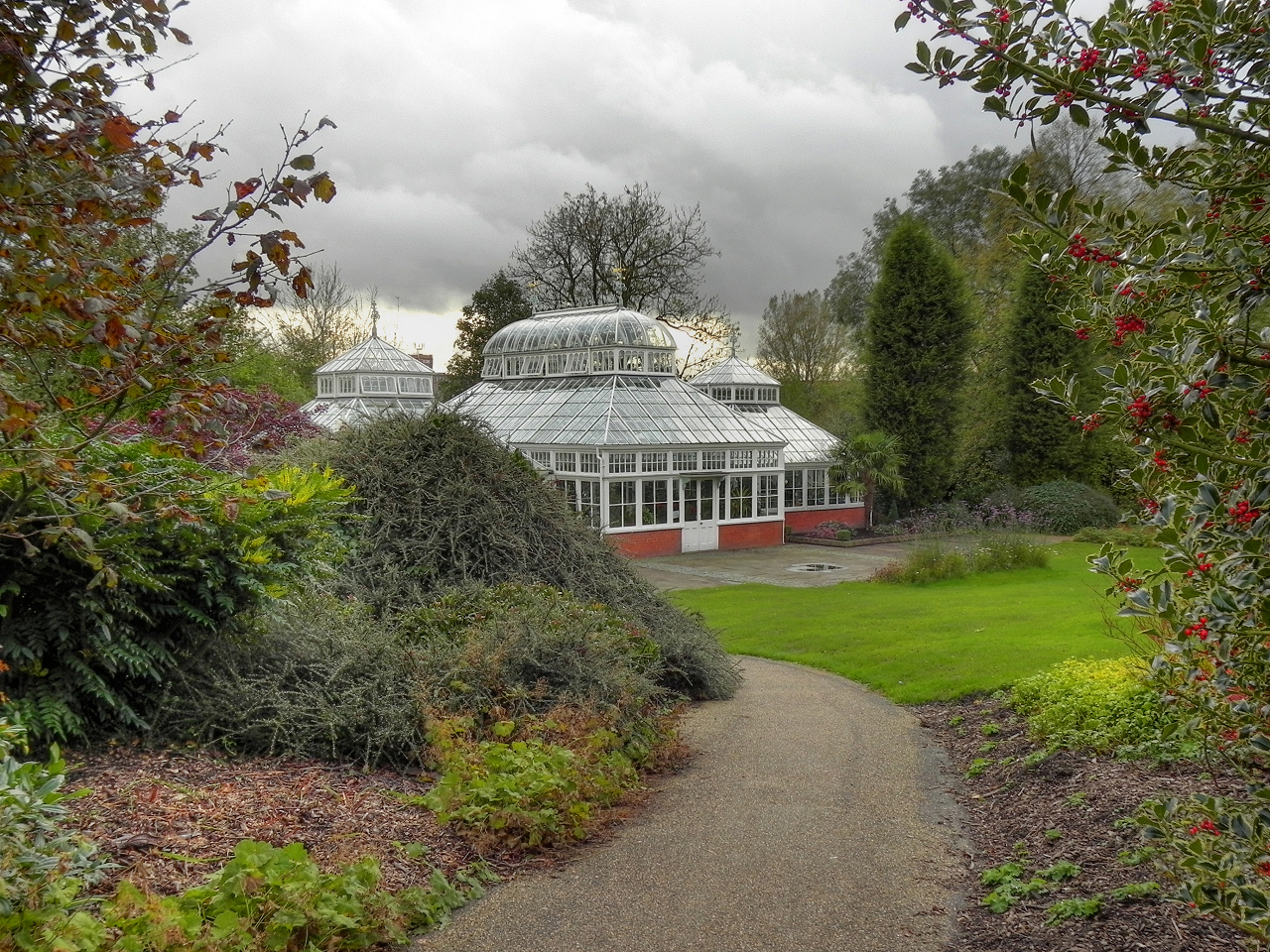
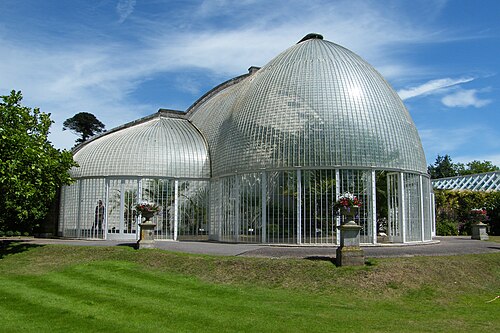
Presented to the people of Liverpool by Henry Yates Thompson, who gave £10,000 for its construction, the Sefton Park Palm House opened in 1896. Designed and built by Mackenzie & Moncur, the octagonal iron-framed conservatory rises in three domed tiers on a granite base, ringed by eight statues by Léon-Joseph Chavalliaud. A bomb blast shattered its glass in May 1941; poorly repaired, it closed in the 1980s and reopened in 2001 after a £3.5 million restoration. Listed Grade II* and run by a charitable trust, it houses palms, bromeliads and threatened plants.
Affiliate links — booking through Verrière helps fund our research, at no extra cost to you.
History
The Sefton Park Palm House was the gift of the Liverpool millionaire Henry Yates Thompson, who gave £10,000 for its construction and presented it to the people of the city. Designed and built by Mackenzie & Moncur of Edinburgh and Glasgow in the tradition of Joseph Paxton's glasshouses, it opened in 1896, on 5 August according to the Captain Cook Society. The eight statues around it were made in 1898. In 1913 an unexploded bomb was found in the eastern porch, with suffragette literature on a nearby bench; the Trust attributes the act to the activist Kitty Marion.
During the Second World War the glass domes were painted over so that they could not serve as a landmark for bombers, and in May 1941, in the Liverpool Blitz, the blast from a nearby bomb shattered the glass. Replacement glazing paid for by the War Damage Committee came only in the 1950s, at a cost of £6,163, but the wrong putty was used and the glazing deteriorated further.
In poor condition, the Palm House closed in the 1980s on safety and maintenance-cost grounds. The statues were taken down in 1990 for restoration, and a Save the Palm House campaign launched in 1992 raised more than £35,000 through pane sponsorship. A £3.5 million heritage project saw the building dismantled piece by piece and restored, and it reopened in 2001. Owned by the city and run by the Sefton Park Palm House Preservation Trust, it received National Lottery Heritage Fund support in 2020 for new displays, interpretation and a wider programme of activities.
Architecture and engineering
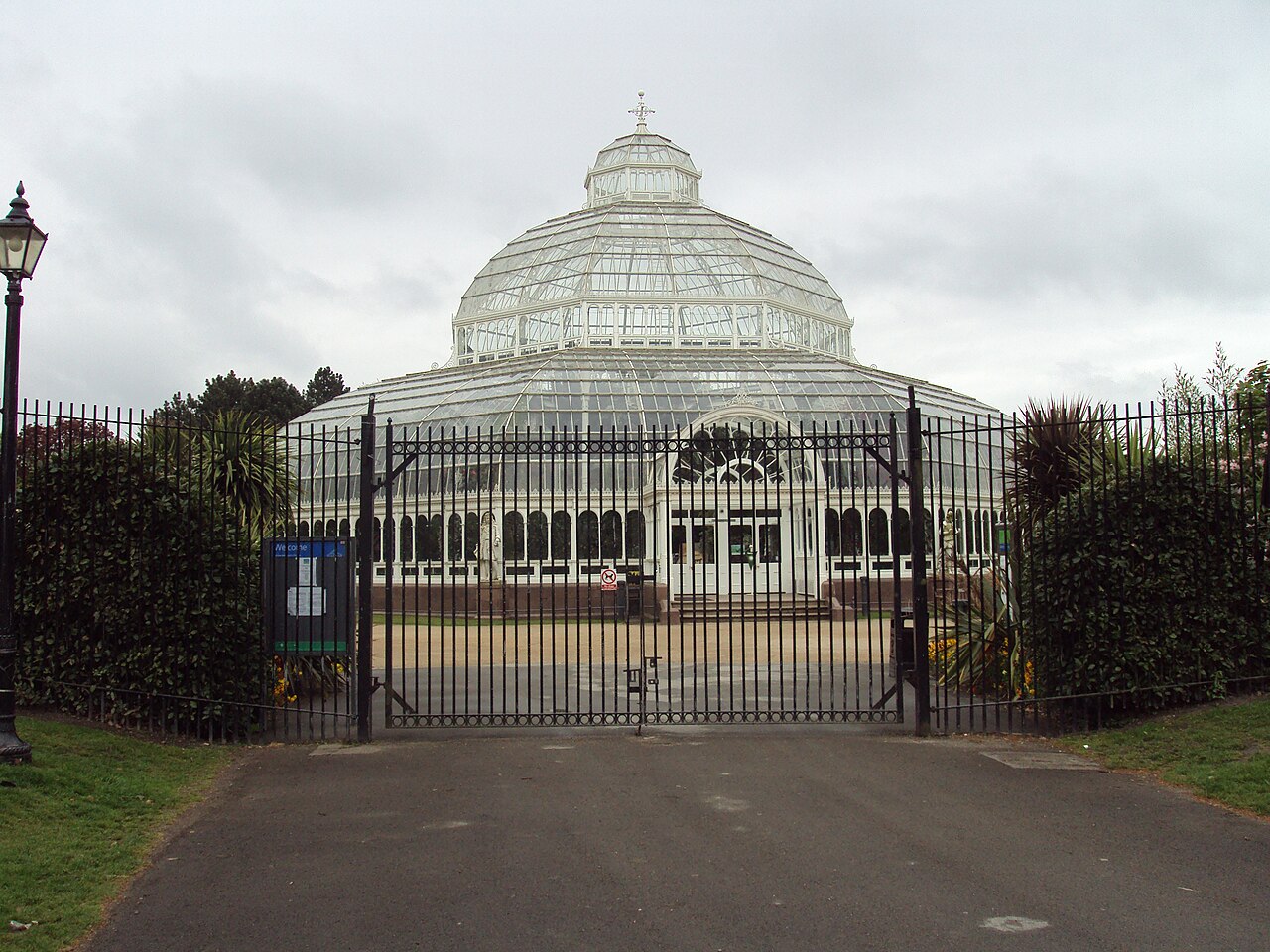
Listed Grade II* since 12 July 1966, the Palm House is an octagonal iron-framed conservatory on a granite base. Its profile rises in three stacked domed roofs, with a clerestory and a lantern topped by a ball finial. Each side is divided into round-arched lights separated by colonnettes and crowned with ornamental cresting.
Three barrel-vaulted porches, to the north, south-east and west, are closed by ornamental gates, some featuring animals or birds. The Victorian Web counts eight main support beams and 3,710 individually cut panes of flat glass.
At the angles of the octagon stand eight statues by Léon-Joseph Chavalliaud representing gardeners, explorers and scientists: André Le Nôtre and John Parkinson to the north, Mercator and Captain Cook to the east, Charles Darwin and Linnaeus to the south, Henry the Navigator and Christopher Columbus to the west. The listing describes them all as bronze, while the Victorian Web mentions four bronzes and four marbles. Inside are sculptures by the Liverpool-born Benjamin Spence.
Plant collections
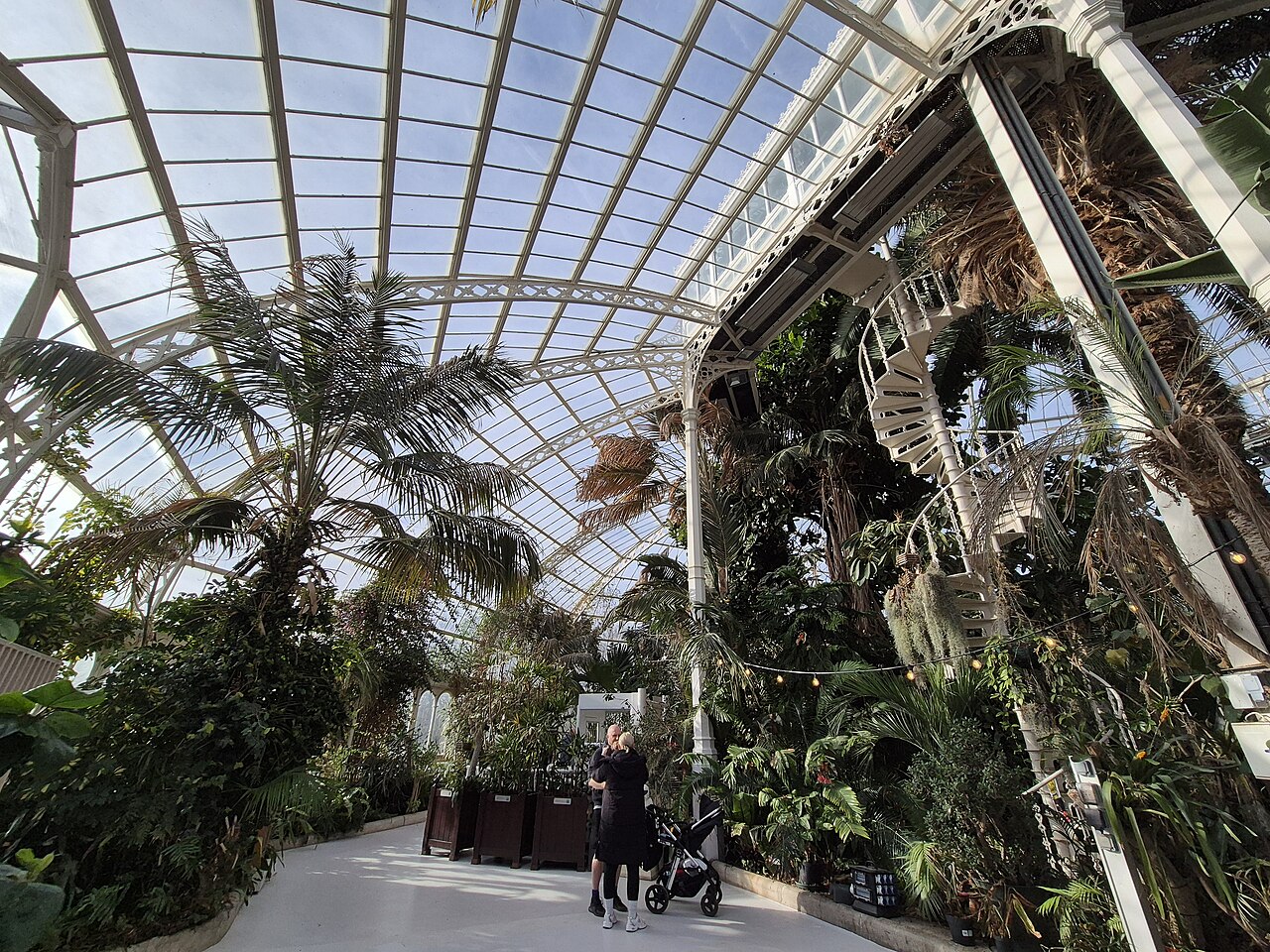
Conceived as a winter garden, the Palm House holds, according to its Trust, a collection of around 300 plants from some 50 countries. The original planting of 1896 was already drawn from several continents: Southeast Asia, Australasia, the Americas, Africa, Europe and the Mediterranean.
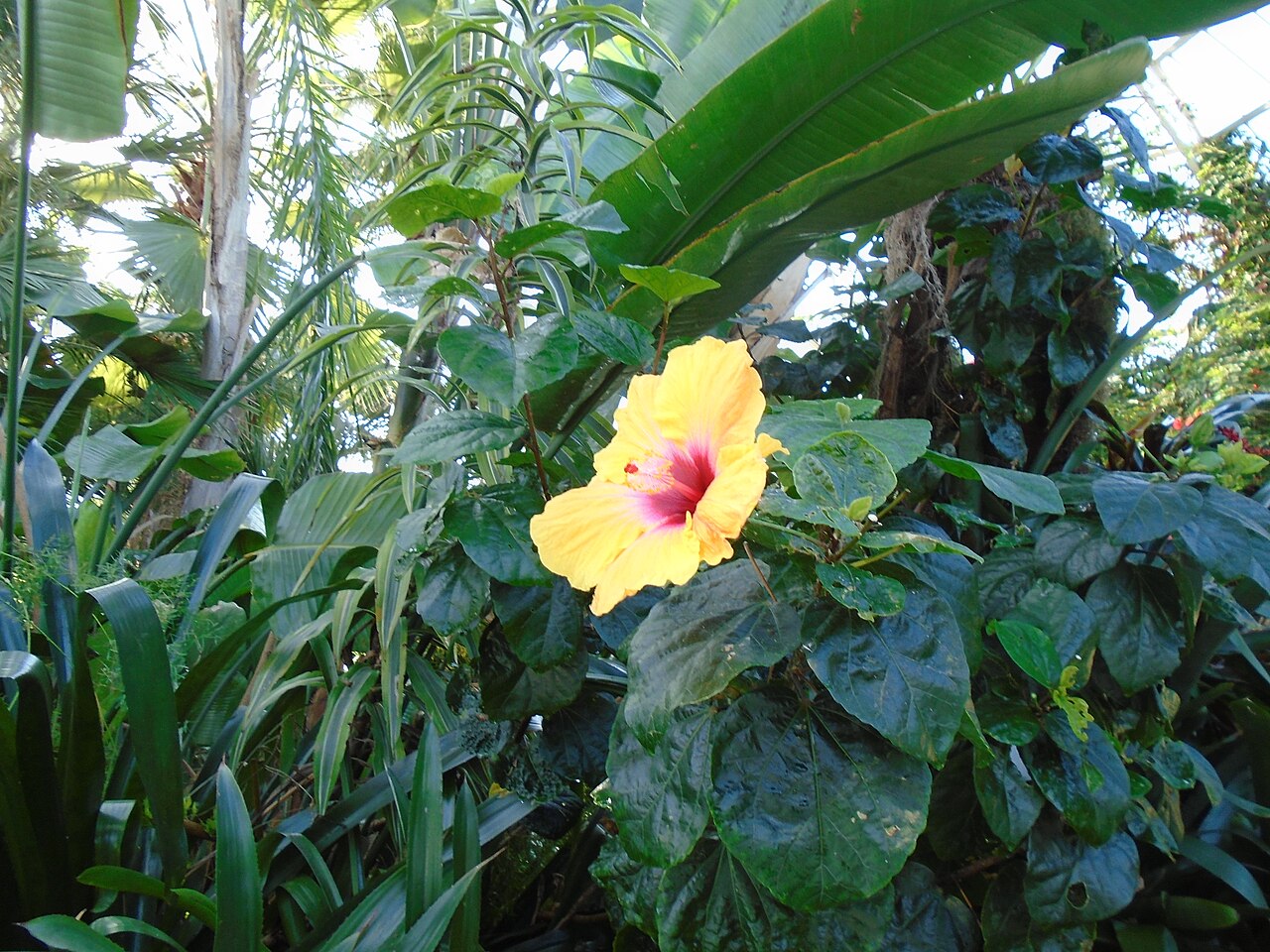
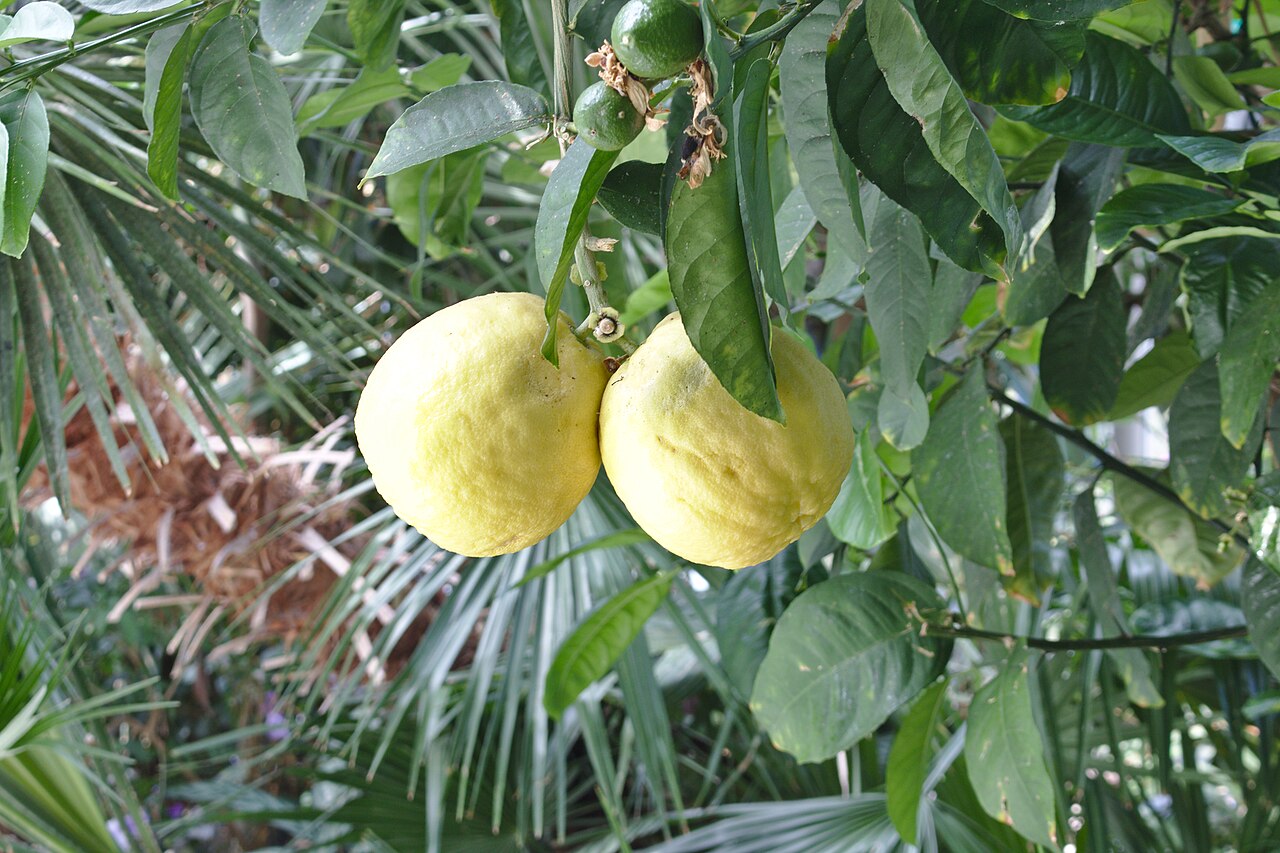
Palms form the backbone of the collection. A Canary Island date palm (Phoenix canariensis), one of the original Palm House plants, has been growing there for more than 120 years; it stands alongside the cabbage palm Sabal palmetto from the southern United States, Cuba and the Bahamas, the Chinese windmill palm Trachycarpus fortunei, the desert fan palm Washingtonia filifera from the American south-west, Livistona australis from Australia and the lady palm Rhapis excelsa, thought to come from southern China and Taiwan and no longer found in the wild. Hibiscus, a large collection of bromeliads, 35 species of food plants and plants that are endangered or already extinct in the wild complete the display.
Since reopening it has also combined botany with cultural life: concerts, festivals, exhibitions, craft sessions and children's story times, as well as weddings and private events.
Visiting
The Palm House stands in Sefton Park in south Liverpool, and access to the glasshouse and its grounds is free; there is a café inside. Half an hour to an hour is enough to see the glasshouse and the eight statues outside, among them Captain Cook, shown as a striding traveller with map and telescope.
Near the glasshouse also stands a full-size bronze replica of Sir George Frampton's Peter Pan, whose original, commissioned by J. M. Barrie, has stood in Kensington Gardens in London since 1912. Set up in Sefton Park on 16 June 1928, the replica was restored in the 1990s and moved to the Palm House grounds. The Trust's events programme, which includes outdoor story times in summer, is worth checking before a visit.
53.38° N, 2.94° W
Greenhouses nearby
Architecture nearby
More greenhouses — United Kingdom
Do you have a good photo of this greenhouse? Suggest it for this page →
Sources (8)
- palmhouse.org.uk/
- palmhouse.org.uk/history
- palmhouse.org.uk/botanical-collection/
- historicengland.org.uk/listing/the-list/list-entry/1292339
- victorianweb.org/art/architecture/iron/30.html
- larklaneandseftonpark.wordpress.com/2021/12/01/the-history-of-sefton-park-palm-house/
- captaincooksociety.com/remembering-cook/memorials/types-of-cook-memorials/statue-to-cook-a
- openstreetmap.org/way/64940743
Affiliate links — booking through Verrière helps fund our research, at no extra cost to you.