Junzō Sakakura
坂倉準三
Junzō Sakakura was born in 1901 in Hashima District, Gifu Prefecture, into a family of sake brewers. At the Imperial University of Tokyo he studied art history and was drawn to architecture. He left for France in 1929; on Le Corbusier's recommendation he first took construction courses, then, between 1931 and 1936, he held a key place in Le Corbusier's studio, working on urban planning and house projects. Back in Japan, he returned to Paris to design the Japanese Pavilion for the 1937 Exposition: built on the slope of the Trocadéro, it won the architecture Grand Prix and brought Sakakura international recognition.
He opened his own office in 1940, renamed it in 1946 and added an Osaka branch in 1948; it completed some 300 works until his death in 1969, aged 68. They include the Museum of Modern Art in Kamakura and the Institut franco-japonais de Tokyo (1951), the International House of Japan (1955), designed with Kunio Maekawa and Junzō Yoshimura, then Hashima City Hall (Architectural Institute of Japan prize, 1961) and the West Plaza of Shinjuku Station (prize, 1968). In 1958, with Maekawa and Takamasa Yoshizaka, he oversaw the building of Le Corbusier's National Museum of Western Art in Tokyo.
It was at the Kamakura museum that his theory of harmony between modern architecture and nature took shape. Built beside the Heike pond, the building seems to reach out over the water; in the manner of Le Corbusier, pilotis carry the upper floor and Ōya stone clads the ground floor, and Sakakura drew on his study of how building and garden relate in traditional Japanese architecture. Reinforced concrete is the material of several of his public buildings: in Saga, the Ichimura Memorial Gymnasium has a saddle-shaped roof made of two facing hyperbolic-paraboloid shells; in Iga, the former Ueno City Hall lets daylight down through the skylights of its courtyards; in Ashiya, Luna Hall is covered in Japanese ivy; in Shinjuku, a void carries light and wind down to the underground plaza.
He is also a figure of postwar Japanese design: in 1941 he worked with Charlotte Perriand on an exhibition, represented Japan at the Milan Triennales of 1957 and 1960, chaired the first jury of the Good Design system, created in 1957, and presided from 1964 to 1968 over the Japanese architects' association from which today's Japan Institute of Architects descends.
Map of the works 61
- Featured work (own page)
- Other work (in the list)
- Work no longer standing
Works in the list: building position when known, otherwise the city; private homes without an address, at a point published by a public source, at neighbourhood or at city level.
Featured works
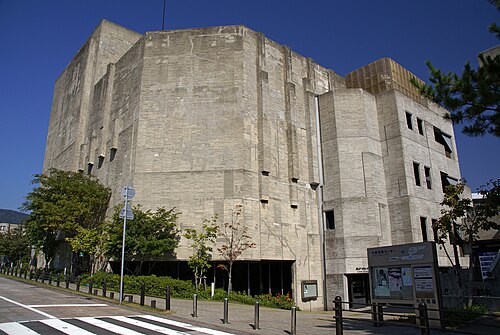
Ashiya Civic Center and Luna Hall (芦屋市民センター・ルナ・ホール)
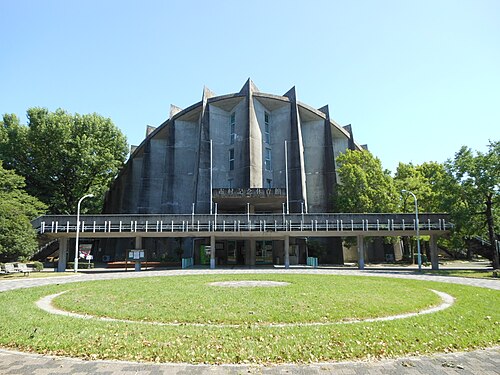
Ichimura Memorial Gymnasium (市村記念体育館)
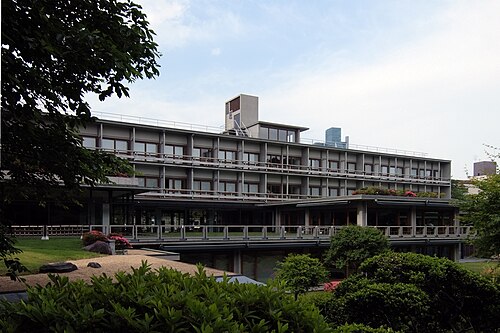
International House of Japan (国際文化会館)
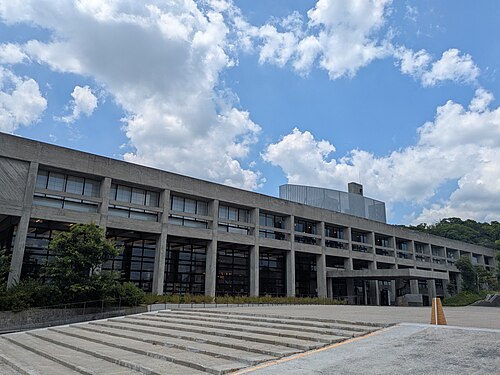
Former Ueno City Hall, SAKAKURA BASE (旧上野市庁舎 SAKAKURA BASE)
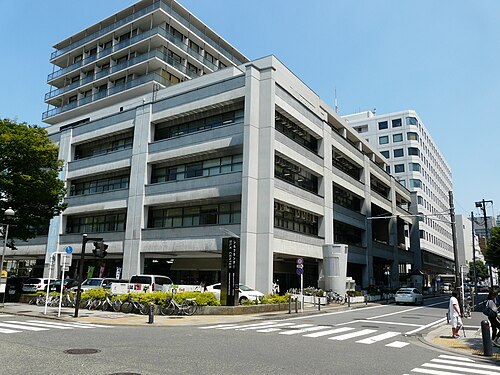
Silk Center (シルクセンター国際貿易観光会館)
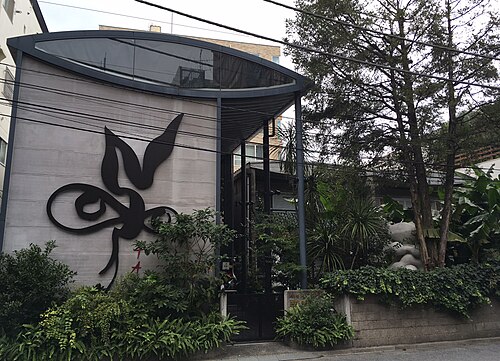
Taro Okamoto Memorial Museum, former house and studio (岡本太郎記念館)
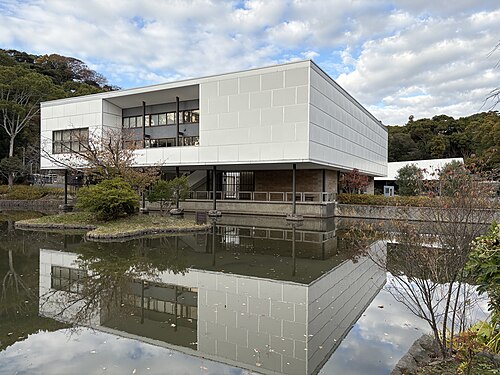
Kamakura Bunkakan Tsurugaoka Museum (鎌倉文華館 鶴岡ミュージアム)
All works 61 works
Private homes are not open to visitors; they are placed without an address, at a point published by a public source, at neighbourhood or at city level.
Japan 59
- Iihashi House (moved, now Domaine de Mikuni) 飯箸邸(ドメイヌ・ドゥ・ミクニ)Karuizawa (Nagano) · 1941
- Osaka Stadium 大阪スタヂアムŌsaka (Naniwa-ku) · 1949
- Institut Franco-Japonais de Tokyo (Institut français, Tokyo) 東京日仏学院(アンスティチュ・フランセ東京)Tokyo (Shinjuku, Ichigaya) · 1951Open to visitors
- Kamakura Bunkakan Tsurugaoka Museum (鎌倉文華館 鶴岡ミュージアム) 鎌倉文華館 鶴岡ミュージアム(旧 神奈川県立近代美術館 鎌倉館本館)Kamakura (Kanagawa) · 1951Open to visitors
- Kansai Electric Power Company Maruyama Power Station 関西電力丸山発電所Yaotsu (Gifu) · 1954
- Taro Okamoto Memorial Museum, former house and studio (岡本太郎記念館) 岡本太郎邸 / 岡本太郎記念館Tokyo (Minato, Minami-Aoyama) · 1954Open to visitors
- Tokyu Kaikan 東急会館Tokyo (Shibuya) · 1954
- International House of Japan (国際文化会館) 国際文化会館Tokyo (Minato, Roppongi) · 1955Open to visitors
- Nankai Kaikan 南海会館Ōsaka (Chūō-ku) · 1957
- Tokyu Bunka Kaikan 東急文化会館Tokyo (Shibuya) · 1957
- Hakuba Tokyu Hotel 白馬東急ホテルHakuba (Nagano) · 1959
- Hashima Municipal Office (former main building) 羽島市庁舎(旧本庁舎)Hashima (Gifu) · 1959Demolished
- Shinsaibashi Arcade 心斎橋筋アーケードŌsaka (Chūō-ku) · 1959
- Silk Center (シルクセンター国際貿易観光会館) シルクセンター国際貿易観光会館Yokohama (Naka-ku, Yamashita-chō) · 1959Open to visitors
- Ueno Community Hall 上野市公民館Iga (Mie) · 1960
- Ashiya City Yamate Junior High School Gymnasium 芦屋市立山手中学校体育館Ashiya (Hyōgo) · 1961
- Saijo City Gymnasium 西条市体育館Saijō (Ehime) · 1961
- Shionogi Pharmaceutical Central Laboratory 塩野義製薬中央研究所Ōsaka (Fukushima-ku) · 1961
- Hirano Residence, House with no front / H 平野邸(正面のない家/H)Nishinomiya (Hyōgo) · 1962Private home, not open to visitors
- Kure Municipal Office and Municipal Culture Center 呉市庁舎・市民会館Kure (Hiroshima) · 1962
- Toray Basic Research Laboratory (Kamakura) 東洋レーヨン基礎研究所Kamakura (Kanagawa) · 1962
- Uenonishi Elementary School 上野市立西小学校(伊賀市立上野西小学校)(1~3期)Iga (Mie) · 1962
- Chusanren Building (Nagoya) 中産連ビル本館Nagoya (Higashi-ku) · 1963Seen from outside
- Hannan High School 大阪府立阪南高等学校Ōsaka · 1963
- Hashima City Labor Youth Home 羽島市勤労青少年ホームHashima (Gifu) · 1963
- Ichimura Memorial Gymnasium (市村記念体育館) 市村記念体育館(佐賀県体育館)Saga · 1963Seen from outside
- Suko Junior High School (Ueno) 上野市立崇広中学校(伊賀市立崇広中学校)(1・2期)Iga (Mie) · 1963
- Ashiya Civic Center and Luna Hall (芦屋市民センター・ルナ・ホール) 芦屋市民センター(市民会館)・ルナ・ホールAshiya (Hyōgo) · 1964Open to visitors
- Former Ueno City Hall, SAKAKURA BASE (旧上野市庁舎 SAKAKURA BASE) 旧上野市庁舎(旧上野市庁舎 SAKAKURA BASE)Iga (Mie) · 1964Open to visitors
- Hiraoka Municipal Office (Higashiosaka Municipal Office Asahimachi) 枚岡市庁舎(東大阪市旭町庁舎)Higashiōsaka (Ōsaka) · 1964
- Hotel Sanai (Sapporo Park Hotel) 札幌パークホテル(ホテル三愛)Sapporo (Chūō-ku) · 1964
- Iwate Broadcasting Building (IBC) 岩手放送会館Morioka (Iwate) · 1964
- Mie Prefecture Ueno Government Building 三重県上野総合庁舎Iga (Mie) · 1964
- TENDO Tokyo 天童木工東京支店Tokyo (Minato) · 1964
- Ueno City Park Resthouse 上野市白鳳公園レストハウスIga (Mie) · 1964
- Hiraoka Fire Station 枚岡消防署Higashiōsaka (Ōsaka) · 1965
- Minoh Spa Garden ミノオスパガーデンMinoh (Ōsaka) · 1965
- Tokyo Kintetsu Building 東京近鉄ビルTokyo (Chiyoda) · 1965
- Kanagawa Prefecture Government New Building 神奈川県庁新庁舎Yokohama (Naka-ku) · 1966
- Meishin Expressway Yoro Rest House 名神高速道路養老レストハウスYōrō (Gifu) · 1966
- Minoh Pool ミノオプール(箕面観光ホテル)Minoh (Ōsaka) · 1966
- Nagoya Terminal Building of Kintetsu Electrical Railway 名古屋近鉄ターミナルビルNagoya (Nakamura-ku) · 1966
- New wing of the Museum of Modern Art, Kamakura 神奈川県立近代美術館鎌倉館 新館Kamakura (Kanagawa) · 1966Demolished
- Oita Asahi Life Building 大分朝日生命館Ōita · 1966
- West Plaza of Shinjuku Station and Parking Lots 新宿西口広場及び駐車場Tokyo (Shinjuku) · 1966
- Gifu Civic Auditorium 岐阜市民会館Gifu · 1967
- Osaka Comprehensive Outdoor Activity Center for Young People (former) 旧 大阪府立総合青少年野外活動センターNose (Ōsaka) · 1967
- Shinjuku Station West Building and Odakyu Department Store 新宿駅西口ビル・小田急百貨店本館Tokyo (Shinjuku) · 1967
- Yamaguchi Prefectural Museum 山口県立山口博物館Yamaguchi · 1967Open to visitors
- Hashima Civic Hall 羽島市民会館Hashima (Gifu) · 1968
- Minoo Kanko Hotel 箕面観光ホテルMinoh (Ōsaka) · 1968Open to visitors
- Kintetsu Kashikojima Country Club Clubhouse 近鉄賢島カンツリークラブ・クラブハウスShima (Mie) · 1969
- Expo '70 Electric Power Pavilion 大阪万国博覧会 電力館Suita (Ōsaka) · 1970 uncertain attribution
- JNR Shibuya Station West Exit Building 国鉄渋谷駅西口ビルTokyo (Shibuya) · 1970
- Nara Terminal Station Building of Kintetsu Electrical Railway 近鉄奈良ターミナルビル(奈良近鉄ビル)Nara · 1970 uncertain attribution
- Okurayama Ski Jump Stadium (Sapporo, 1972 Winter Olympics) 札幌オリンピック 大倉山ジャンプ競技場Sapporo (Chūō-ku) · 1970 uncertain attributionOpen to visitors
- Hotel Pacific Tokyo ホテルパシフィック東京Tokyo (Minato, Takanawa) · 1971 uncertain attribution
- Miyazaki Prefectural Museum of Nature and History 宮崎県総合博物館Miyazaki · 1971 uncertain attribution
- Villa Serena ビラ・セレーナTokyo (Shibuya) · 1971 uncertain attribution
France 2
- Japanese Pavilion, Paris International Exposition 1937 パリ万国博覧会 日本館Paris · 1937
- Residence of the Japanese Ambassador in France 駐仏日本大使公邸Paris · 1967
Sources (11)
- wikidata.org/wiki/Q388272
- sakakura.co.jp/company/junzo-sakakura/
- moma.pref.kanagawa.jp/en/about-us/architecture/kamakura/
- fondationlecorbusier.fr/oeuvre-architecture/realisations-musee-national-des-beaux-arts-de-
- universalis.fr/encyclopedie/sakakura/
- sakakura.co.jp/works/1961-1970/132/
- sakakura.co.jp/works/office/1498/
- sakakura.co.jp/works/1961-1970/1124/
- sakakura.co.jp/works/transportation/298/
- bunka.go.jp/nama/collection/sakakura/index.html?menu=3-0-7
- jia.or.jp/about_jia/history/