Kamakura Bunkakan Tsurugaoka Museum (鎌倉文華館 鶴岡ミュージアム)
Kamakura, Kanagawa Prefecture
Sources checked November 2026
- Year
- 1951
- Architect
- Junzō Sakakura
- Type
- Museum (former Kanagawa Prefectural Museum of Modern Art)
- Access
- Open to the public (official website, November 2026)
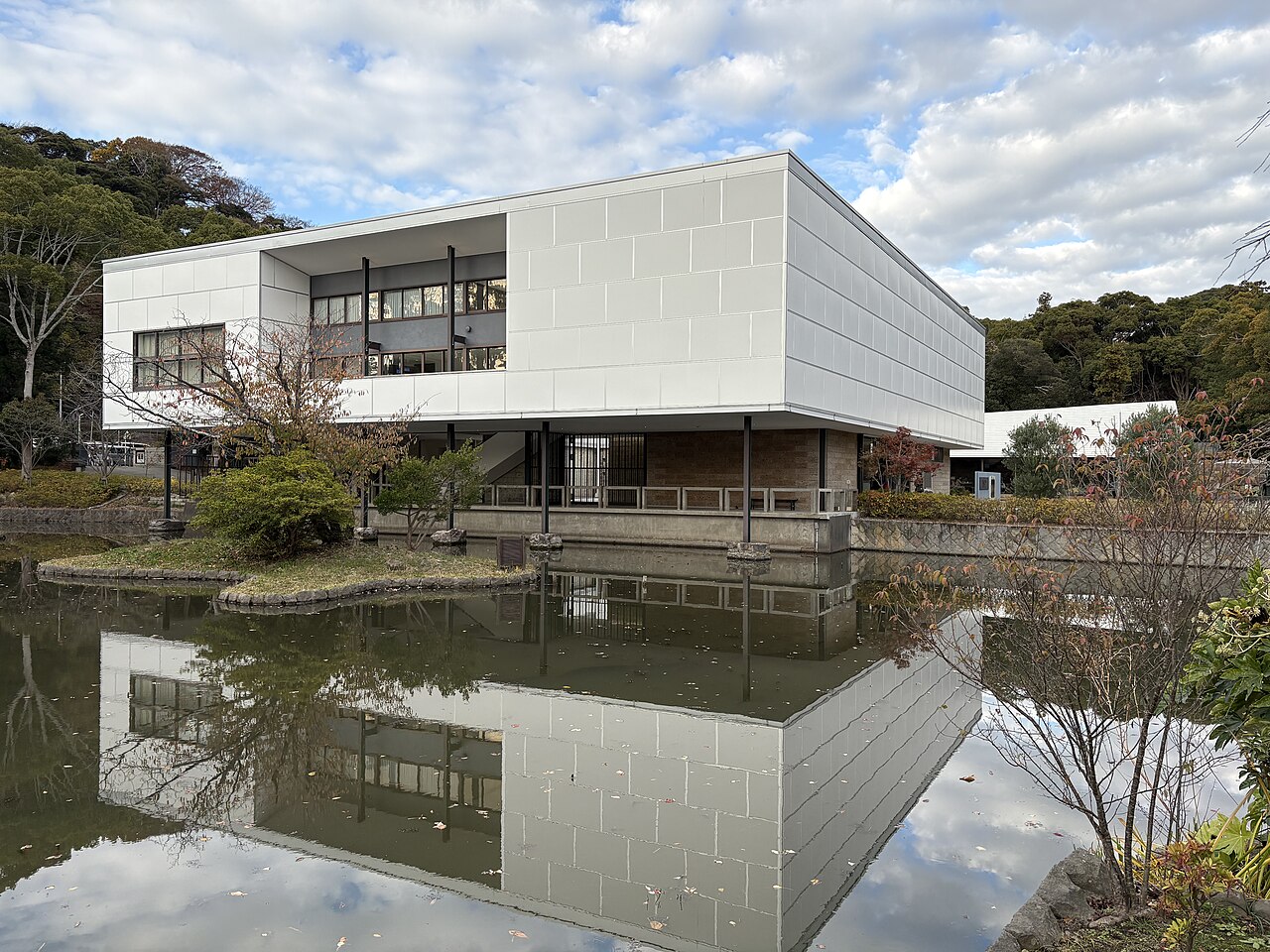
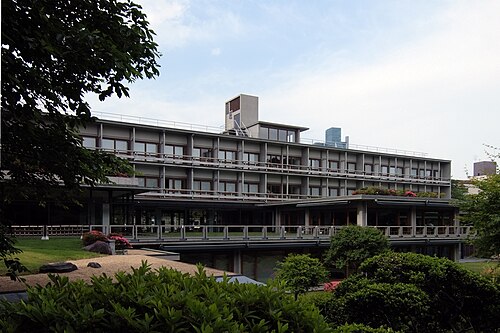
Junzō Sakakura designed this museum, completed in 1951: its main parts sit on the upper floor, carried on pilotis, with Ōya stone on the ground floor, galleries arranged around a square courtyard and a terrace opening onto Heike Pond. It opened as the Kanagawa Prefectural Museum of Modern Art, was transferred in 2016 to Tsurugaoka Hachimangū shrine, which has run it since 2019 as the Kamakura Bunkakan Tsurugaoka Museum. It has been an Important Cultural Property since 2020.
Affiliate links — booking through Verrière helps fund our research, at no extra cost to you.
History
In 1949, artists and critics in Kanagawa Prefecture asked the governor, Iwatarō Uchiyama, for an art museum, and went on to found a committee of the prefecture's artists. The museum was built in the grounds of Tsurugaoka Hachimangū shrine. Five architects were invited to a competition, among them Kunio Maekawa, Junzō Yoshimura, Yoshirō Taniguchi and Junzō Sakakura; Sakakura's design was chosen at the end of June 1950. The building was completed in 1951, and the Kanagawa Prefectural Museum of Modern Art opened its doors on 17 November 1951, Japan's first public museum of modern art.
A new wing and an annex were built in 1966, the roof and exterior were redone in 1968, and a major renovation took place in 1991. In 1999, DOCOMOMO Japan included the museum in its selection of twenty modern Japanese buildings.
The museum of modern art closed on 31 March 2016, as the lease on the land had come to an end. Demolition of the new wing and the annex began in July. The original building was designated an Important Cultural Property of Kanagawa Prefecture in November, then transferred free of charge to the shrine in December. The sculptures and the café mural were moved the same year to the Museum of Modern Art, Kanagawa in Hayama. Seismic strengthening and repair work began in 2017, and the Kamakura Bunkakan Tsurugaoka Museum opened on 8 June 2019. The building was designated a national Important Cultural Property on 23 December 2020.
Architecture
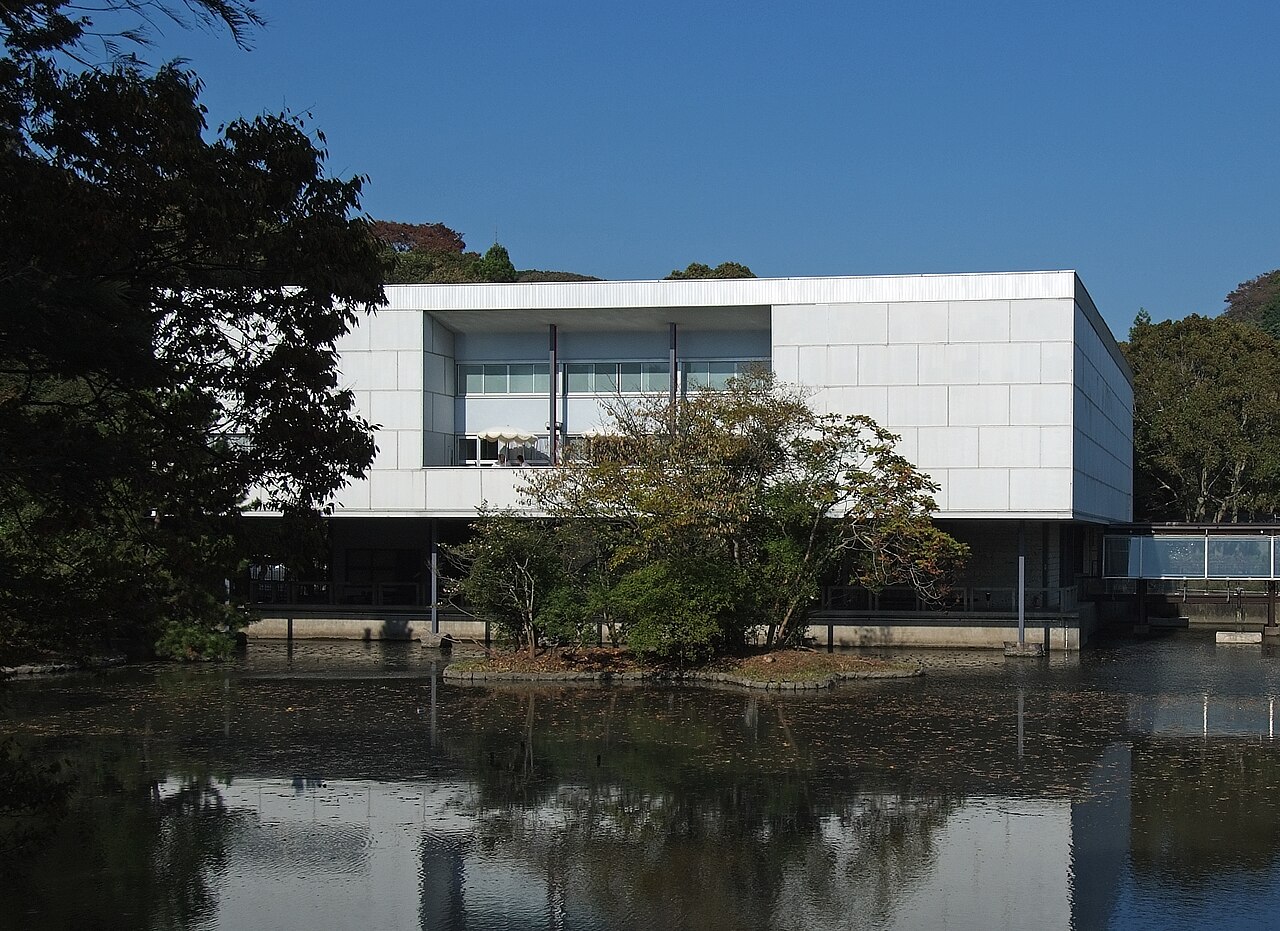
The building stands beside Heike Pond (平家池), as if it were reaching out over the water. The original building has two storeys above ground and 1,575 m² of floor space. The plan is built around a square courtyard, with the galleries and other functions around it. The competition design planned further galleries and a hall to the east and west of the upper floor, following the "Museum of Unlimited Growth" that Le Corbusier had published in 1939.
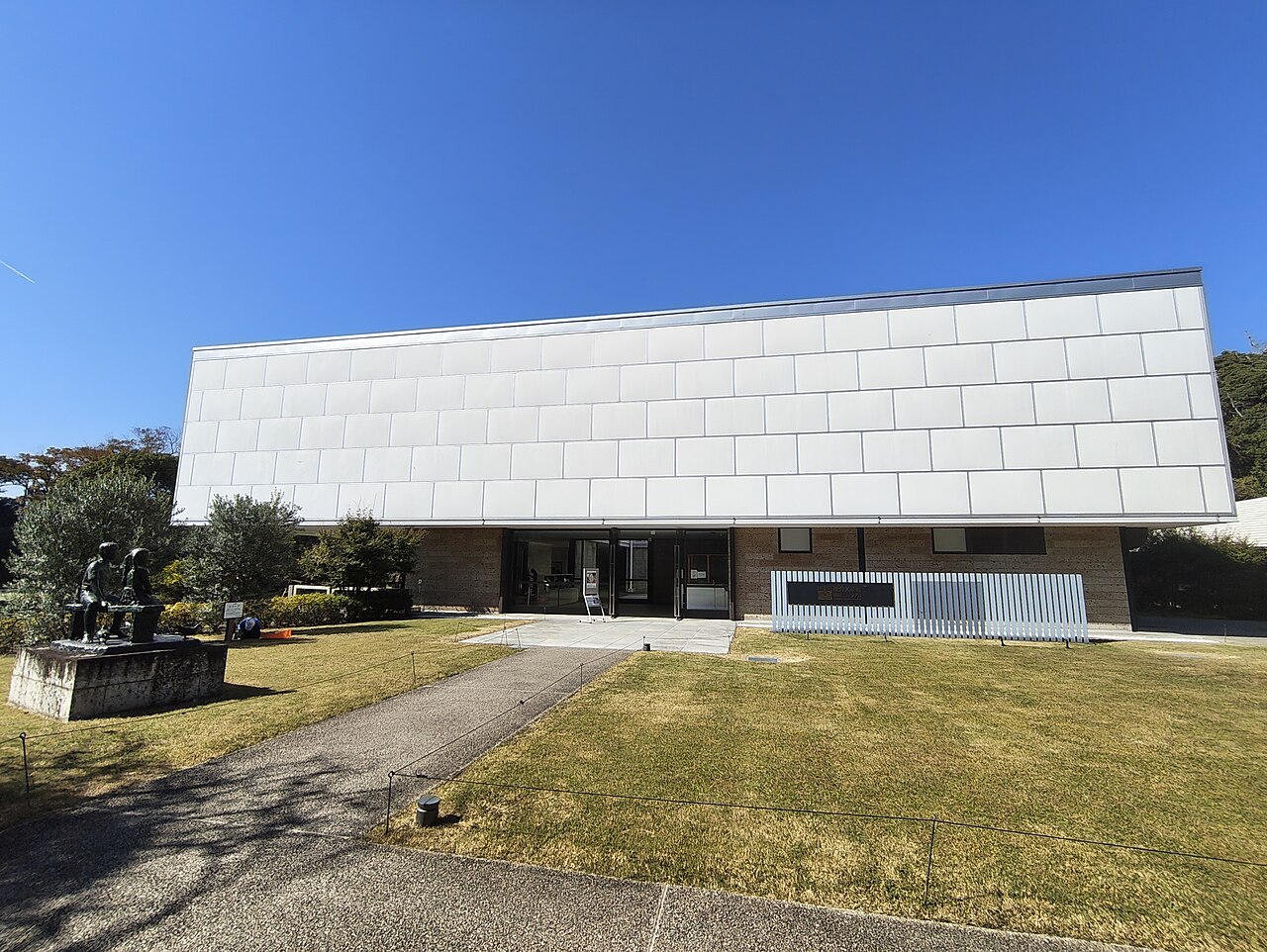
Following Le Corbusier's housing system of the 1920s, the principal parts are on the upper floor, carried by a row of pilotis. On the ground floor, Sakakura used Ōya stone. He also drew on his experience of the Japanese pavilion he had designed for the Paris Exposition of 1937: he had summed up its thinking in four points, clarity of plan, clarity of structure, respect for the natural beauty of materials and harmony with the surrounding nature, the last drawn from his research on the relationship between building and garden in traditional Japanese architecture.
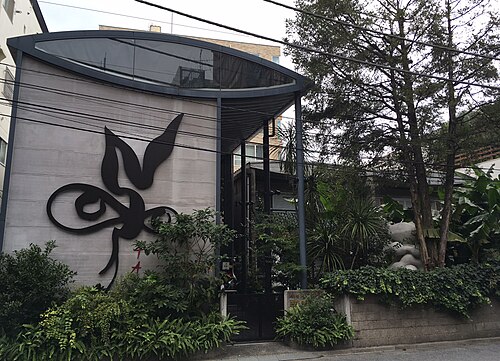
Moving through the building, one passes from a closed interior space to a semi-outdoor space overlooking the courtyard, then down a staircase to a terrace open to the pond. The building was later altered in many respects: natural light from the ceiling of the galleries gave way to artificial lighting, and a wind lobby was added at their entrance. The logo of the Tsurugaoka Museum takes as its motif a free-standing post projecting into Heike Pond, with the ripples of the water reflected on its ceiling.
Use today
Today the building is a facility of Tsurugaoka Hachimangū shrine, which owns and runs it. Centred on the shrine's history, it presents seasonal exhibitions on Kamakura and special exhibitions each devoted to one theme.
Visiting
The museum is open from 10 a.m. to 4:30 p.m., with last admission at 4 p.m. It is closed on Mondays (except when the Monday is a public holiday), during exhibition changeovers and over the New Year period; hours and days may vary with the exhibition. There is no advance booking: tickets are sold at the desk on the day of the visit.
A lift serves the galleries, which are accessible by wheelchair. The building is a designated cultural property, so food and drink are not allowed inside. From Kamakura station (JR Yokosuka Line and Enoshima Dentetsu Line), allow ten minutes on foot.
Photos
35.32° N, 139.55° E
Greenhouses nearby
Architecture nearby
By the same architect
Sources (13)
- tsurugaokamuseum.jp/shiru/index.html
- tsurugaokamuseum.jp/annai/index.html
- tsurugaokamuseum.jp/faq.html
- tsurugaokamuseum.jp/annai/access.html
- tsurugaokamuseum.jp/english/annai/access.html
- tsurugaokamuseum.jp/english/shiru/index.html
- tsurugaokamuseum.jp/english/annai/index.html
- tsurugaokamuseum.jp/english/faq.html
- moma.pref.kanagawa.jp/about-us/architecture/kamakura/
- moma.pref.kanagawa.jp/en/about-us/architecture/kamakura/
- sakakura.co.jp/works/renovation-conversion/15903/
- sakakura.co.jp/company/junzo-sakakura/
- bijutsutecho.com/magazine/news/headline/22902
Affiliate links — booking through Verrière helps fund our research, at no extra cost to you.