Taro Okamoto Memorial Museum, former house and studio (岡本太郎記念館)
Minami-Aoyama, Minato, Tokyo
Sources checked November 2026
- Year
- 1954
- Architect
- Junzō Sakakura
- Type
- House and studio turned museum
- Access
- Open to the public, closed on Tuesdays except public holidays (museum website, November 2026)
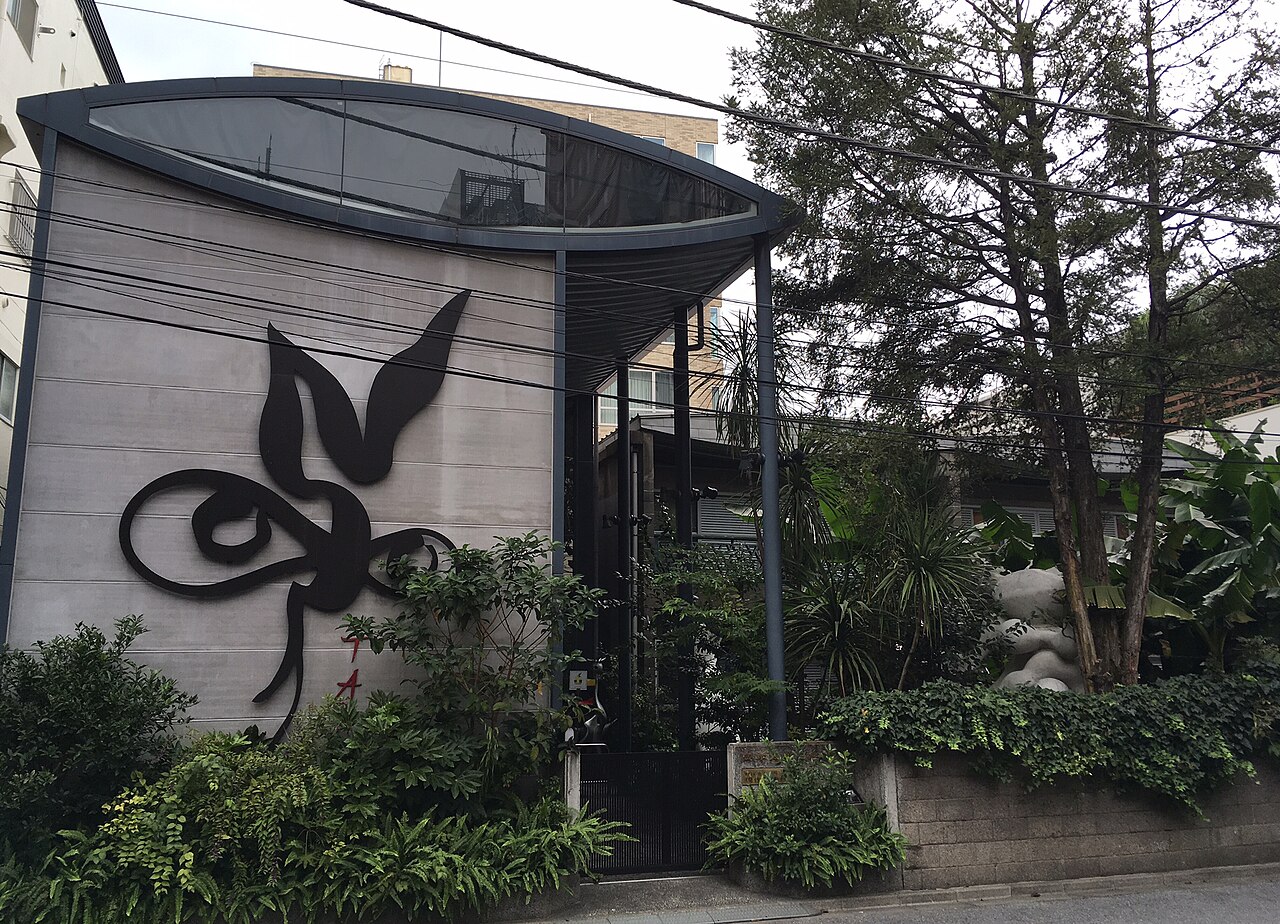
Junzō Sakakura designed this studio for his friend Tarō Okamoto, who lived and worked in it from 1954 until his death in 1996. Walls of stacked concrete blocks carry a roof shaped like a convex lens. The place has been a museum since 1998, and in its garden sculptures and plants share the ground.
Affiliate links — booking through Verrière helps fund our research, at no extra cost to you.
History
Before the war, the family made up of Ippei, Kanoko and Tarō Okamoto lived for years on this plot in Aoyama, and left it for Europe; the house burned down during the war. Afterwards Tarō Okamoto had a studio built there to the plans of his friend Junzō Sakakura. Completed in May 1954, it was his workplace and his home until his death in 1996, at 84.
Every painting Okamoto made from 1954 on was born there. He also dictated his texts in it and conceived large monuments and murals, such as the Tower of the Sun for the Osaka World Exposition.
The museum opened on 7 May 1998, two years after the artist's death, driven by Toshiko Okamoto, who wanted to make Tarō Okamoto known to the next generation.
Architecture
Sakakura, a disciple of Le Corbusier, met Okamoto's request with walls of stacked concrete blocks crowned by a roof shaped like a convex lens.
To make it a public museum run by a foundation, Sakakura's building was kept as it stood; next to it, the two-storey timber building that held the study and the sculpture studio made way for a new exhibition wing.
Use today
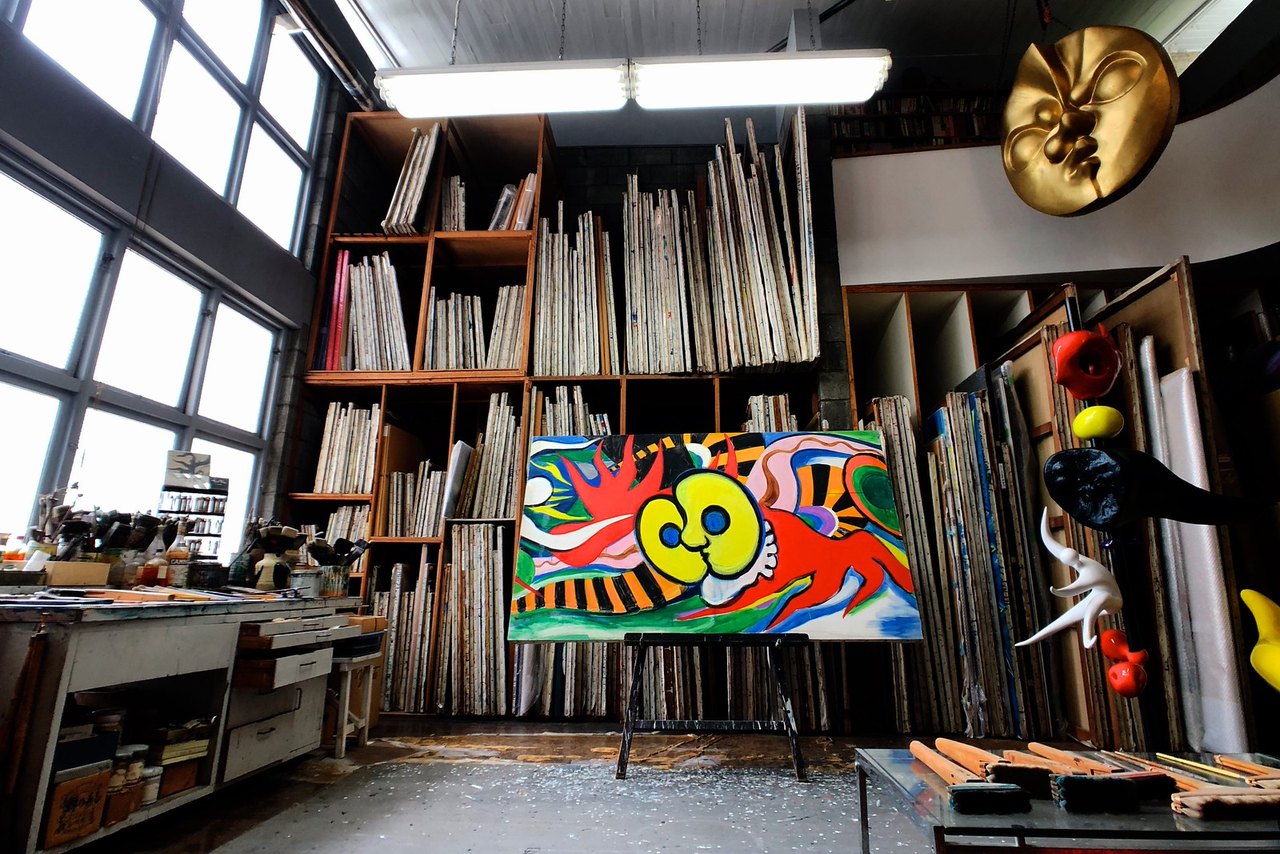
The painting studio remains as it was in his day: tools on the table, paint splashed over the floor, unfinished canvases wedged into the shelves.
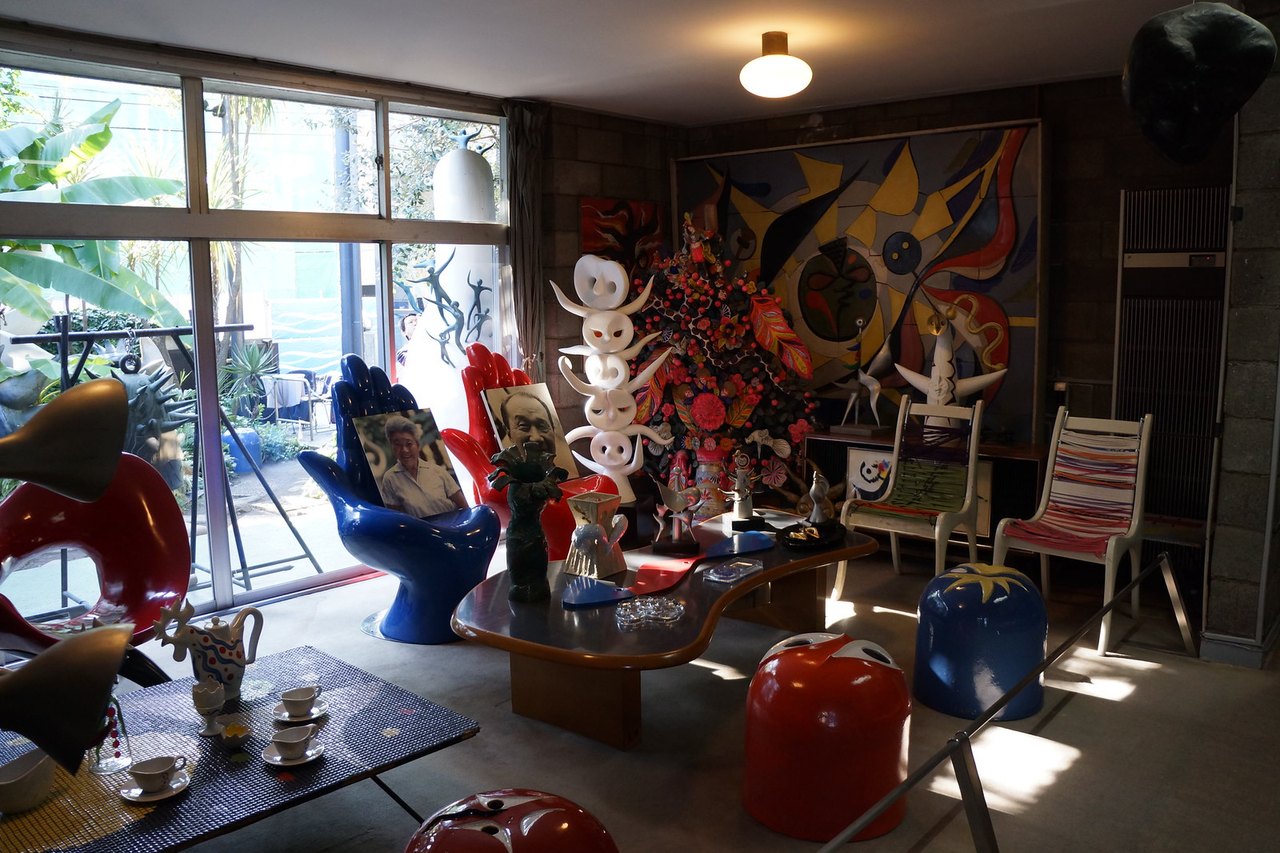
The sitting room opens onto the garden through large floor-length windows; everything in it was designed by Okamoto himself, apart from one pink form, a tree of life brought back from Mexico.
The garden carries the artist's aesthetic: no ornamental flowers and no layout, only banana plants, ferns and weeds growing at will, with sculptures set down among them.
Upstairs, the first exhibition room has three walls and 35 m² of floor. The second, long and narrow, is reached over a bridge spanning the ground-floor hall; it covers 22 m², and its large window onto the garden can let in plenty of daylight. A shop of books and goods occupies the ground floor.
Visiting
The museum is open from 10 am to 6 pm, with last entry at 5.30 pm. It is closed on Tuesdays (open if the day is a public holiday), from 28 December to 4 January and on maintenance days. Visitors go in without shoes, and the building is not equipped for accessibility. Omotesando station is eight minutes away on foot.
Photos
35.66° N, 139.72° E
Greenhouses nearby
Architecture nearby
By the same architect
Affiliate links — booking through Verrière helps fund our research, at no extra cost to you.