Awaji Yumebutai (淡路夢舞台)
Awaji, Hyōgo Prefecture
Sources checked October 2026
- Year
- 2000
- Architect
- Tadao Ando
- Type
- Landscape and cultural complex: terraced gardens, open-air theatre, conference centre, hotel and greenhouse
- Access
- Terraces and gardens open free of charge from 7 am to 10 pm, no closing day; greenhouse admission charged (official website, October 2026)
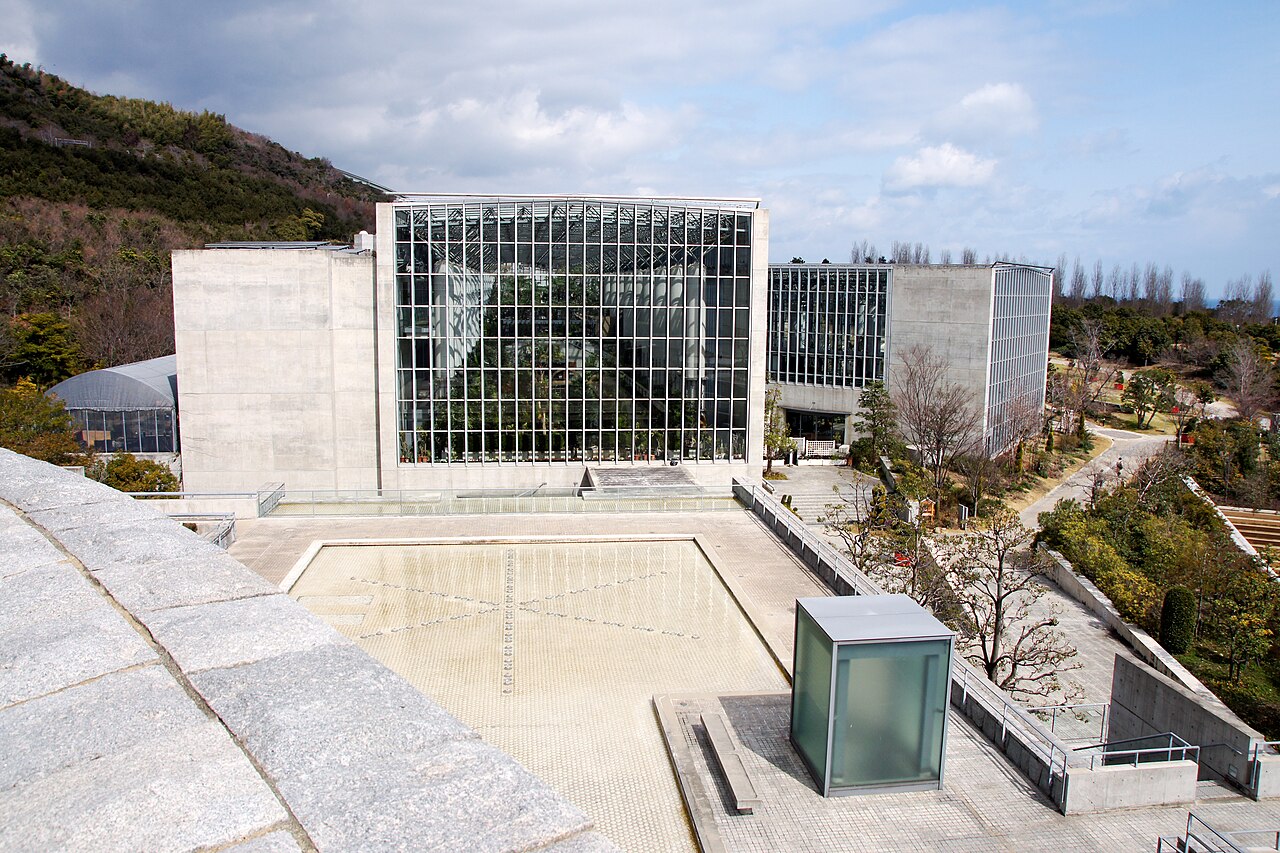
Awaji Yumebutai (淡路夢舞台) is a complex whose master plan was drawn by Tadao Ando (安藤忠雄), at the northern tip of Awaji Island, on a former earth-quarrying site. Tiered up a slope facing Osaka Bay, it brings together a hundred stepped flower beds, a circular forum and an elliptical forum, a gallery of light and a gallery of shadow, an open-air theatre, a conference centre, a hotel and a greenhouse. It opened in March 2000 with the flower exposition Japan Flora 2000. The terraces and gardens can be walked freely.
Affiliate links — booking through Verrière helps fund our research, at no extra cost to you.
History
Awaji Yumebutai (淡路夢舞台, literally "dream stage") stands on the site from which earth was taken to build artificial islands in Osaka Bay, such as the one for Kansai International Airport (関西国際空港). The project set out to return this cut-away mountain to a nature in which plants, animals and people live together: Tadao Ando (安藤忠雄) drew up the master plan (グランドデザイン) for these facilities, set in a 130-hectare park. The complex is the core of the "Awaji Island International Park City" (淡路島国際公園都市).
It was due to be finished for the opening of the Akashi Kaikyō Bridge (明石海峡大橋) in 1998. The working plans were almost complete and construction about to begin when the Great Hanshin-Awaji Earthquake (阪神・淡路大震災) struck. The site, close to the epicentre, was surveyed; several active faults were found there and the design was changed. The changes and the construction took two years, and the complex opened in March 2000, at the same time as the flower exposition Japan Flora 2000 (ジャパンフローラ2000, known as 淡路花博).
It is a project of Hyōgo Prefecture (兵庫県). The company 株式会社夢舞台, founded in 1995, manages the facilities as a whole, and the garden is a prefectural park (兵庫県立淡路夢舞台公苑). In 2001 the 42nd BCS Prize of the Building Contractors Society (建築業協会) gave it a special award, for turning a former earth-quarrying site into a tourist destination.
Architecture
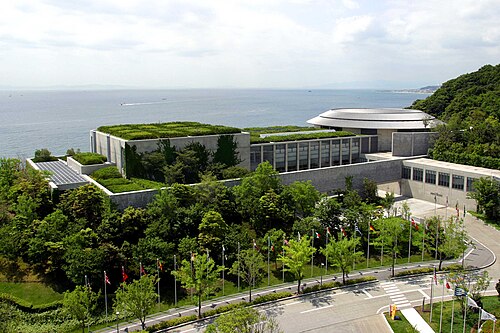
Ando wanted visitors to feel water, wind, light, shadow, sky, mountain and sea, the aspects of nature we tend to overlook in daily life. The complex is composed in layers that make use of the slope: walking through it, one finds new views at every turn.
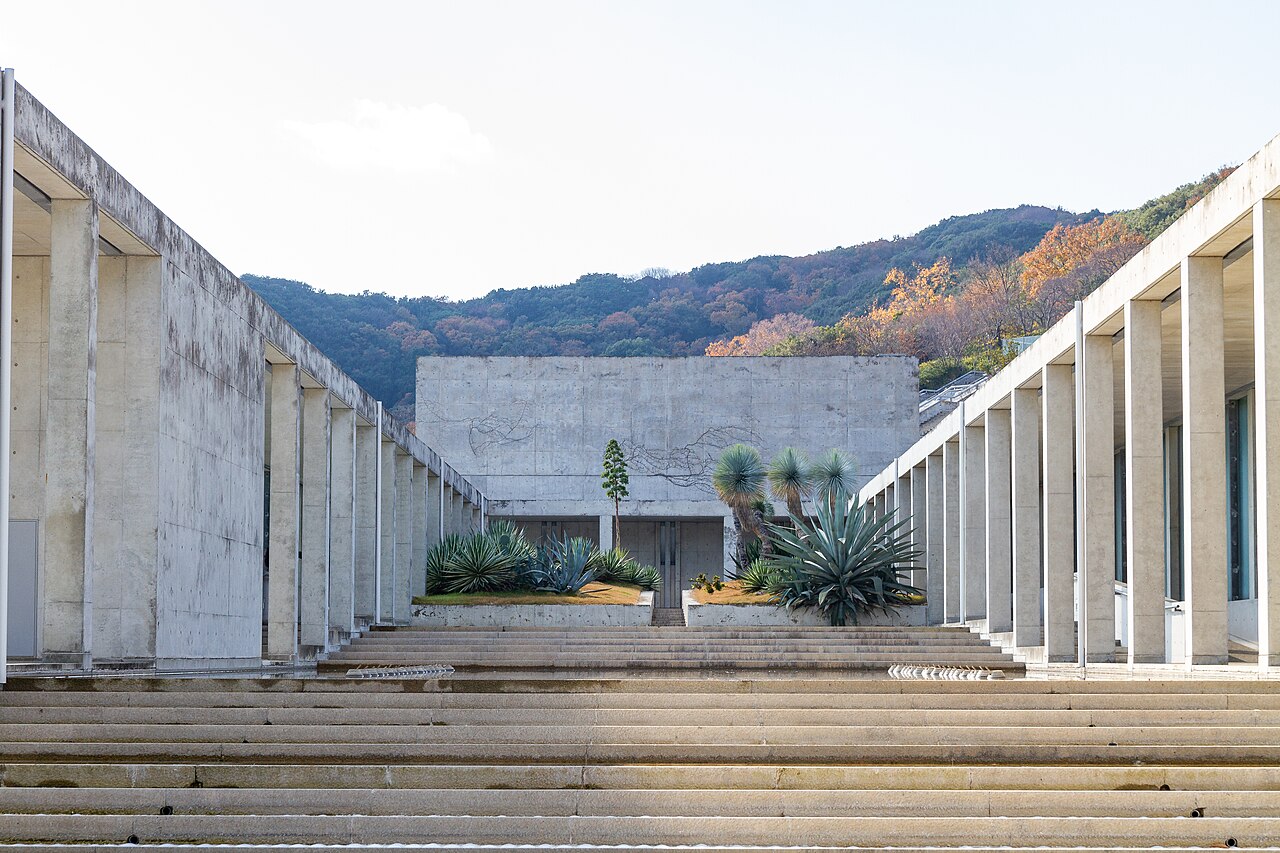
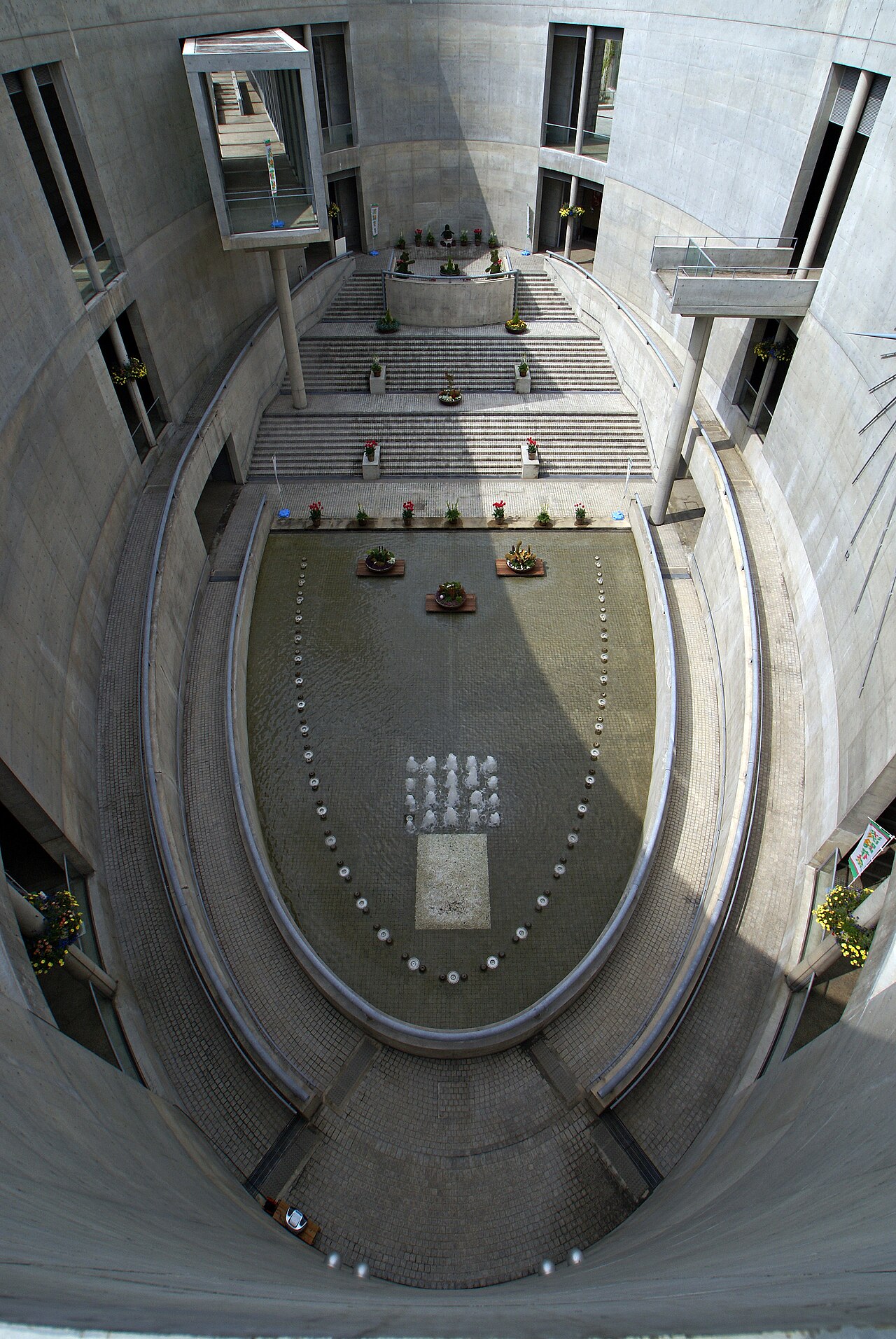
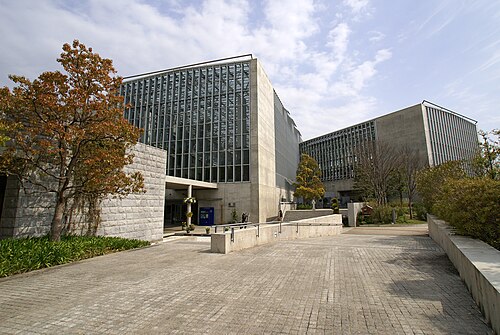
On the observation terraces (展望テラス), at the centre of the complex, the Circular Forum (円形フォーラム) is a cylinder about 32 m across and 11 m high. A ramp circles it and windows in the wall frame views of the landscape. The Elliptical Forum (楕円フォーラム), about 50 m across and 17 m high, links the Sea Gallery (海回廊) to the Mountain Gallery (山回廊); a sundial is fixed to its wall, and it also serves as an event space. The two galleries take up one of Ando's motifs, light and shadow: the Sea Gallery, open to the sea and surrounded by fountains, is the "gallery of light"; the Mountain Gallery, a roof garden entirely enclosed in frosted glass and lined with a colonnade, cut off from the surroundings, is the "gallery of shadow".
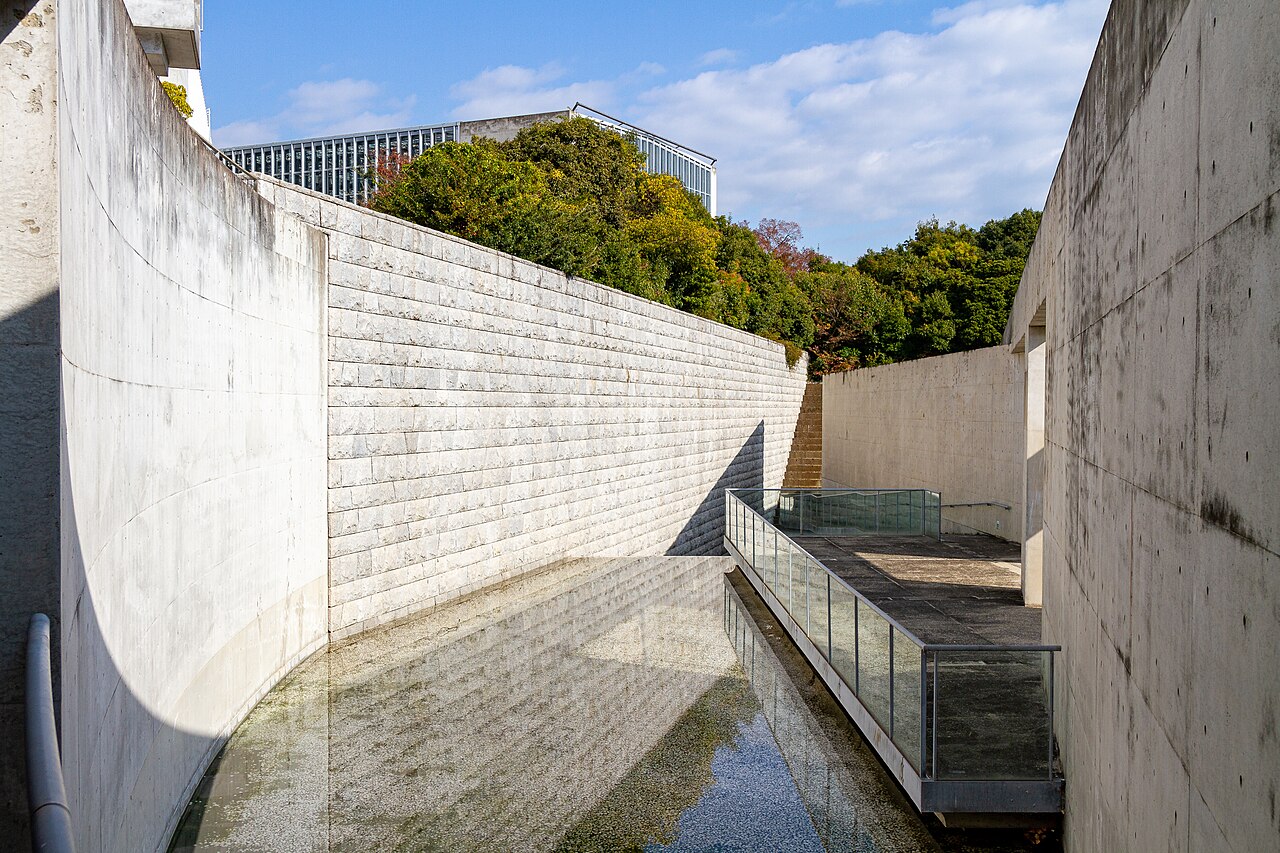
The Sky Garden (空庭) is an 18 m cube sunk into the slope, between the flower beds and the Mountain Gallery: symmetrical stairs cross around a central pillar, and the shadows of the walls and pillar make light, sky and wind perceptible. The Water Garden (水庭), along the approach to the greenhouse, is made of nothing but walls, a waterfall and basins.
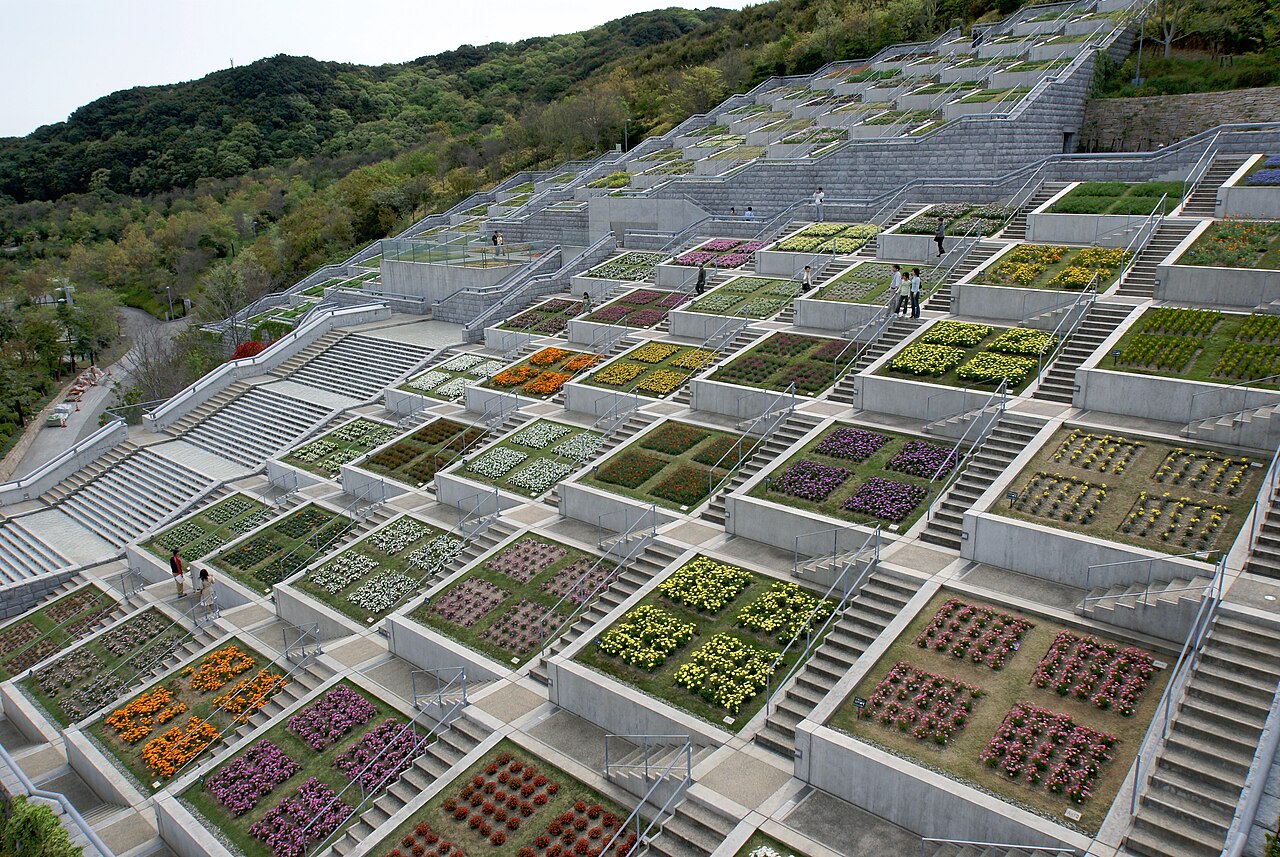
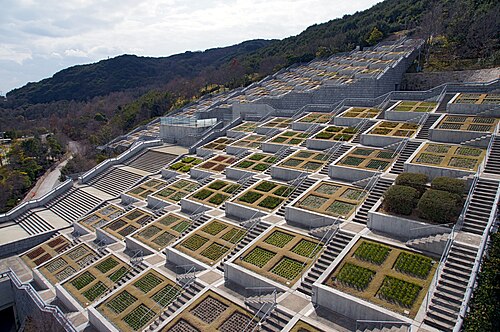
Hyakudan-en (百段苑, "Hundred Steps Garden") lines up a hundred stepped flower beds along the slope facing Osaka Bay, with a cascade beside them; it is planted with Asteraceae (キク科) from around the world. The Shell Beach (貝の浜) is covered with a million scallop shells salvaged from a fish-processing plant in Hokkaidō and laid one by one by craftsmen; the water features have a thousand fountains.
The open-air theatre (野外劇場), which recalls an ancient Greek theatre, seats 3,000 people in its bowl-shaped stands, lawn included, facing Osaka Bay. The stage, about 300 m², floats on a pond of concentric circles; a small 150-seat theatre is attached.
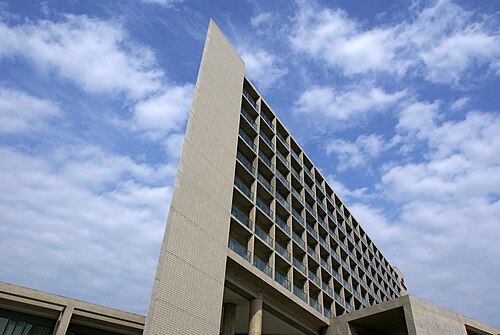
The complex also includes the international conference centre (国際会議場), with a tea-ceremony room (お茶室) and a third-floor courtyard (4階中庭), and the Grand Nikko Awaji hotel (グランドニッコー淡路), whose first floor holds the chapel "church of the sea" (海の教会).
Use today
Today the terraces, forums, gardens and theatre can be explored freely, above Osaka Bay. Restaurants and a shop occupy the observation terrace; the hotel and the conference centre host stays and meetings, and the open-air theatre can be hired.
The complex's greenhouse, あわじグリーン館 (Awaji Green-House), a large glazed volume about 20 m high, has its own entry in the atlas.
In 2015, cherry trees grown from seeds that spent about eight months in space, the "space cherries" (宇宙桜), were donated and planted here, as a message of encouragement from the island, which had suffered the 1995 earthquake, to the rebuilding Tōhoku.
Visiting
The observation terraces, the gardens, Hyakudan-en among them, and visits to the open-air theatre are free of charge from 7 am to 10 pm, with no closing day; the Hyakudan-en lift runs from 7 am to 6 pm. Only the greenhouse charges admission: it is open from 10 am to 6 pm (last entry 5:30 pm) and is free up to high-school age. It closes on the Thursday of the second week of each month, with some months changed and exceptional closures possible.
Bicycles are not allowed into the park. Animals may not enter the conference centre, the hotel, the greenhouse or the restaurants (the terrace walkways are open to them, in a cage or on a lead), and the whole estate is non-smoking, apart from a few areas. A paid underground car park of 600 spaces is open from 7 am to 11 pm (cash only). Guided tours of the complex are for groups of 10 to 45 people and must be booked at least two weeks ahead; for fewer than ten people, a request must be made.
Address: 2 Yumebutai, Awaji (兵庫県淡路市夢舞台2番地). From Kōsoku-Maiko (Kōbe), an express bus reaches the "Awaji Yumebutai-mae" stop (淡路夢舞台前) in about fifteen minutes.
Photos
34.56° N, 135.01° E
Greenhouses nearby
Architecture nearby
Sources (13)
- yumebutai.co.jp/yumebutai_guide
- yumebutai.co.jp/
- yumebutai.co.jp/ando
- yumebutai.co.jp/map
- yumebutai.co.jp/faq
- yumebutai.co.jp/guidetour
- yumebutai.co.jp/theater
- yumebutai.co.jp/outline
- awajishima-kanko.jp/manual/detail.html?bid=675
- xtech.nikkei.com/kn/article/building/news/20010731/499/
- obayashi.co.jp/chronicle/archives/c7s1_p2.html
- wikidata.org/wiki/Special:EntityData/Q2960179.json
- api.openstreetmap.org/api/0.6/map?bbox=135.0030,34.5575,135.0125,34.5640
Affiliate links — booking through Verrière helps fund our research, at no extra cost to you.