Hill of the Buddha (頭大仏殿, Atama Daibutsuden)
Sapporo, Hokkaido
Sources checked October 2026
- Year
- 2015
- Architect
- Tadao Ando
- Type
- Open-air hall of prayer in a cemetery
- Access
- Open to the public, admission charged, 9 am to 4 pm from April to October and 10 am to 3 pm from November to March (official website, October 2026)
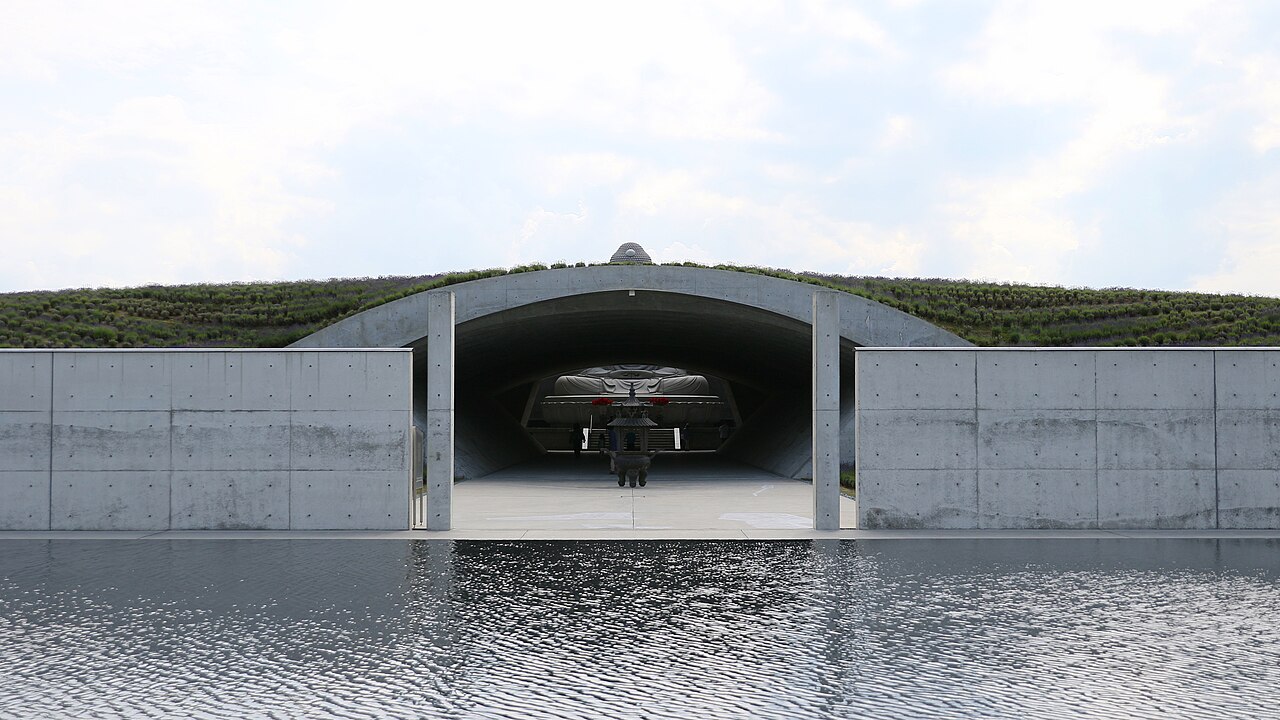
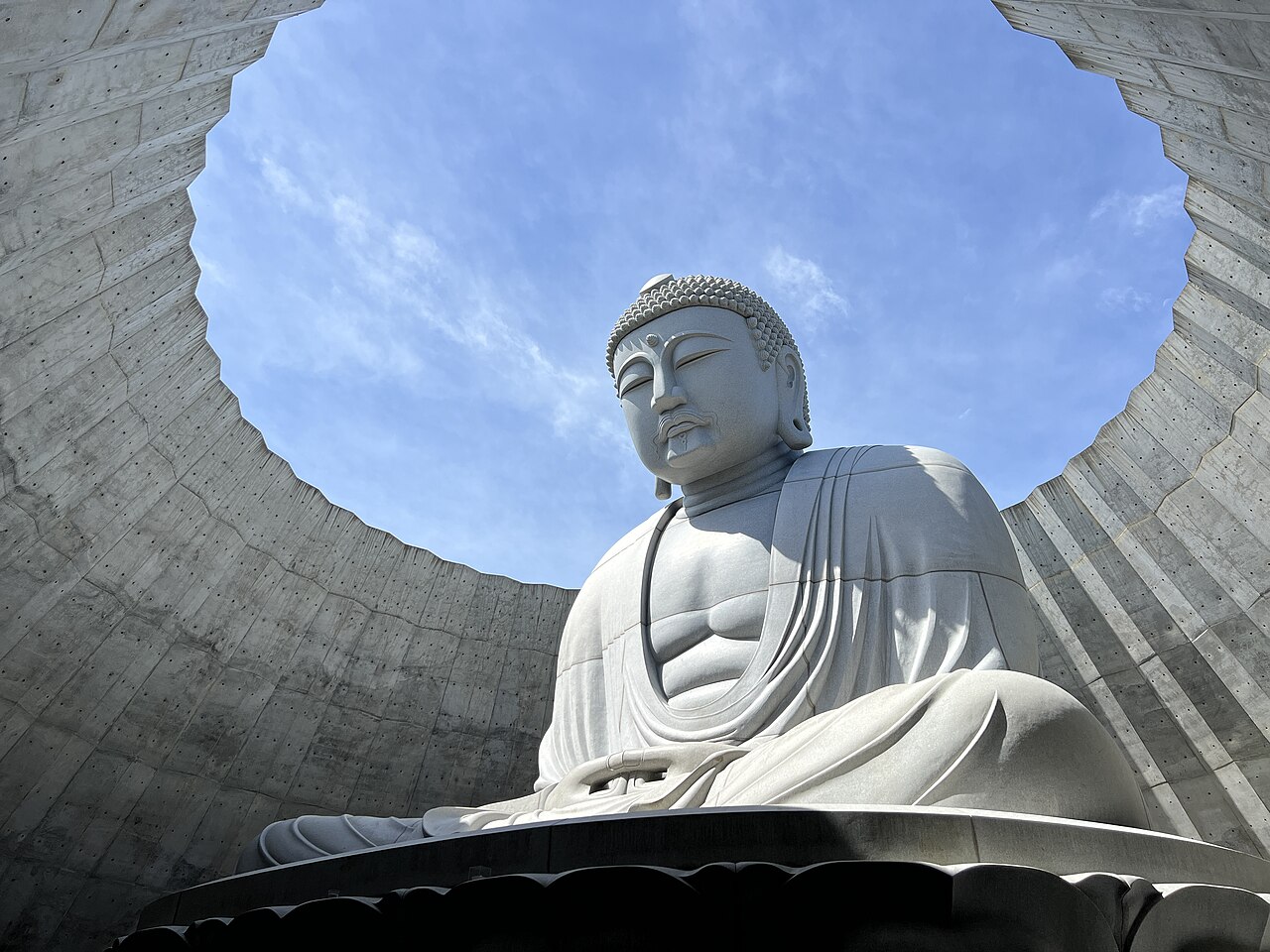
Tadao Ando covered a 13.5 m, 1,500 t stone Buddha, which stood alone in Makomanai Takino Cemetery in Sapporo, with a hill of lavender. From outside only the head shows; visitors reach the statue by a detour, a water garden and then a 40 m concrete tunnel, and see it in a room with no roof. The hall can be visited for an admission fee, in a cemetery open to all religions.
Affiliate links — booking through Verrière helps fund our research, at no extra cost to you.
History
The Hill of the Buddha (頭大仏殿, Atama Daibutsuden) stands in Makomanai Takino Cemetery (真駒内滝野霊園), a park cemetery in the south of Sapporo (札幌市) on the island of Hokkaido (北海道). The cemetery received its operating licence on 30 October 1981. It has several stone monuments, including moai statues and a Stonehenge, but its symbol was a stone Buddha: 13.5 m high, 1,500 t, carved from 4,000 t of rock.
Tadao Ando (安藤忠雄) recounts that the statue, carved about fifteen years earlier, stood alone in the field and gave an uneasy impression; the client wanted visitors to be able to contemplate it more serenely. On a visit to the cemetery, Ando had suggested developing its surroundings into a place where cemetery and tourism meet, a site representing Hokkaido. The project was carried out for the thirtieth anniversary of the cemetery's opening. His idea: everything below the Buddha's head would be covered by a hill of lavender, hence the name "head-out Buddha".
Ando finished the work in late 2015 according to Dezeen; the Hokkaido tourism office dates its birth to summer 2016.
Architecture
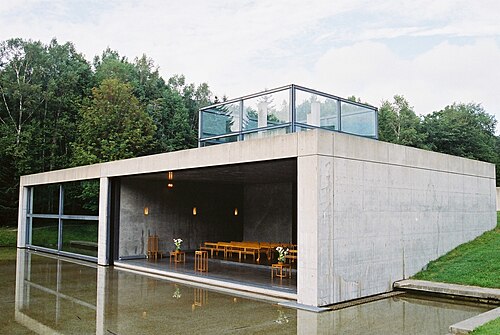
Ando started from the emotion of looking up at a Buddha glowing in faint light deep inside a cave in India or China: the face can be seen from afar, but not reached directly. The 135 m route begins with a purification fountain (手水舎) where visitors wash their hands, then detours around a water garden (水庭) enclosed by tall cast-concrete walls and a border of grey gravel. It is this water garden that serves as the threshold: it is a boundary (結界) between the sacred and the profane. It continues through a 40 m tunnel steeped in half-darkness, with exposed concrete ribs tracing one sixth of a circle.
At the end, the 13.5 m Buddha appears in a room with no roof: the light of the sky, clouds, wind, rain or snow of the day become part of the encounter. The central opening is lit by natural light between concertinaed concrete walls that narrow towards the sky. From outside the statue stays hidden: only its head shows above the lavender hill, which goes from green in spring to purple in summer and white under winter snow; the head itself collects snow.
Use today
The hall is a place of prayer for the cemetery, which is not run by a religious organisation and welcomes all religions and nationalities; the cemetery brings in monks for services, notably at Obon and the equinoxes. A mausoleum, the 頭大仏御廟 (Atama Daibutsu Gobyō), is associated with it: an indoor columbarium where visitors can pray in warmth in winter; under its plan, ashes are kept individually for seven years, then placed in the cemetery's collective perpetual grave, Stonehenge.
The hall also holds a cafe and shop, the Rotunda Cafe & Store (ロタンダカフェ&ストア), which serves drinks and sweets and sells items made for the Hill of the Buddha.
Visiting
Admission is charged, free up to and including primary school age. It is paid at a machine, in cash (thousand-yen notes only) or by card, and the receipt is valid on the day only. The hall is open 9 am to 4 pm from April to October and 10 am to 3 pm from November to March; it closes on certain designated days, for maintenance or because of the weather, and on 22 April and 22 October a memorial service closes it in the morning. From 4 November to the end of April the water garden holds no water; the lavender is usually at its best from mid-July to late July.
To get there, take the Chuo Bus no. 108 (真108) from Makomanai subway station (platform 2) to the terminus, "Makomanai Takino Reien (Atama Daibutsu)". By car, use the central car park. Coaches with 11 seats or more need prior authorisation.
This is a cemetery: avoid noise, smoking, animals (except assistance dogs) and wheeled vehicles (except wheelchairs and strollers). Drones are banned; do not enter the water garden, touch the statue or walk in the lavender. Photography for personal use is free, but press and film shoots need permission.
Photos
42.92° N, 141.36° E
Greenhouses nearby
Architecture nearby
Sources (9)
- takinoreien.com/pages/107/
- takinoreien.com/pages/108/
- takinoreien.com/pages/153/
- takinoreien.com/pages/49/
- takinoreien.com/pages/48/
- dezeen.com/2017/08/08/tadao-ando-hill-of-the-buddha-lavender-mound-makomanao-takino-cemete
- visit-hokkaido.jp/spot/detail_11222.html
- wikidata.org/wiki/Special:EntityData/Q61890364.json
- api.openstreetmap.org/api/0.6/node/6000866414.json
Affiliate links — booking through Verrière helps fund our research, at no extra cost to you.