Akino Fuku Museum, Hamamatsu (浜松市秋野不矩美術館)
Hamamatsu (Tenryū Ward, Shizuoka Prefecture)
Sources checked November 2026
- Year
- 1997
- Architect
- Terunobu Fujimori
- Type
- Municipal art museum
- Access
- Open to the public, except between exhibitions (official website, November 2026)
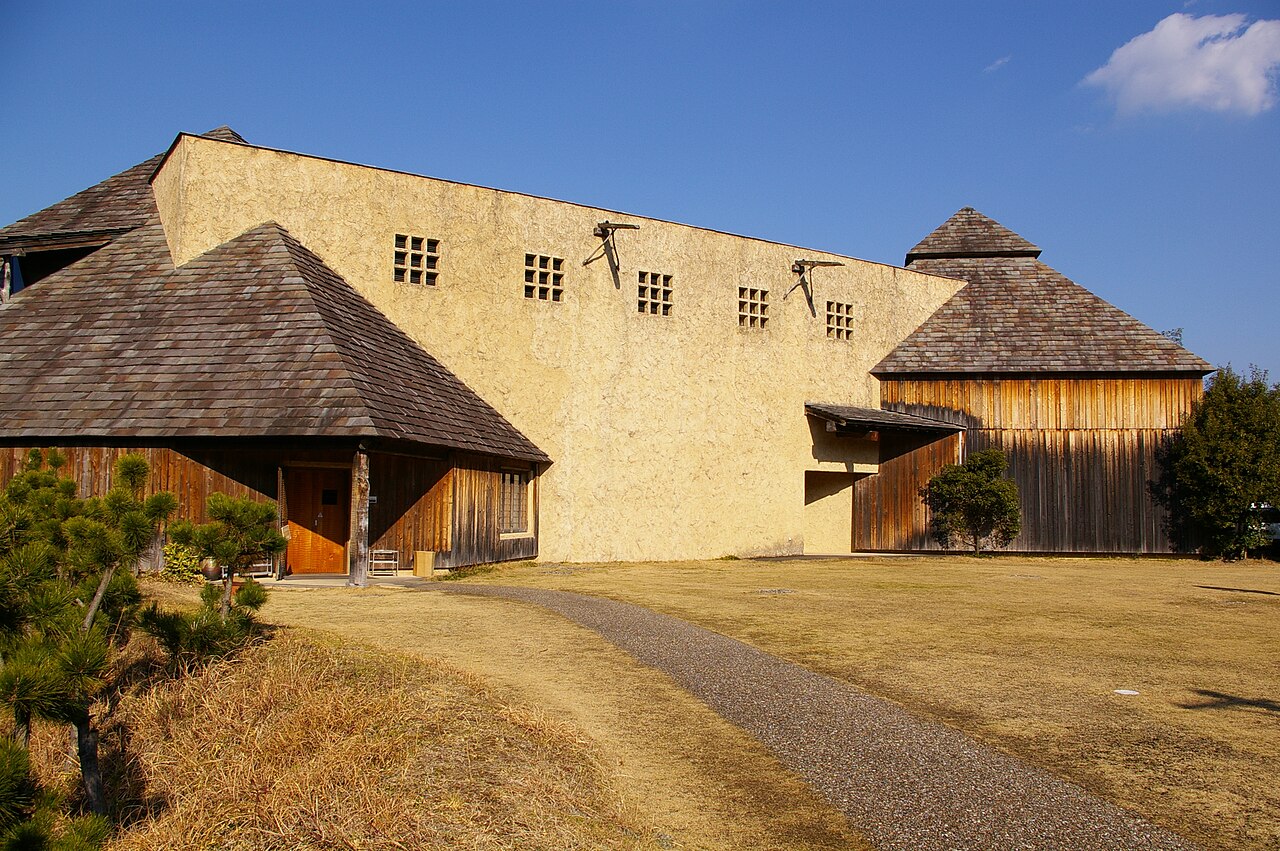
This municipal museum, built on a hill above Futamata, is devoted to the painter Fuku Akino. Terunobu Fujimori designed it with the architect Yoshio Uchida in natural materials: stone, straw-mixed mortar, Tenryū cedar, lime plaster. Visitors take off their shoes at the entrance; the works, hung a little lower than usual, are viewed sitting on the floor.
Affiliate links — booking through Verrière helps fund our research, at no extra cost to you.
History
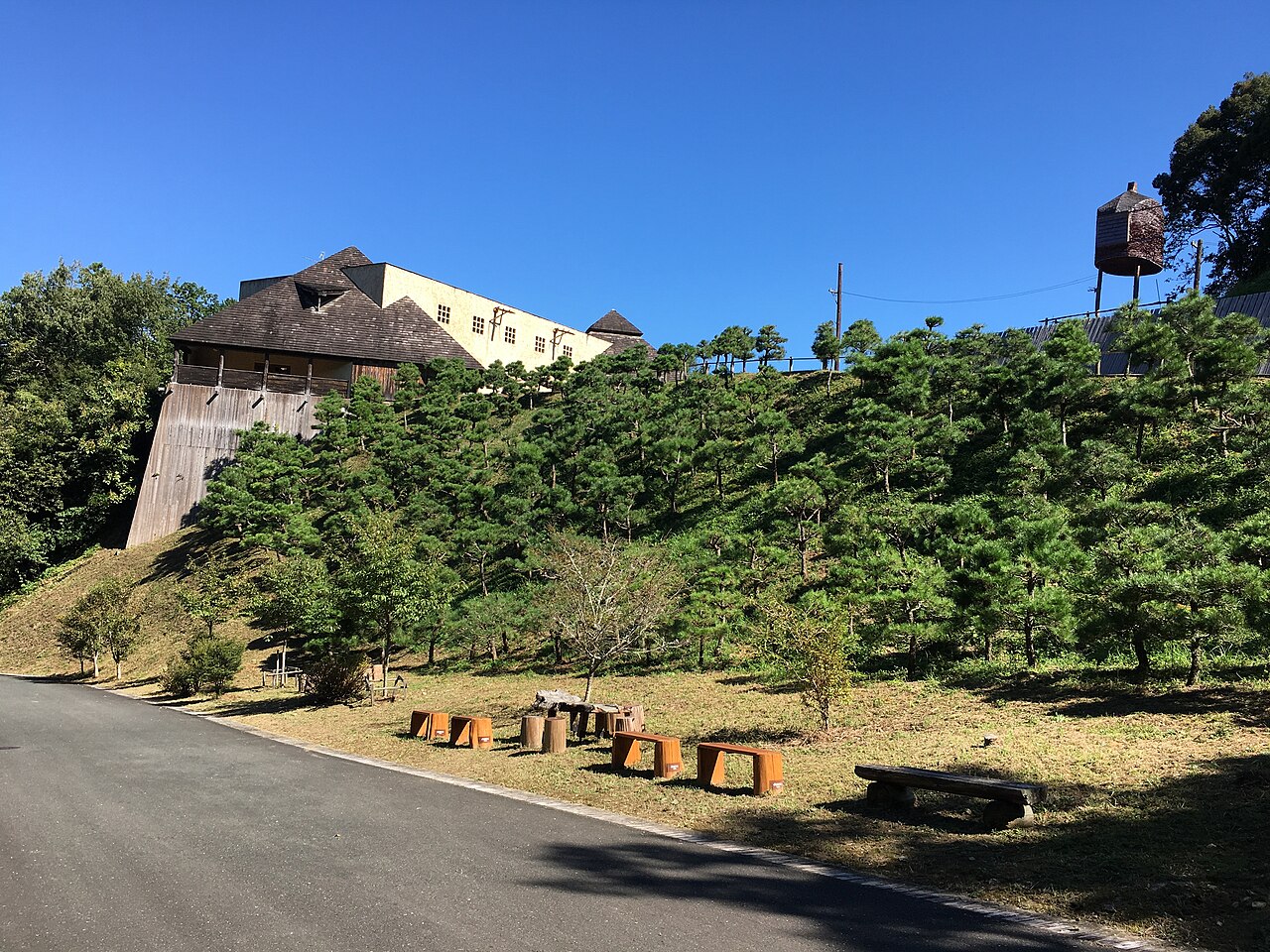
The museum is devoted to Fuku Akino (1908–2001), a painter of nihonga, Japanese-style painting, born in the former city of Tenryū, now Tenryū Ward in Hamamatsu. It stands on a hill above Futamata, the town she came from. Completed in 1997, it opened in April 1998 to honour her achievements and promote the arts in the region.
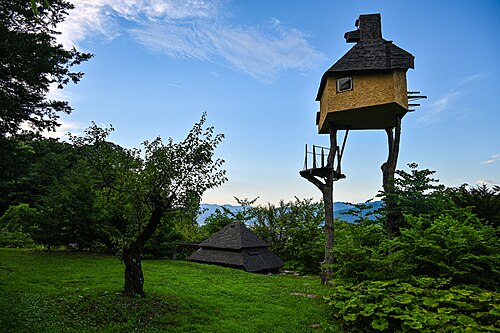
The building is the work of Terunobu Fujimori, a friend of the painter, and the architect Yoshio Uchida; Fujimori drew up the basic design. In 2018 a tea room, Bōkurō, also designed by Fujimori, was completed in the grounds.
Architecture
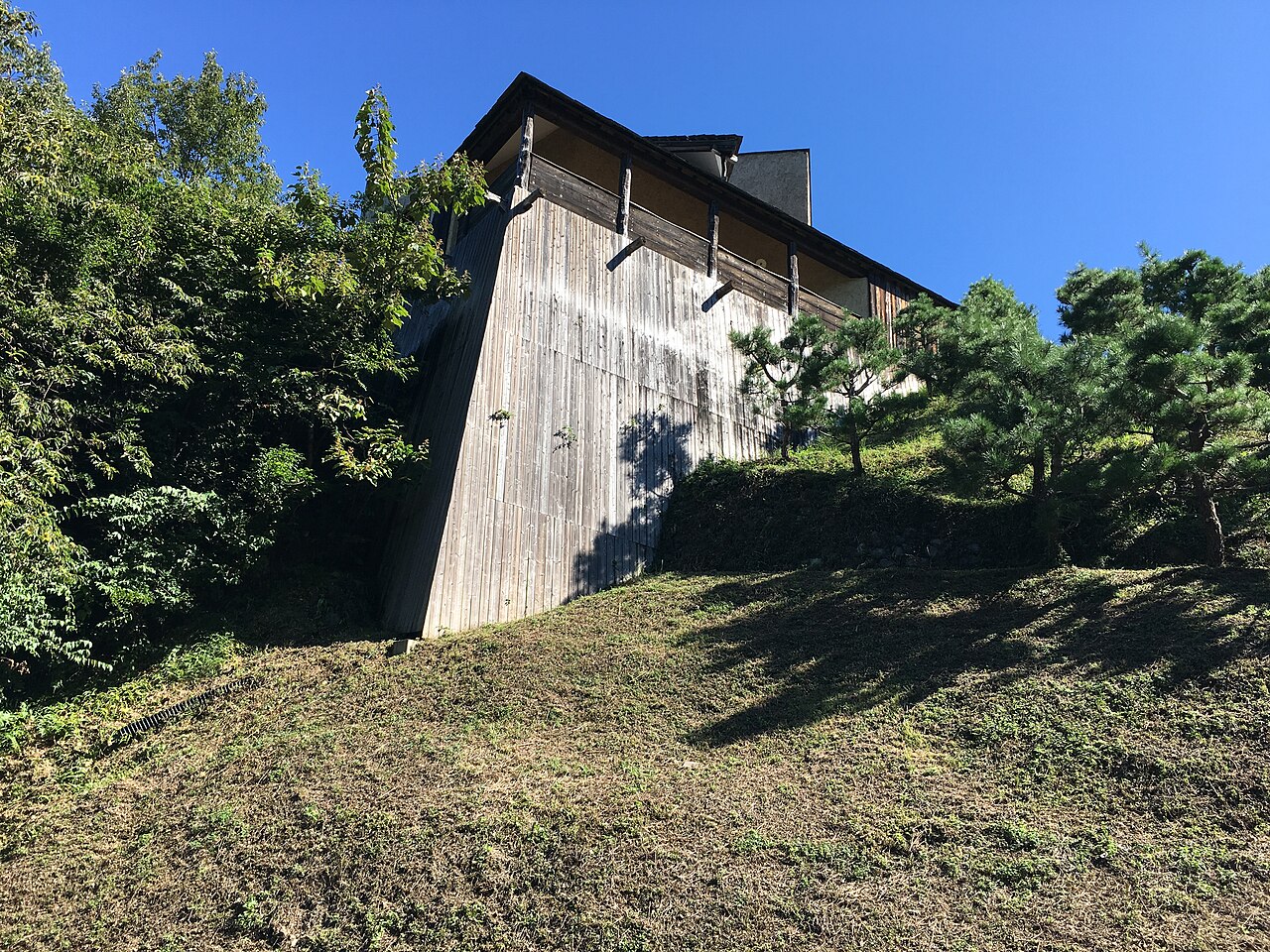
The building rises on a wooded hill near the Futamatagawa river. The path up to the entrance is planted mostly with evergreens: the concrete-block retaining walls that hold the slope are faced with cedar boards, the drains have wooden covers, shelves of chestnut boards, tied with palm rope and wedged to posts with wooden pegs, line the climb, and the street lamps are old wooden utility poles carrying shaded incandescent bulbs.
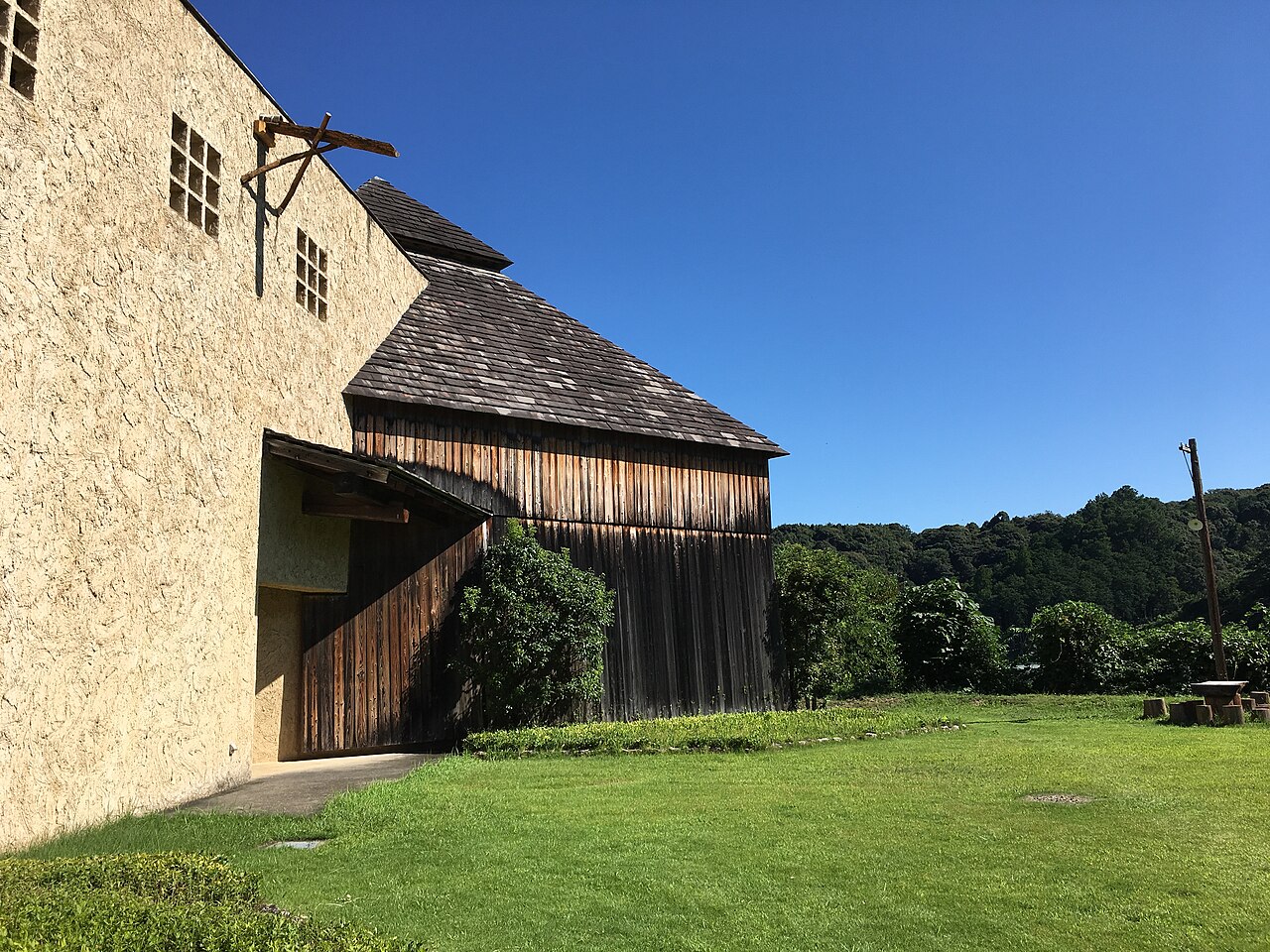
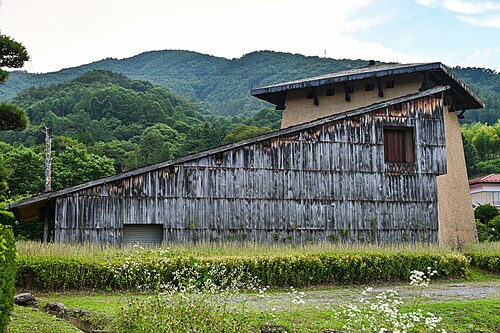
The roof is covered with slabs of flat stone from Suwa, in Nagano Prefecture. The outer walls are a tinted mortar mixed with straw and finished with mud from the site, together with boards of Tenryū cedar; the gutters are hollowed half-logs of hinoki and sawara. The structure is reinforced concrete, partly timber, on two storeys above ground, with 999.6 m² of floor area.
On the ground floor a rectangular gallery floored with rattan matting leads to the square main gallery, floored with white marble; walls and ceilings are lime-plastered. Fujimori felt that street shoes did not suit the purity of Fuku Akino's paintings and designed a museum visited barefoot; the works hang a little closer to the floor than usual so that they can be seen from a seated position. This flooring, made possible by the absence of shoes, lets natural light coming from the ceiling spread evenly through the white room. In the hall, cedar posts and beams charred with a torch stand out against a wall of lime plaster mixed with straw, and one corner opens onto a terrace.
The Bōkurō tea room uses materials from the region, including Tenryū hinoki; together with the main building, its distinctive outline makes an unusual landscape.
Use today
The museum holds about 330 works, centred on Fuku Akino. It presents its works in collection exhibitions and stages special exhibitions on artists related to the painter. The first-floor exhibition room can also be rented as a gallery open to local residents for their own shows and creations.
Visiting
The museum is open from 9:30 to 17:00 (last entry at 16:30). It is closed on Mondays (on the following day when Monday is a public holiday), over the year-end and New Year holidays, and on some days of exhibition changeover or maintenance. With no permanent exhibition, it stays closed outside exhibition periods.
Visitors take off their shoes at the entrance, then their slippers to enter the galleries. The inside of the Bōkurō tea room is not open.
From Tenryū Futamata Station (Tenryū Hamanako Railroad) it is a fifteen-minute walk.
Photos
34.86° N, 137.82° E
Greenhouses nearby
Architecture nearby
By the same architect
Sources (9)
- bunka.go.jp/kindai/kenzoubutsu/research/shizuoka/029/index.html
- akinofuku-museum.jp/
- akinofuku-museum.jp/museum/highlight/
- akinofuku-museum.jp/information/
- akinofuku-museum.jp/museum/
- akinofuku-museum.jp/museum/greeting/
- inhamamatsu.com/art/fuku-akino-art-museum.php
- id.ndl.go.jp/auth/ndlna/01030593
- tenhama.co.jp/english/
Affiliate links — booking through Verrière helps fund our research, at no extra cost to you.