Tropical and succulent greenhouses (Serra Lodi) of the Orto botanico, University of Bologna
Bologna, Emilia-Romagna

Sources checked October 2026
- Year
- 1988 (succulent greenhouse); tropical greenhouse undated
- Style
- Glazed greenhouses with a metal frame, glazing being replaced
- Dimensions
- About 3,000 succulent specimens
- Status
- Garden free on reservation; greenhouses on guided tours; glass panes being replaced
In the Orto botanico of the University of Bologna, founded in 1568 by Ulisse Aldrovandi and on its present site since 1803, two large greenhouses shelter most of the collections under glass: a hot, humid tropical house with orchids and bromeliads, and the succulent house, dedicated to Giuseppe Lodi, which holds about 3,000 specimens. A donation plaque of March 1988 ties it to the University's ninth centenary. In October 2026 the University launched a fundraising appeal to renovate both greenhouses: the replacement of the glass panes and the rebuilding of part of the succulent house's base have already begun.
Affiliate links — booking through Verrière helps fund our research, at no extra cost to you.
History
The botanical garden of the University of Bologna dates back to 1568: Ulisse Aldrovandi founded it in a courtyard of the Palazzo Pubblico, near today's former Sala Borsa. It was enlarged in 1587 on a site at Porta Santo Stefano, in today's Via San Giuliano, where Wikipedia records a winter shelter for exotic plants in 1745 and neoclassical greenhouses of 1765 designed by Francesco Tadolini, which still stand in that street. In 1803, after the Napoleonic reforms, the University bought a large agricultural plot between Porta Mascarella and San Donato and set up the present garden there, its design attributed to the architect Martinetti. The opening of Via Irnerio in the early 20th century reduced its extent, and a bombing in 1944 destroyed the Napoleonic-era orangery.
The present greenhouses belong to a different story. A plaque at the entrance to the succulent house, legible in a freely licensed photograph on Wikimedia Commons, records a donation by the engineering company Italtekna, of the IRI-Italstat group, dated March 1988 and tied to the University's ninth centenary; a second plaque, dated 6 October 1990, dedicates the greenhouse to Giuseppe Lodi (1896-1989), a lecturer of the Ateneo who promoted and developed the succulent collection. A local blog, which lists the garden's own panels among its sources, adds that Lodi had started this collection in 1922. In October 2026 the University launched a fundraising campaign to renovate the two largest greenhouses, whose exterior surfaces have deteriorated with time and weather: the replacement of the glass panes and the rebuilding of part of the succulent house's base are already under way.
Architecture and engineering
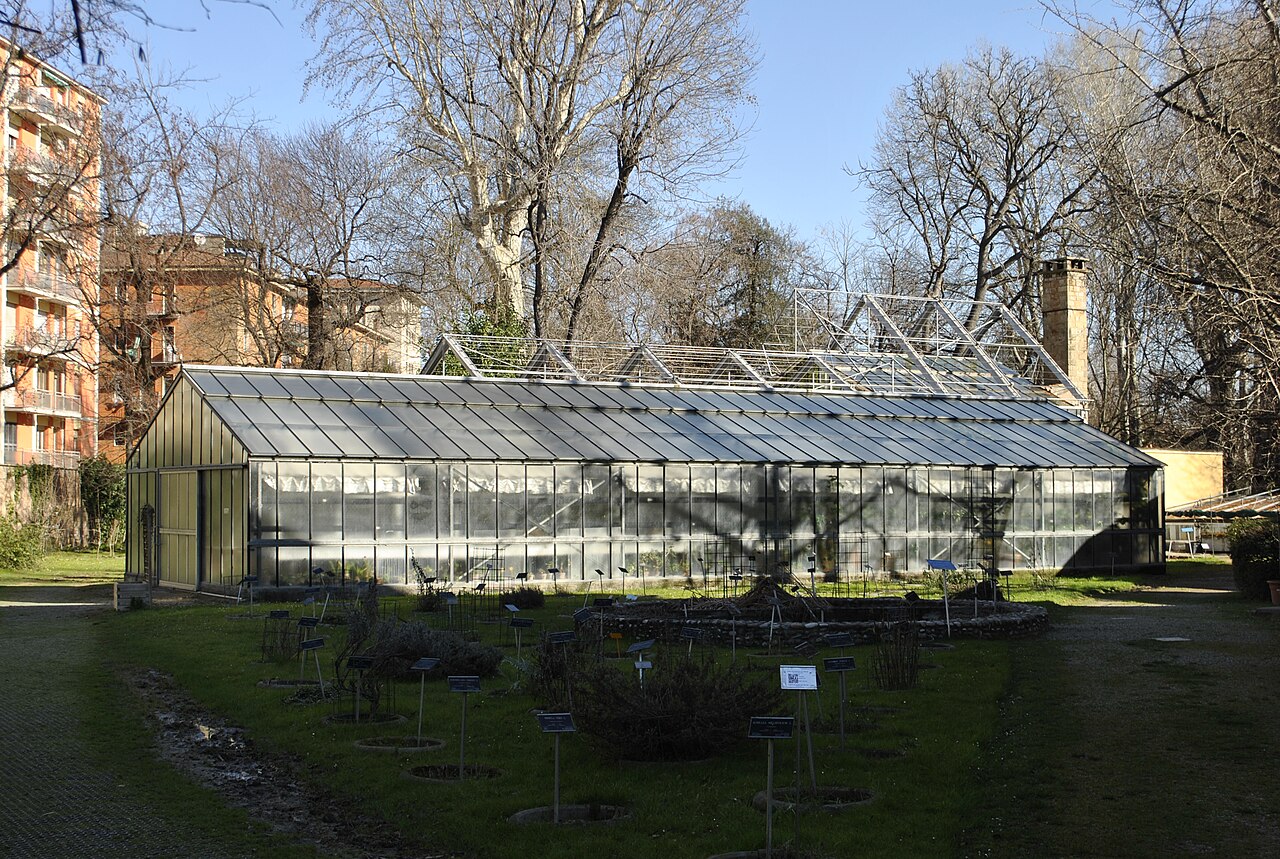
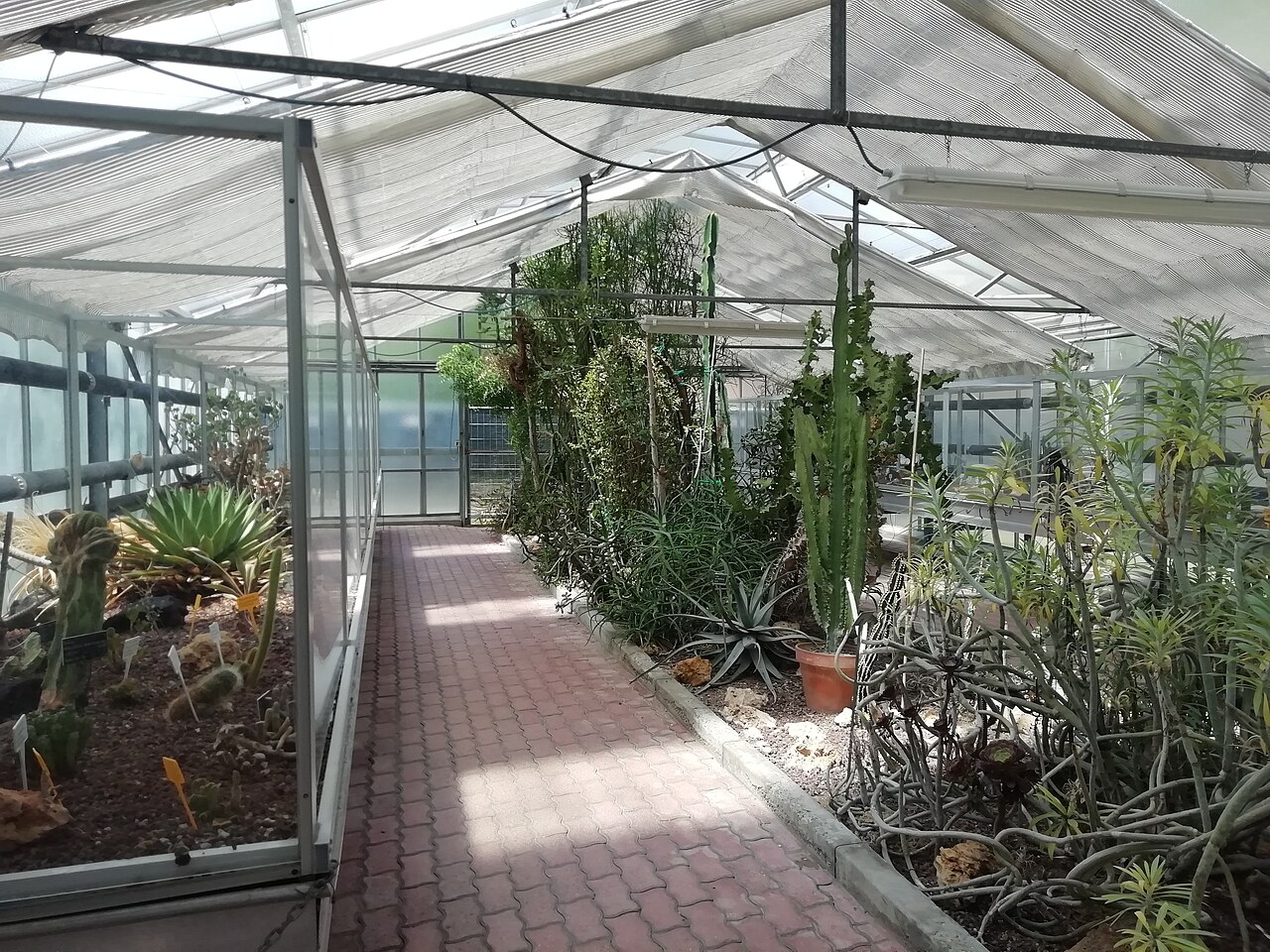
The garden has four greenhouses, two tropical (one of them semi-sunken) and two for succulents, with service rooms, plus a small greenhouse for carnivorous plants. For the succulent house, the 1988 date comes from the donation plaque. The University specifies the nature of the 2026 works: replacing the glass panes, renewing the glazing ("vetrate"), repairing the exterior surfaces and rebuilding part of the base of the succulent house.
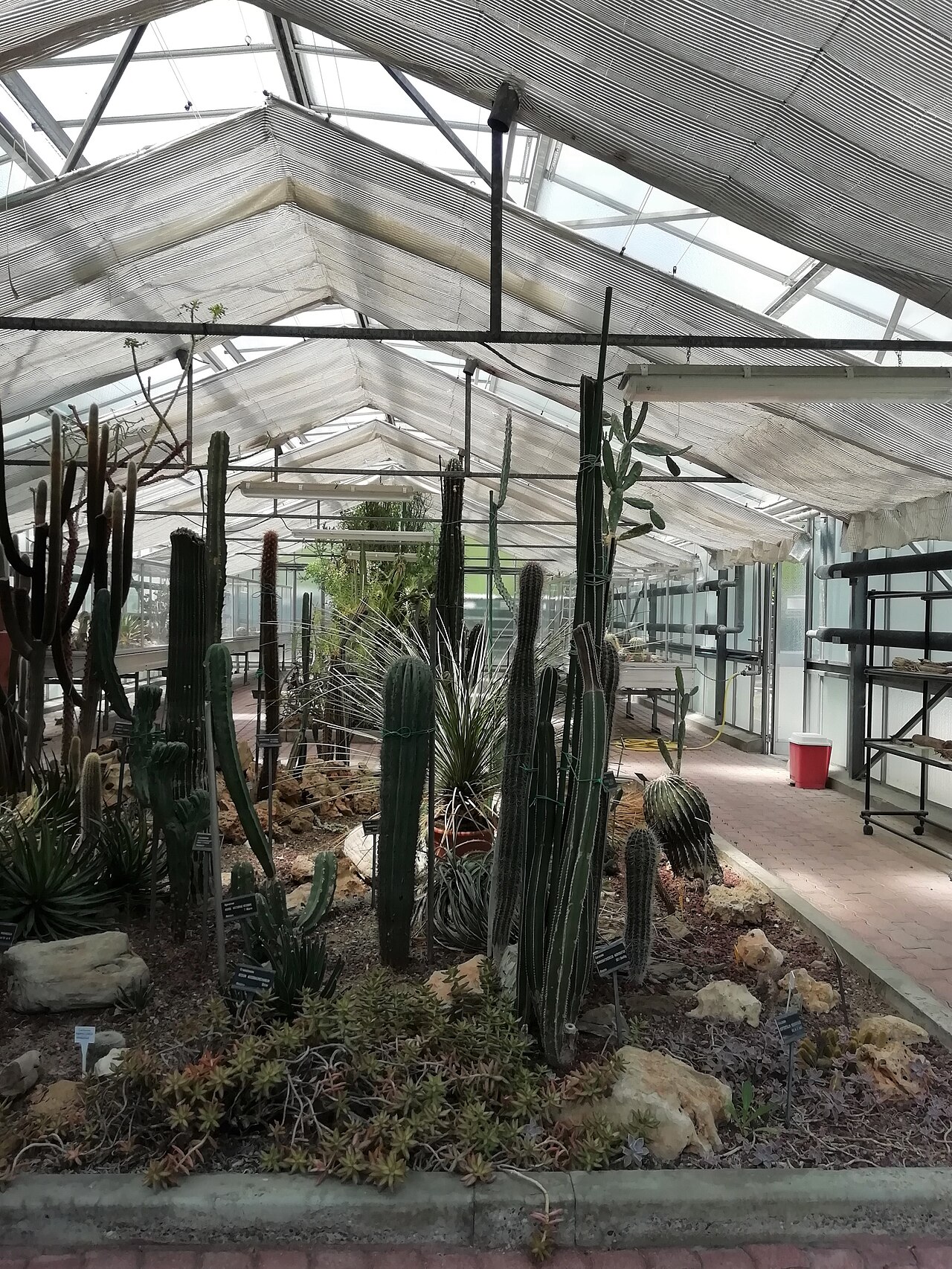
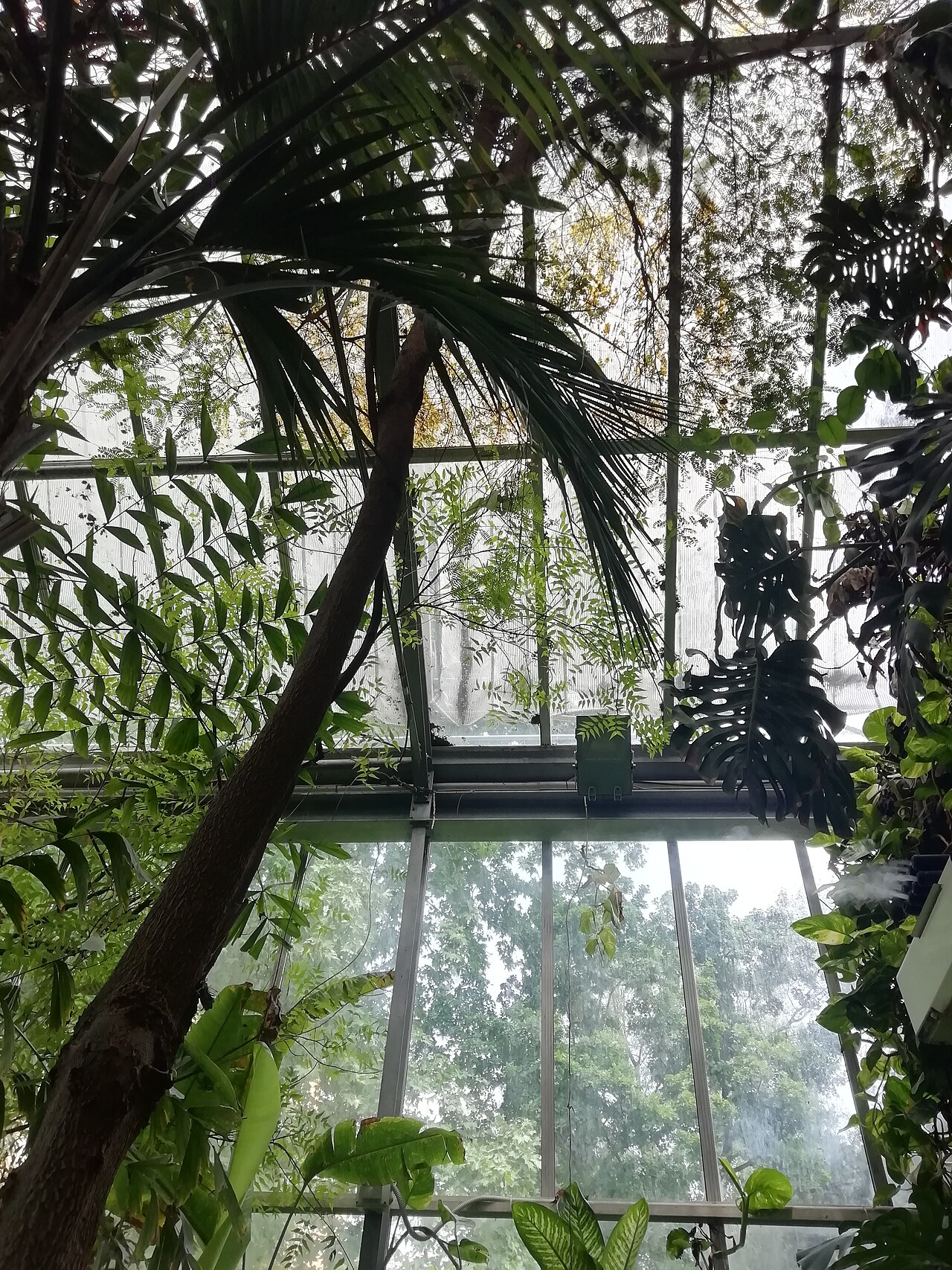
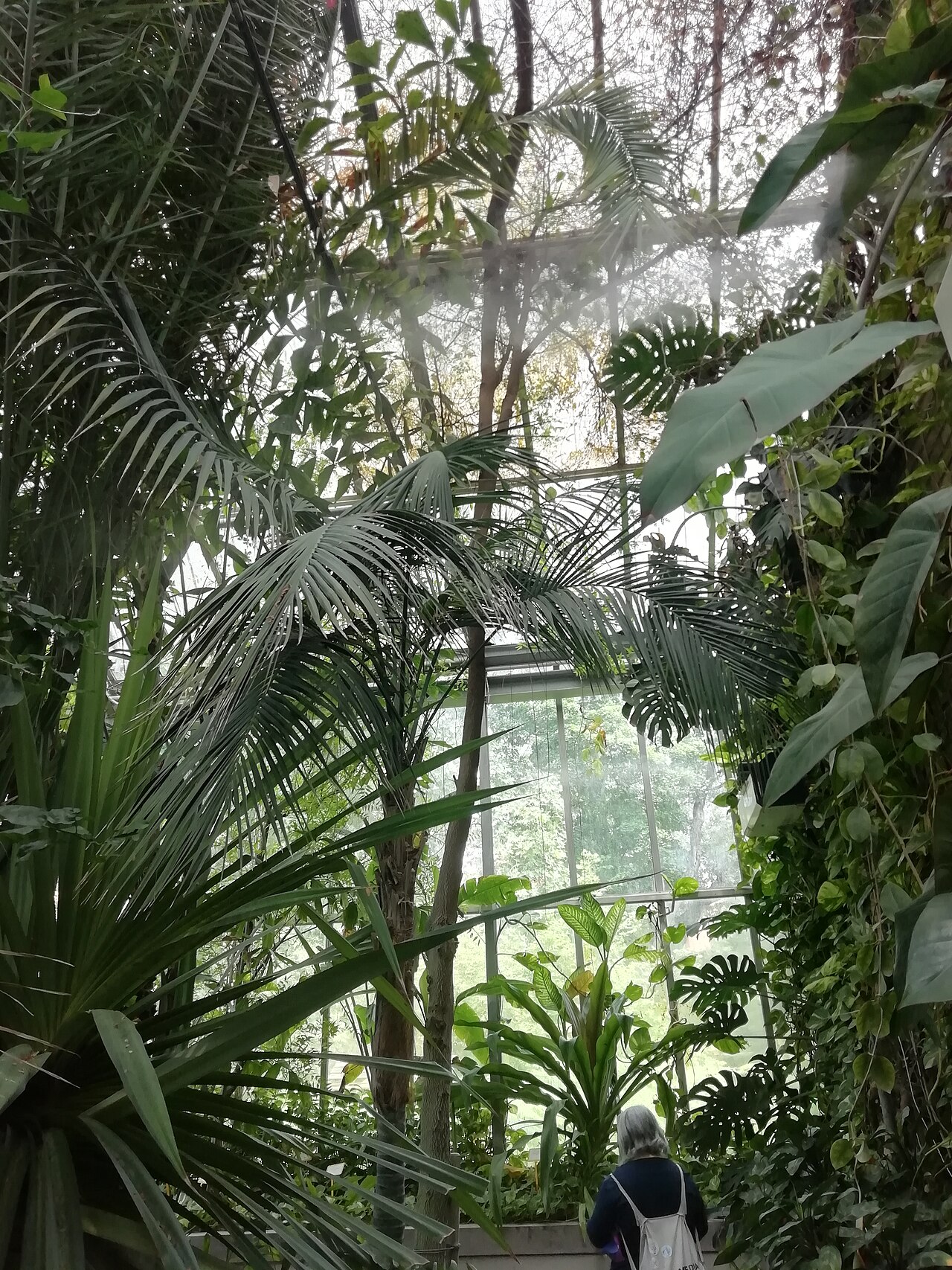
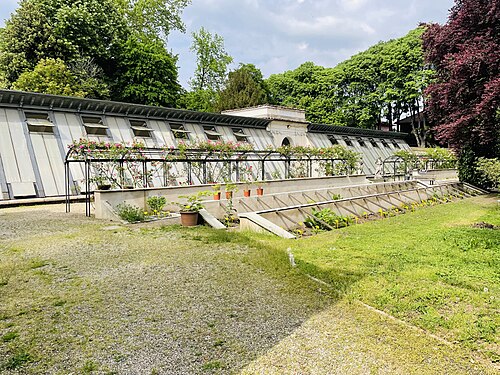
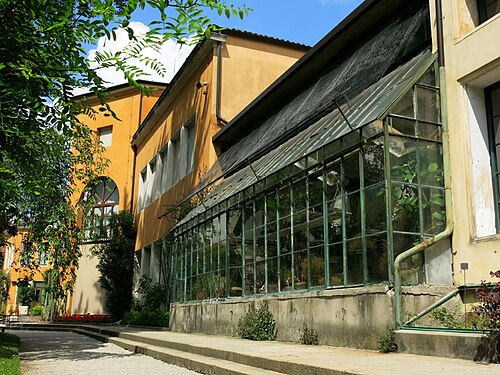
In freely licensed photographs on Wikimedia Commons one can make out metal-framed buildings with glazed gable roofs, shade cloths stretched beneath the covering and, in the succulent house, brick-paved paths running beside rockery beds. The tropical house reproduces the hot, humid climate of a rainforest, with plants layered on several levels, including very shaded lower strata: the University asks visitors to take off jackets and sweaters before entering and admits only small groups.
Plant collections
The tropical house gathers epiphytes, bromeliads, orchids, ornamental plants and useful species: coffee, cacao, spices and medicinal plants; the January 2026 programme also names vanilla and neem. The portal of Italian botanical gardens adds, among others, papaya, mango, Ananas bracteata, Tillandsia usneoides, as well as Cattleya, Dendrobium nobile and Oncidium.
The succulent house is presented by that same portal as the most important collection in northern Italy, and by the University as one of the most important in the country. It holds about 3,000 specimens according to the University in 2026 (Wikipedia gives about 5,000), arranged by a geographic and physiological criterion: Beaucarnea recurvata, Welwitschia mirabilis and Leuchtenbergia principis are among the examples cited. In winter, citrus trees can also be seen there. A small neighbouring greenhouse holds carnivorous plants (Drosera, Nepenthes, Utricularia, Pinguicula, Dionaea). Scientific, photographic and artistic exhibitions are sometimes held in the succulent house.
Visiting
The greenhouses stand in the rear garden, behind the department building, at the end of a route that is mostly outdoors and crosses often wet lawns. The garden is free with online reservation; the greenhouses, for their part, feature in the guided visit "Piante sotto vetro", open to adults and to children from 6 in groups of no more than ten, and scheduled on 28 November and 19 December 2026. It is cancelled in rain or strong wind. A notice of 25 May 2026 also reports a requalification works site (second phase) that makes some zones inaccessible, without naming the greenhouses: dates and access are best confirmed with the Orto before visiting.
The neighbouring herbarium opens only by appointment, for documented study purposes, and the garden touches the old city walls.
44.50° N, 11.35° E
Greenhouses nearby
More greenhouses — Italy
Do you have a good photo of this greenhouse? Suggest it for this page →
Sources (8)
- magazine.unibo.it/it/articoli/al-via-la-raccolta-fondi-per-riqualificare-le-serre-dellorto
- sma.unibo.it/it/agenda/visite-guidate-per-adulti-e-famiglie-ottobre-dicembre-2026
- sma.unibo.it/it/visita/scuole/percorsi-didattici/piante-sotto-vetro-le-serre-dellorto-bota
- sma.unibo.it/it/il-sistema-museale/orto-botanico-ed-erbario
- ortobotanicoitalia.it/emilia-romagna/bologna/
- it.wikipedia.org/wiki/Orto_botanico_di_Bologna
- unimpatto.unibo.it/azioni/riqualificazione-serre-orto-botanico
- commons.wikimedia.org/wiki/File:Wikiraduno_Bologna_giugno_2023_-_Orto_botanico_di_Bologna_
Affiliate links — booking through Verrière helps fund our research, at no extra cost to you.