Greenhouses of the Giardino dei Semplici (Orto Botanico of Florence)
Florence, Tuscany
Entry updated on September 30, 2026
- Year
- 1880
- Architect
- Built under the direction of Teodoro Caruel (architect not identified)
- Style
- Large 19th-century warm and cold glasshouses in glass and metal
- Dimensions
- ≈1,690 m² of glasshouses, ≈162 m frontage on Via Micheli
- Status
- Open to the public (Natural History Museum of the University of Florence)
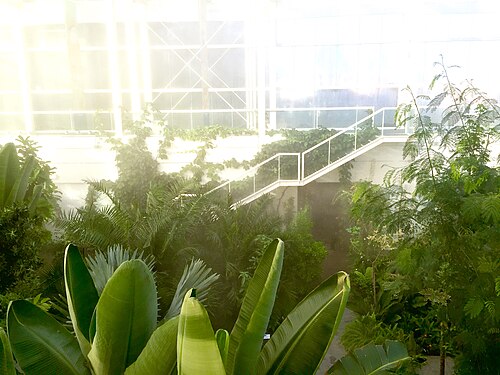
The Giardino dei Semplici, created in 1545 by Cosimo I de' Medici, holds a large group of glass-and-metal greenhouses raised under the botanist Teodoro Caruel, from 1880 according to the university's own sources, stretching about 162 m along Via Micheli. They are divided into a warm zone for tropical plants and a cold zone, for a total of around 1,690 m². They hold one of Italy's richest cycad collections, ferns, palms and useful tropical plants such as coffee. The storm of 19 September 2014 seriously damaged the glazing.
Affiliate links — booking through Verrière helps fund our research, at no extra cost to you.
History
1 min
The garden was founded on 1 December 1545 by Cosimo I de' Medici, with a layout attributed to Niccolò Pericoli, known as il Tribolo, and a plant selection entrusted to Luca Ghini. It became one of the oldest botanical gardens in the world, gained new momentum under Pier Antonio Micheli from 1718, and opened to the public in the 19th century. The glasshouses date from that period: the botanist Teodoro Caruel, director from 1865 to 1895, had them built, and university sources date them to 1880. An article in a scientific journal, however, gives 1864 for the large glasshouses; sources therefore disagree on the exact date.
The complex forms a continuous front along Via Micheli: a central block flanked by two large lateral greenhouses, completed by several smaller glass-and-metal houses inside the garden. The warm houses are among the largest in Italy and allow the cultivation of tropical plants that yield important medicinal or food products: coffee, cacao, cotton and pepper.
On 19 September 2014 a storm with winds of around 160 km/h struck Florence between 12:40 and 12:55. The large panes shattered, trees fell onto the roofs, and the damage to the garden was estimated at about one million euros.
Architecture and engineering
1 min
The glasshouses line up over some 160 to 162 m along Via Micheli and cover about 1,690 m². The main building, a rectangular block whose centre holds administrative rooms, is flanked by two large lateral houses, one warm for tropical plants and one cold. Their metal structure, with large glazed surfaces, is closed by massive glass-and-steel doors. Five or six smaller glass-and-metal greenhouses are scattered through the garden.
The division into two thermal zones is the main logic of the layout: in the cold house, frost-sensitive plants overwinter under shelter, while the warm house keeps the conditions needed by tropical species. The sources consulted name no architect; they attribute the work to Caruel's scientific direction.
Plant collections
1 min
The cold house shelters a cycad collection considered possibly the largest in Italy, formed in the early 20th century through donations and later expeditions; specimens include Encephalartos altensteinii and Cycas circinalis, grown in large terracotta pots and moved outdoors in summer. It also holds more than 300 ferns, collected since the 18th century, as well as palms, succulents and carnivorous plants.
The warm houses receive tropical plants: coffee (Coffea arabica), traveller's palm (Ravenala madagascariensis), banana and the titan arum (Amorphophallus titanum) are among the species cited, and a Monstera deliciosa about ten metres tall stands out in the warm house. Orchids, cacti, historic citrus varieties, epiphytes, begonias and bromeliads complete the picture.
Visiting
1 min
The garden covers about 2.3 hectares in the heart of Florence, at Via Pier Antonio Micheli 3, and belongs to the university's museum circuit; it can be visited with the Firenzecard. Allow about an hour and a half to add the medicinal-plant beds, the yew planted in 1720 and the cork oak of 1805 to the glasshouses. The glasshouses offer a sheltered route in cold or rainy weather, while the flowering of azaleas and hydrangeas marks the garden's spring and early summer. It combines easily with other sites in the historic centre.
43.78° N, 11.26° E
Greenhouses nearby
Do you have a good photo of this greenhouse? Suggest it for this page →
Sources (8)
- apgi.it/giardino/orto-botanico-di-firenze/
- brunelleschi.imss.fi.it/itinerari/luogo/MuseoStoriaNaturaleFirenzeOrtoBotanicoGiardinoSemp
- ortobotanicoitalia.it/toscana/unifirenze/
- anms.it/upload/rivistefiles/7b5f72cd8de3bc3f62394354832f8758.pdf
- es.wikipedia.org/wiki/Jard%C3%ADn_de_simples_de_Florencia
- it.wikipedia.org/wiki/Giardino_dei_Semplici
- en.wikipedia.org/wiki/Orto_Botanico_di_Firenze
- theflorentine.net/2024/05/28/giardino-dei-semplici-botanical-gardens-florence/