Rainforest Conservatory (Fort Worth Botanic Garden)
Fort Worth, Texas
Entry updated on October 5, 2026
- Year
- 1986
- Style
- 1980s glass tropical conservatory adjoining the Garden Center
- Dimensions
- About 930 m² (10,000 sq ft)
- Status
- Open to the public (closed for repairs from 2016 to 2019)
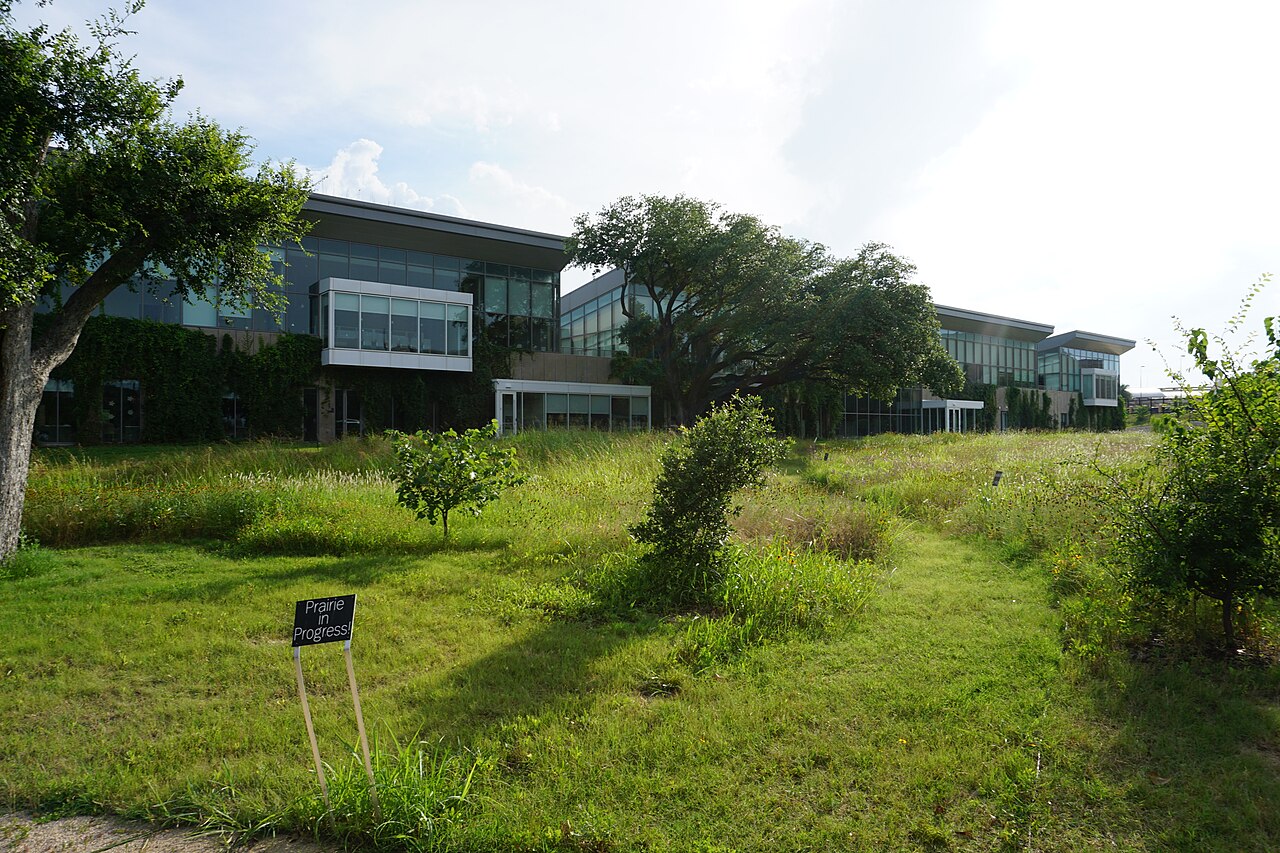
Opened in September 1986 at the entrance to the Fort Worth Botanic Garden, Texas's oldest major botanic garden (1934), this 10,000-square-foot (about 930 m²) conservatory adjoins the Deborah Beggs Moncrief Garden Center; both buildings were paid for with money raised by the Fort Worth Garden Club. Closed in 2016 over safety concerns after years of deferred maintenance, it reopened on 21 August 2019. A path follows a stream and slips behind a waterfall, among orchids, begonias, gingers, a coffee tree and coconut palms.
Affiliate links — booking through Verrière helps fund our research, at no extra cost to you.
History
1 min
The Fort Worth Botanic Garden grew out of Rock Springs Park, 37.5 acres bought by the city in 1912 and laid out to plans by the Kansas City landscape architects Hare & Hare. Its rose garden, built during the Great Depression by unemployed men hired through federal relief programmes, was dedicated in 1933, and on 18 December 1934 the park was officially renamed the Fort Worth Botanic Garden. The garden was listed on the National Register of Historic Places in 2009.
The conservatory belongs to a later phase of growth. In 1986 the garden opened the 17,000-square-foot Deborah Beggs Moncrief Garden Center and a 10,000-square-foot tropical conservatory, both built with money raised by the Fort Worth Garden Club; the glasshouse welcomed its first visitors that September.
Thirty years on, deferred upkeep, structural weaknesses and worries over safety led to its closure in 2016. The garden was then running budget shortfalls of about $1.2 million a year, which the city set out to close by introducing an admission fee in July 2019. Repairs were paid for with proceeds from the Japanese Garden, a private gift of $20,000 and two contributions of $40,000, one from the Fort Worth Garden Club and one from the Fort Worth Botanical Society. The conservatory reopened without fanfare on 21 August 2019, and a ribbon-cutting for the renovated space was announced for the eve of the butterfly exhibition that began on 29 February 2020. Since 1 October 2020 the Botanical Research Institute of Texas (BRIT) has run the garden under a 20-year agreement, while the city remains its owner.
Architecture and engineering
1 min
The conservatory is the glazed wing of the Deborah Beggs Moncrief Garden Center, the garden's entrance building, dedicated in 1986. When it opened, the centre combined offices, rentable rooms and an auditorium on 17,000 square feet (about 1,580 m²).
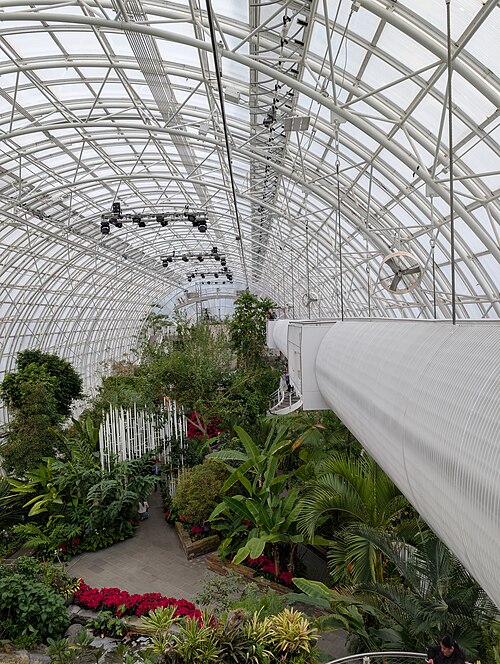
The glasshouse itself covers 10,000 square feet, roughly 930 m², under a glass roof and glass walls. Its tropical climate depends on misting, evaporative cooling and a bank of twelve exhaust fans. During the closure, missing or broken panes let in cold outside air that many of the heat-loving plants could not survive. The 2019 works replaced 88 panes in the roof and 12 in the walls, overhauled the misting and cooling systems, swapped six of the twelve fans, power-washed the paving and hauled out seventeen dump-truck loads of dead vegetation; a reverse-osmosis system, six more fans and an exit door were still waiting for funds.
Inside, a winding path runs beside a stream and ducks behind a waterfall, under dense foliage.
Plant collections
1 min
The conservatory gathers plants from the world's tropical regions, with an emphasis on those behind everyday foods, spices and drinks: the garden lists seven varieties of ginger, a chocolate tree, a coffee tree, a star fruit tree and a coconut palm. Orchids are shown courtesy of the Fort Worth Orchid Society, part of the garden's nationally recognised begonia collection grows here, and a carnivorous plant completes the circuit.
The 2016-2019 closure killed much of this flora, including a 15-foot (about 4.5 m) chocolate tree. At the reopening, the local press listed among the survivors elephant ears, maidenhair ferns, calathea, yellow and red ginger, a banana, begonias, a towering bird of paradise, an allspice tree and a mango tree; a coffee tree given up for dead had recovered. Replacements came from nurseries, donations and other gardens, among them the U.S. National Arboretum.
Every year, the Butterflies in the Garden exhibition releases thousands of butterflies from several continents into the house.
Visiting
1 min
The conservatory sits at the main entrance, against the Garden Center that serves as the visitors' entry point. Half an hour covers the circuit, though it gains another dimension during Butterflies in the Garden, the annual live-butterfly exhibition run with BRIT (in 2020 it ran from 29 February to 12 April).
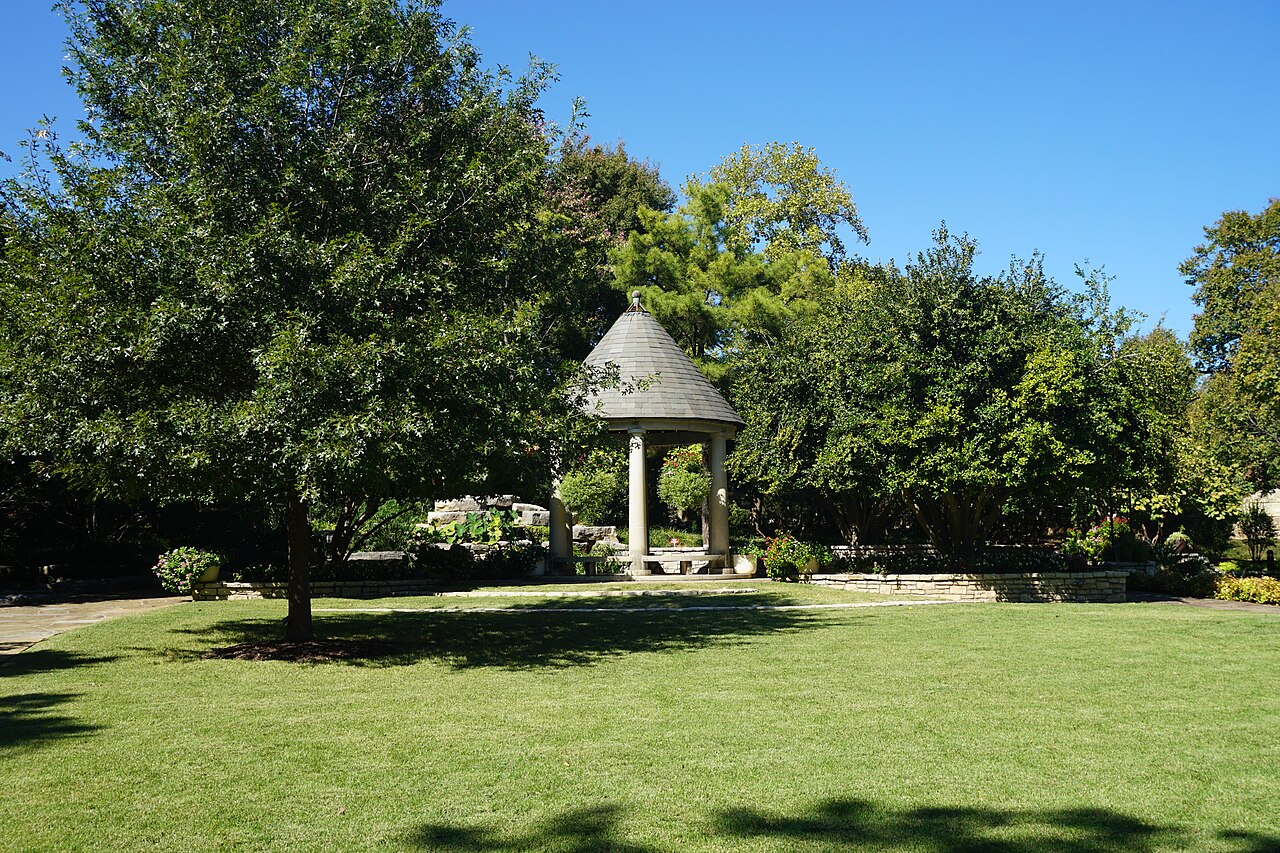
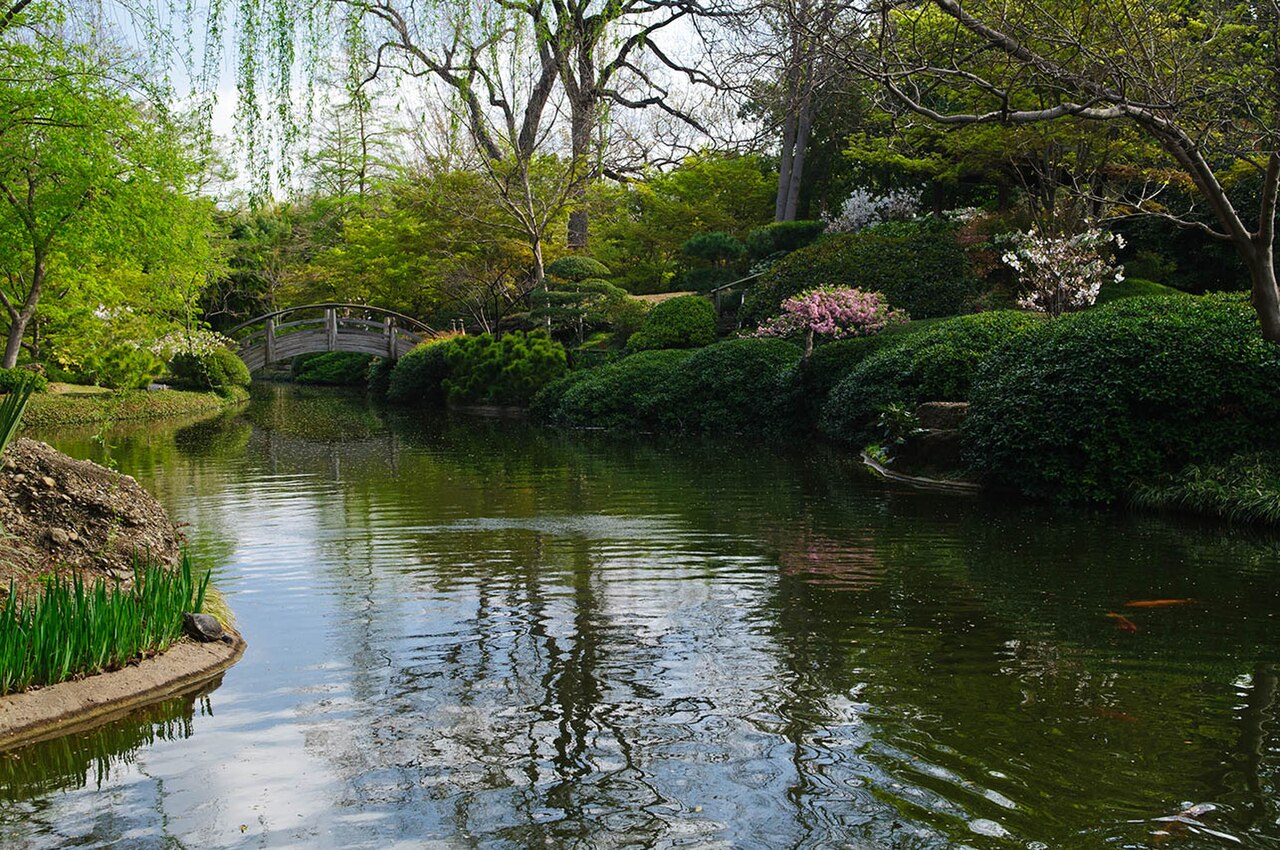
The garden counts 23 specialty gardens, among them the 1933 rose garden, the 7.5-acre Japanese Garden opened in 1973, which hosts a Japanese festival in spring and autumn, and the 955-foot elevated boardwalk through a native Texas forest. BRIT's headquarters, with its herbarium and library, stands just to the north in Fort Worth's Cultural District.
32.74° N, 97.36° W
Greenhouses nearby
More greenhouses — United States
Do you have a good photo of this greenhouse? Suggest it for this page →
Sources (7)
- fwbg.org/gardens/rainforest-conservatory/
- fwbg.org/plan-a-visit/interactive-map/
- fwtx.com/culture/the-fort-worth-botanic-garden-turns-90/
- greensourcetexas.org/articles/rainforest-quietly-reopens-fort-worth-botanic-garden
- fwtx.com/culture/live-butterflies/
- fwbg.org/about-us/masterplan/
- en.wikipedia.org/wiki/Fort_Worth_Botanic_Garden