The Greenhouses, Chicago Botanic Garden (Regenstein Center)
Glencoe, Illinois

Sources checked October 2026
- Architect
- Edward Larrabee Barnes (Education Center, now the Regenstein Center)
- Style
- Three glasshouses linked to the Regenstein Center (Education Center, 1976)
- Dimensions
- Three glasshouses (tropical, semitropical, arid); over 1,000 taxa
- Status
- Open to the public, with a temporary closure in January to set up the Orchid Show
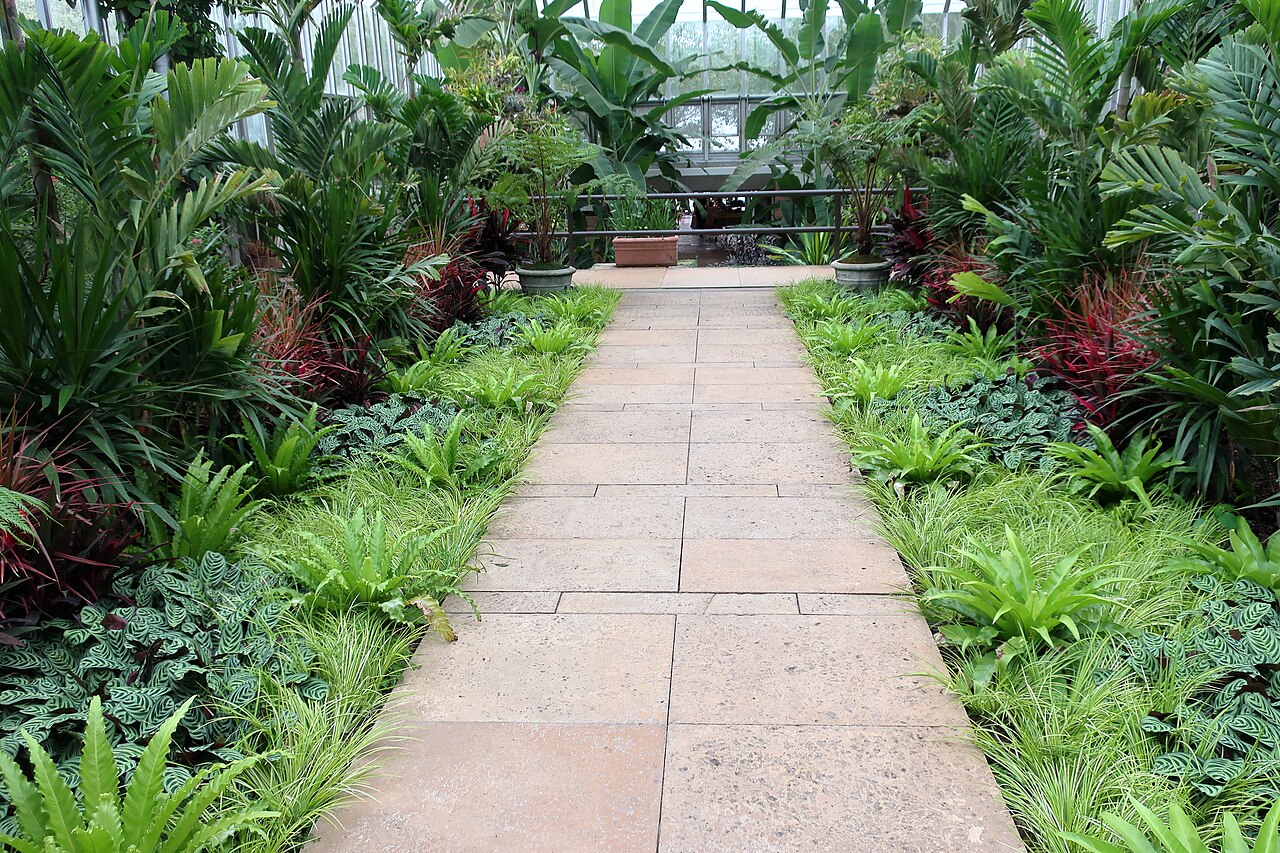
At the heart of the Chicago Botanic Garden in Glencoe, three glasshouses are attached to the Regenstein Center, the former Education Center designed by Edward Larrabee Barnes and completed in 1976. Each reproduces a climate: a hot, very humid tropical house, a semitropical house where ferns, gardenias, jasmine and bougainvillea bloom in winter, and an arid house devoted to cacti, agaves and other succulents. According to the garden's own collections policy, the three houses held more than 1,000 taxa in 2018. Fans, white shading on the panes and tight thermostats regulate light, heat and humidity all year round.
Affiliate links — booking through Verrière helps fund our research, at no extra cost to you.
History
The Chicago Botanic Garden descends from the Chicago Horticultural Society, founded in 1890. In 1962 the Society agreed to create and manage a public garden with the Forest Preserves of Cook County; construction began in 1965 and the garden opened in 1972. According to Horticulture magazine, it then consisted of only a small greenhouse, one outdoor garden and about thirty staff.
The first major building was Edward Larrabee Barnes's Education Center, completed in 1976 according to the American Planning Association, which sees it as the first space devoted to collections, education and research. A Chicago Tribune photograph dated 7 August 1979 presents it as the garden's main building, with connecting greenhouses under triangular roofs, so display greenhouses already existed by then. The garden itself says they have welcomed the public for more than forty years.
Renamed the Regenstein Center, the building (78,000 square feet, or about 7,200 m², including a 10,000-square-foot addition) underwent a complete renovation that earned an ASHRAE Illinois engineering award in 2006. It expanded the public spaces on the first floor, which include exhibition galleries, a library, an auditorium, labs, a catering kitchen and the greenhouses, while the lower level is reserved for offices, workshops and plant preparation. The Regenstein Center's flat roofs were redone in 2023, according to the roofing company that carried out the work.
Architecture and engineering
The garden describes the group as three "glass houses", glazed greenhouses with distinct microclimates, attached to the Regenstein Center, a three-level building with open-air courtyards on either side. The collaborative OpenStreetMap map draws them as three separate volumes, the arid, semitropical and tropical houses.
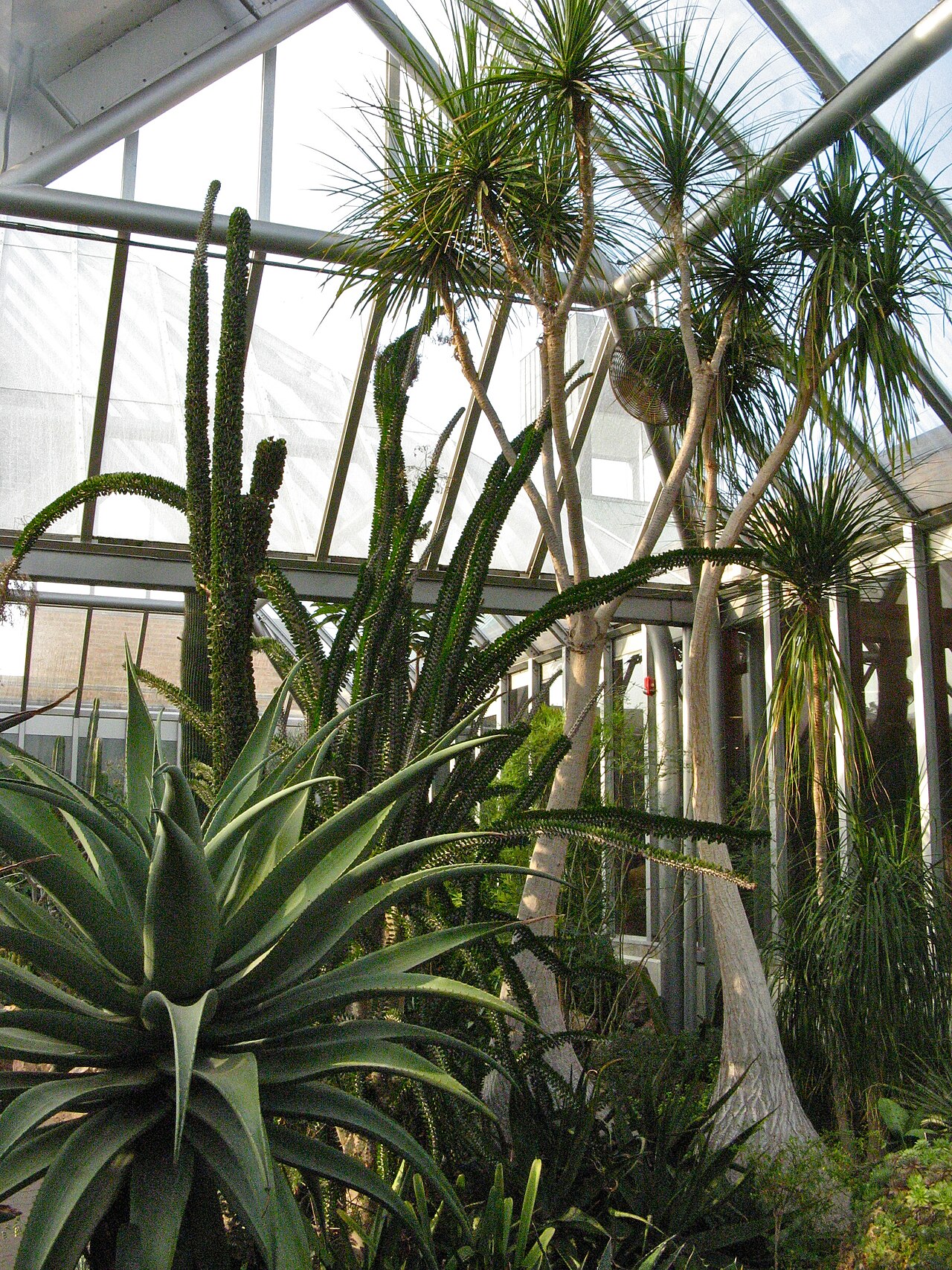
The climate is managed all year: fans, white shading on the panes and tightly set thermostats control light, heat, wind and humidity, with a night-time drop of about ten degrees described as essential. The semitropical house stays between 75 and 85 °F by day (roughly 24 to 29 °C), with humidity close to 30 percent. The tropical house adds about ten degrees Fahrenheit and reaches 90 percent humidity. The arid house runs at 80 to 90 °F in the daytime (27 to 32 °C), can lose 40 degrees at night, and stands on rocky soil.
The roof includes glass panes. In autumn 2025 staff replaced one of them with a sheet of plastic to let the flower stalk of a blooming agave through, then wrapped the tip of the stem in a heated tube to protect it from frost.
Plant collections
According to the garden's collections policy (2018), the three greenhouses hold more than 1,000 taxa, including many threatened species; the garden works with the US Fish and Wildlife Service, CITES and the IUCN to regulate trade in these plants.
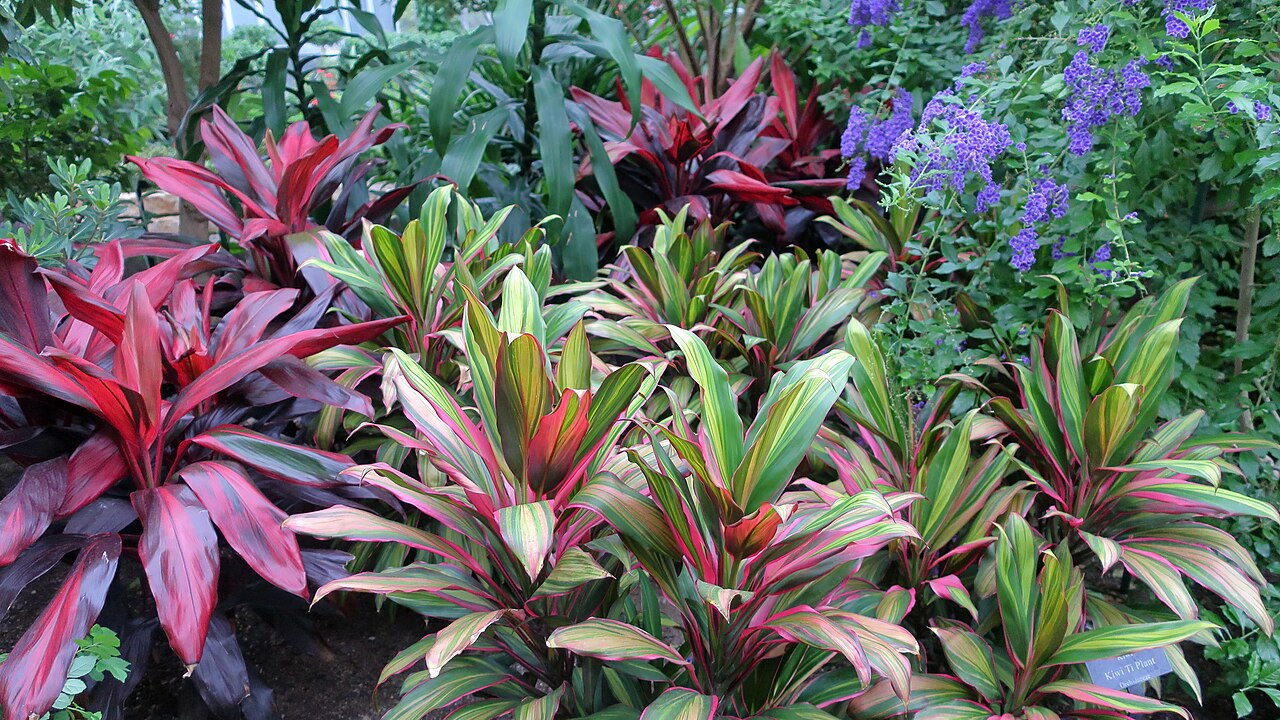
The tropical house, the richest, has nearly 500 taxa from more than 50 families, among them nearly 200 orchids, featured every year in the Orchid Show, along with bromeliads, aroids and gingers. A cacao tree bears its pods and banana plants unfold leaves of seven feet; the garden's own walk-through also cites heliconias and an allée of spindle palms. In 2025 two ghost orchids (Dendrophylax lindenii) were displayed there in flower.
The semitropical house has 160 taxa, chiefly mints, acanthus-family plants and asparagus-family plants; it shows ferns, gardenias and jasmine, a bog garden with about twenty Sarracenia and Nepenthes, and is also used to show titan arums in bloom. The arid house gathers more than 400 taxa from 35 families, including South African aloes that flower in winter; an agave acquired in 1993 flowered there in 2025-2026.
Visiting
The greenhouses stand inside the Regenstein Center, which also houses the Lenhardt Library, exhibition halls and an auditorium; garden admission has been charged since 2022, as has parking. The garden presents the walk through the three climates as a short escape of a few minutes, most welcome in winter, when the semitropical plants and the aloes are in bloom.
The Orchid Show, an annual event in February and March (6 February to 21 March in 2027, themed "Orchids in Orbit"), takes over the premises; the greenhouses close in January while it is installed (from 20 January in 2026). A visit can continue with the Japanese garden or the English walled garden; about thirty kilometres to the south, Chicago offers Lincoln Park Conservatory and Garfield Park Conservatory.
42.15° N, 87.79° W
Greenhouses nearby
More greenhouses — United States
Do you have a good photo of this greenhouse? Suggest it for this page →
Sources (9)
- chicagobotanic.org/walk/walk-through-greenhouses
- chicagobotanic.org/about
- chicagobotanic.org/blog/news/our-bloom-century
- bgci.org/resource/chicago-botanic-garden-collection-policy/
- planning.org/greatplaces/spaces/2012/botanicgarden.htm
- galleries.apps.chicagotribune.com/chi-classic-photos-chicago-botanic-garden-20131122
- grummanbutkus.com/projects/chicago-botanic-garden-regenstein-center/
- hortmag.com/chicago-botanic-garden-visit-a-city-in-a-garden
- en.wikipedia.org/wiki/Chicago_Botanic_Garden
Affiliate links — booking through Verrière helps fund our research, at no extra cost to you.