Large Palm House and Cactus House, AJC Bose Indian Botanic Garden
Shibpur, Howrah, West Bengal
Entry updated on October 3, 2026
- Year
- Mid-19th century · Cactus House: 1987
- Style
- Iron-framed palm house with dome; pentagonal glasshouse (Cactus House)
- Status
- Open to the public
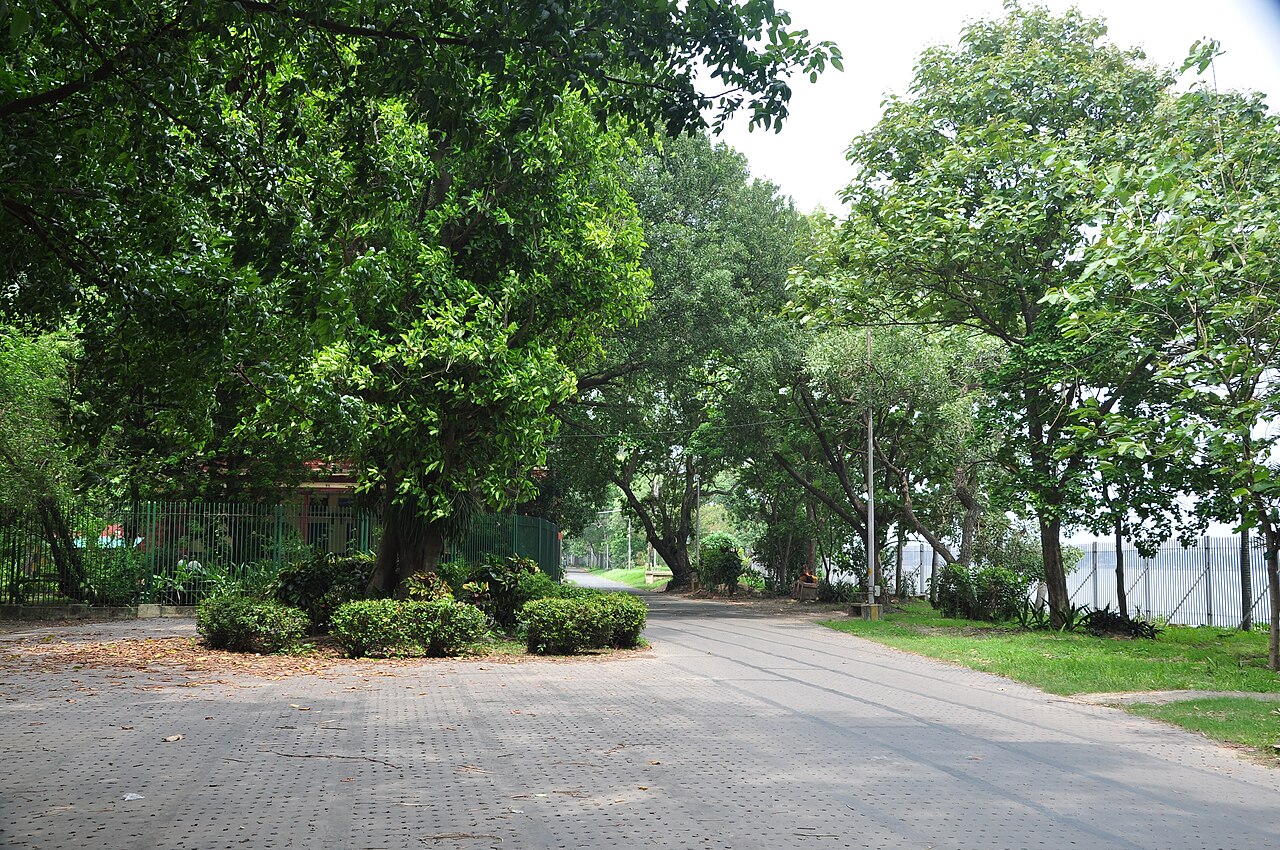
The botanic garden at Howrah, near Kolkata, was founded in 1787 on the initiative of Lieutenant-Colonel Robert Kyd. Its Large Palm House, built in the middle of the 19th century for palms and shade-loving plants, is an iron structure crowned by a dome and shaded by climbers; a double coconut planted in 1894 grows beneath the dome. The Cactus House, a pentagonal glasshouse put up for the garden's bicentenary in 1987, holds more than a hundred species of succulents. The garden is now run by the Botanical Survey of India.
Affiliate links — booking through Verrière helps fund our research, at no extra cost to you.
History
1 min
The garden grew out of a proposal made in 1786 by Lieutenant-Colonel Robert Kyd: the following year permission was given to lay out some 310 acres below his private garden at Shalimar. Honorary superintendent until his death in 1793, Kyd's successors included William Roxburgh (1793–1815), author of the catalogue Hortus Bengalensis (1814), and Nathaniel Wallich, in post from 1817 to 1846.
Two cyclones then devastated the site. In 1864 the water rose nearly eight feet in places and left two ships stranded in the garden; in 1867 another storm brought down more than 750 of the trees that had survived. George King, superintendent from 1871 to 1897, rebuilt the garden: he raised the ground, created 24 lakes linked to the Ganges by pipes and steam pumps, laid out roads and paths, and replaced the old bamboo structures with large iron ones. The garden's own notes date the Large Palm House to the middle of the 19th century; the double coconut was planted in it in 1894.
In 1987 the garden's bicentenary was marked by the construction of the Cactus House. Part of the Botanical Survey of India, which King had founded in 1890, the institution has borne the name of the scientist Jagadish Chandra Bose since 24 June 2009.
Architecture and engineering
1 min
The Large Palm House stands in Division XVII of the garden, which has 25 divisions in all. Its iron structure, crowned by a dome, works as a shade house: climbers trained over the frame filter the light above the palms and shade-loving plants grown inside, creating an atmosphere the garden compares to that of a rainforest. The centre of the building, directly beneath the dome, is reserved for the double coconut. The sources consulted give neither a precise construction date, nor a designer's name, nor dimensions.
The Cactus House, in Division 22, follows a quite different approach: it is a free-standing glasshouse on a pentagonal plan, built in 1987. Both buildings sit within the landscape remodelled by George King in the late 19th century, with its interconnected lakes, roads and paths.
Plant collections
1 min
Beneath the dome of the Palm House grows Lodoicea maldivica, the double coconut, a palm native to the Seychelles that was introduced and planted here in 1894. Around it are gathered threatened palms such as Areca nagensis, Arenga engleri, Bentinckia nicobarica, Licuala peltata, Livistona jenkinsiana, Orbignya cohune and Rhopaloblaste augusta, together with the climbing rattan Calamus andamanicus and the bird's nest fern (Asplenium nidus).
The Cactus House brings together more than a hundred species of succulents from ten families, rare species among them. These collections reflect the course the garden has followed since 1987: giving priority to rare, endangered and threatened native species, notably from the Western and Eastern Ghats, North-East India and the Andaman and Nicobar Islands.
Visiting
1 min
The garden, about 110 hectares in extent, lies at Shibpur in the city of Howrah. The Palm House and Cactus House combine with the site's other highlights: the Great Banyan, which measures more than 330 m around, the giant water lily Victoria amazonica, the Mahogany Avenue that followed the species' introduction in 1795, the baobab and Amherstia nobilis. Specialised sections — arboretum, pinetum, palmetum, bambusetum, orchidarium — extend the walk, and the two glasshouses stand about 500 m apart.
22.56° N, 88.29° E
Greenhouses nearby
More greenhouses — India
All greenhouses — India →
Do you have a good photo of this greenhouse? Suggest it for this page →