Bolz Conservatory (Olbrich Botanical Gardens)
Madison, Wisconsin
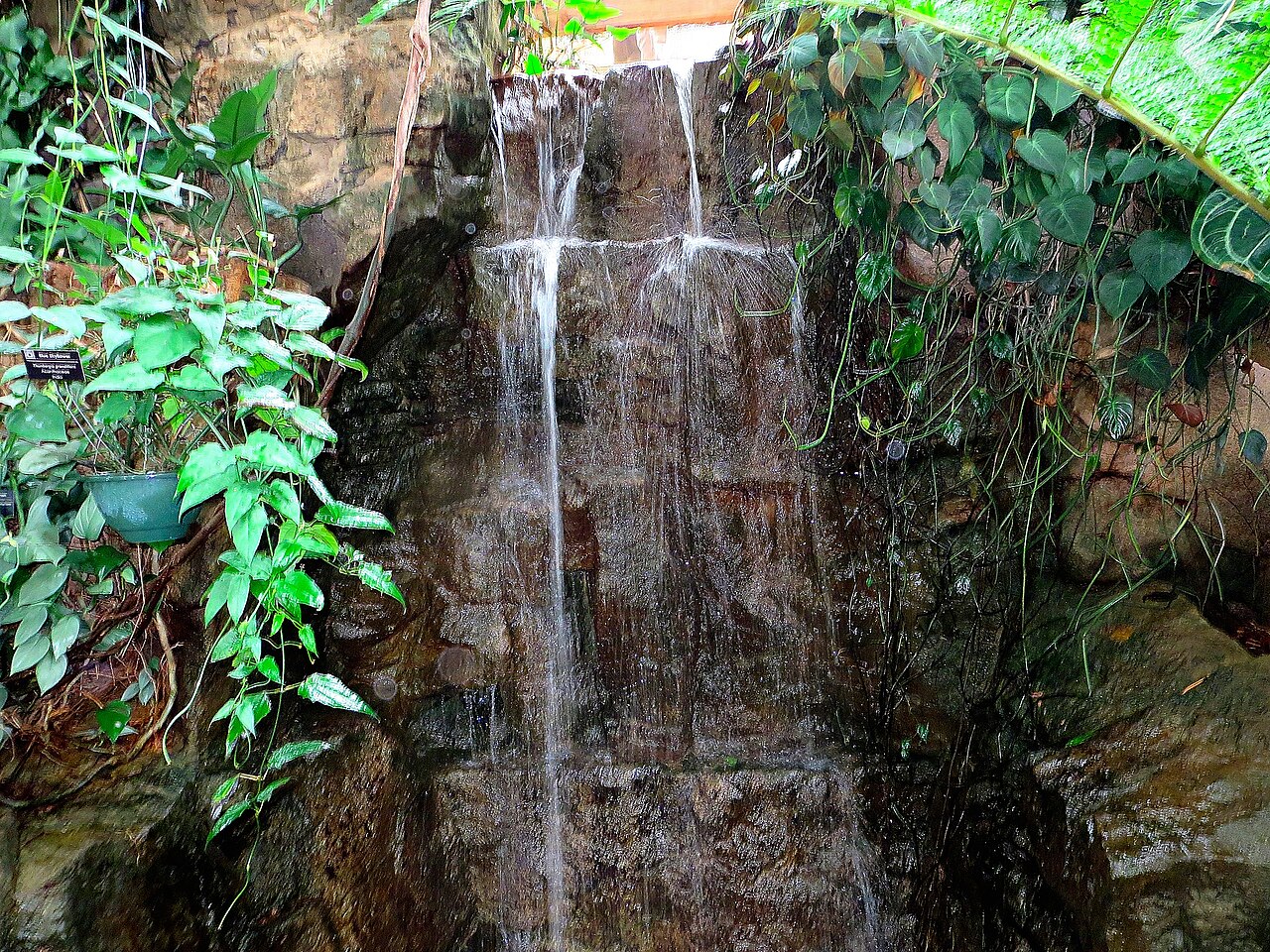
Entry updated on October 5, 2026
- Year
- 1991
- Architect
- Stuart Gallaher
- Style
- Contemporary glass pyramid on a metal frame
- Dimensions
- ≈930 m² (10,000 sq ft); 30 × 30 m base, 15 m high
- Status
- Open to the public; glazing repairs in design (occasional closures)
Opened to the public on 2 November 1991 at Olbrich Botanical Gardens in Madison, the Bolz Conservatory is a glass pyramid 30 metres square that rises to 15 metres at its apex. Designed by the architect Stuart Gallaher and built by J. H. Findorff, it holds more than 750 tropical and subtropical plants, several kinds of birds and a koi pond across some 930 m². After its first major maintenance closure in 2024, the City of Madison is preparing repairs to its glazing, ventilation and heating.
Affiliate links — booking through Verrière helps fund our research, at no extra cost to you.
History
1 min
Madison's botanical garden honours Michael Olbrich (1881-1929), a lawyer, politician and conservationist who was also behind the University of Wisconsin Arboretum. Officially founded in 1952, Olbrich Botanical Gardens belong to the city, whose parks division runs them jointly with a non-profit, the Olbrich Botanical Society.
According to the city, a first visitor building, the Atrium, was built in 1977; the garden states that the architect Stuart Gallaher had designed it as early as 1971. In 1986 he went on to design the new visitor centre and the conservatory. J. H. Findorff built the complex, which cost 4.6 million dollars, three quarters of it raised from private donors. The Bolz Conservatory opened to the public on 2 November 1991; the city, for its part, dates to 1992 the completion of this new campus, which brought together the visitor centre known as The Commons, offices, production greenhouses and the pyramid.
In March 2024 the conservatory underwent its first major closure since opening, so that the glass, metal framing, foundation and seals could be inspected. Assessments commissioned since 2022 by the city and the garden found that much of the glass roof had lost its weather sealing and thermal performance. A repair project entered design in July 2025, with completion envisaged for June 2028; in July 2026, however, the city noted that it might pause while funding is sought.
Architecture and engineering
1 min
The conservatory takes the form of a glass pyramid on a square plan 100 feet (about 30 m) on each side, rising to 50 feet (about 15 m) at its apex. It thus covers some 10,000 square feet, close to 930 m². The glass panels rest on a metal frame, and a cupola caps the tip of the pyramid, housing the ventilation equipment. Heat comes from radiator-style tubes running around the interior perimeter, and part of the planting sits in raised beds.
The indoor climate is kept between 65 and 80 °F (18 to 27 °C), although summer sun can push it to 100 °F (38 °C); relative humidity is held at 70 per cent or more. Exposed on the outside to Wisconsin's extremes, the envelope has aged: the roof's seals and thermal qualities have deteriorated, and some raised beds leak. The planned works include replacing the glazing and cleaning and repainting the concrete and steel elements. In January 2026 the design team removed and reinstalled one glass panel to document the procedure.
Plant collections
1 min
The pyramid gathers more than 750 plants from over 70 families, representing more than 550 species and cultivars, all native to tropical and subtropical regions. Their presence depends on a stable, warm and humid indoor climate maintained all year round, at a latitude where winters are harsh.
The conservatory also houses a small fauna: several species of birds, among them canaries, waxbills and quail, and a pond stocked with koi and goldfish. Preparations for the repairs have raised the question of which plants cannot be moved during construction and will have to be protected in place. For a few days each year the conservatory closes while temporary exhibitions are installed or dismantled.
Outdoors, the gardens extend the collection: an English-style sunken garden with a 24-metre reflecting pool, a rose garden, a rock garden of conifers and alpines, an herb garden of medicinal, dye and kitchen plants, and a Thai garden planted to look tropical in summer while surviving Wisconsin winters.
Visiting
1 min
The pyramid is part of the visitor complex of Olbrich Botanical Gardens at 3330 Atwood Avenue in Madison. The roughly 16 acres (6.5 ha) of outdoor gardens are free to enter, while admission to the conservatory is charged.
Half an hour is enough for the conservatory; allow more for the sunken garden, the rose garden and the Thai sala opened in 2002, linked to the rest of the garden by a 47-metre footbridge over Starkweather Creek. In winter the pyramid is a tropical refuge a few steps from the dormant gardens. It closes for several days a year for maintenance, especially in spring, and major repairs are being prepared, so checking the garden's calendar before a visit is wise.
43.09° N, 89.34° W
Greenhouses nearby
More greenhouses — United States
Do you have a good photo of this greenhouse? Suggest it for this page →