Orangery of the Samara University Botanical Garden (Botanichesky Sad)
Samara, Samara Oblast

Entry updated on October 5, 2026
- Year
- 1935-1936
- Architect
- Unknown
- Style
- 1930s collection orangery, extended 1947-1961 and rebuilt 1962-1974
- Dimensions
- About 1,200 m², 6 to 8 m high depending on the source
- Status
- Open to the public at limited times
Samara's botanical garden, founded on 1 August 1932 and part of Samara University since 2015, has grown tender plants from the start: first in a small semi-basement greenhouse, then in an orangery built in 1935-1936 for research and themed tours. Extended between 1947 and 1961 and rebuilt between 1962 and 1974, it now covers about 1,200 m² with a tropical section, a subtropical section and four attached glasshouses, and holds well over a thousand species, forms and cultivars.
Affiliate links — booking through Verrière helps fund our research, at no extra cost to you.
History
1 min
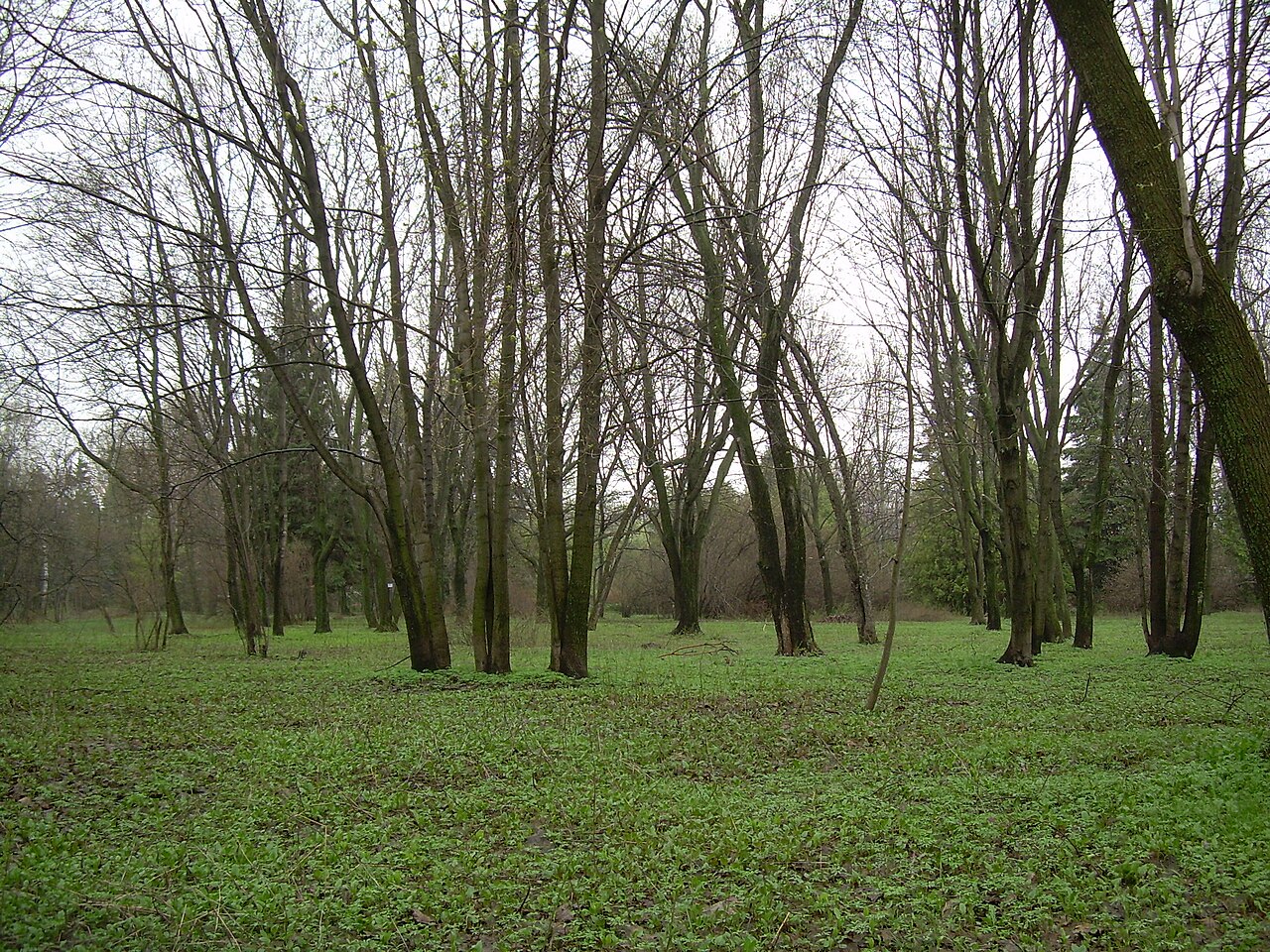
Samara's botanical garden was founded on 1 August 1932 at the initiative of V. I. Smirnov, director of the research institute for the study and protection of nature in the Middle Volga region, to which it then belonged. It took over former dachas, the largest of which had belonged to a plant-loving landowner named Borshchev; North American blue spruces planted there in 1905 still stand.
Growing under glass began in 1932 in a small semi-basement greenhouse used for raising seedlings. In 1935-1936 the garden acquired a proper orangery, designed for scientific work and themed tours. After the war the building was extended between 1947 and 1961 and then rebuilt between 1962 and 1974.
The garden was recognised as a natural monument of regional importance in 1977 and as a specially protected natural area in 1995. Since 2015 it has been a division of Samara University. Its director describes it as a reservoir of rare species; in 2008 it supplied plants to reintroduce a fine-leaved peony that had been listed as lost from the region.
Architecture and engineering
1 min
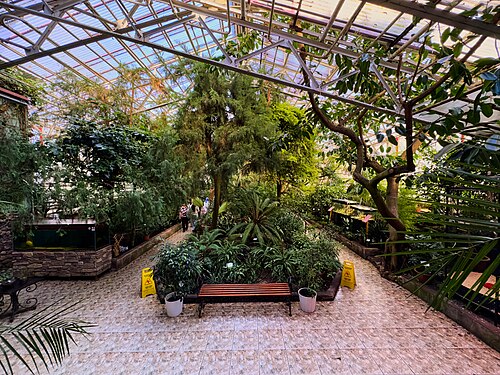
None of the sources consulted names the orangery's designer. The present complex covers about 1,200 m²; the university gives its height as 8 m, Wikipedia as 6 m. It consists of two sections run at different temperatures, one tropical and one subtropical, with four smaller glasshouses attached.
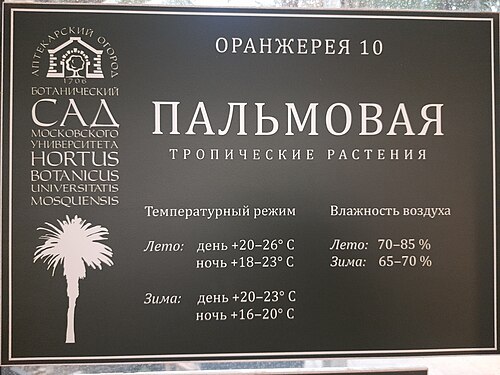
The tropical section is kept humid at about 24 °C, while the subtropical part stays slightly cooler at around 20 °C. This arrangement allows rainforest plants and species of Mediterranean or subtropical origin to be shown side by side. The garden presents it as the largest orangery on the Middle Volga, a region whose winters rule out growing such plants outdoors.
Plant collections
1 min
According to Wikipedia the orangery holds 1,187 species, forms and cultivars from 113 families and 362 genera; a 2026 feature gives about 1,300 tropical species brought from Japan, Australia, China, South America and Africa. Nearly 30 per cent of the collection consists of threatened species, starting with the dragon tree, which survives in the wild on only two of the Canary Islands.
The collection includes some fifty species of bromeliads, ferns, acalyphas, lemons and figs. The Japanese banana bears fruit here, though its seed-filled fruits are not edible. Feijoa, loquat, guava, fig, coffee, avocado and murraya are also grown, together with a rare tropical conifer from southern China, the nagi podocarp.
Visiting
1 min
The orangery stands in the botanical garden at 36 Moskovskoye Shosse, in the geographical centre of Samara. It opens only at certain times of the week, more limited than the garden's own hours, so the university's website is worth checking first. The garden itself closes in winter.
A visit can continue along the garden's 9.5 km of paths, among more than 4,700 species, varieties and forms. Near the main entrance two artificial ponds are said to be the oldest in the city, and 2026 brought a garden of ornamental apple trees and a bed of plants raised from seeds sent into orbit in 2013.
53.22° N, 50.18° E
Greenhouses nearby
More greenhouses — Russia
Do you have a good photo of this greenhouse? Suggest it for this page →