Palm House, Peter the Great Botanical Garden
Saint Petersburg

Sources checked September 2026
- Year
- 1896–1898
- Architect
- Ieronim Kitner and N. I. de Rochefort
- Style
- Historic iron-and-glass greenhouse, an evolving complex from the 19th and early 20th centuries
- Dimensions
- About 1 hectare of combined glazed area across the whole greenhouse complex
- Status
- Open to the public
The successor to the apothecaries' garden founded by Peter the Great in 1713, the Saint Petersburg Botanical Garden built its great palm house between 1896 and 1898, as its collections were expanding to around 15,000 species, then one of the richest in the world. The greenhouse complex was almost entirely destroyed by German bombing during the Siege of Leningrad, leaving only about a thousand plants alive. Rebuilt after the war, its collections now exceed 12,000 taxa, and the neighbouring Victoria house has a pool 13 metres across.
Affiliate links — booking through Verrière helps fund our research, at no extra cost to you.
History
The Saint Petersburg Botanical Garden, on Aptekarsky Island, has grown plants under glass since the 1730s; an inventory of 1736 already listed 921 plants in three wooden glasshouses. After a decree of Alexander I made it an independent imperial institution in 1823, director Friedrich Fischer built a huge range of glasshouses between 1823 and 1826, about 1.5 kilometres long in total. A first palm house followed in 1845–1849 and a Victoria house in 1853.
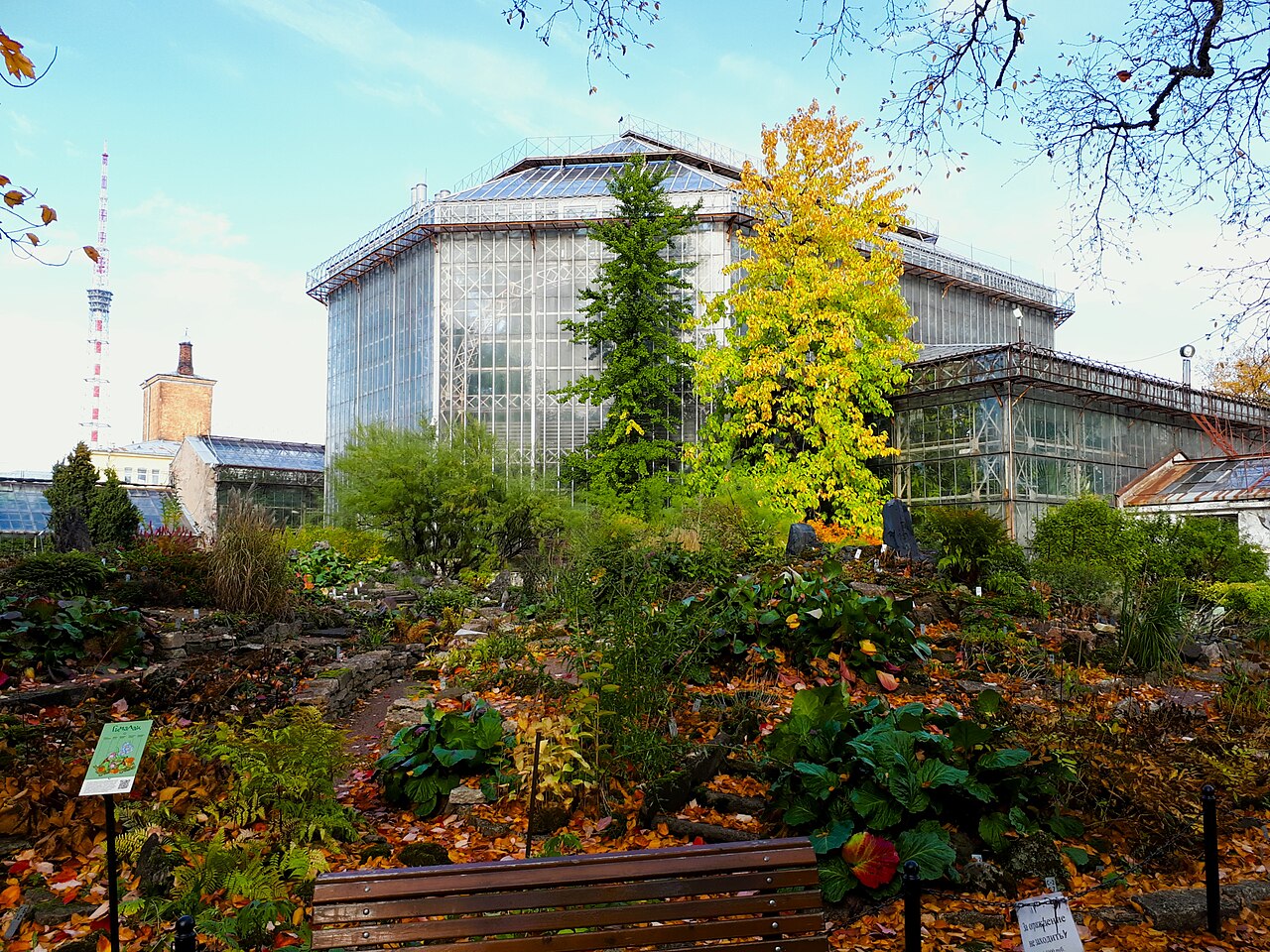
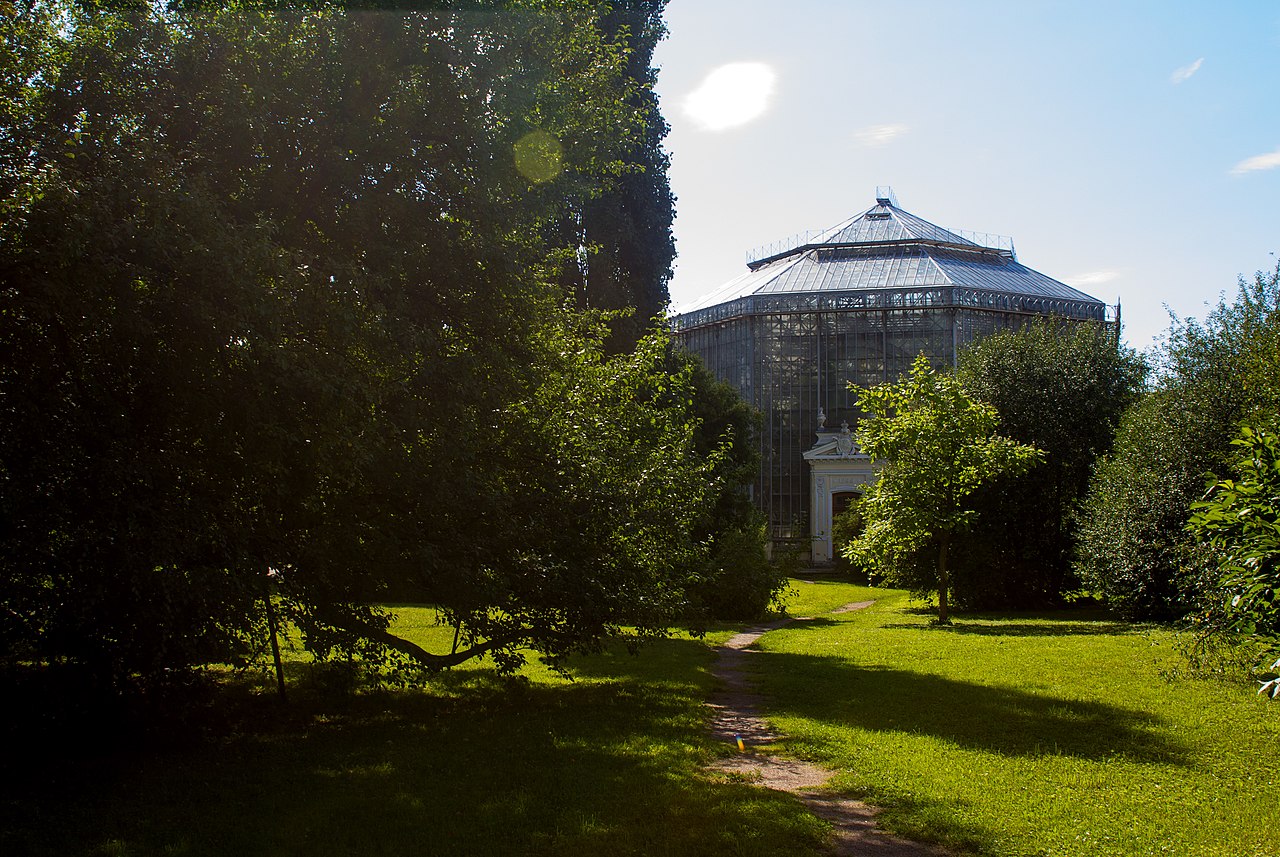
The present Great Palm House (glasshouse No. 26) was built between 1896 and 1899 to designs by the architects Ieronim Kitner and Nikolai de Rochefort. According to E. M. Arnautova's 2015 history of the collections, it opened on 8 November 1899 together with the adjoining houses Nos. 27 and 28; the garden's own website gives 1896–1898.
The Siege of Leningrad was devastating. On 15 November 1941, with the temperature around −15°C, a bomb fell near the palm house, destroying houses 16 to 18 and blowing out the glass elsewhere. The palms died on the first night. In January 1942 the garden recorded the loss of every plant under glass; roughly a thousand specimens survived, sheltered in one small heated house or in staff members' homes. Rebuilding the collection began in 1943 with material from Batumi and later Sukhumi. By the late twentieth century the building was in critical condition; it was reconstructed, with work completed in December 2003, and on 3 January 2004 it received visitors for the first time in seventeen years.
Architecture and engineering
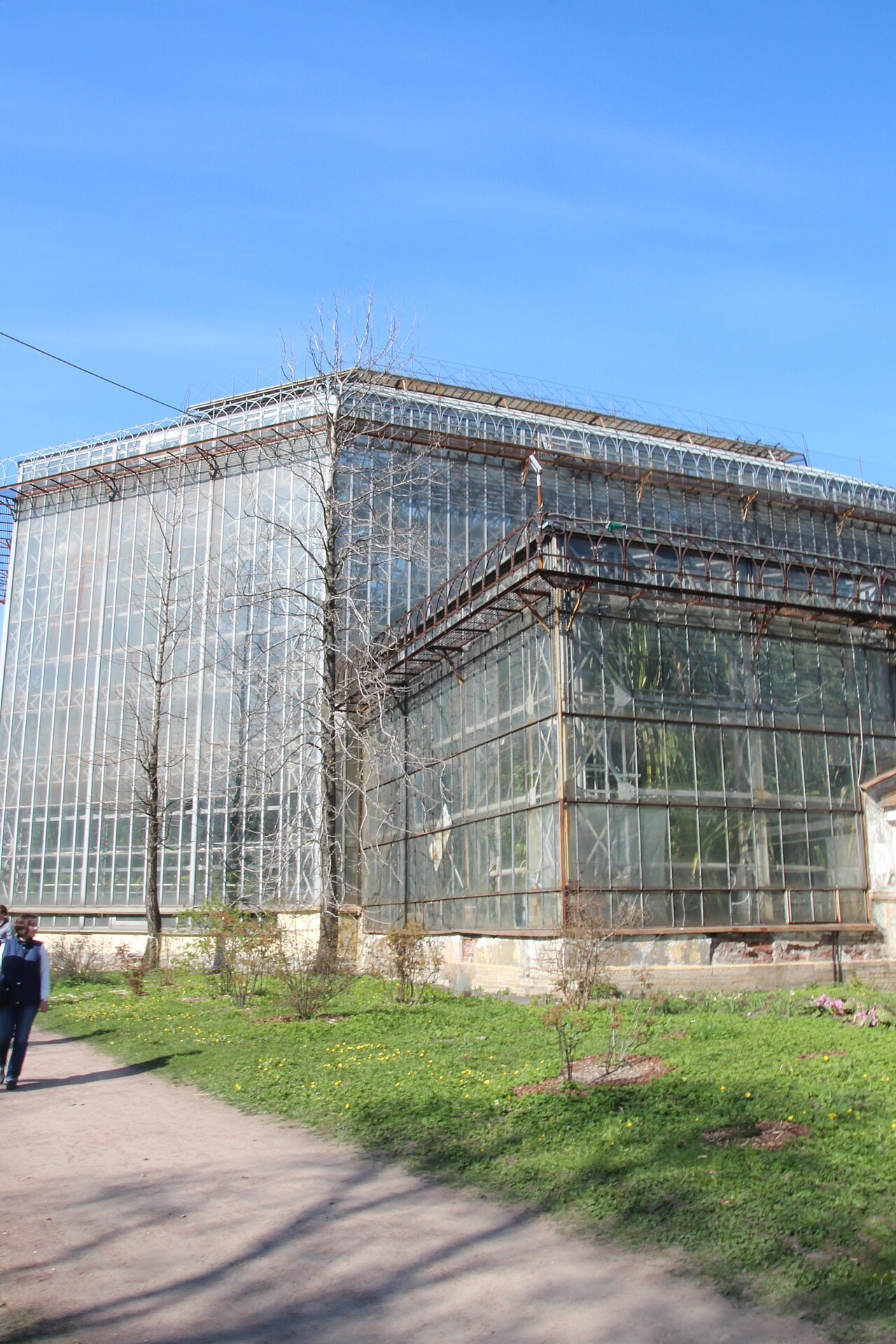
Completed in 1899, the Great Palm House stands 23.5 metres high, which Arnautova describes as the tallest glasshouse in the world at the time. It forms a single late nineteenth-century iron-and-glass group with the Mangrove House (No. 27) and the Victoria House (No. 28). The Victoria House holds a circular pool about 13 metres across (12.9 metres according to the garden), with some 113 square metres of water surface, compared with 7.6 metres for the 1853 pool.
The whole glasshouse complex, made up of buildings of different periods, covers more than a hectare. The reconstruction programme begun in the late 1990s tackled the Great Palm House first, finishing it at the end of 2003, followed by the large subtropical house in 2005 and house No. 16 in 2008; around a dozen houses were still awaiting work at that point.
Plant collections
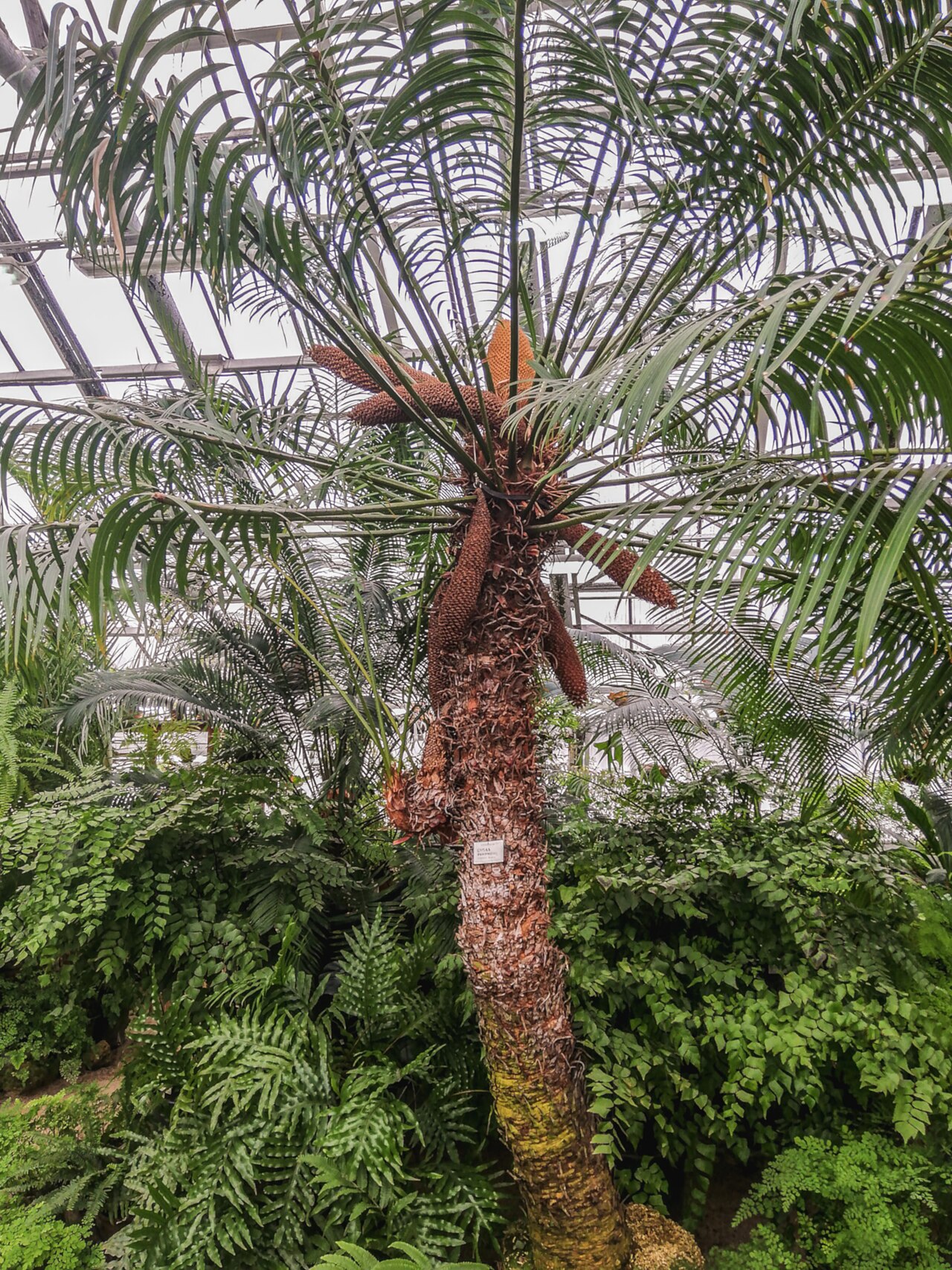
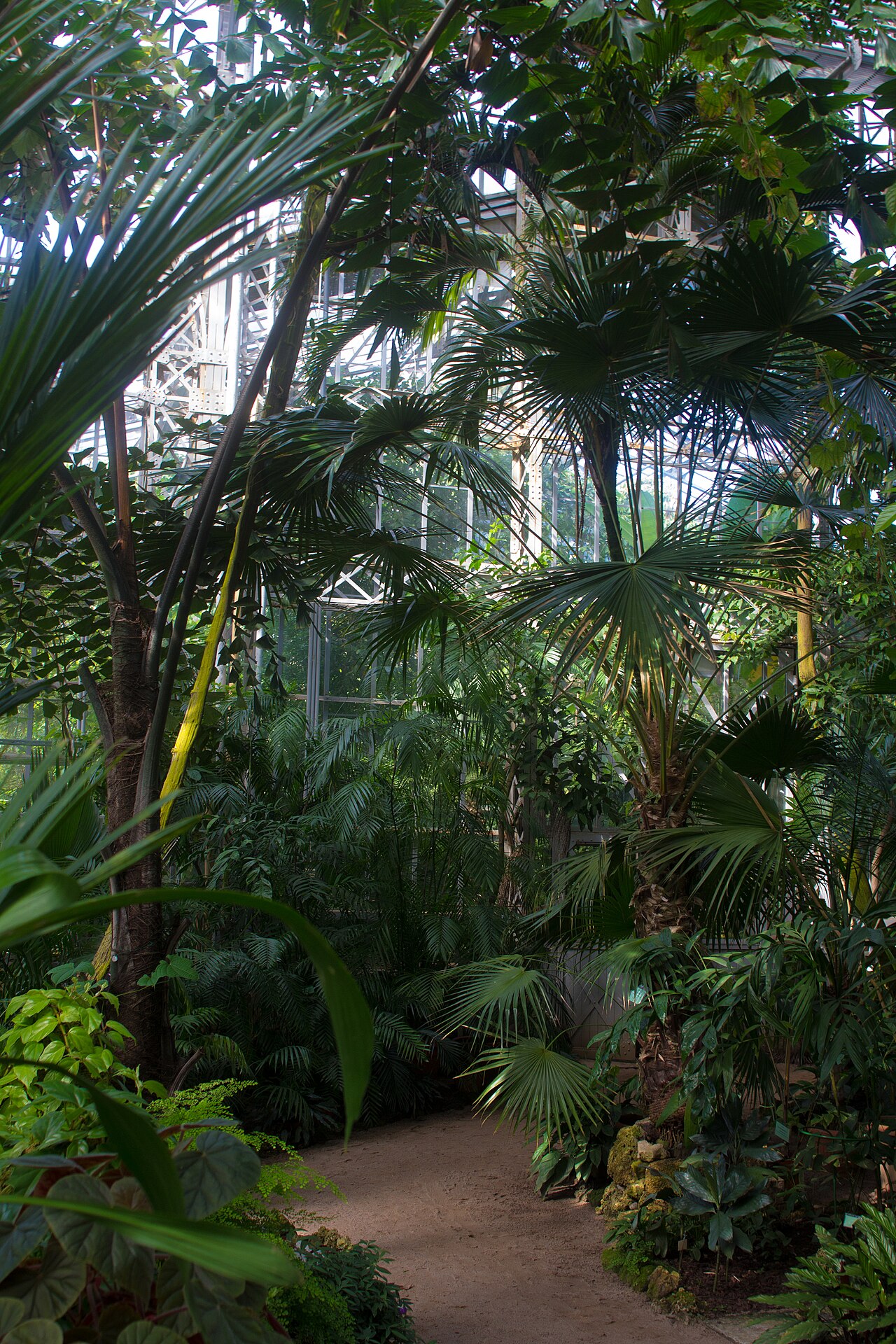
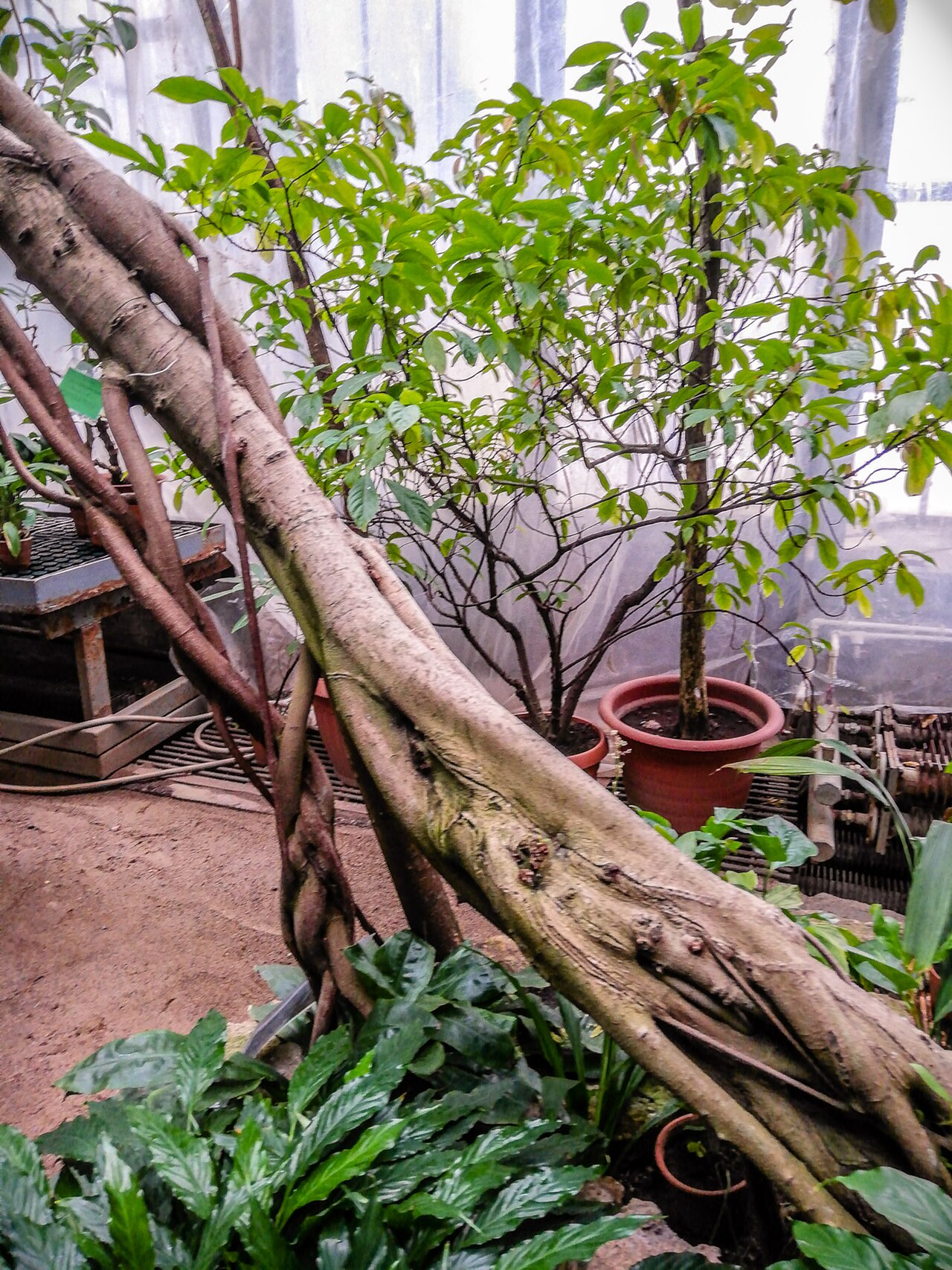
The Great Palm House holds a range of palms, including climbing rattans, the sugar palm and species tapped for palm wine, along with tropical trees such as the looking-glass tree and ant plants. A giant bamboo reaches up towards the roof. Next door, house No. 28 is devoted to Victoria amazonica and other aquatic plants.
Across all the glasshouses the garden now holds more than 12,500 taxa according to Arnautova, or over 13,000 according to its website, including more than 1,500 rare or threatened species. Its oldest plant is a Selenicereus grandiflorus cactus, grown since 1824 according to the garden, whose night flowering is a much-publicised annual event. In winter or during school holidays the palm house hosts a recurring orchid exhibition called Fragments of the Rainbow.
Visiting
The garden occupies part of Aptekarsky Island in the Petrogradsky district. The glasshouses are seen on themed routes, often guided: a subtropical route, a tropical route and an aquatic route. The aquatic route runs in the warmer months only and takes in the Great Palm House and the Victoria House. In winter the palm house may be added to the tropical route, particularly during the orchid show. Summer is the richest season, when the giant water lilies are in flower. When the outdoor arboretum is open, a visit to the glasshouses extends naturally into the park.
59.97° N, 30.32° E
Greenhouses nearby
More greenhouses — Russia
Do you have a good photo of this greenhouse? Suggest it for this page →
Sources (7)
- botsad-spb.com/ru/oranzherei/vodnye/bolshaya-palmovaya-oranzhereya
- botsad-spb.com/ru/o-nas/istoriya
- botsad-spb.com/en/
- hb.karelia.ru/journal/article.php?id=3102
- new.ras.ru/activities/news/kak-v-gody-voyny-spasali-botanicheskiy-sad-petra-velikogo-bin-r
- en.wikipedia.org/wiki/Saint_Petersburg_Botanical_Garden
- fontanka.ru/2003/12/26/67151/
Affiliate links — booking through Verrière helps fund our research, at no extra cost to you.