Palm Greenhouse, Aptekarsky Ogorod
Moscow

Sources checked October 2026
- Year
- 1891
- Style
- Victorian iron-and-glass greenhouse
- Dimensions
- Interior height of about 18 meters under the main vault
- Status
- Open to the public
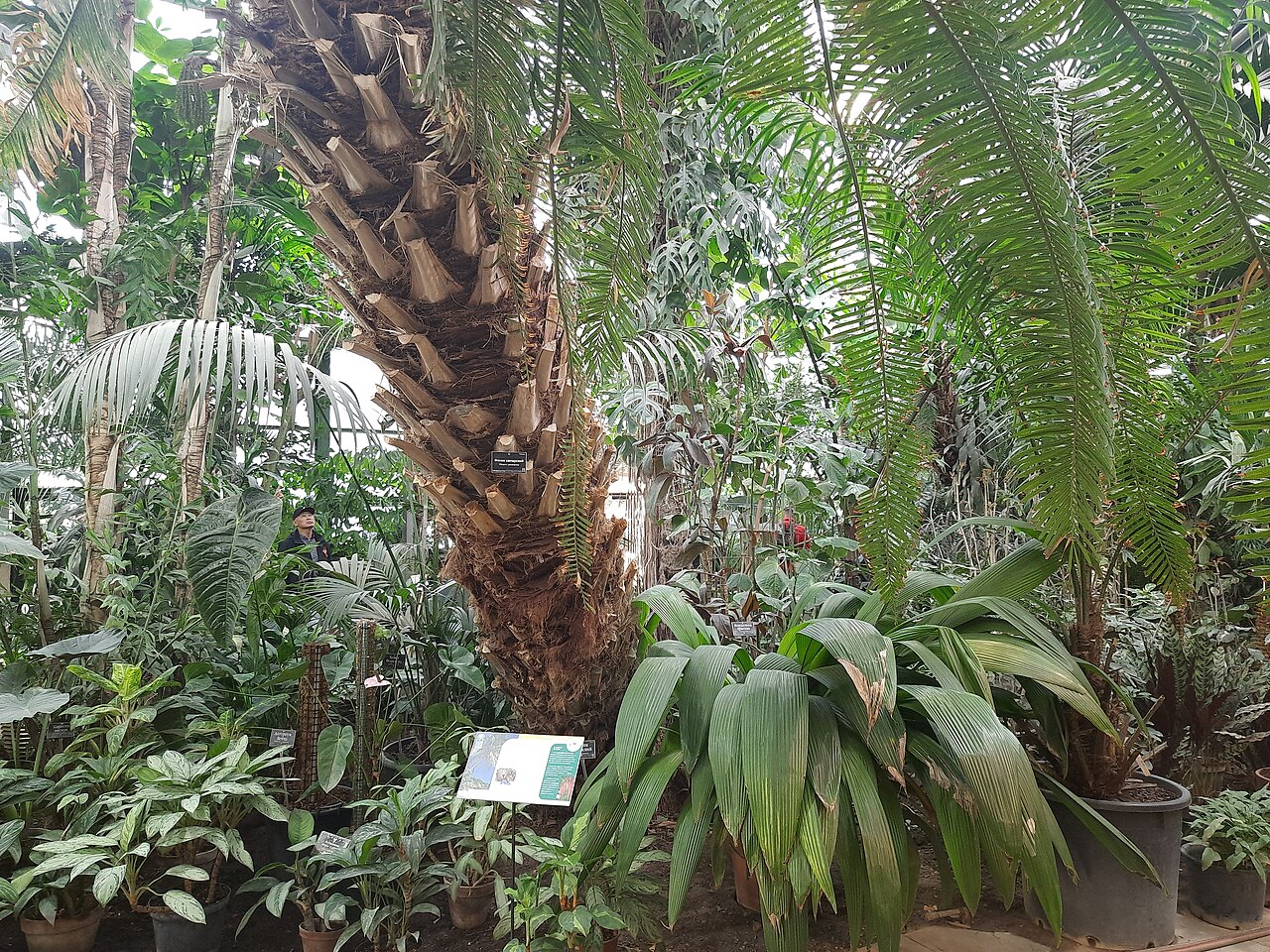
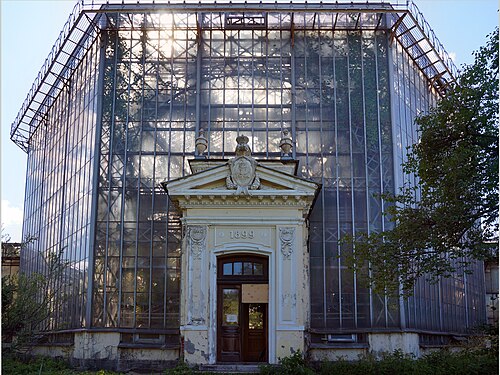
Founded in 1706 as a garden of medicinal plants by Peter the Great, Moscow University's Aptekarsky Ogorod built its palm house in 1891 to shelter a collection already nearly two centuries old at the time. Under a metal-and-glass frame rising to about 18 meters, some century-old palms now reach the roof. The greenhouse preserves a Cycas circinalis specimen about 200 years old, as well as a Howea forsteriana planted more than 120 years ago, the garden's oldest living resident.
Affiliate links — booking through Verrière helps fund our research, at no extra cost to you.
History
The Aptekarsky Ogorod, or Apothecaries' Garden, was founded on the orders of Peter the Great to grow medicinal plants and train future doctors. In 1805 it passed to Moscow University and became a research base; today it is the botanical garden of the Faculty of Biology at Lomonosov Moscow State University. Neglected after 1917, it was restored in the late 1930s.
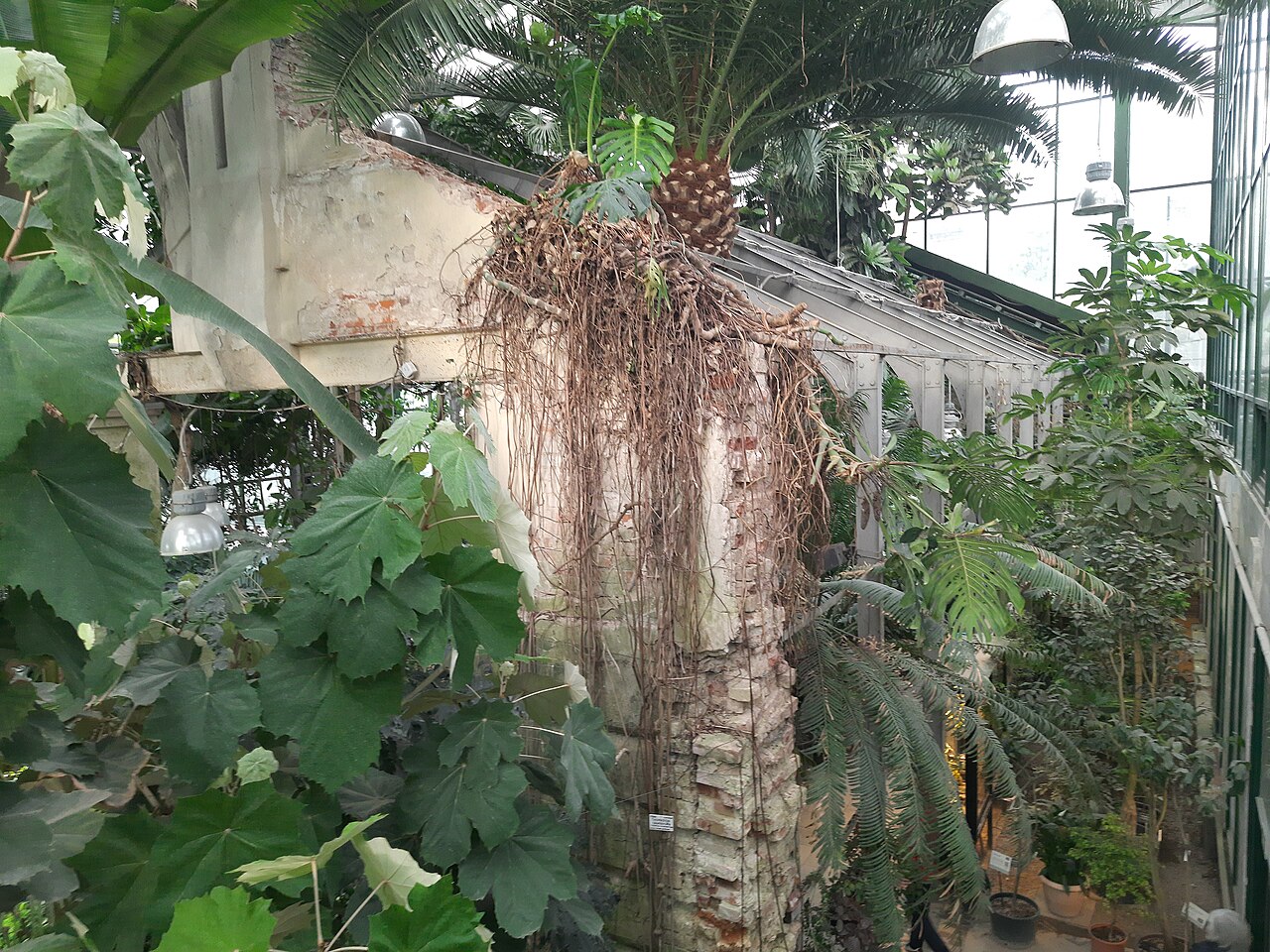
The palm house was built in 1891 to hold tropical collections that had been assembled over more than two centuries, some of them from other historic gardens in the region. It has been rebuilt in several phases. By the 1990s the original structure was badly deteriorated, and instead of demolishing it the garden had a new glasshouse of large glass panels built directly over the old one, keeping the nineteenth-century facade inside the new envelope.
That facade had long been smothered in climbers until spring 2017, when the garden's director, Alexei Retelyum, had the vegetation cut back so that visitors could see it properly again. At the end of 2014 new decorative lighting allowed longer opening hours, and a bog garden of carnivorous plants was added.
Architecture and engineering
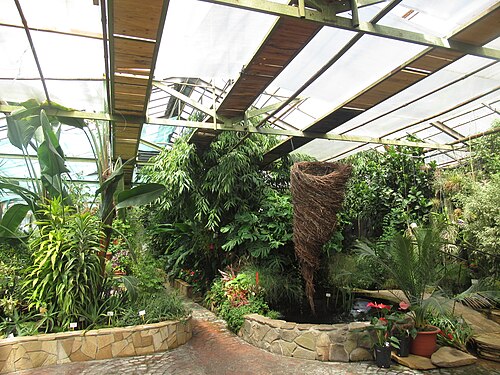
The present palm house is a large contemporary glass pavilion that literally wraps around the 1891 building. This glasshouse-within-a-glasshouse approach preserves the nineteenth-century facade wall as an interior feature, and the collection's most valuable plant grows beside it. The height of the new envelope is best read from the plants themselves: the century-old palms are close to touching the roof.
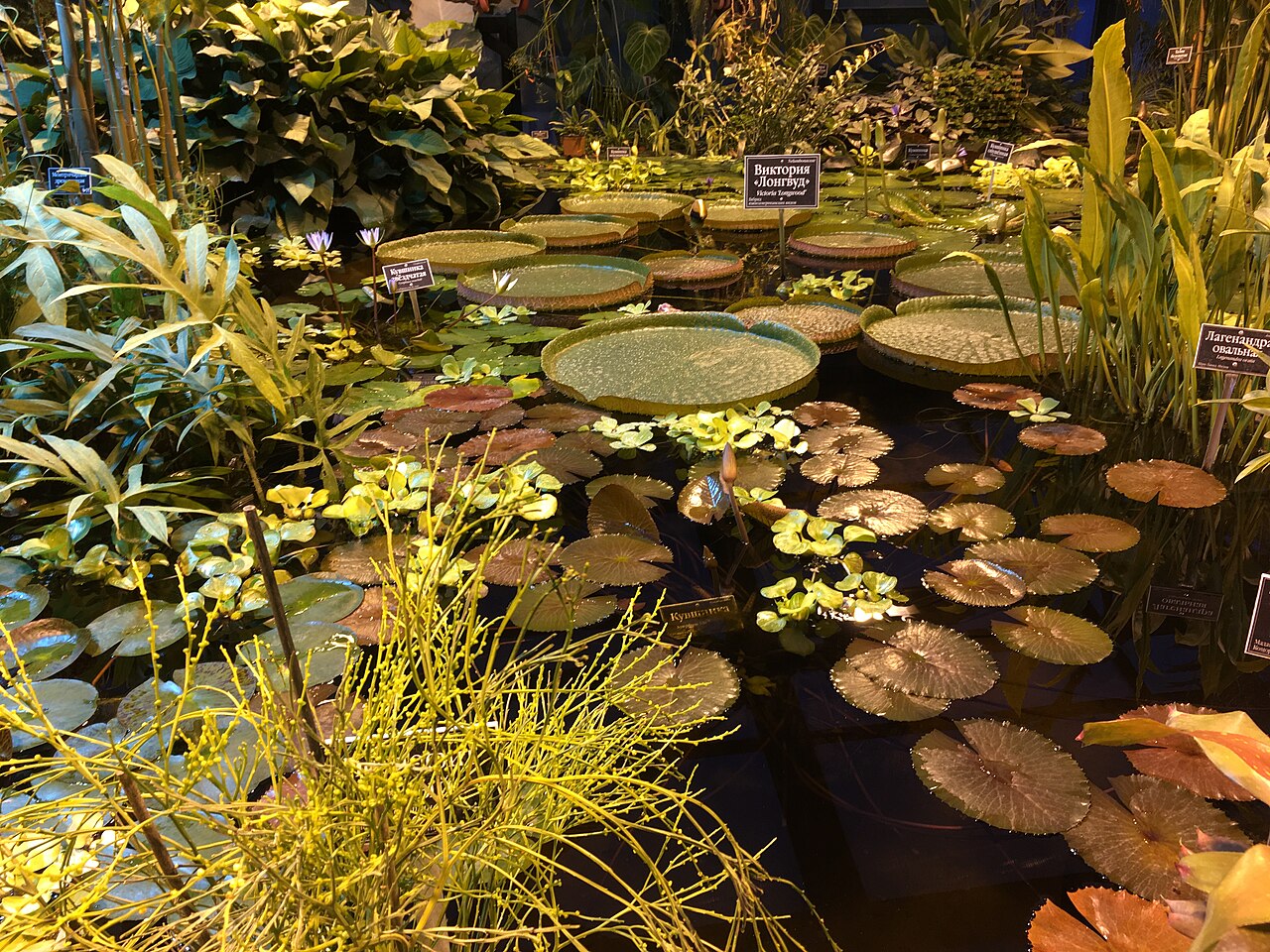
The palm house belongs to a group that also includes a Victoria house, a succulent house on the upper floor, a subtropical house reopened after reconstruction in 2021, and collection houses closed to the public. The tropical houses are kept at around 25°C with high humidity.
Plant collections
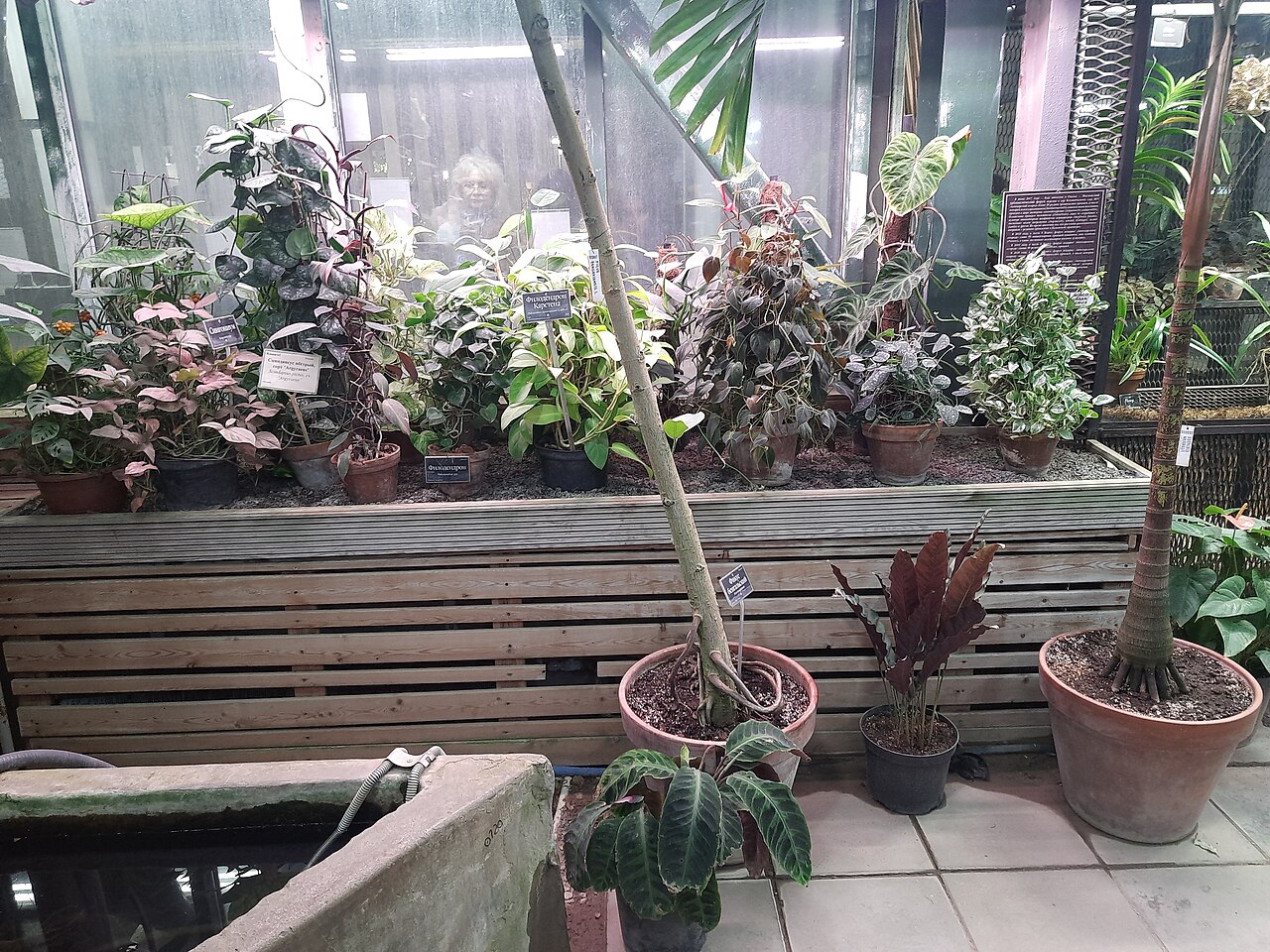
The prize specimen is a Cycas circinalis more than two hundred years old, which came to the garden around 1807 from Count Razumovsky's botanical garden at Gorenki; it is among the oldest plants anywhere to have been grown continuously under glass. Two Howea forsteriana palms rise to about 15 metres, and one of them recently passed 120 years of age, making it the garden's oldest palm. Other veterans include Livistona chinensis, a century-old Phoenix canariensis, a Pandanus over a hundred years old with striking stilt roots, and a Theophrasta imperialis, described as the only one in Russia, raised from seed brought back in the nineteenth century.
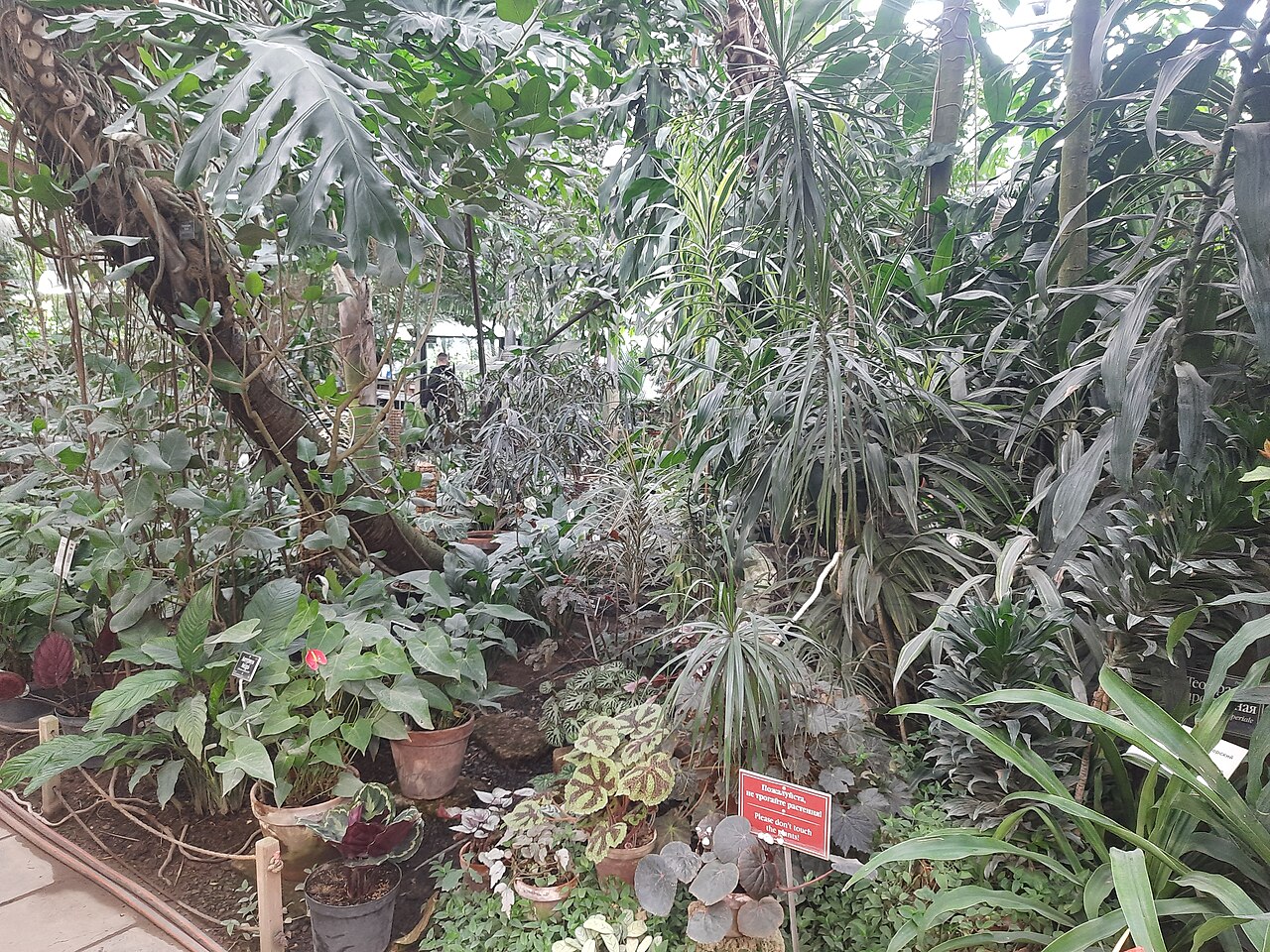
Figs, bananas (some brought from Indonesia in 2014), ferns, aroids, bromeliads and carnivorous plants fill out the display, along with a glazed compartment for rare orchids; the garden's orchid collection is one of the largest in Russia. Chameleons are among the house's attractions.
Visiting
The garden is on Prospekt Mira in central Moscow, a few minutes' walk from Prospekt Mira metro station. The palm house is visited together with the Victoria house, which shows cacao, papaya and giant water lilies, and can be followed by the succulent and subtropical houses. Allow about an hour for the glasshouses, longer to see the outdoor garden as well. The houses are open all year and make a sharp contrast with a Moscow winter; in spring the garden is known for its flowering cherries, apple trees and thousands of tulips.
55.78° N, 37.64° E
Greenhouses nearby
More greenhouses — Russia
Do you have a good photo of this greenhouse? Suggest it for this page →
Sources (8)
- hortus.msu.ru/palmhouse.html
- hortus.msu.ru/news/tropicheskie-oranzherei-aptekarskogo-ogoroda-otkryty-s-1-iyulya.html
- mosregtoday.ru/culture/istoricheskiy-fasad-oranzherei-xix-veka-mozhno-vpervye-uvidet-v-apt
- mag.russpass.ru/rubric/moskva/aptekarskiy-ogorod-v-moskve
- moskvapark.naidich.ru/aptekar/oranzhereja/oranzhereja.htm
- vittasim.livejournal.com/149580.html
- openstreetmap.org/way/152208237
- openstreetmap.org/way/300214555
Affiliate links — booking through Verrière helps fund our research, at no extra cost to you.