Cluj-Napoca Botanical Garden Glasshouses
Cluj-Napoca

Sources checked September 2026
- Year
- 1960
- Style
- Complex of modern glasshouses
- Dimensions
- ≈2,000 m² in total, palm house 16 m high
- Status
- Open to the public
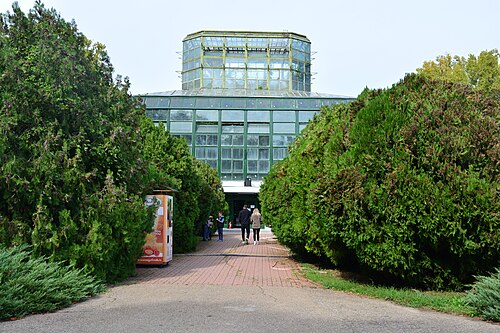
The 'Alexandru Borza' Botanical Garden of Babeș-Bolyai University has held a complex of six glasshouses covering around 2,000 m² since 1960, three of them open to the public. The palm house, 16 metres high and kept between 18 and 25°C, holds a Canary Island date palm (Phoenix canariensis) over 145 years old, an East African oil palm (Elaeis guineensis) and a traveller's tree (Ravenala madagascariensis). The other houses show Mediterranean and Australian flora, epiphytic orchids and ferns, and a cactus and succulent collection including the rare Thelocactus hexaedrophorus, endemic to Mexico.
Affiliate links — booking through Verrière helps fund our research, at no extra cost to you.
History
The Cluj glasshouses belong to a long botanical history. In the early nineteenth century the amateur botanist Wolfgang Cserey laid out a first garden with both outdoor and sheltered collections. After the Hungarian Franz Joseph University was founded in 1872, a university garden was organised on land donated by Count Imre Mikó; its first director, August Kanitz, managed to build only a small house for tropical plants. A later director, Aladár Richter, acquired a larger site in the south of the city in 1910.
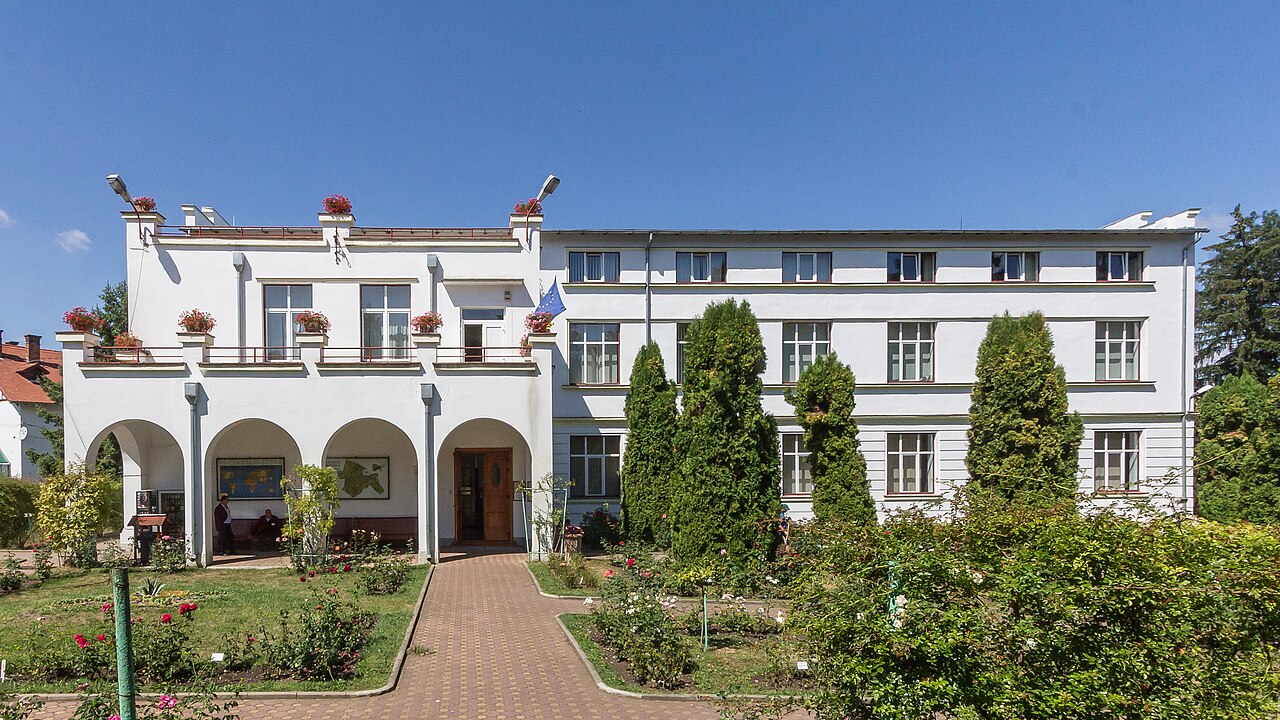
After 1919 the Romanian university entrusted Professor Alexandru Borza with re-founding the garden, which opened to the public on 25 June 1925 and now bears his name; the Botanical Institute was built between 1930 and 1935. The giant water lily Victoria cruziana has been grown in the garden since 1930.
The present glasshouse complex was built after the Second World War, between 1957 and 1960 according to the garden's own history, which gives 1960 as its completion date. It belongs to Babeș-Bolyai University, of which the garden is one of the units.
Architecture and engineering
The complex consists of six glasshouses covering just over 2,000 m². Three are open to the public; the other three are reserved for research and for exchanges of plant material between institutions.
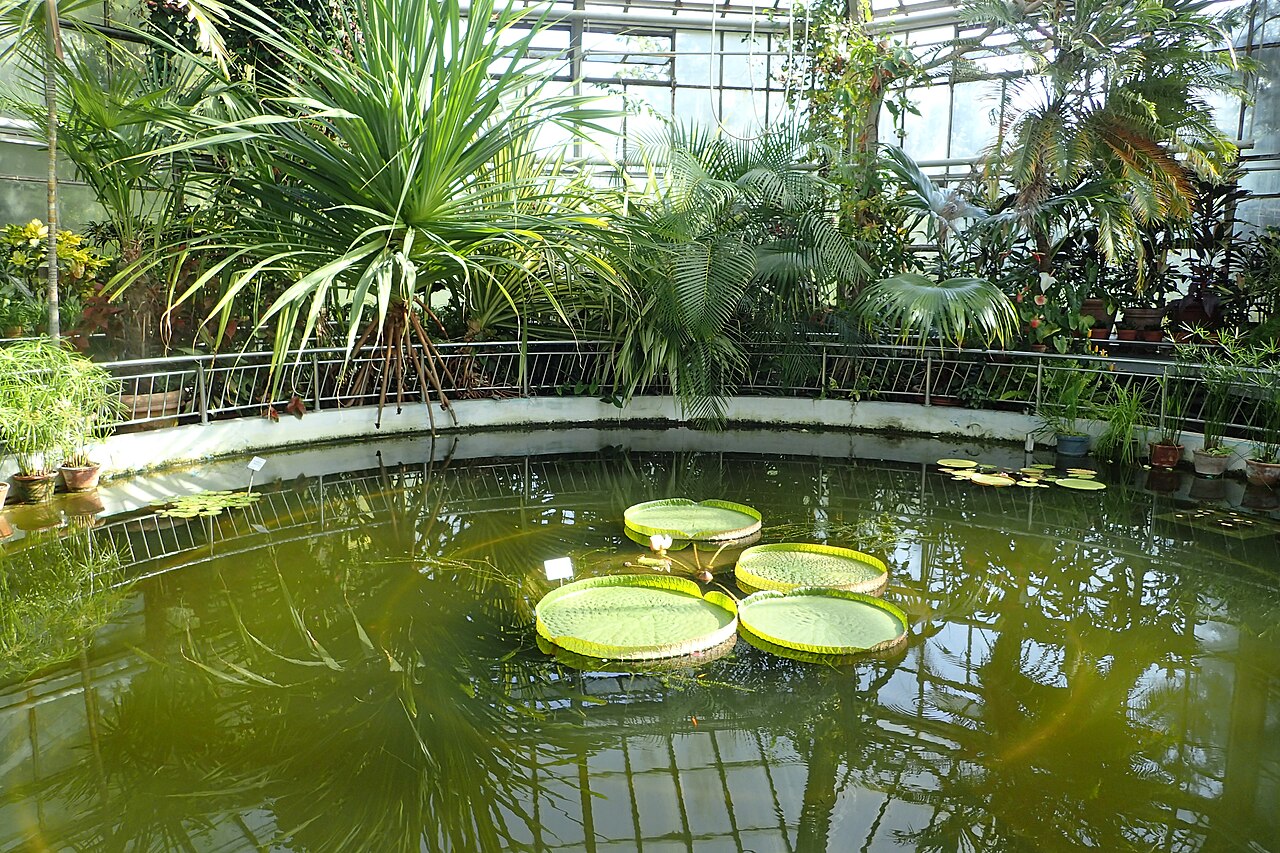
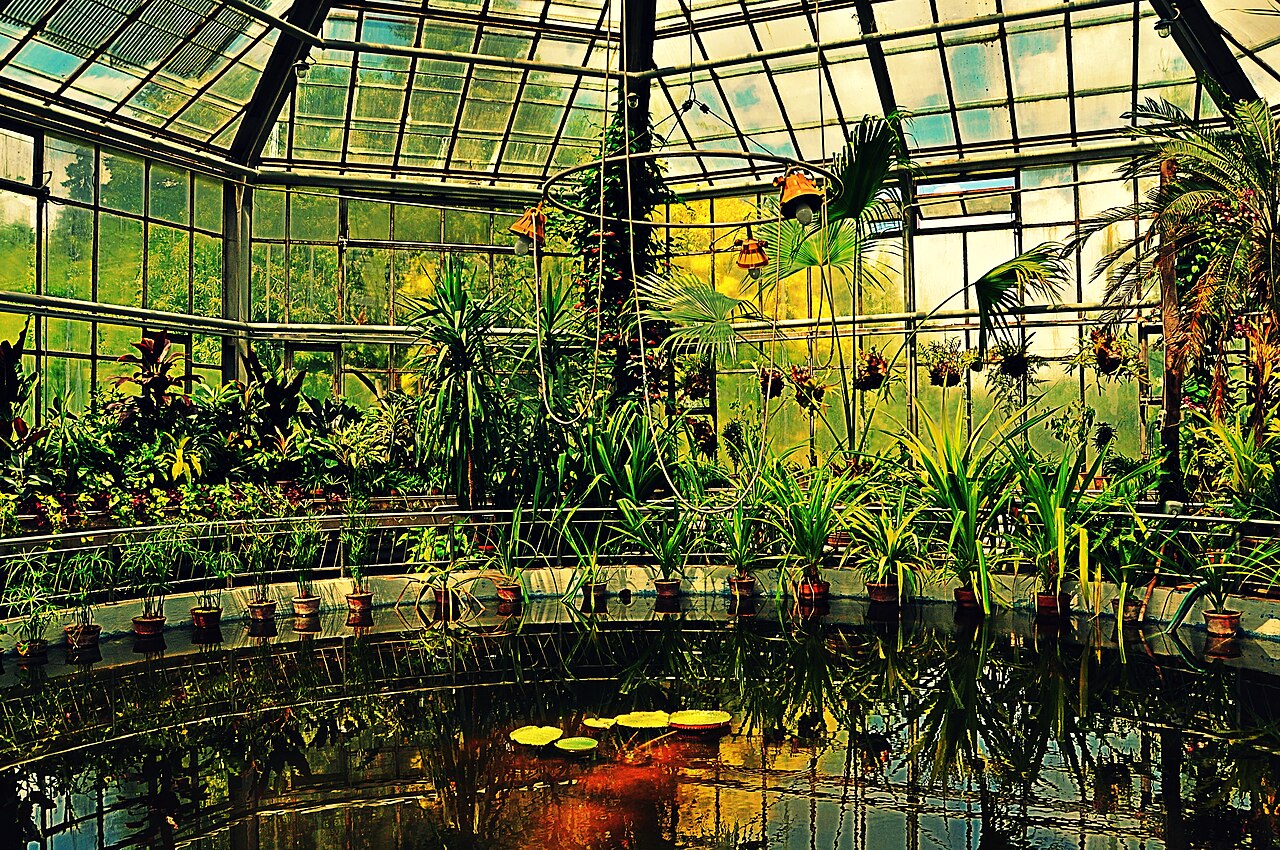
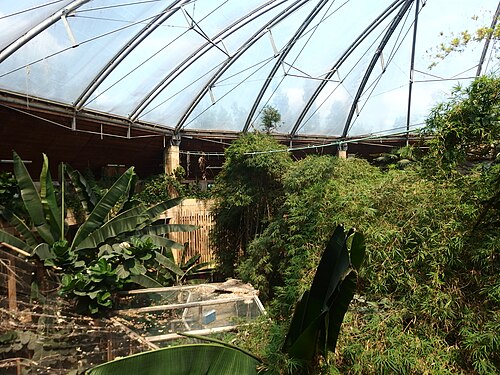
The public houses represent three climates. The equatorial house, known as the "aquarium", keeps humidity around 92 per cent and temperatures of 30 to 35 °C around a central pool. The palm house, the tallest, rises to 16 metres and is held between 18 and 25 °C at 45 to 60 per cent humidity, allowing large specimens to grow. A third house at the front holds Mediterranean and Australian flora in more temperate conditions.
Plant collections
In the aquarium house, the giant water lily Victoria cruziana, grown in the garden since 1930, shares space with sugar cane, crotons, cordylines, strelitzias, marantas and epiphytic ferns. The palm house holds a Canary Island date palm (Phoenix canariensis) more than 145 years old, an oil palm (Elaeis guineensis), a traveller's tree (Ravenala madagascariensis), bananas, eucalyptus and palms of the genera Washingtonia, Sabal and Trachycarpus. The Mediterranean and Australian house shows myrtle, olive, dwarf fan palm, cork oak, camphor and cinnamon, along with casuarinas, acacias, Brachychiton and grevilleas.
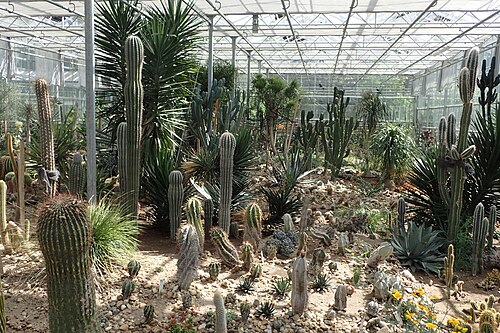
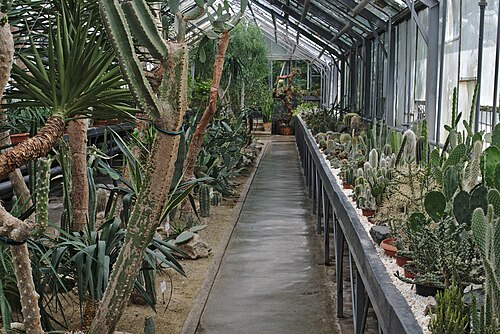
The research houses keep the collections of cacti and succulents, including the Mexican Thelocactus hexaedrophorus, as well as bromeliads, aroids, Piperaceae, ferns and tropical orchids such as Cattleya lueddemanniana.
Visiting
The Alexandru Borza Botanical Garden covers about fourteen hectares on Republicii street, south of central Cluj-Napoca. The glasshouses belong to the phytogeographical sector and are best seen as part of a wider walk through the other sections: a Japanese garden with a stream and pagoda, a Roman garden dedicated to Ceres with sarcophagi from ancient Napoca, and the systematic, economic and medicinal collections. Only three of the six houses are open to the public. Spring and summer, when the outdoor garden is in flower, are the best time for a full visit.
46.76° N, 23.60° E
Greenhouses nearby
Architecture nearby
More greenhouses — Romania
Do you have a good photo of this greenhouse? Suggest it for this page →
Sources (5)
- gradinabotanica.ubbcluj.ro/en/the-greenhouse-complex/
- gradinabotanica.ubbcluj.ro/complexul-de-sere/
- gradinabotanica.ubbcluj.ro/en/a-brief-historical-overview/
- bjc.ro/wiki/index.php/Gr%C4%83dina_Botanic%C4%83_%E2%80%9EAlexandru_Borza%E2%80%9D_Cluj (archived copy)
- cluj.com/articole/gradina-botanica-alexandru-borza-cluj-napoca/
Affiliate links — booking through Verrière helps fund our research, at no extra cost to you.